Cancer research breakthroughs in 2026 have brought new answers to some of oncology’s most challenging scientific questions. Targets once considered undruggable became therapeutically accessible, immunotherapy expanded into earlier stages of disease, and molecular testing increasingly influenced not only which treatments patients received but also when treatment was necessary.
From remarkable survival improvements in pancreatic and small cell lung cancers to personalized mRNA cancer vaccines and new opportunities for organ preservation in rectal cancer, this year has demonstrated the importance of translating scientific discoveries into meaningful clinical outcomes.
Behind these achievements are years of research, international collaboration, and, most importantly, patients who participate in clinical trials, making progress possible for those who come after them.
This Thanksgiving, we look back at some of the most significant scientific advances covered throughout the year by OncoDaily Breast, OncoDaily GI, OncoDaily Lung, OncoDaily GU, OncoDaily IO and OncoDaily RT celebrating the discoveries that are shaping the future of cancer care.
Personalized Cancer Vaccines: A New Era of Immunotherapy
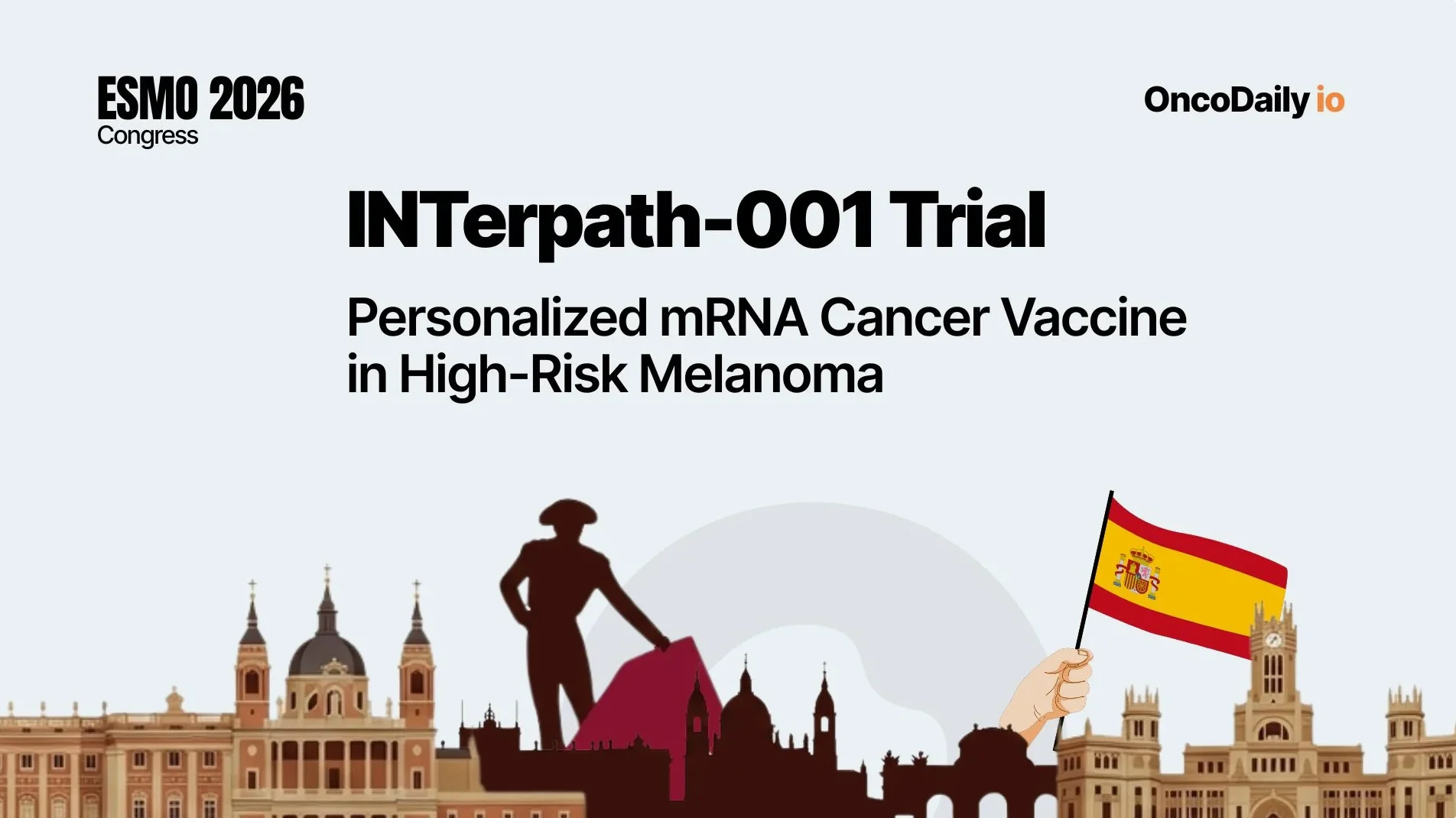
INTerpath-001: Personalized mRNA Cancer Vaccines Reach Phase III Success
Presented at ESMO 2026, the phase III INTerpath-001 trial demonstrated that Moderna and Merck’s individualized mRNA cancer vaccine, intismeran autogene (V940), combined with pembrolizumab improved two-year recurrence-free survival to 82.2% versus 70.0% with pembrolizumab alone in resected high-risk melanoma. This represents the first successful phase III trial of an individualized mRNA-based cancer therapy.
Cellular Therapy: Breaking Beyond Hematological Malignancies
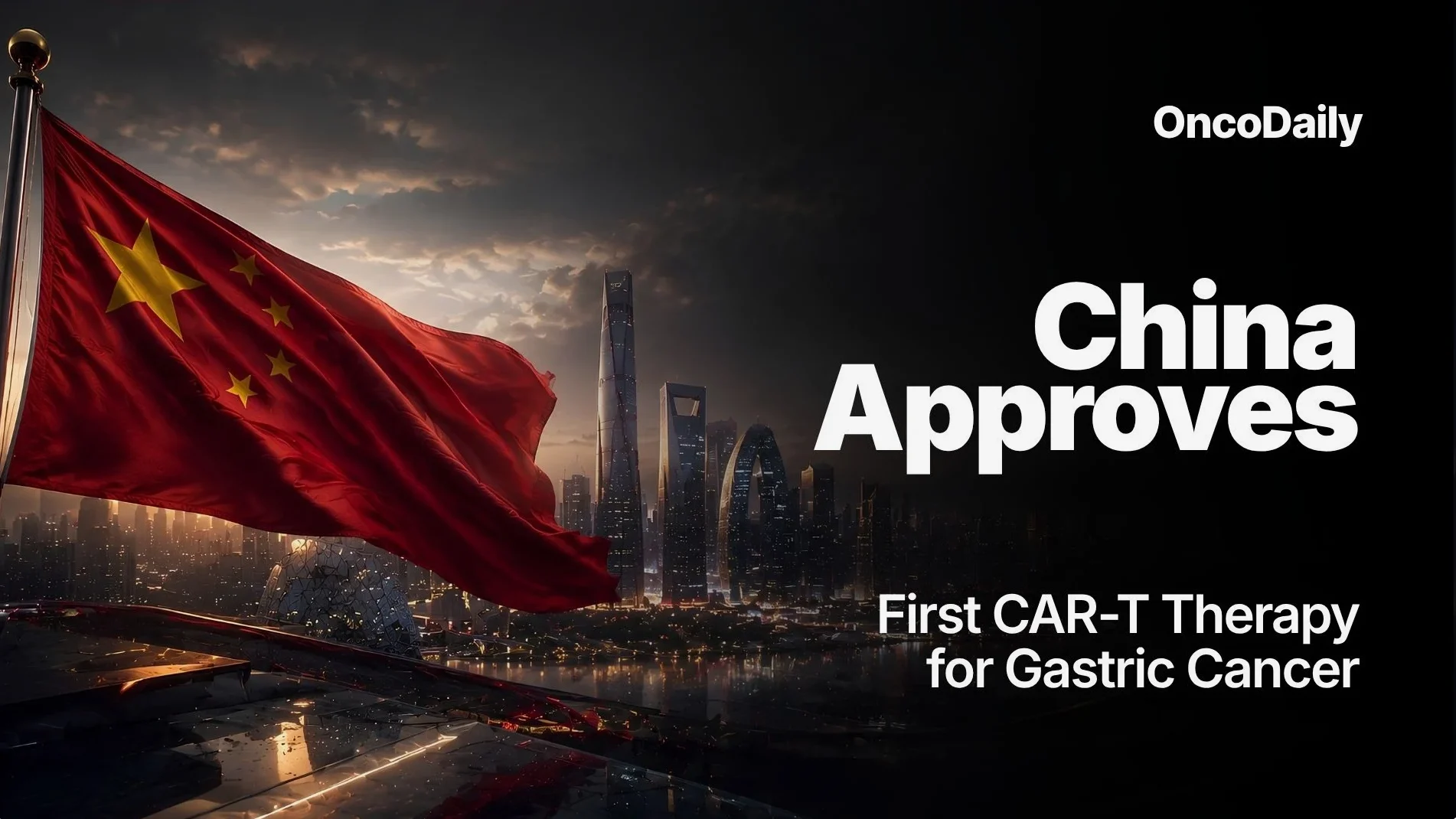
Satri-cel: The World’s First Approved CAR T-Cell Therapy for Solid Tumors
On June 22, 2026, China approved satricabtagene autoleucel (satri-cel), a CLDN18.2-directed CAR T-cell therapy, for previously treated CLDN18.2-positive, HER2-negative advanced gastric or gastroesophageal junction cancer. This historic approval marks the expansion of CAR T-cell therapy beyond hematological malignancies into solid tumors.
Precision-T: Making Stem Cell Transplantation Safer
On June 30, 2026, the FDA approved Tregzi (Orca-T), the first regulatory T-cell-based immunotherapy for allogeneic hematopoietic stem cell transplantation. The phase III Precision-T trial demonstrated a reduction in the 12-month incidence of moderate-to-severe chronic graft-versus-host disease from 44.0% to 12.6%, representing a major advance in transplant immunology.
Hematological Malignancies: Advancing Bispecific Antibody Therapy
MajesTEC-3: Transforming Multiple Myeloma Treatment
Building on the landmark results published in December 2025, the FDA approved teclistamab plus daratumumab in March 2026 for eligible patients with relapsed or refractory multiple myeloma after at least one prior line of therapy. MajesTEC-3 demonstrated three-year progression-free survival of 83.4% versus 29.7% (HR 0.17), highlighting the potential of earlier bispecific antibody therapy.
Gynecologic Oncology: New Opportunities for Difficult-to-Treat Cancers
KEYNOTE-B96: Immunotherapy Reaches Platinum-Resistant Ovarian Cancer
On February 10, 2026, the FDA approved pembrolizumab plus paclitaxel, with or without bevacizumab, for eligible patients with PD-L1-positive platinum-resistant ovarian cancer. The phase III KEYNOTE-B96 trial demonstrated median overall survival of 18.2 versus 14.0 months (HR 0.76), introducing a new biomarker-directed immunotherapy option.
TroFuse-005: ADCs Advance Endometrial Cancer Treatment
Presented at ESMO 2026, the phase III TroFuse-005 trial demonstrated median overall survival of 19.0 versus 12.1 months (HR 0.68) with sacituzumab tirumotecan compared with chemotherapy in advanced or recurrent endometrial cancer previously treated with platinum-based chemotherapy and immunotherapy.
KEYNOTE-C93: Moving Toward Chemotherapy-Free Treatment
The phase III KEYNOTE-C93 trial, presented at ESMO 2026, demonstrated median progression-free survival of 38.2 versus 8.4 months (HR 0.57) with first-line pembrolizumab monotherapy compared with carboplatin–paclitaxel in dMMR advanced or recurrent endometrial cancer, supporting further movement toward biomarker-selected, chemotherapy-free treatment strategies.
Breast Cancer: New Therapeutic Frontiers
NATALEE: From Preventing Recurrence to Improving Survival
Presented at ESMO 2026, the six-year analysis of the phase III NATALEE trial demonstrated overall survival of 91.86% versus 89.73% (HR 0.809; nominal P=0.019) with adjuvant ribociclib plus endocrine therapy compared with endocrine therapy alone, strengthening the long-term evidence for CDK4/6 inhibition in high-risk HR-positive/HER2-negative early breast cancer.
Vepdegestrant: The Beginning of the PROTAC Era
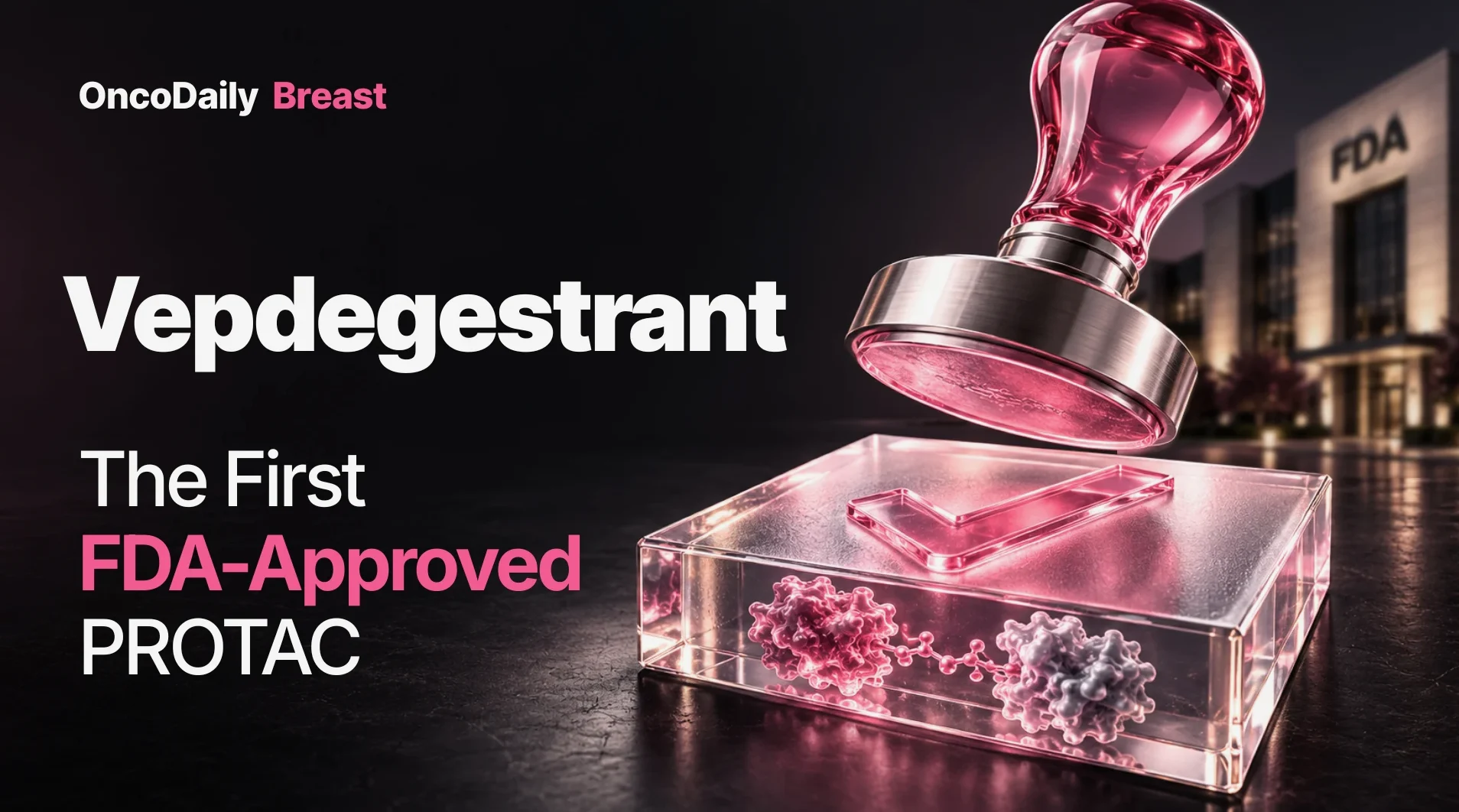
On May 1, 2026, vepdegestrant became the first FDA-approved PROTAC therapy, based on the phase III VERITAC-2 trial. By harnessing the cell’s protein degradation machinery to eliminate estrogen receptors, it introduces a novel therapeutic approach for ER-positive/HER2-negative, ESR1-mutated advanced breast cancer, with potential applications beyond breast oncology.
DESTINY-Breast05 and DESTINY-Breast11: ADCs Move Into Early Breast Cancer
In May 2026, trastuzumab deruxtecan received two FDA approvals in HER2-positive early breast cancer. DESTINY-Breast11 demonstrated pathological complete response rates of 67.3% versus 56.3%, while DESTINY-Breast05 showed three-year invasive disease-free survival of 92.4% versus 83.7% compared with trastuzumab emtansine. These approvals mark the expansion of ADCs into potentially curative treatment settings.
ASCENT-03 and ASCENT-04: Changing First-Line Treatment in Triple-Negative Breast Cancer
In June 2026, sacituzumab govitecan received two FDA approvals for first-line treatment of advanced TNBC: as monotherapy for patients ineligible for immune checkpoint inhibition, based on ASCENT-03, and in combination with pembrolizumab for PD-L1-positive disease (CPS ≥10), based on ASCENT-04.
lidERA: A New Chapter in Adjuvant Endocrine Therapy
Just days before Thanksgiving, on November 23, 2026, giredestrant became the first new endocrine therapy approved for early-stage breast cancer in more than two decades. The phase III lidERA trial demonstrated three-year invasive disease-free survival of 92.4% versus 89.6% with standard endocrine therapy (HR 0.70), although overall survival data remain immature.

Gastrointestinal Cancer: Breaking Longstanding Scientific Barriers
RASolute 302: Targeting the Previously Undruggable in Pancreatic Cancer
Presented at ASCO 2026, the phase III RASolute 302 trial demonstrated that daraxonrasib nearly doubled median overall survival compared with chemotherapy in previously treated metastatic pancreatic cancer (13.2 versus 6.7 months; HR 0.40). Its FDA approval on August 26, 2026, marked a historic milestone in decades of RAS-targeted cancer research.
HERIZON-GEA-01: Beyond Trastuzumab in Gastroesophageal Cancer
The phase III HERIZON-GEA-01 trial demonstrated median overall survival of 26.4 versus 19.2 months (HR 0.72) with zanidatamab, tislelizumab and chemotherapy compared with trastuzumab plus chemotherapy, marking a major advance in first-line HER2-positive gastroesophageal cancer treatment.
ATOMIC: Immunotherapy Enters the Adjuvant Setting in Colon Cancer
On October 8, 2026, the FDA approved atezolizumab plus chemotherapy for stage III dMMR colon cancer. The phase III ATOMIC trial demonstrated a 50% reduction in the hazard of recurrence or death, establishing a biomarker-driven immunotherapy approach in the adjuvant setting.
AZUR-1: Bringing Organ Preservation Closer to Reality
On October 19, 2026, dostarlimab received FDA accelerated approval for stage II–III MSI-H/dMMR locally advanced rectal cancer. The phase II AZUR-1 trial demonstrated sustained clinical complete responses, offering selected patients the possibility of avoiding chemotherapy, radiotherapy and surgery under careful surveillance.
Lung Cancer: Meaningful Survival Gains and More Precise Treatments
DeLLphi-305: A Major Survival Breakthrough in Small Cell Lung Cancer
Presented at ESMO 2026, the phase III DeLLphi-305 trial demonstrated that tarlatamab plus durvalumab as first-line maintenance therapy improved median overall survival to 21.1 versus 12.7 months with durvalumab alone (HR 0.42), marking a major therapeutic advance in extensive-stage small cell lung cancer.
Krascendo 1: The Next Generation of KRAS G12C Inhibition
The phase III Krascendo 1 trial demonstrated that divarasib improved median overall survival to 17.7 versus 12.0 months(HR 0.56) compared with sotorasib or adagrasib in previously treated KRAS G12C-mutated advanced NSCLC, highlighting the potential of next-generation KRAS inhibitors.
SAFFRON: Overcoming Resistance to Targeted Therapy
The phase III SAFFRON trial demonstrated median overall survival of 17.8 versus 12.9 months (HR 0.68) with osimertinib plus savolitinib compared with platinum–pemetrexed chemotherapy in EGFR-mutated advanced NSCLC with MET overexpression and/or amplification following progression on osimertinib.
DESTINY-Lung04: Bringing HER2-Directed ADCs Into First-Line Treatment
Presented at WCLC 2026, the phase III DESTINY-Lung04 trial demonstrated median progression-free survival of 14.3 versus 8.3 months with trastuzumab deruxtecan compared with pembrolizumab plus chemotherapy in previously untreated advanced HER2-mutant NSCLC. Overall survival benefit remains unestablished.
Genitourinary Cancer: From Molecular Residual Disease to Earlier Targeted Intervention
IMvigor011: When a Blood Test Can Guide Immunotherapy
On May 15, 2026, the FDA approved adjuvant atezolizumab for patients with muscle-invasive bladder cancer and ctDNA-defined molecular residual disease following cystectomy. Supported by the phase III IMvigor011 trial, this milestone advances the use of liquid biopsy as a tool for guiding treatment decisions.
VOLGA: Expanding Perioperative Treatment in Bladder Cancer
The phase III VOLGA trial demonstrated two-year overall survival of 78.4% versus 69.4% (HR 0.58) with perioperative durvalumab and enfortumab vedotin compared with surgery-based treatment. These findings led to FDA approval on November 13, 2026, expanding treatment options for patients with muscle-invasive bladder cancer who are ineligible for or decline cisplatin-based chemotherapy.
CAPItello-281: Advancing Precision Medicine in Prostate Cancer
On June 12, 2026, the FDA approved capivasertib plus abiraterone and prednisone for PTEN-deficient metastatic hormone-sensitive prostate cancer. Updated CAPItello-281 results demonstrated a numerical improvement in median overall survival of 57.4 versus 46.5 months, although statistical significance was not established.
LITESPARK-022: HIF-2α Inhibition Moves Into Adjuvant Kidney Cancer Treatment
The phase III LITESPARK-022 trial demonstrated a 28% reduction in the hazard of recurrence or death with belzutifan plus pembrolizumab compared with pembrolizumab alone (HR 0.72). The FDA approval in June 2026 expanded HIF-2α inhibition into adjuvant clear-cell renal cell carcinoma treatment, although overall survival data remain immature.
A Thanksgiving Tribute to the Oncology Community
Behind every hazard ratio, survival curve, regulatory approval and scientific publication is a patient whose life may be changed by these discoveries.
Years of laboratory research, clinical investigation and international collaboration precede each scientific breakthrough. What is presented on a congress stage in a matter of minutes often represents decades of work.
This Thanksgiving, we express our gratitude to the researchers who continue to challenge the boundaries of science, the healthcare professionals who translate these discoveries into clinical practice, and the patients whose trust and participation make clinical research possible.
While significant challenges remain, the achievements of 2026 give us reasons to look toward the future with optimism. They also remind us of our collective responsibility to ensure that scientific progress becomes accessible to patients worldwide.
There is still much to accomplish, but there is also much to be thankful for.
National Pancreatic Cancer Foundation
“Thanksgiving can mean something different when pancreatic cancer has touched your life.
Maybe this year, the celebration looks a little different. Maybe someone you love is missing from the table. Maybe you’re navigating treatment, worrying about what comes next, or finding your way through a holiday while caring for someone who needs you.
And maybe, in the middle of all of that, there are still moments worth holding close.
A familiar laugh. A favorite family recipe. An unexpected phone call. A few extra minutes together. The comfort of having someone beside you.
This Thanksgiving, we’re especially thinking of the patients, survivors, caregivers, and families whose lives have been changed by pancreatic cancer.
We are grateful for the people who continue to show up, the communities that offer support, and the moments of connection that remind us what matters most.
However you’re spending today, we hope you find a little comfort, a reason to smile, and a reminder that you are not alone.
From all of us at the National Pancreatic Cancer Foundation, we are thinking of you and wishing you a meaningful Thanksgiving.”
“Who said yes to you early in your career? Tag them and tell them thank you.
This Thanksgiving…I’m thinking about the first yes.
Before a research idea can win big funding, someone like you has to believe in it first. LCFA’s donors have been that first yes for 25 early-career research grants with IASLC. Those researchers have heard more ‘yes’, winning $60 million in follow-on funding.
I’m grateful to every donor who said yes early, to the researchers who turned that yes into progress, and to the people living with lung cancer who share their stories so others feel less alone.
So who said yes to you early in your career? Tag them and tell them thank you.
Happy Thanksgiving.”
“Thanksgiving is a chance to slow down and make time for the people who matter to us. It also makes me think about what we can build together in the years ahead.
This Thanksgiving, I’m grateful to my colleagues in the Myeloma Division and at the Sylvester Myeloma Institute, Sylvester Comprehensive Cancer Center, University of Miami, for the care you give our patients and their families, the work you do to advance myeloma research, and the many ways you show up for one another. I’m proud to be part of this team and grateful for what we’re building together.
I’m also thankful for our colleagues across Sylvester Comprehensive Cancer Center and University of Miami Health System, and for the collaborators at other institutions who work with us to improve care for people with multiple myeloma.
To everyone caring for patients over the holiday, thank you for being there for them and their families.
Happy Thanksgiving from Miami. I hope you get to spend some time with the people who matter most to you.”
Conquer Cancer, the ASCO Foundation
“Today, as we pause to reflect on what we are most thankful for, our thoughts turn directly to you.
You are the reason a researcher can pursue a new idea, the reason a family can find hope in a clinical trial, and the reason we are making continuous progress against every cancer, for every patient, everywhere.
Your generosity gives patients more time, more memories, and more milestones with the people they love. That is the greatest gift imaginable.
From all of us at Conquer Cancer, thank you for your enduring support. We wish you and your loved ones a very healthy, safe, and happy Thanksgiving.”
“This Thanksgiving, I am especially grateful for the patients and families who inspire our mission, the healthcare professionals who care for them, and the researchers and colleagues who continue to push the boundaries of science.
At Pfizer Oncology, our purpose goes beyond discovering medicines. It is about making a meaningful difference in the lives of people living with cancer, advancing breakthroughs, and helping transform the future of cancer care.
Every day, we are reminded why our work matters. Every breakthrough represents hope. Every collaboration creates opportunity. And every patient reinforces our commitment to deliver meaningful progress.
I am thankful to be part of a team driven by purpose, united by science, and committed to changing patients’ lives.
Wishing everyone a healthy, happy, and meaningful Thanksgiving.”
“Grateful for progress this Thanksgiving.
In 2026, the FDA issued 51 oncology and hematologic malignancy approvals, spanning breast, lung, GU, GI, gynecologic and blood cancers, plus tumor-agnostic options. Behind every approval are patients who joined clinical trials, research teams, nurses, coordinators, and years of investment in science.
Science saves lives. Research saves lives. Investment in research saves lives.
We still have a long way to go. But every new option means more Thanksgivings, more holidays, and more time around the table for our patients and their families.
Thank you to the patients who trust us and to everyone working to make the next approval possible.
Happy Thanksgiving.”
What 2026 Has Taught Us About Cancer Research
The cancer research breakthroughs of 2026 remind us how far we have come and how much more there is to accomplish. Molecular targets once considered undruggable are becoming accessible, personalized cancer vaccines are turning years of scientific ambition into clinical evidence, and treatments that once seemed unimaginable are offering patients new possibilities.
But the true significance of these achievements extends far beyond survival curves, statistical endpoints, and regulatory approvals. They represent more time with loved ones, the possibility of avoiding life-altering surgery, fewer recurrences, and renewed hope for patients whose treatment options were once limited.
We must also recognize the studies that did not meet their primary endpoints. Behind these results are equally dedicated researchers and equally courageous patients. Even when a trial does not deliver the outcomes we hoped for, it contributes knowledge that may guide the next discovery.
This year has reminded us that progress in oncology is rarely the result of a single breakthrough. It is built through years of curiosity, perseverance, collaboration, and the courage to continue when answers remain elusive.
And perhaps that is what we should be most thankful for: a global oncology community that refuses to stop searching for better answers, because every patient deserves a better tomorrow.
Written by Marine Marachlian, MD and Mane Hovhannisyan, MDc