The phase III INTerpath-001 trial demonstrated statistically significant improvements in recurrence-free survival (RFS) and distant metastasis-free survival (DMFS) with the individualized mRNA-based neoantigen therapy intismeran plus pembrolizumab compared with placebo plus pembrolizumab in patients with resected stage IIB–IV cutaneous melanoma.
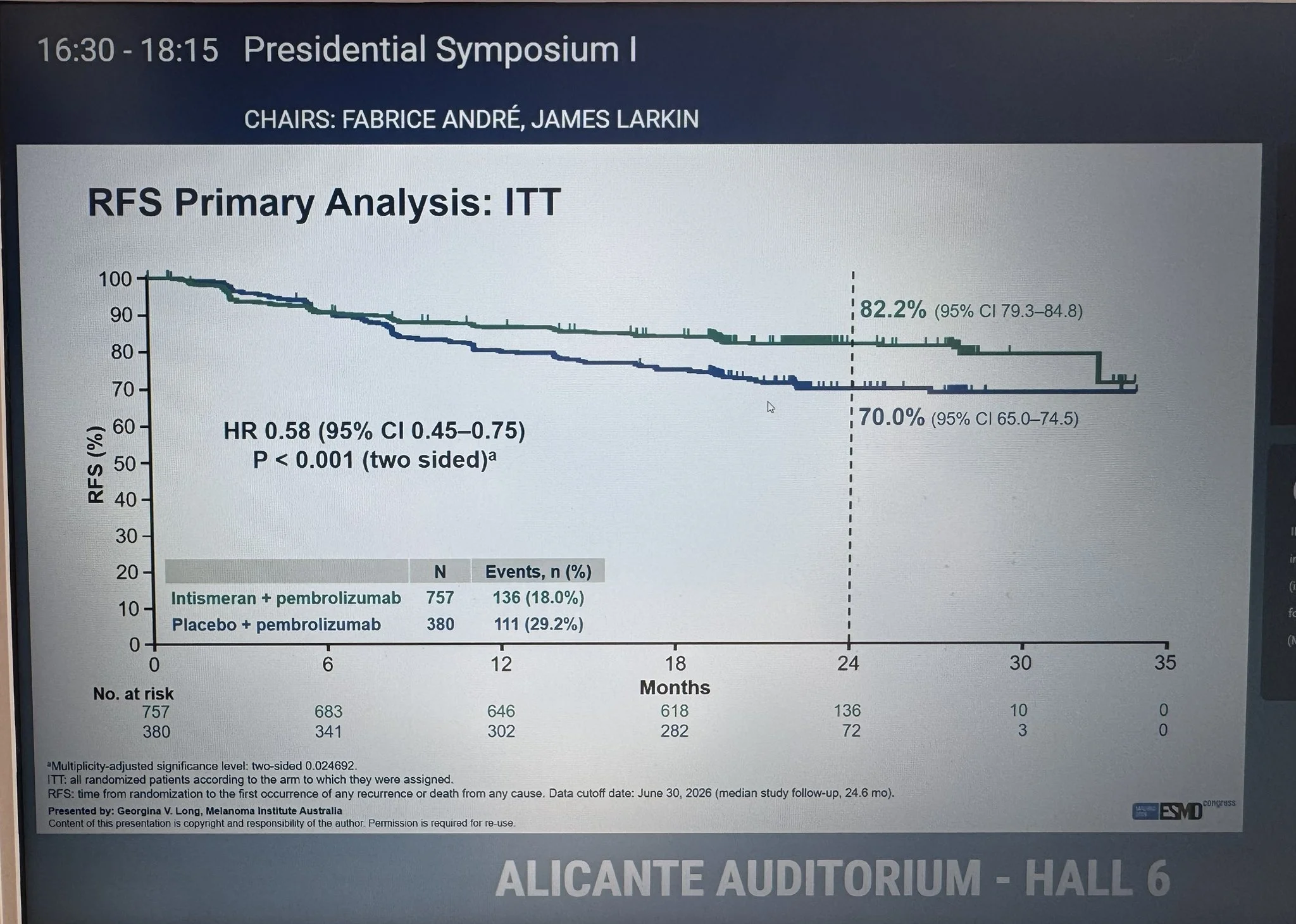
At 24 months, RFS was 82.2% versus 70.0%, an absolute difference of 12.2 percentage points. The RFS hazard ratio was 0.58, corresponding to a 42% reduction in the hazard of recurrence or death.
Georgina V. Long presented the findings during Presidential Symposium I at ESMO 2026 (abstract LBA1).
Background
Patients with resected high-risk melanoma remain at risk of recurrence despite adjuvant therapy. Intismeran is designed to expand pre-existing and generate new neoantigen-specific antitumor T-cell responses by targeting patient-specific tumor-derived antigens.
INTerpath-001 evaluated whether adding this individualized therapy to adjuvant pembrolizumab could improve outcomes following surgery.
Methods and Study Design
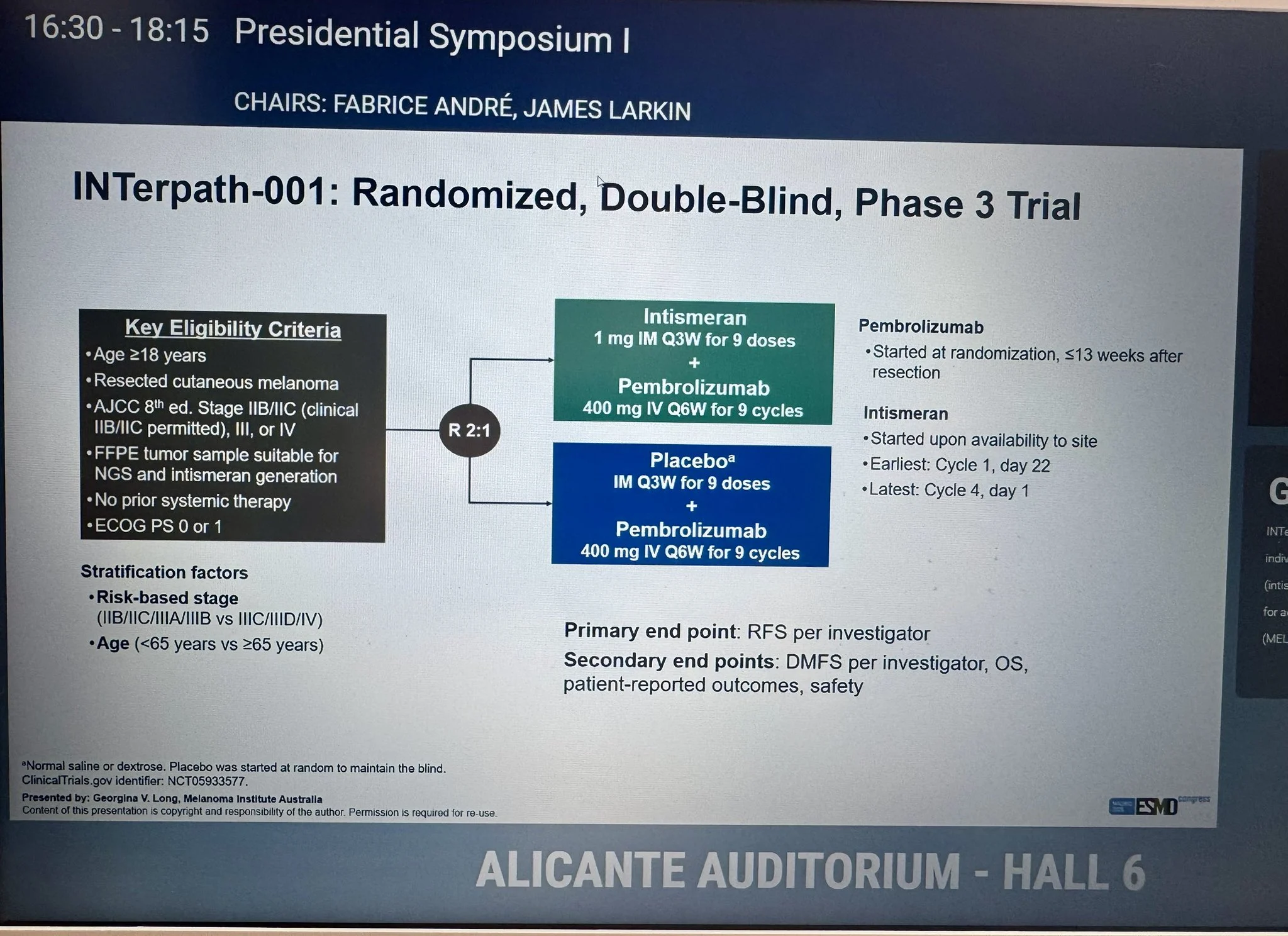
INTerpath-001 (NCT05933577) was a randomized, double-blind phase III trial enrolling adults with resected stage IIB/IIC, III, or IV cutaneous melanoma according to AJCC eighth-edition staging. Clinical stage IIB/IIC disease was permitted.
Eligible patients had a tumor sample suitable for next-generation sequencing and intismeran generation, no prior systemic therapy, and ECOG performance status 0–1.
A total of 1,137 patients were randomized 2:1 to:
- Intismeran plus pembrolizumab (n = 757): Intismeran 1 mg intramuscularly every three weeks for nine doses, plus pembrolizumab 400 mg intravenously every six weeks for nine cycles.
- Placebo plus pembrolizumab (n = 380): Intramuscular placebo every three weeks for nine doses, plus the same pembrolizumab regimen.
Randomization was stratified by age (<65 versus ≥65 years) and risk-based disease stage (IIB/IIC/IIIA/IIIB versus IIIC/IIID/IV).
Pembrolizumab began at randomization, within 13 weeks after resection. Intismeran began upon availability at the treatment site, from cycle 1, day 22 to cycle 4, day 1. Placebo initiation was randomized to maintain blinding.
The primary endpoint was investigator-assessed RFS, defined as the time from randomization to recurrence or death from any cause. Secondary endpoints included investigator-assessed DMFS, overall survival (OS), patient-reported outcomes, and safety.
Results
At the June 30, 2026 data cutoff, median study follow-up was 24.6 months. Efficacy was assessed in the intention-to-treat population.
- Recurrence-free survival: Recurrence or death occurred in 136 of 757 patients (18.0%) receiving intismeran plus pembrolizumab versus 111 of 380 (29.2%) receiving placebo plus pembrolizumab. Estimated 24-month RFS was 82.2% (95% CI 79.3–84.8) versus 70.0% (95% CI 65.0–74.5). The HR was 0.58 (95% CI 0.45–0.75; two-sided P <0.001), meeting the multiplicity-adjusted significance threshold.
- Distant metastasis-free survival: Estimated 24-month DMFS was 88.5% (95% CI 86.0–90.6) versus 80.2% (95% CI 75.6–84.0), respectively. The HR was 0.62 (95% CI 0.45–0.85; two-sided P = 0.002). DMFS events occurred in 89 of 757 patients versus 71 of 380.
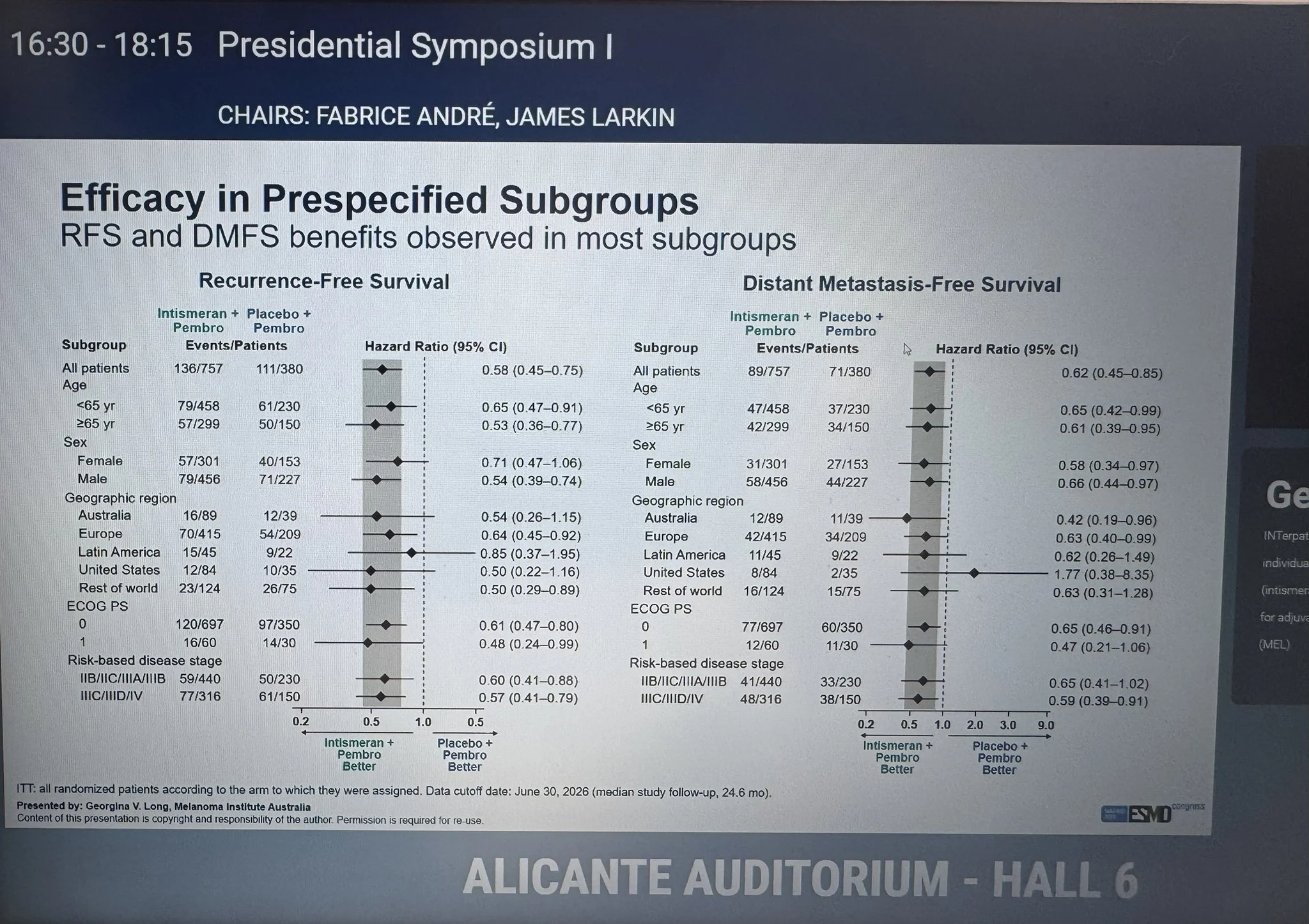
- RFS by disease stage: HRs favored intismeran plus pembrolizumab in both stage IIB/IIC/IIIA/IIIB disease (HR 0.60; 95% CI 0.41–0.88) and stage IIIC/IIID/IV disease (HR 0.57; 95% CI 0.41–0.79).
- DMFS by disease stage: Corresponding HRs were 0.65 (95% CI 0.41–1.02) and 0.59 (95% CI 0.39–0.91). The confidence interval crossed 1 in the lower-risk stage group.
- Other prespecified subgroups: RFS and DMFS findings generally favored the combination across most assessed subgroups. Some estimates had wide confidence intervals, limiting conclusions within individual subgroups.
- Treatment delivery: At least one dose of intismeran or placebo was received by 95.9% and 96.1% of patients, respectively.
- Safety: The supplied abstract reported grade ≥3 adverse events in 23.6% versus 20.3% of patients. Adverse events led to simultaneous discontinuation of both study drugs in 6.5% versus 5.3%.
- Common adverse events: Pyrexia occurred in 52.2% versus 8.2%, injection-site pain in 51.0% versus 9.5%, and fatigue in 38.5% versus 29.7%.
- Overall survival: OS results were not reported in the supplied abstract.
Interpretation
INTerpath-001 demonstrated improved postoperative disease control when intismeran was added to pembrolizumab. The 12.2-percentage-point difference in estimated 24-month RFS was accompanied by an improvement in DMFS.
The prespecified stage subgroup findings were broadly consistent with the overall RFS result. However, subgroup estimates should not be interpreted as independently establishing benefit in every patient category.
The combination was associated with more frequent pyrexia and injection-site pain, while grade ≥3 adverse events and simultaneous discontinuation of both study drugs were numerically more frequent.
An OS benefit has not been established. Longer follow-up is needed to assess the durability of the RFS and DMFS improvements and their relationship to long-term survival.
Conclusion
INTerpath-001 met its primary RFS endpoint and demonstrated improved DMFS with intismeran plus adjuvant pembrolizumab compared with placebo plus pembrolizumab in resected high-risk cutaneous melanoma.
These phase III findings support the potential of individualized neoantigen therapy to improve outcomes after surgery. Continued follow-up will clarify the durability of benefit, long-term safety, and effect on OS.
GDFather-NEO Trial: Visugromab Plus Nivolumab in Cisplatin-Ineligible MIBC