The SAFFRON phase III trial has demonstrated statistically significant improvements in both progression-free survival (PFS) and overall survival (OS) with osimertinib plus savolitinib compared with platinum–pemetrexed chemotherapy in patients with EGFR-mutated, MET-overexpressed and/or MET-amplified advanced non-small cell lung cancer (NSCLC) following progression on osimertinib.
Presented by Shun Lu, MD, PhD, at the ESMO Congress 2026 Presidential Symposium in Madrid, the global randomized study provides phase III evidence supporting dual EGFR and MET inhibition as a biomarker-directed strategy for overcoming acquired resistance to osimertinib.
Among 338 randomized patients, median PFS was 7.6 months with osimertinib plus savolitinib versus 5.4 months with chemotherapy, corresponding to a 45% reduction in the hazard of disease progression or death (HR 0.55; 95% CI 0.42–0.72; p<0.001).
Importantly, the improvement extended to overall survival. Median OS reached 17.8 months versus 12.9 months, respectively, representing a 4.9-month difference and a 32% reduction in the hazard of death (HR 0.68; 95% CI 0.50–0.91; p=0.010).
These findings address a clinically important treatment gap in EGFR-mutated NSCLC, where acquired resistance to third-generation EGFR tyrosine kinase inhibitors remains a major obstacle to durable disease control.
Why SAFFRON Matters: Targeting MET-Mediated Resistance
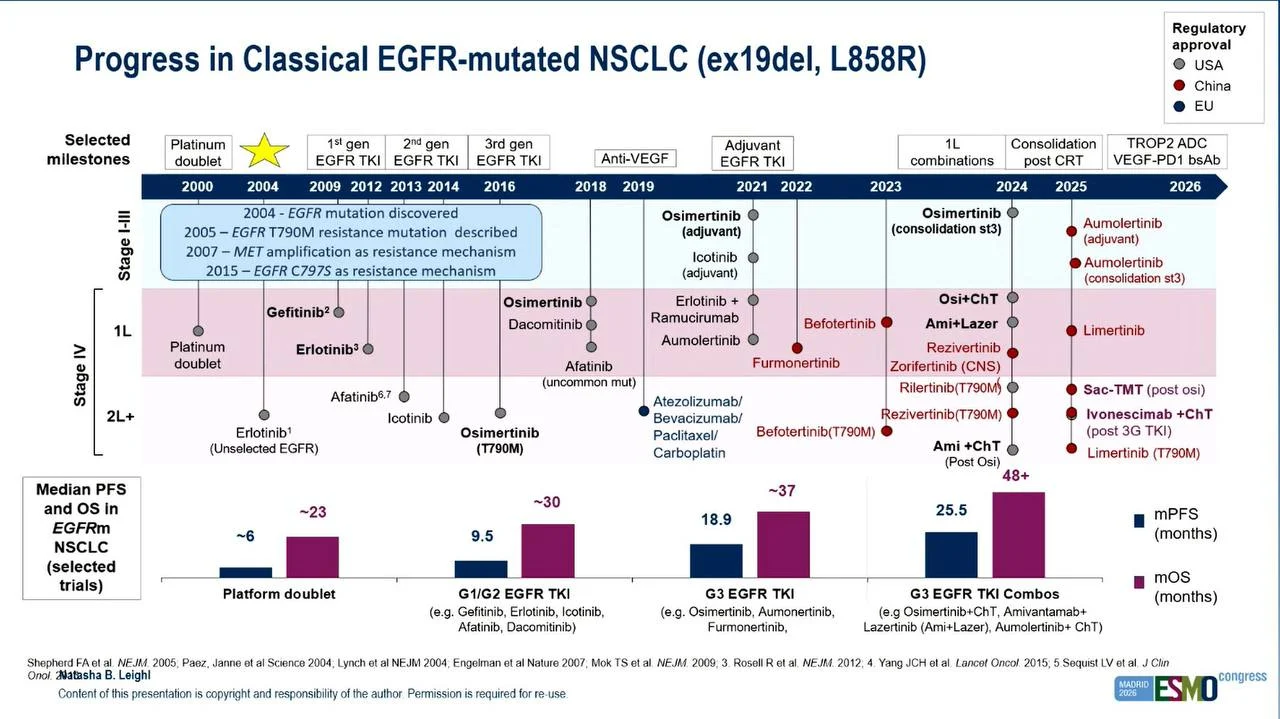
Osimertinib has become a central component of treatment for EGFR-mutated advanced NSCLC, offering potent EGFR inhibition and central nervous system activity. Nevertheless, nearly all patients with metastatic disease eventually develop resistance.
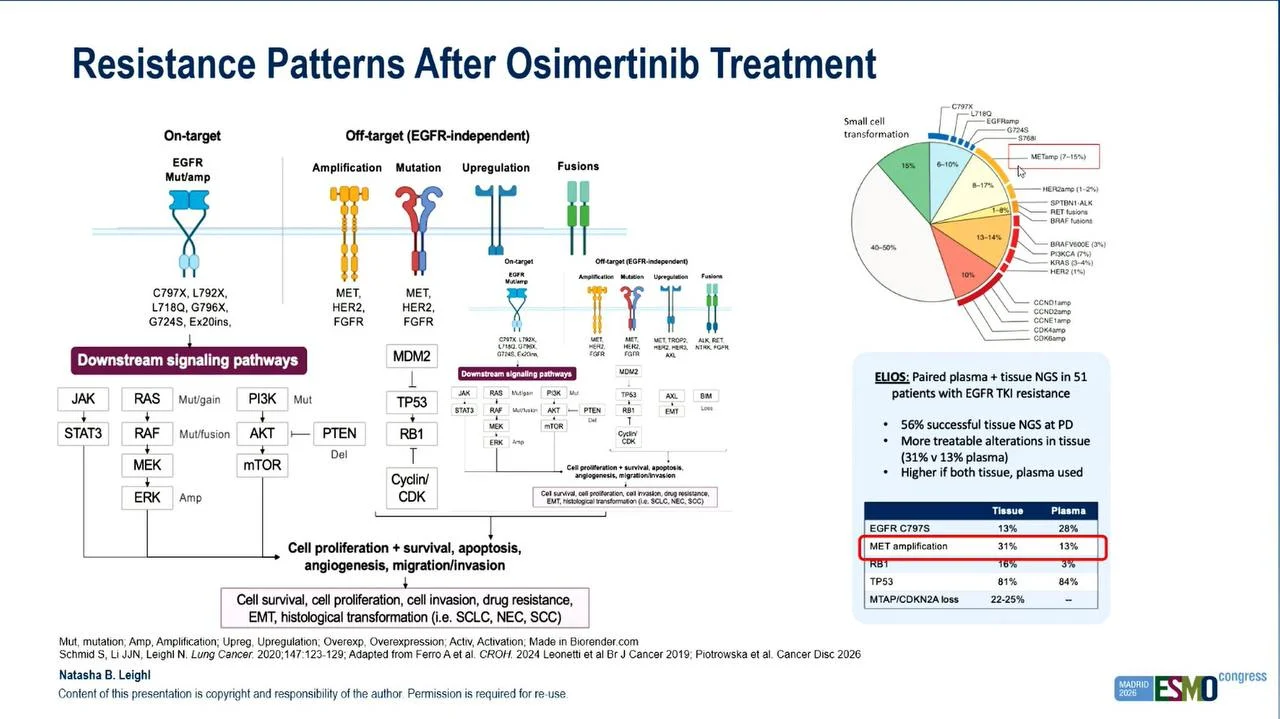
Resistance mechanisms are heterogeneous, ranging from additional EGFR alterations to activation of alternative signaling pathways. Among the most clinically relevant bypass mechanisms is MET amplification, which can restore downstream oncogenic signaling despite continued EGFR inhibition.
MET protein overexpression may also identify tumors with MET pathway involvement, although increased protein expression and genomic amplification are biologically distinct findings.
Historically, platinum-based chemotherapy has been an important treatment option following osimertinib progression. More recently, amivantamab-based chemotherapy combinations have expanded the post-osimertinib treatment landscape. However, defining the optimal strategy for patients with an identifiable MET-driven resistance mechanism remains an important clinical challenge.
Dual inhibition of EGFR and MET offers a mechanistically targeted approach: osimertinib maintains suppression of the original EGFR driver, while savolitinib, a selective oral MET inhibitor, blocks an alternative signaling pathway associated with acquired resistance.
Earlier phase II findings from SAVANNAH established the clinical activity of this combination in biomarker-selected patients. SAFFRON was designed to determine whether that activity could translate into superior outcomes compared with conventional chemotherapy in a randomized phase III setting.
Study Design and Patient Population
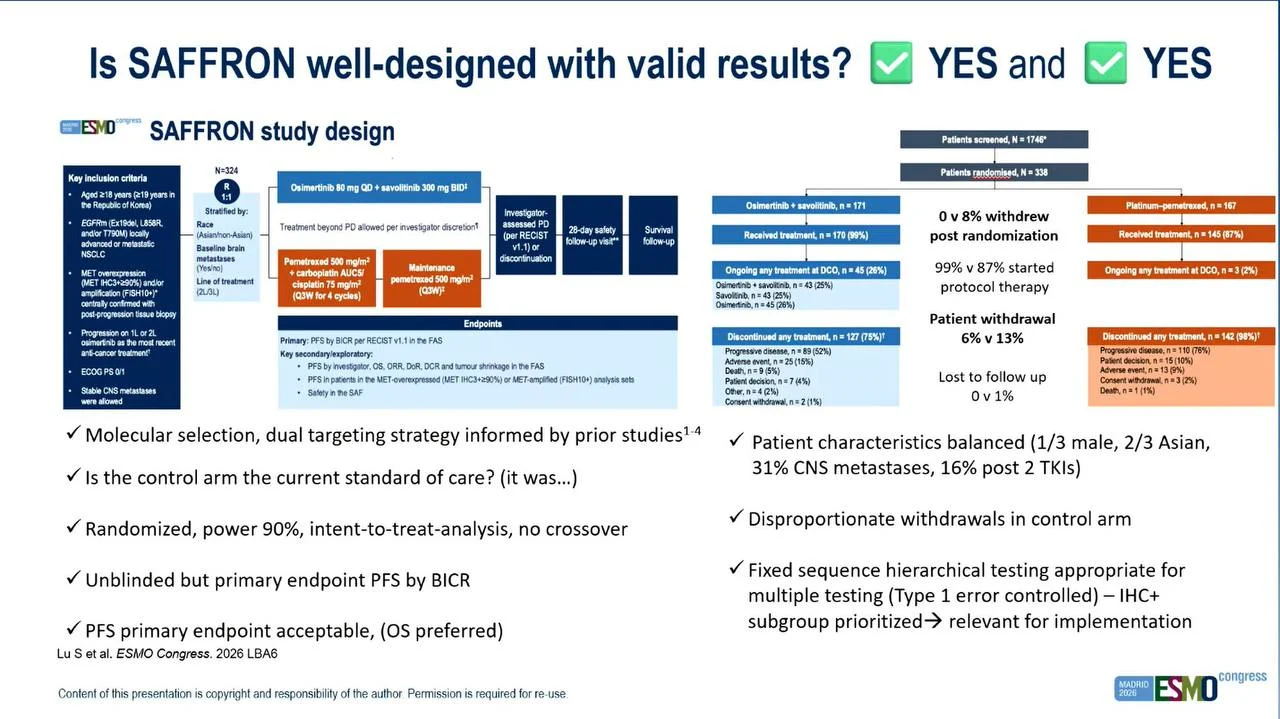
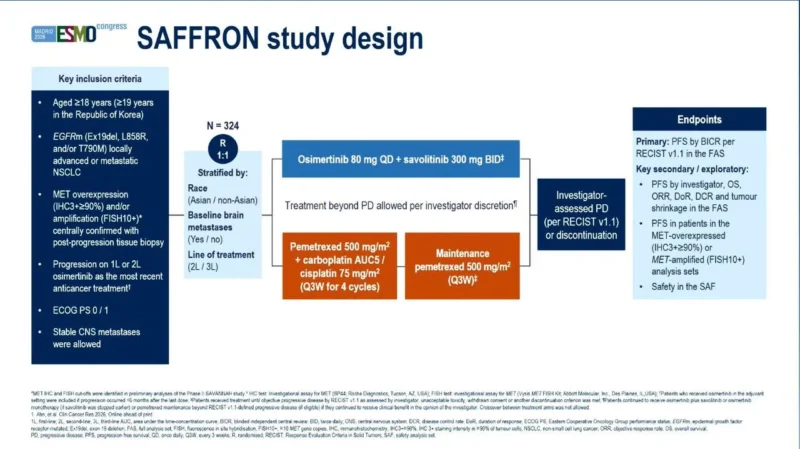
SAFFRON (NCT05261399) was a global, randomized, open-label phase III trial evaluating osimertinib plus savolitinib against platinum–pemetrexed chemotherapy in patients with locally advanced or metastatic EGFR-mutated NSCLC who had progressed after first- or second-line osimertinib.
Eligible patients had EGFR alterations including exon 19 deletion, L858R and/or T790M, together with high MET expression or amplification confirmed through post-progression tumor tissue testing.
High MET expression was defined as immunohistochemistry (IHC) 3+ staining in at least 90% of tumor cells, while MET amplification required at least 10 MET gene copies by fluorescence in situ hybridization (FISH). Patients could qualify through either criterion.
Additional eligibility requirements included ECOG performance status 0–1. Patients with stable central nervous system metastases were permitted.
A total of 338 patients were randomized 1:1 to receive either osimertinib 80 mg once daily plus savolitinib 300 mg twice daily (n=171), or pemetrexed 500 mg/m² combined with carboplatin AUC5 or cisplatin 75 mg/m² every three weeks for four cycles, followed by maintenance pemetrexed (n=167). Randomization was stratified according to race, baseline brain metastases, and treatment line.
The primary endpoint was PFS assessed by blinded independent central review (BICR) according to RECIST v1.1. Secondary and exploratory assessments included investigator-assessed PFS, OS, objective response rate, duration of response, disease control, and safety. The data cutoff for the primary analysis was July 6, 2026.
Primary Endpoint: Significant Improvement in Progression-Free Survival
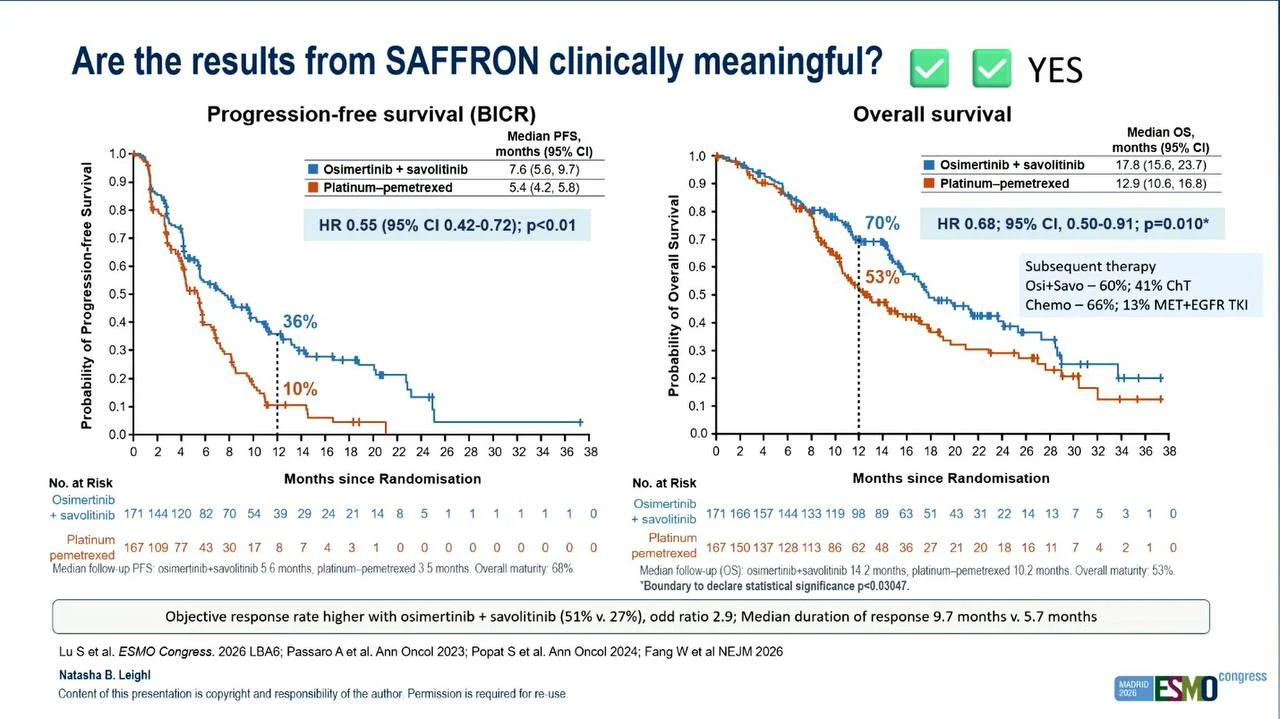
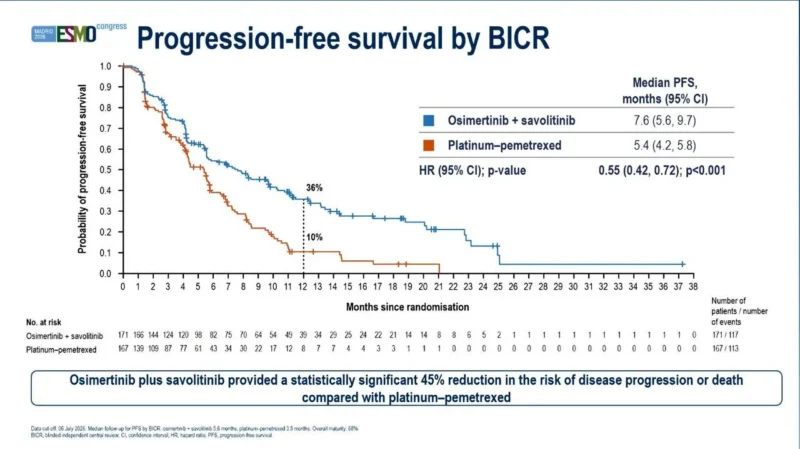
SAFFRON met its primary endpoint, demonstrating a statistically significant PFS advantage for osimertinib plus savolitinib compared with platinum–pemetrexed chemotherapy. Median PFS by BICR was 7.6 months (95% CI 5.6–9.7) in the targeted combination arm compared with 5.4 months (95% CI 4.2–5.8) in the chemotherapy arm.
The HR of 0.55 (95% CI 0.42–0.72; p<0.001) corresponded to a 45% reduction in the hazard of progression or death. The difference became more pronounced when considering longer-term disease control. At 12 months, the estimated PFS rate was 36% with osimertinib plus savolitinib compared with 10% with chemotherapy.
Investigator-assessed PFS supported the primary findings, with median PFS of 7.4 versus 4.2 months, respectively (HR 0.47; 95% CI 0.36–0.61).
Although the absolute difference in median PFS was 2.2 months, the substantial separation in 12-month progression-free survival suggests that a proportion of patients achieved more sustained disease control with dual targeted inhibition.
Overall Survival: A Clinically Meaningful and Statistically Significant Benefit
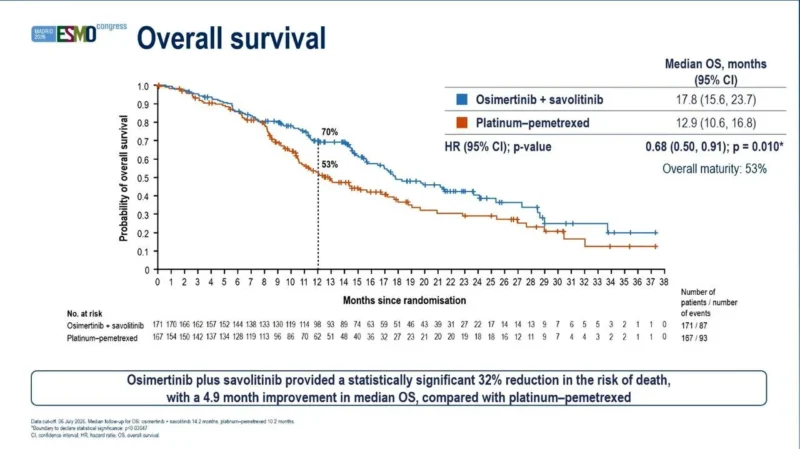
One of the most consequential findings from SAFFRON was the statistically significant improvement in overall survival, extending the study’s clinical relevance beyond delaying disease progression. Median OS was 17.8 months (95% CI 15.6–23.7) with osimertinib plus savolitinib compared with 12.9 months (95% CI 10.6–16.8) with platinum–pemetrexed.
The corresponding HR was 0.68 (95% CI 0.50–0.91; p=0.010), indicating a 32% reduction in the hazard of death. At 12 months, estimated overall survival was 70% in the targeted combination arm versus 53% in the chemotherapy arm, an absolute difference of 17 percentage points.
Overall survival data maturity was 53% at the analysis cutoff. Although continued follow-up will further characterize long-term survival, the reported OS result crossed the prespecified statistical significance boundary.
This distinction is important. SAFFRON does not merely demonstrate improved tumor control or a favorable numerical survival trend; it provides randomized phase III evidence of a statistically significant survival advantage in a molecularly selected population following osimertinib progression.
Tumor Response and Duration of Benefit
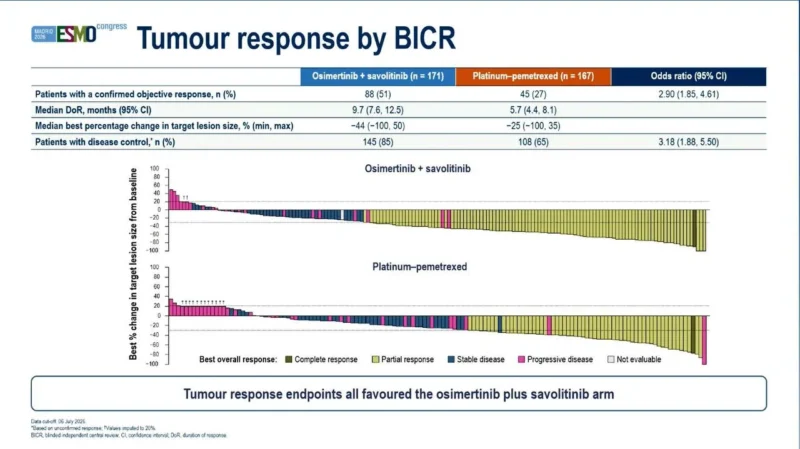
Tumor response outcomes consistently favored osimertinib plus savolitinib. The confirmed objective response rate by BICR was 51% (88 patients) with dual targeted therapy compared with 27% (45 patients) with chemotherapy, corresponding to an odds ratio of 2.90 (95% CI 1.85–4.61).
Responses were also more durable. Median duration of response was 9.7 months (95% CI 7.6–12.5) with osimertinib plus savolitinib versus 5.7 months (95% CI 4.4–8.1) with chemotherapy. Disease control was achieved in 85% versus 65% of patients, respectively, with an odds ratio of 3.18 (95% CI 1.88–5.50).
The median best percentage reduction in target lesion size was 44% with osimertinib plus savolitinib compared with 25% with chemotherapy.
Taken together, these findings suggest that dual EGFR/MET inhibition increased both the probability of achieving an objective response and the durability of that response. The magnitude of response improvement strengthens the biological rationale for treating a molecularly defined resistance mechanism rather than relying exclusively on nonspecific cytotoxic therapy.
Biomarker Selection: MET Overexpression and Amplification
A defining feature of SAFFRON was its prospective selection of patients with high MET expression and/or amplification. The study used stringent biomarker thresholds developed from earlier investigations, enriching the population for tumors more likely to depend on MET signaling after osimertinib resistance.
The PFS benefit was consistent in the MET-overexpressed and MET-amplified analysis sets, supporting the clinical relevance of both selection approaches.
In the MET-overexpressed analysis set, median PFS was 8.5 versus 5.6 months (HR 0.51; 95% CI 0.37–0.71). In the MET-amplified analysis set, median PFS was approximately 7.6 versus 4.2 months (HR approximately 0.48; 95% CI 0.35–0.66). These biomarker-defined populations were not mutually exclusive, and the subgroup findings should not be interpreted as a direct comparison between MET expression and amplification.
The results reinforce the importance of obtaining an updated molecular and pathological assessment at disease progression. Importantly, MET amplification detected by FISH and MET overexpression assessed by IHC are distinct biomarkers, and the SAFFRON selection thresholds should not automatically be generalized to lower levels of MET expression or amplification.
Safety and Treatment Tolerability
The efficacy advantages of osimertinib plus savolitinib must be considered alongside its safety profile. All-causality treatment-emergent adverse events occurred in 99% of patients receiving the combination and 97% receiving chemotherapy. Grade 3 or higher treatment-emergent adverse events occurred in 64% and 63%, respectively.
Treatment-related adverse events were reported in 93% of patients in the combination group and 92% in the chemotherapy group. However, grade 3 or higher treatment-related adverse events were less frequent with dual targeted therapy, occurring in 40% versus 52% of patients.
Conversely, serious treatment-emergent adverse events were more common with osimertinib plus savolitinib (41% versus 28%), as were treatment-emergent adverse events leading to treatment discontinuation (14% versus 8%).
Median treatment exposure was also longer with the targeted combination, at 8.3 months compared with 4.1 months in the chemotherapy arm, an important consideration when interpreting crude adverse-event frequencies.
These findings indicate that the all-oral regimen should not be regarded as inherently less toxic than chemotherapy. Although severe treatment-related adverse events were less frequent, serious adverse events and treatment discontinuations were more common.
Detailed assessment of individual toxicities, including edema, hepatic abnormalities, cardiac events, and interstitial lung disease, remains important for understanding the regimen’s clinical tolerability.
Clinical Interpretation: A Biomarker-Directed Alternative After Osimertinib
SAFFRON represents an important advance in the management of acquired resistance to EGFR inhibition. Rather than treating all patients progressing on osimertinib as a single population, the trial demonstrates the value of identifying a biologically relevant resistance pathway and selecting treatment accordingly.
The simultaneous improvement in PFS, OS, objective response rate, and response durability provides a consistent efficacy signal. The statistically significant OS result is particularly important because earlier MET-directed combination studies largely established antitumor activity without providing the same level of randomized survival evidence.
However, SAFFRON should be interpreted within an increasingly complex treatment landscape. Amivantamab plus chemotherapy has become an established post-osimertinib treatment option based on randomized evidence, while other MET-directed strategies and antibody-drug conjugates are being investigated.
SAFFRON compared dual EGFR/MET inhibition with platinum–pemetrexed chemotherapy, not with amivantamab-containing regimens. Consequently, it cannot establish the relative superiority of osimertinib plus savolitinib over other contemporary combination strategies.
Its most immediate clinical relevance lies in patients with high MET expression or amplification who meet the trial’s molecular eligibility criteria. For such patients, the results support dual EGFR/MET inhibition as a compelling treatment option, with actual access dependent on regulatory approval, availability, and local practice.
Limitations and Remaining Questions
Despite its positive findings, several questions remain relevant to clinical implementation. First, SAFFRON used an open-label design, although blinded independent central review strengthened the reliability of its primary PFS assessment.
Second, the stringent MET selection criteria limit generalizability to patients with lower MET expression or amplification levels. Whether similar benefit can be achieved across a broader spectrum of MET alterations remains uncertain.
Third, although patients with stable brain metastases were eligible, the available results do not establish a specific intracranial efficacy advantage. CNS outcomes will be important given the frequency of brain metastases in EGFR-mutated NSCLC.
Fourth, the absence of an amivantamab-containing comparator limits conclusions about optimal sequencing among available post-osimertinib strategies.
Finally, longer-term follow-up, detailed safety analyses, and greater understanding of subsequent treatments will help refine the combination’s clinical positioning.
OncoDaily Takeaway
SAFFRON provides phase III evidence that targeting a defined resistance mechanism can improve not only disease control but also overall survival after osimertinib progression. In patients with EGFR-mutated, MET-overexpressed and/or amplified advanced NSCLC, osimertinib plus savolitinib significantly prolonged both PFS and OS compared with platinum–pemetrexed chemotherapy.
The 4.9-month difference in median overall survival, together with a 45% reduction in the hazard of progression or death, represents a clinically relevant advance. The higher response rate, longer duration of response, and substantially improved 12-month PFS further strengthen the efficacy findings.
For clinical practice, the central message is the importance of molecular reassessment at osimertinib progression. Identifying MET overexpression or amplification can provide an opportunity to select treatment according to a resistance mechanism rather than moving automatically to chemotherapy.
Nevertheless, the results should not be interpreted as establishing superiority over all contemporary post-osimertinib options. Comparative efficacy, detailed tolerability, intracranial outcomes, biomarker testing access, and regulatory availability remain important considerations.
SAFFRON marks a meaningful step toward more personalized management of EGFR-mutated lung cancer after acquired resistance. Its principal contribution is the demonstration that appropriately selected patients can derive a statistically significant survival benefit from continued EGFR inhibition combined with targeted blockade of MET-mediated resistance.
Source
- Lu S, et al. Osimertinib plus savolitinib versus platinum–pemetrexed in EGFR-mutated, MET-overexpressed and/or amplified advanced NSCLC following osimertinib: SAFFRON phase III primary results. ESMO Congress 2026, Madrid, Spain. Presidential Symposium II, October 25, 2026. Late-breaking abstract LBA6. ClinicalTrials.gov: NCT05261399.