At the ESMO Congress 2026, Kohei Shitara (Kashiwa, Japan) presented the updated overall survival (OS) analysis from the Phase III HERIZON-GEA-01 trial (NCT05152147), evaluating zanidatamab plus chemotherapy, with or without tislelizumab, in patients with previously untreated HER2-positive advanced or metastatic gastroesophageal adenocarcinoma.
The updated analysis, presented as Late-Breaking Abstract LBA79, provides longer-term survival outcomes for zanidatamab-based regimens compared with trastuzumab plus chemotherapy.
Why Was HERIZON-GEA-01 Conducted?
The primary progression-free survival (PFS) analysis and first interim OS analysis demonstrated significant PFS improvements with zanidatamab plus chemotherapy, with or without tislelizumab, compared with trastuzumab plus chemotherapy. Zanidatamab combined with tislelizumab and chemotherapy also significantly improved OS (HR 0.72), as reported in the New England Journal of Medicine in 2026. The planned second interim analysis evaluated OS with longer follow-up.
HERIZON-GEA-01 Study Design and Methods
HERIZON-GEA-01 was a randomized Phase III trial involving 914 patients with previously untreated HER2-positive advanced or metastatic gastroesophageal adenocarcinoma. Patients were randomized 1:1:1 to receive zanidatamab plus chemotherapy, zanidatamab plus chemotherapy and tislelizumab, or trastuzumab plus chemotherapy.
Zanidatamab was administered intravenously every three weeks at 1800 mg for patients weighing less than 70 kg or 2400 mg for those weighing at least 70 kg. Chemotherapy consisted of capecitabine/oxaliplatin or 5-fluorouracil/cisplatin, while tislelizumab was administered at 200 mg intravenously every three weeks. The primary endpoints were PFS by blinded independent central review and OS.
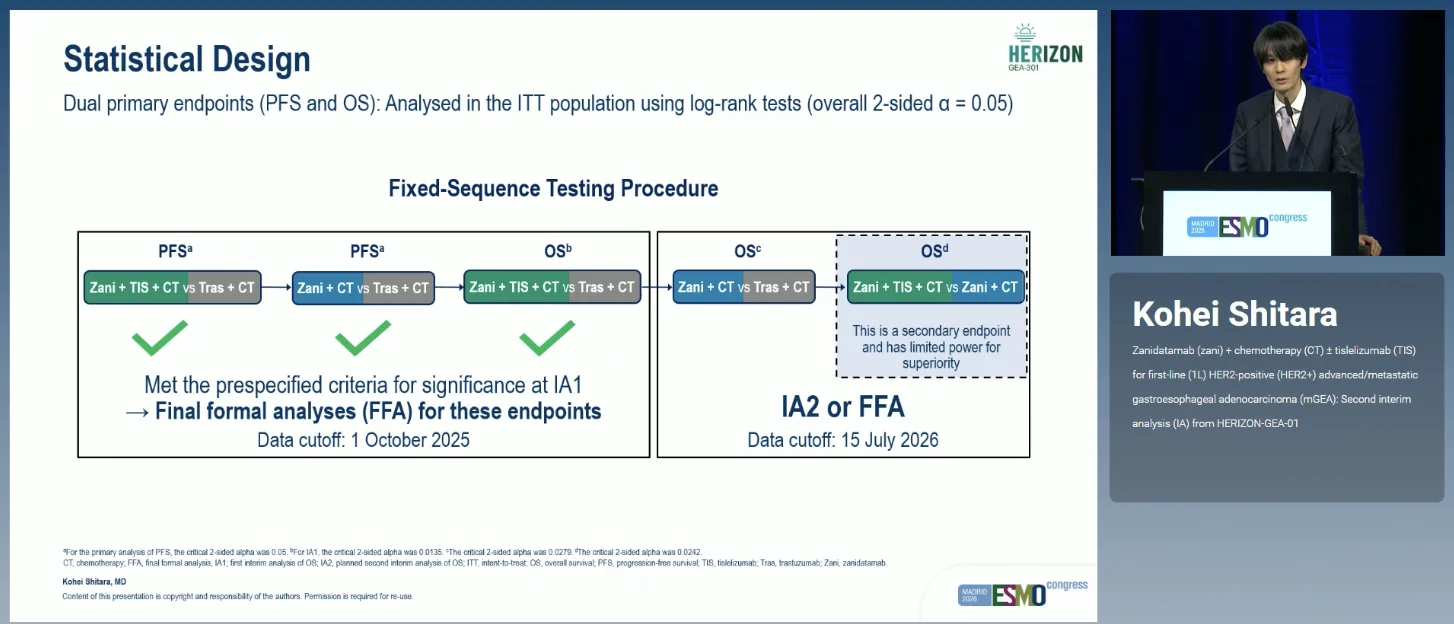
At the second interim analysis, OS was assessed according to the prespecified fixed-sequence testing procedure. The comparison of zanidatamab plus chemotherapy and tislelizumab versus zanidatamab plus chemotherapy was a secondary endpoint with limited power for superiority.

Key Findings from HERIZON-GEA-01
At the July 15, 2026 data cutoff, median follow-up reached 35.3 months, representing an additional 9.4 months compared with the first interim analysis.
Progression-free survival
Progression-free survival (PFS) results remained consistent with the first interim analysis. Median PFS was 12.7 months (95% CI 9.8–16.8) with zanidatamab plus tislelizumab and chemotherapy, 12.4 months (95% CI 9.8–14.5) with zanidatamab plus chemotherapy, and 8.3 months (95% CI 7.0–8.9) with trastuzumab plus chemotherapy.
Compared with trastuzumab plus chemotherapy, the PFS HR was 0.61 (95% CI 0.50–0.76) for zanidatamab plus tislelizumab and chemotherapy and 0.65 (95% CI 0.53–0.80) for zanidatamab plus chemotherapy. Both comparisons had already met the prespecified criteria for statistical significance at the first interim analysis.
Updated Overall Survival
Zanidatamab plus chemotherapy significantly improved OS compared with trastuzumab plus chemotherapy (HR 0.76; 95% CI 0.62–0.93; p=0.0088). Median OS was 22.9 months (95% CI 19.9–27.6) versus 19.6 months (95% CI 16.9–22.2), respectively.
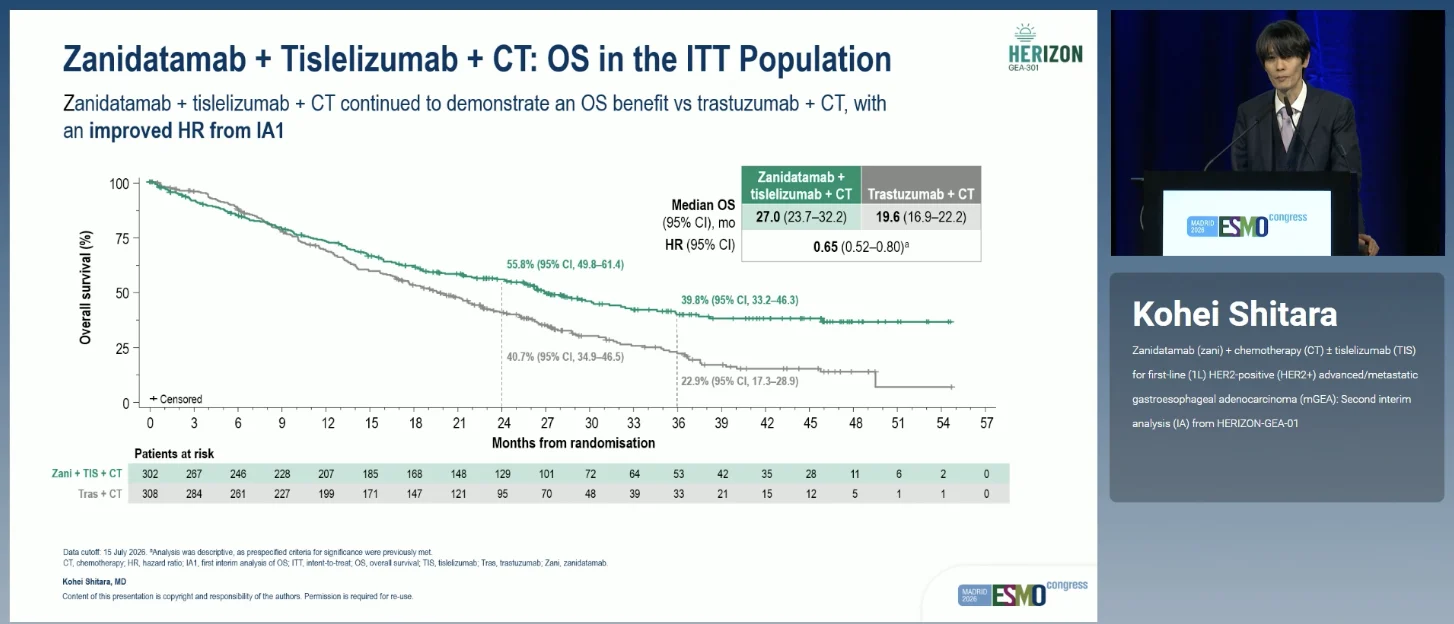
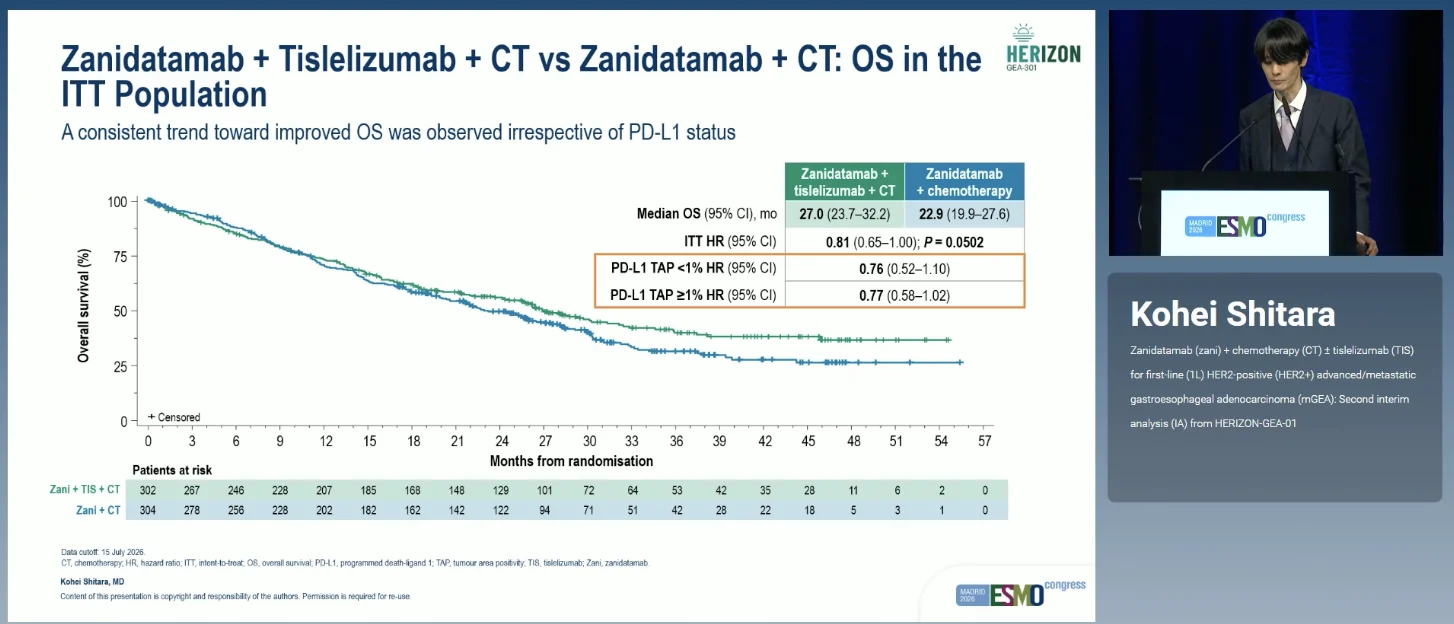
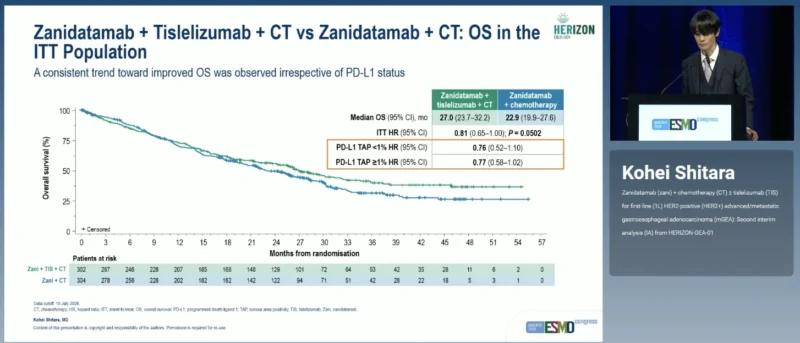
Median OS was 27.0 months (95% CI 23.7–32.2) with zanidatamab plus tislelizumab and chemotherapy versus 22.9 months (95% CI 19.9–27.6) with zanidatamab plus chemotherapy alone (HR 0.81; 95% CI 0.65–1.00; p=0.0502). This numerical difference did not reach statistical significance.
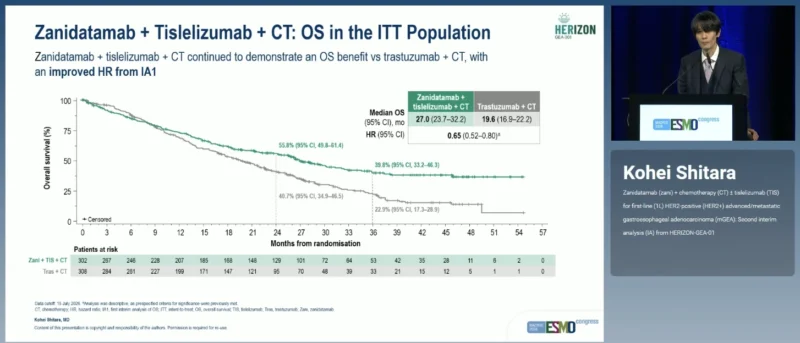
The OS benefit of zanidatamab plus chemotherapy and tislelizumab versus trastuzumab plus chemotherapy was maintained with longer follow-up, with an HR of 0.65 (95% CI 0.52–0.80), compared with 0.72 at the first interim analysis.
Three-Year Overall Survival and Safety
Estimated 36-month OS rates were 39.8% with zanidatamab plus chemotherapy and tislelizumab, 31.5% with zanidatamab plus chemotherapy, and 22.9% with trastuzumab plus chemotherapy. The investigators reported that the safety profiles remained manageable with no new safety signals during longer follow-up.
Conclusions
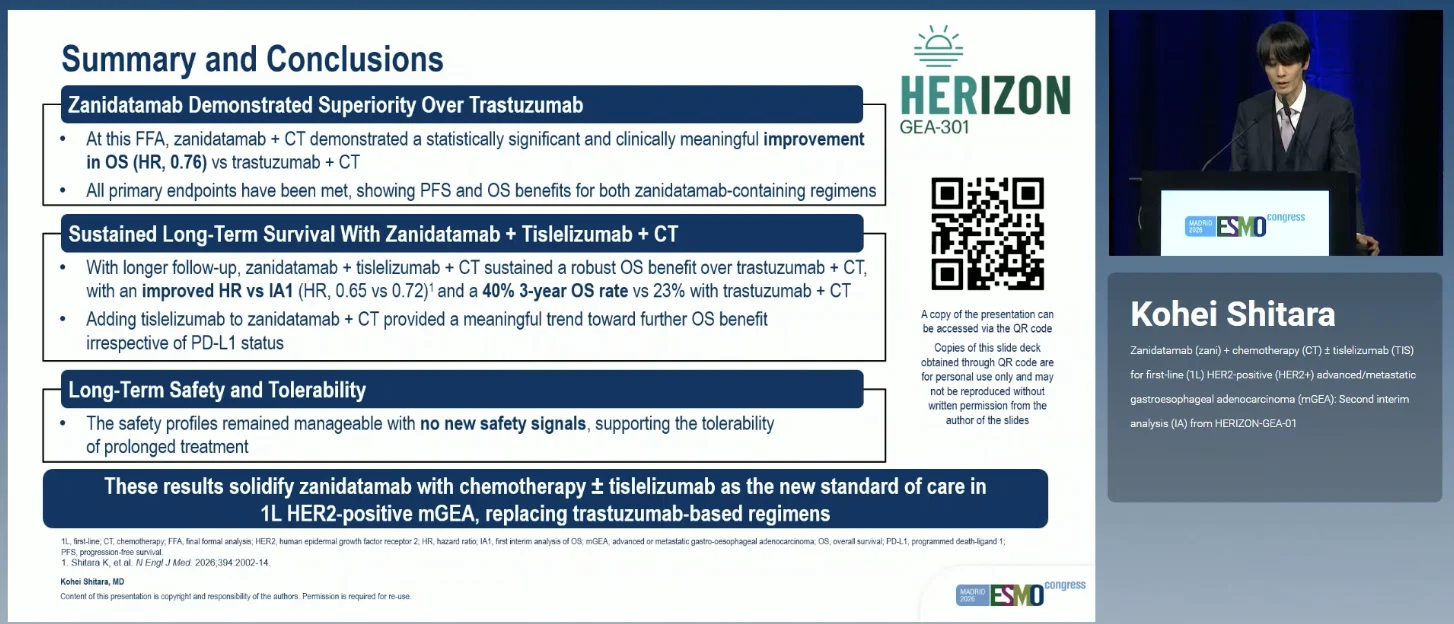
The second interim analysis of HERIZON-GEA-01 demonstrated a statistically significant OS improvement with zanidatamab plus chemotherapy compared with trastuzumab plus chemotherapy in first-line HER2-positive advanced or metastatic gastroesophageal adenocarcinoma.
With longer follow-up, zanidatamab plus chemotherapy and tislelizumab maintained its OS benefit over trastuzumab plus chemotherapy and showed a numerical OS improvement over zanidatamab plus chemotherapy alone, although the latter comparison was not statistically significant.
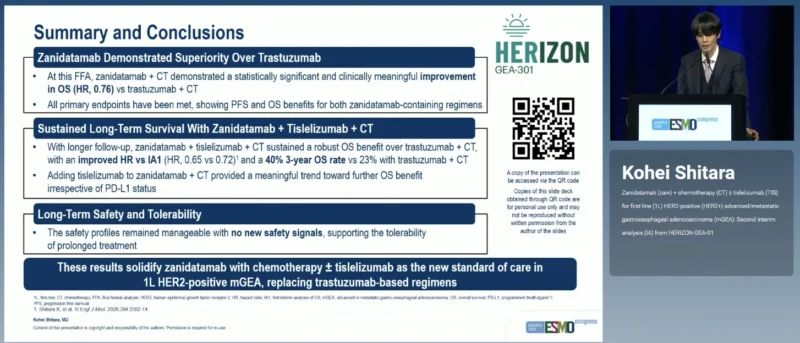
The investigators concluded that these findings, together with manageable safety profiles and no new safety signals, support zanidatamab plus chemotherapy, with or without tislelizumab, as a new HER2-directed first-line standard of care.