The U.S. Food and Drug Administration (FDA) has approved Tregzi (allogeneic regulatory T cell-based immunotherapy with hematopoietic stem and progenitor cells [HSPCs] and T cells-vldq, Orca Bio) for adults with hematologic malignancies undergoing matched donor hematopoietic stem cell transplantation (HSCT) following a myeloablative conditioning regimen.
This marks the first FDA-approved allogeneic regulatory T cell (Treg)-based cellular immunotherapy, representing a major advance in transplant immunology. Rather than relying solely on pharmacologic immunosuppression to control graft-versus-host disease (GVHD), Tregzi uses a precisely engineered donor graft enriched with regulatory T cells to promote immune tolerance while preserving hematopoietic reconstitution.
Why This Approval Matters
Allogeneic HSCT remains a potentially curative treatment for acute leukemias, myelodysplastic syndrome (MDS), and other hematologic malignancies. However, chronic graft-versus-host disease (cGVHD) remains one of its most serious long-term complications, contributing substantially to morbidity, impaired quality of life, prolonged immunosuppression, and non-relapse mortality.
Current GVHD prevention primarily relies on broad immunosuppressive drugs, which can increase infection risk and potentially compromise immune recovery.
Tregzi introduces an entirely different strategy by engineering the cellular composition of the graft itself, increasing regulatory T cells that naturally suppress harmful alloreactive immune responses while allowing effective immune reconstitution.
The Precision-T Trial
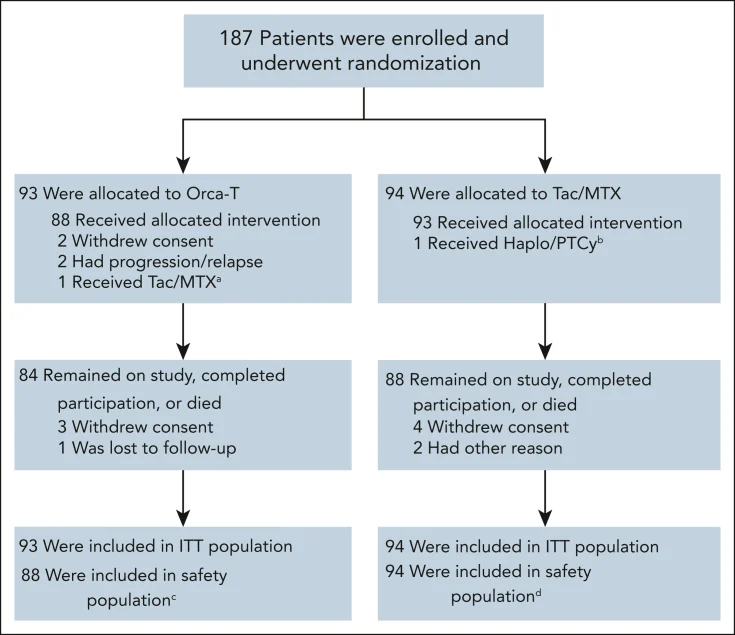
FDA approval was based on the phase III Precision-T trial (NCT05316701), a multicenter, randomized, open-label study involving 187 adults with acute leukemias or myelodysplastic syndrome undergoing matched donor HSCT.
Patients were randomized to receive:
- Tregzi followed by tacrolimus alone for GVHD prophylaxis (n=93)
- Standard unmanipulated donor graft followed by tacrolimus plus methotrexate (n=94)
Unlike conventional transplantation, Tregzi consists of a highly defined cellular product containing:
- Hematopoietic stem and progenitor cells (HSPCs)
- Purified regulatory T cells (Tregs)
- Conventional donor T cells (Tcons)
These components are administered sequentially to optimize immune reconstitution while reducing alloreactivity.
Chronic GVHD-Free Survival
The primary endpoint of the Precision-T trial was chronic graft-versus-host disease (cGVHD)-free survival, a clinically meaningful composite endpoint measuring the time from transplantation until either death from any cause or the development of moderate-to-severe chronic GVHD. The study demonstrated a substantial improvement with Tregzi compared with conventional transplantation.
Median cGVHD-free survival was not reached in the Tregzi arm, whereas patients receiving a standard unmanipulated donor graft had a median cGVHD-free survival of 7.3 months. This translated into a 74% reduction in the risk of death or moderate-to-severe chronic GVHD (HR 0.26), highlighting the ability of regulatory T cell–enriched grafts to significantly improve long-term transplant outcomes.
Marked Reduction in Chronic GVHD
One of the most impressive findings of the study was the dramatic reduction in chronic GVHD. At 12 months after transplantation, only 12.6% of patients treated with Tregzi developed moderate-to-severe chronic GVHD, compared with 44.0% of patients receiving standard transplantation. This corresponded to an 81% relative reduction in the risk of clinically significant chronic GVHD (HR 0.19).
These results suggest that enriching the graft with regulatory T cells can promote immune tolerance while maintaining the beneficial effects of allogeneic transplantation, potentially reducing one of its most debilitating long-term complications.
Successful Hematopoietic Engraftment
Importantly, the improved control of chronic GVHD did not come at the expense of successful donor engraftment. Hematopoietic recovery remained rapid and robust in patients receiving Tregzi.
All treated patients (100%) achieved neutrophil engraftment within 28 days after transplantation, and 60.2%demonstrated sustained neutrophil recovery, defined as maintaining neutrophil counts above 500/mm³ for three consecutive days within the same period. These findings indicate that incorporating regulatory T cells into the graft preserves effective hematopoietic reconstitution while substantially reducing the incidence of chronic GVHD.
Safety Profile
The most frequently reported adverse events included:
- Mucositis
- Diarrhea
- Rash
- Viral infections
- Bacterial infections
- Fungal infections
- Nausea and vomiting
- Abdominal pain
- Hemorrhage
- Acute GVHD
- Edema
The prescribing information also highlights important risks requiring close monitoring, including:
- Graft failure
- Acute and chronic GVHD
- Infusion reactions
- Secondary malignancies
- Donor-derived malignancies
- Transmission of infectious agents
Overall, the safety profile was considered consistent with expectations for allogeneic stem cell transplantation.
How Tregzi Is Administered
Tregzi is administered as three sequential cellular components:
Day 0
- Hematopoietic stem and progenitor cells (HSPCs)
- Regulatory T cells (Tregs)
Day +2 to Day +3
- Conventional donor T cells (Tcons)
This staged cellular infusion is designed to establish immune tolerance before introducing conventional donor T cells, thereby reducing the likelihood of harmful alloreactivity.
A New Era of Cell Therapy Beyond CAR T Cells
While cellular immunotherapy has largely been defined by CAR T-cell therapy over the past decade, Tregzi represents a different evolution in immune engineering.
Instead of redirecting immune cells to attack cancer, it reprograms immune balance by enhancing regulatory immune mechanisms that promote tolerance after transplantation.
This approval demonstrates that cell engineering can be used not only to enhance antitumor immunity but also to precisely control immune-mediated toxicity.
Key Takeaways
- FDA has approved Tregzi, the first allogeneic regulatory T cell-based immunotherapy for adults undergoing matched donor HSCT for hematologic malignancies.
- In the Precision-T phase III trial, Tregzi significantly improved chronic GVHD-free survival, reducing the risk of death or moderate-to-severe chronic GVHD by 74%.
- Moderate-to-severe chronic GVHD occurred in 12.6% of patients receiving Tregzi versus 44.0% with standard transplantation.
- All treated patients achieved neutrophil engraftment within 28 days, demonstrating preserved hematopoietic recovery.
- This approval introduces a new paradigm in transplant immunology, using engineered regulatory T cells to promote immune tolerance rather than relying solely on pharmacologic immunosuppression.