Key takeaways
- Platinum-based chemotherapy uses cisplatin, carboplatin, or oxaliplatin to damage cancer cell DNA and prevent tumor growth.
- Multiple cancer types are treated with platinum drugs, including ovarian, lung, colorectal, testicular, and bladder cancers.
- Treatment effectiveness varies, with platinum chemotherapy offering curative potential in some cancers and improved disease control in others.
- Side effects differ by drug: Cisplatin is associated with kidney and hearing damage, carboplatin with bone marrow suppression, and oxaliplatin with neuropathy.
- - Platinum resistance can develop when cancer cells become less responsive to treatment, sometimes requiring alternative therapies.
Platinum-based chemotherapy has been used in cancer treatment for decades and remains an important part of care for several common cancers. Cisplatin, carboplatin, and oxaliplatin are the three main drugs in this group. Each has a different role, from treating testicular and ovarian cancers to forming part of standard chemotherapy regimens for lung and colorectal cancer.
For some patients, platinum chemotherapy offers a chance of cure. For others, it can help shrink tumors, reduce the risk of recurrence, or keep advanced cancer under control. The benefits depend on the type and stage of cancer, the drugs used alongside it, and how well the patient tolerates treatment.
What Is Platinum-Based Chemotherapy?
Platinum-based chemotherapy is a type of cancer treatment that uses platinum-containing drugs to damage the DNA of cancer cells, making it harder for them to grow and divide. It belongs to a group of medicines known as cytotoxic chemotherapy, which work by damaging or killing cells.
When platinum drugs enter cancer cells, they form chemical bonds with DNA. These bonds interfere with DNA replication and transcription, processes that cells need to divide and function normally. If the damage cannot be repaired, the cancer cell may undergo programmed cell death, known as apoptosis.
Platinum drugs are often described as alkylating-like agents because they bind to DNA, although their chemical activity differs from that of traditional alkylating drugs (Wang and Lippard, 2005).
Because these medications can also affect healthy tissues, particularly the bone marrow, kidneys, and nerves, treatment may cause side effects. The risks vary between the three main platinum drugs and influence which one is selected.
Platinum chemotherapy can be used before or after surgery, alongside radiation therapy, or as part of treatment for advanced cancer (Kelland, 2007).
What Are the Main Platinum Chemotherapy Drugs?
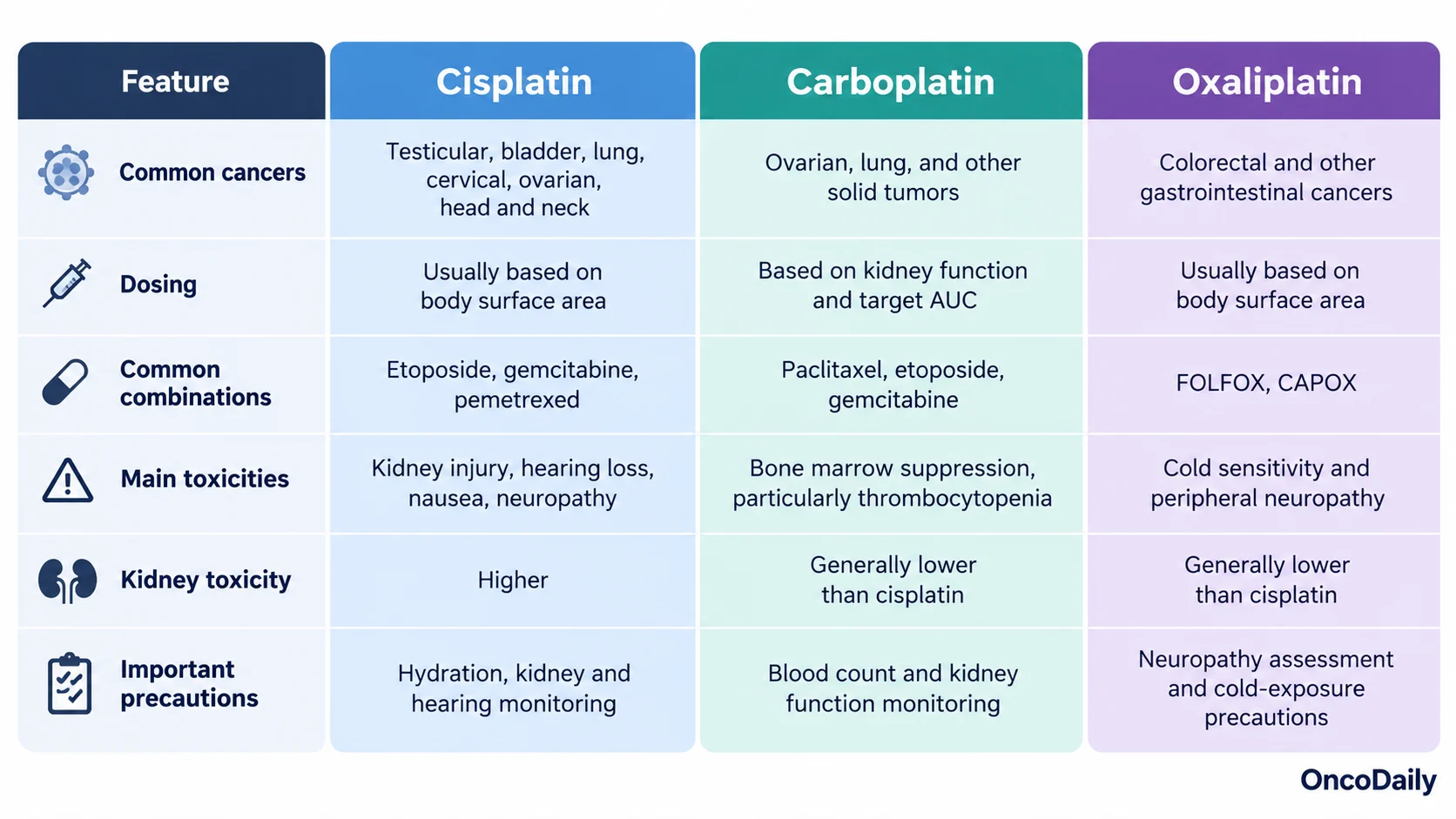
The three main platinum chemotherapy drugs are cisplatin, carboplatin, and oxaliplatin. All three work by damaging cancer cell DNA, but they differ in their clinical uses, dosing methods, and side effects. The choice of drug depends on the cancer type, treatment goals, kidney function, and overall patient health.
Cisplatin
Cisplatin is one of the oldest and most effective platinum chemotherapy drugs, widely used in the treatment of testicular, bladder, ovarian, lung, cervical, and head and neck cancers. It can be administered alone or combined with other chemotherapy drugs, depending on the cancer type and stage.
One of cisplatin’s most important applications is in testicular cancer, where cisplatin-based combination chemotherapy has significantly improved survival outcomes (Kelland, 2007).
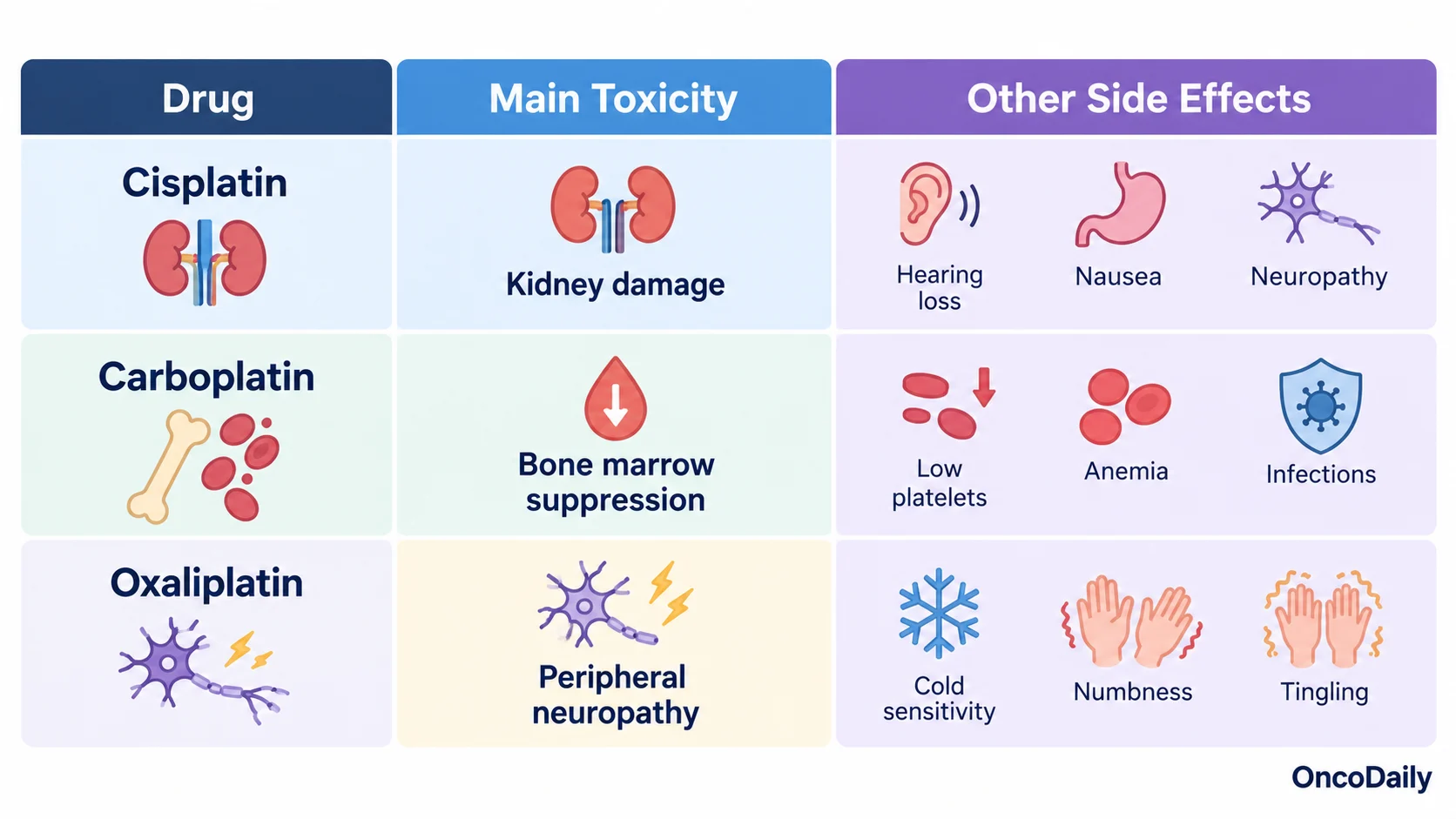
However, cisplatin is associated with several important side effects, particularly kidney damage (nephrotoxicity), hearing loss (ototoxicity), nausea, and peripheral neuropathy. Kidney injury is a major dose-limiting toxicity, which is why patients typically receive intravenous hydration before and after treatment. Kidney function and electrolyte levels, particularly magnesium, are also monitored regularly.
Cisplatin can additionally cause tinnitus and hearing loss, which may become permanent in some patients. Hearing assessments may be recommended, particularly for patients at increased risk (Cisplatin, StatPearls).
Carboplatin
Carboplatin is a platinum chemotherapy drug commonly used to treat ovarian and lung cancers, as well as several other solid tumors. It has a similar mechanism of action to cisplatin but generally causes less kidney toxicity, hearing damage, and severe nausea.
Carboplatin is frequently combined with other chemotherapy drugs, particularly paclitaxel in ovarian cancer and paclitaxel or etoposide in selected lung cancer regimens.
Unlike cisplatin, carboplatin is commonly dosed using the Calvert formula, which considers kidney function and the target area under the concentration-time curve (AUC), a measurement of drug exposure.
Carboplatin dose (mg) = Target AUC × (GFR + 25)
The target AUC varies according to the treatment regimen, previous chemotherapy exposure, and individual patient factors.
Carboplatin’s main dose-limiting side effect is bone marrow suppression (myelosuppression), which can reduce white blood cells, red blood cells, and platelets. Thrombocytopenia, or a low platelet count, is particularly important because it can increase bleeding risk. Blood counts are monitored throughout treatment, and doses may be adjusted when necessary (Carboplatin, DailyMed).
Oxaliplatin
Oxaliplatin is a platinum chemotherapy drug primarily used to treat colorectal and other gastrointestinal cancers.It is an important component of several combination chemotherapy regimens used after surgery or in advanced disease.
Two of the most common oxaliplatin-containing regimens are:
- FOLFOX: Oxaliplatin combined with fluorouracil (5-FU) and leucovorin.
- CAPOX (XELOX): Oxaliplatin combined with capecitabine, an oral chemotherapy drug that is converted into 5-FU inside the body.
Oxaliplatin is particularly associated with peripheral neuropathy, which affects the nerves responsible for sensation. Unlike cisplatin, which is more strongly associated with kidney and hearing toxicity, oxaliplatin frequently causes tingling, numbness, and abnormal sensations in the hands, feet, or around the mouth.
A characteristic side effect is cold-triggered neuropathy, where exposure to cold drinks, objects, or air can produce sudden tingling or uncomfortable sensations. These symptoms often occur shortly after treatment.
With repeated chemotherapy cycles, some patients develop cumulative neuropathy that can persist for months or longer after treatment ends. Dose reduction or discontinuation may be necessary if symptoms become severe (Oxaliplatin, StatPearls).
Which Drugs Are Not Platinum-Based?
Not all chemotherapy drugs contain platinum. Paclitaxel (Taxol), docetaxel, gemcitabine, pemetrexed, and topotecan are non-platinum chemotherapy drugs that work through mechanisms different from platinum-induced DNA crosslinking.
Although these medications are frequently combined with cisplatin or carboplatin, they belong to different drug classes:
- Paclitaxel (Taxol) and docetaxel: Taxanes that interfere with microtubules, preventing cancer cells from dividing normally.
- Gemcitabine: An antimetabolite that interferes with DNA synthesis, preventing cancer cells from multiplying.
- Pemetrexed: An antifolate chemotherapy drug that blocks enzymes needed for DNA synthesis.
- Topotecan: A topoisomerase I inhibitor that interferes with DNA replication and causes DNA damage.
These medications are conventional cytotoxic chemotherapy drugs, but they do not contain platinum.
Bevacizumab (Avastin) and cetuximab are different again. They are targeted monoclonal antibodies, rather than conventional chemotherapy. Bevacizumab blocks VEGF, a protein involved in blood vessel formation, while cetuximab targets EGFR, a receptor involved in cell growth.
Targeted therapies act on specific biological pathways, although they can still cause significant side effects. Some require biomarker testing to identify patients most likely to benefit (NCI, Targeted Therapy).
Combining different drug classes is common in oncology. For example, carboplatin plus paclitaxel is considered a platinum-containing chemotherapy regimen, even though paclitaxel itself is not platinum-based.

Which Cancers Are Treated With Platinum Chemotherapy, and How Is It Given?
Platinum chemotherapy has a role in many solid tumors, but the preferred drug and combination differ considerably between cancers. Treatment may aim to cure the disease, lower recurrence risk, or control cancer that has spread.
Ovarian Cancer
Carboplatin combined with paclitaxel is one of the standard first-line treatments for epithelial ovarian cancer. It may be given before or after surgery, depending on the extent of disease and the treatment plan.
Some patients also receive bevacizumab, while maintenance treatment may include PARP inhibitors or other therapies selected according to clinical and molecular characteristics.
If ovarian cancer returns, another platinum-containing regimen may be appropriate, particularly when the disease previously responded well to treatment.
Lung Cancer
Both cisplatin and carboplatin are used in non-small-cell lung cancer (NSCLC) and small-cell lung cancer (SCLC).
For NSCLC, platinum drugs are often paired with pemetrexed, paclitaxel, or gemcitabine. The combination depends partly on whether the tumor is squamous or nonsquamous and whether actionable molecular alterations are present.
In SCLC, cisplatin or carboplatin is commonly combined with etoposide. Immunotherapy is also part of treatment for many patients with extensive-stage disease.
Platinum chemotherapy may be combined with pembrolizumab or other immunotherapies in appropriate NSCLC settings (NCI, NSCLC Treatment).
Colorectal and Gastrointestinal Cancers
Oxaliplatin is the platinum drug most closely associated with colorectal cancer treatment.
It is included in FOLFOX and CAPOX, which are commonly used after surgery for stage III colon cancer and in selected patients with metastatic colorectal cancer.
Oxaliplatin also forms part of treatment for other gastrointestinal cancers. One example is FOLFIRINOX, a combination of oxaliplatin, irinotecan, fluorouracil, and leucovorin used in selected patients with pancreatic cancer.
Testicular, Bladder, and Cervical Cancers
Cisplatin has a particularly important role in testicular germ-cell tumors. Regimens such as BEP, which combines bleomycin, etoposide, and cisplatin, have dramatically improved treatment outcomes.
For bladder cancer, gemcitabine plus cisplatin is used in selected patients with muscle-invasive or metastatic disease.
In locally advanced cervical cancer, cisplatin is commonly administered alongside radiation therapy. Platinum-containing combinations are also used in certain recurrent or metastatic cases (NCI, Cervical Cancer Treatment).
Head and Neck, Breast, and Pancreatic Cancers
For locally advanced head and neck cancers, cisplatin is frequently given together with radiation therapy.
In breast cancer, carboplatin is particularly relevant for selected patients with triple-negative disease, where it may be included in neoadjuvant treatment, sometimes alongside immunotherapy.
Oxaliplatin-containing FOLFIRINOX is another important option for selected patients with pancreatic cancer.
How Is Platinum Chemotherapy Given?
Most platinum chemotherapy is administered through an intravenous (IV) infusion, either through a peripheral vein or a central venous access device.
Treatment is usually divided into cycles, often repeated every two or three weeks. The interval gives healthy tissues time to recover before the next dose, although the schedule depends on the regimen.
Supportive care is an important part of treatment. Cisplatin generally requires hydration to protect the kidneys, while anti-nausea medications are routinely given with platinum-containing regimens.
Platinum chemotherapy may be used before surgery (neoadjuvant), after surgery (adjuvant), alongside radiation therapy, or to manage metastatic disease.
Blood counts, kidney function, and side effects are monitored throughout treatment. Doses may be reduced or delayed if significant toxicity develops (eviQ, Carboplatin Calculator).
What Are the Side Effects of Platinum Chemotherapy?
Platinum-based chemotherapy can cause side effects by affecting healthy cells and tissues, particularly the bone marrow, kidneys, nerves, and digestive system. The severity depends on the specific drug, dose, and individual patient factors.
Common side effects include:
- Nausea and vomiting: Particularly common with cisplatin.
- Fatigue and weakness: Often related to treatment or anemia.
- Low blood cell counts: Increased risk of infection, anemia, and bleeding.
- Appetite and taste changes: May contribute to weight loss.
- Digestive problems: Diarrhea, constipation, and mouth sores.
- Hair loss: More common when combined with drugs such as paclitaxel.
- Allergic reactions: Rash, itching, or breathing difficulties, particularly after repeated exposure (Makrilia et al., 2010).
Long-Term Side Effects
Some side effects may persist after treatment, including peripheral neuropathy, hearing loss, and reduced kidney function. Platinum chemotherapy can also affect fertility, particularly with cisplatin-containing regimens.
Rare complications include secondary malignancies. Regular monitoring and dose adjustments help reduce the risk of serious long-term effects.
How Effective Is Platinum-Based Chemotherapy?
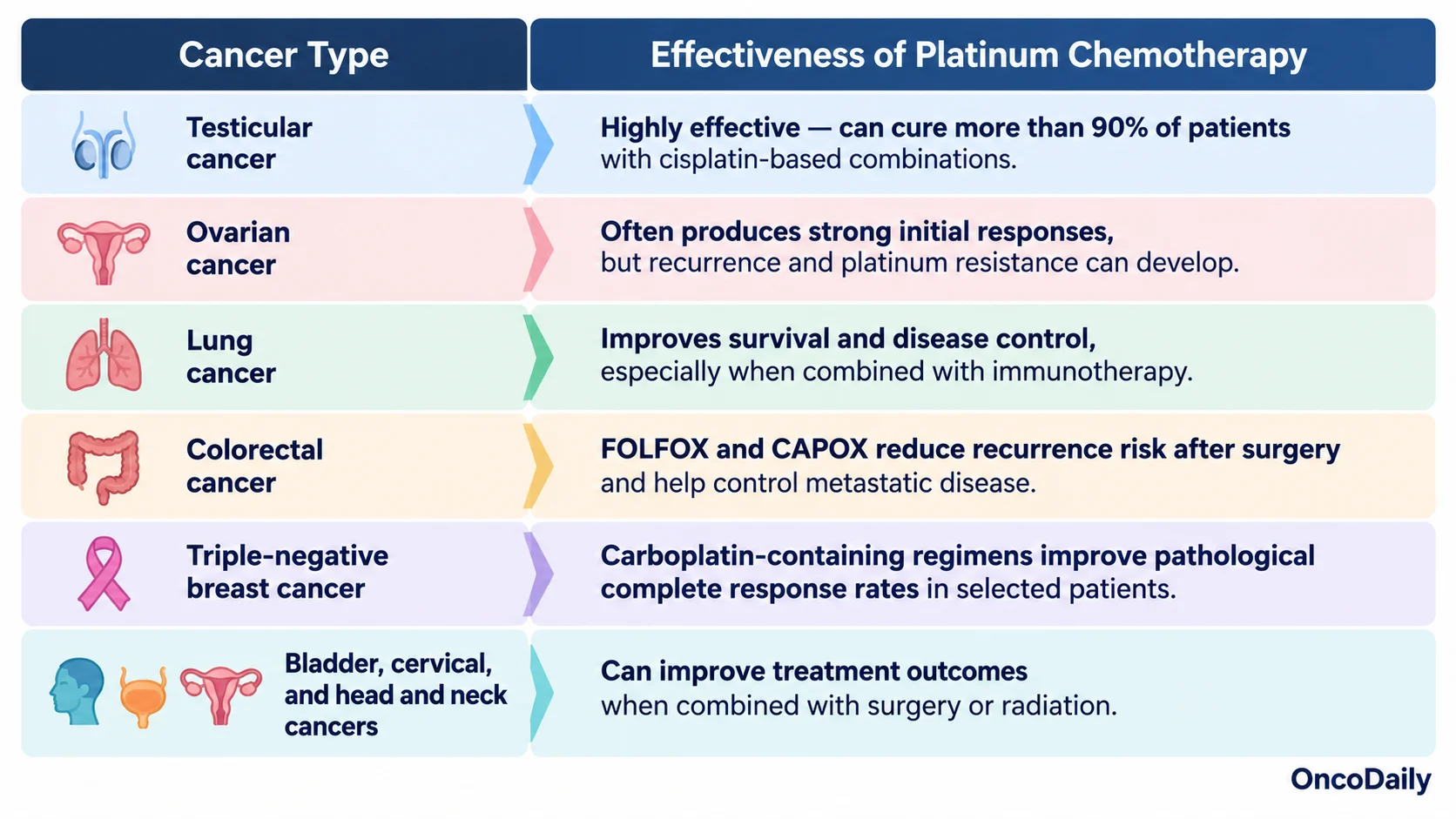
The effectiveness of platinum chemotherapy differs widely between cancers. In some diseases, it is an essential part of curative treatment. In others, its main role is to shrink tumors, delay progression, or improve survival.
Testicular cancer is one of the clearest examples of successful platinum-based treatment, with cisplatin-containing combinations contributing to high cure rates.
Ovarian cancers also frequently respond well to initial platinum treatment, although recurrence remains common in advanced disease.
For lung cancer, platinum doublets are often used with immunotherapy to improve outcomes. In colorectal cancer, FOLFOX and CAPOX reduce recurrence risk after surgery in stage III disease and help control metastatic cancer.
Carboplatin-containing regimens can also increase pathological complete response rates in selected patients with triple-negative breast cancer (NCI, Cisplatin Discovery).
What Affects Platinum Chemotherapy Effectiveness?
A good response depends on more than the chemotherapy drug itself.
Cancer stage, tumor genetics, previous treatments, and the patient’s overall health all matter. Tumors with certain defects in DNA repair, including some BRCA1/2 alterations, may be particularly sensitive to platinum-induced damage.
The drugs used alongside platinum chemotherapy can also influence outcomes. Depending on the disease, adding other chemotherapy agents, immunotherapy, or targeted treatment may improve results.
There is no single success rate for platinum-based chemotherapy. A regimen that is highly effective for one cancer may provide a more limited benefit for another, even when the same platinum drug is used.
What Is Platinum Resistance?
Platinum resistance occurs when cancer cells do not respond to platinum-based chemotherapy or become less sensitive to treatment over time. This can reduce the effectiveness of cisplatin, carboplatin, or oxaliplatin and may require a change in treatment.
There are two main types of platinum resistance:
- Primary resistance: Cancer does not respond adequately to platinum chemotherapy from the beginning.
- Acquired resistance: Cancer initially responds to treatment but later becomes resistant, allowing tumors to grow or recur.
Resistance can develop through several mechanisms, including increased DNA repair, reduced platinum accumulation inside cancer cells, drug inactivation, and changes in pathways controlling cell death (Galluzzi et al., 2012).
Platinum-Sensitive vs Platinum-Resistant Ovarian Cancern ovarian cancer, platinum sensitivity has historically been classified according to the time between the last platinum chemotherapy dose and disease recurrence.
- Platinum-sensitive: Cancer recurs six months or more after completing platinum chemotherapy.
- Platinum-resistant: Cancer recurs within six months after the last platinum treatment.
- Platinum-refractory: Cancer progresses during platinum chemotherapy or fails to respond to treatment.
These definitions remain useful, but the six-month cutoff is not an absolute rule. Treatment decisions increasingly consider the patient’s previous response, disease characteristics, treatment history, and available options.
A patient whose ovarian cancer previously responded well to platinum chemotherapy may be considered for another platinum-based regimen. When the cancer is unlikely to benefit from further platinum exposure, other treatment approaches may be more appropriate.
Platinum-based chemotherapy continues to play an important role in cancer treatment, from potentially curative regimens to the management of advanced disease. Cisplatin, carboplatin, and oxaliplatin each have different strengths and risks, making the choice of drug an important part of treatment planning.
For patients, understanding the purpose of treatment, possible side effects, and how response is monitored can make the process easier to navigate. The most appropriate regimen depends on the cancer itself, previous treatment, and the patient’s overall health.
FAQ
What Are the Most Common Platinum Chemotherapy Drugs?
The three main platinum chemotherapy drugs are cisplatin, carboplatin, and oxaliplatin. They are used to treat different cancers and have distinct side-effect profiles.
Is Platinum-Based Chemotherapy Stronger Than Regular Chemotherapy?
Platinum chemotherapy is not necessarily stronger than other chemotherapy drugs. Its effectiveness depends on the cancer type, stage, and treatment regimen.
How Long Does Platinum-Based Chemotherapy Last?
Platinum chemotherapy is usually given in cycles, often every two or three weeks. Treatment may last several months, depending on the cancer type, treatment response, and overall treatment plan.
Can Platinum Chemotherapy Cure Cancer?
Yes, platinum chemotherapy can cure certain cancers, particularly testicular cancer. In other cancers, it can shrink tumors, reduce recurrence risk, or prolong survival.
What Happens if Platinum Chemotherapy Stops Working?
If cancer becomes resistant to platinum chemotherapy, oncologists may recommend alternative chemotherapy drugs, targeted therapies, immunotherapy, or clinical trials, depending on the cancer type and available treatment options.