





Cisplatin: A Key Platinum Chemotherapy Across Multiple Cancers
Key takeaways
- Cisplatin is an intravenous platinum-based cytotoxic chemotherapy used in the treatment of several solid tumors.
- It damages cancer-cell DNA by producing DNA cross-links, ultimately interfering with replication and promoting cell death.
- FDA-labeled indications include advanced testicular, ovarian, and bladder cancers.
- Cisplatin is also incorporated into treatment strategies for numerous other solid tumors.
- Nephrotoxicity, severe nausea and vomiting, ototoxicity, and peripheral neuropathy are among its most clinically important adverse effects.
- Hydration, antiemetic prophylaxis, laboratory monitoring, and careful treatment modification are central to safe clinical use.
Cisplatin is an intravenous platinum-based cytotoxic chemotherapy used in the treatment of several solid tumors. Its FDA-labeled indications include advanced testicular, ovarian, and bladder cancers, while cisplatin-containing regimens are also widely incorporated into treatment strategies for lung, head and neck, cervical, and other cancers.
This article aims to review cisplatin, including its mechanism of action, clinical dosing approach, administration, supportive care, dose modification, pharmacology, clinical uses, safety profile, and current role in oncology.
Cisplatin Key Facts
- Drug class: Platinum-based cytotoxic chemotherapy
- Other name: CDDP
- Administration: Intravenous
- FDA status: Approved
- FDA-labeled cancers: Advanced testicular, ovarian, and bladder cancer
- Mechanism: Formation of DNA cross-links that interfere with replication and transcription
- Major toxicities: Nephrotoxicity, severe nausea and vomiting, myelosuppression, ototoxicity, and peripheral neuropathy
- Key supportive requirement: Adequate hydration and antiemetic prophylaxis
- Clinical role: Curative or disease-controlling component of numerous combination chemotherapy and chemoradiotherapy regimens
Cisplatin has been used clinically for decades and remains an important platinum compound despite its substantial toxicity profile.
What Is Cisplatin?
Cisplatin is an inorganic platinum-containing chemotherapy agent that damages DNA and prevents cancer cells from successfully replicating.
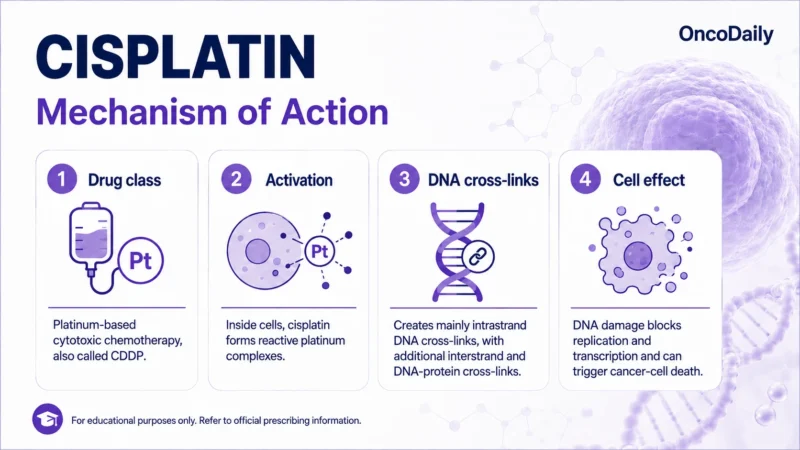
After entering cells, cisplatin forms reactive platinum complexes that bind to DNA. This produces predominantly intrastrand DNA cross-links, as well as interstrand and DNA-protein cross-links. The resulting structural damage interferes with DNA replication and transcription and can ultimately trigger apoptosis.
Cisplatin is considered an alkylating-like agent, although its chemical structure and mechanism differ from traditional alkylating drugs.
What Is the Dose of Cisplatin?
Cisplatin dosing is body-surface-area based and highly regimen dependent.
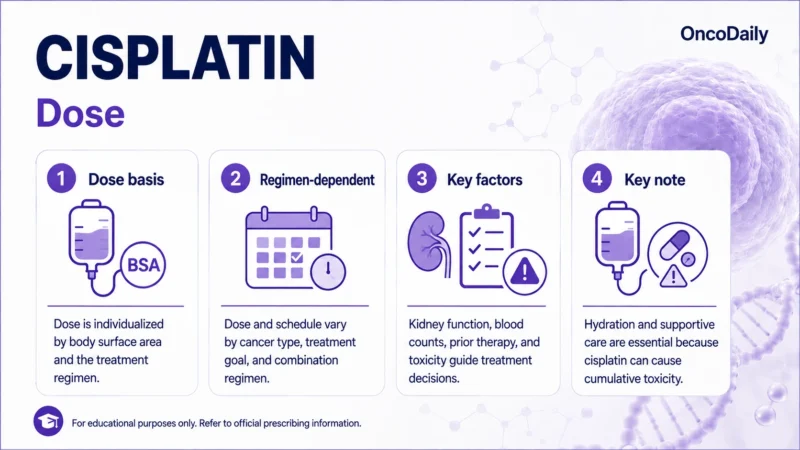
The treatment schedule differs substantially according to:
- Cancer type
- Curative versus palliative intent
- Combination chemotherapy regimen
- Concurrent radiotherapy
- Kidney function
- Previous platinum exposure
- Bone-marrow reserve
- Treatment-related toxicity
The FDA prescribing information contains different dosing schedules for advanced testicular, ovarian, and bladder cancers. Because cisplatin has potentially serious renal, neurologic, hematologic, and gastrointestinal toxicity, dosing and modifications must be determined by an oncology team using the applicable protocol.
How Is Cisplatin Administered?
Cisplatin is administered intravenously in a monitored oncology setting.
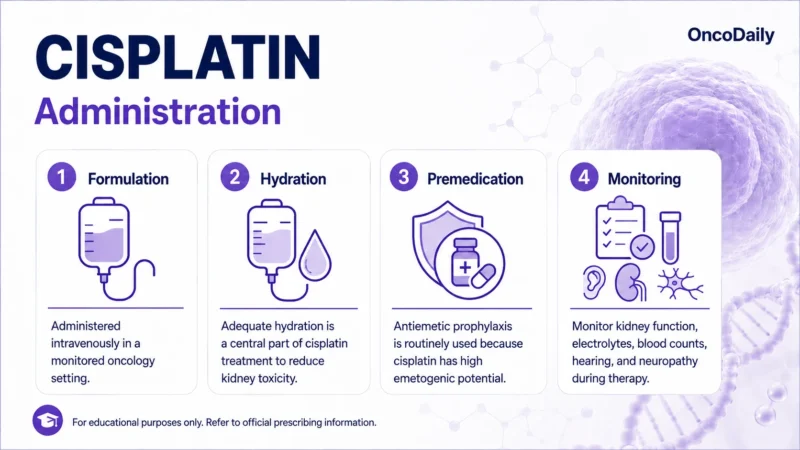
Administration requires particular attention to renal protection and fluid balance. Adequate hydration is an established component of cisplatin treatment because nephrotoxicity is one of its major dose-limiting adverse effects.
Renal function, electrolytes, blood counts, and other relevant laboratory parameters are assessed during treatment.
Does Cisplatin Require an In-Line Filter?
Cisplatin administration requirements depend on the specific formulation and institutional protocol.
One particularly important preparation consideration is that cisplatin should not come into contact with aluminum-containing equipment, because aluminum can react with cisplatin and affect the product. The applicable manufacturer prescribing information and institutional chemotherapy procedures should therefore be followed for preparation and administration.
Is Premedication Required?
Cisplatin has high emetogenic potential, meaning it can cause substantial nausea and vomiting without preventive treatment.
Antiemetic prophylaxis is therefore routinely incorporated into cisplatin-containing chemotherapy regimens. Hydration is also an important supportive component of treatment.
The exact supportive regimen depends on cisplatin exposure, accompanying anticancer therapies, institutional guidelines, and individual risk factors.
Are Dose Reductions Used?
Yes. Cisplatin treatment may require delay, modification, substitution, or discontinuation when clinically important toxicity develops.
Important factors include:
- Reduced kidney function
- Severe or persistent electrolyte abnormalities
- Myelosuppression
- Peripheral neuropathy
- Hearing impairment
- Severe gastrointestinal toxicity
- Other clinically significant treatment-related adverse effects
Because nephrotoxicity can be cumulative, renal function is particularly important when determining whether additional cisplatin treatment is appropriate.
What Is Known About Cisplatin Pharmacology?
Cisplatin undergoes nonenzymatic chemical transformation after administration and forms reactive platinum species capable of binding DNA and other cellular molecules.
Platinum becomes extensively protein-bound, and renal elimination is clinically important. This contributes to the close relationship between kidney function and cisplatin safety.
Its cytotoxic activity is not restricted to one particular stage of the cell cycle.
Are Renal or Hepatic Dose Adjustments Required?
Renal function is a major determinant of cisplatin eligibility and treatment safety.
Cisplatin can cause significant cumulative nephrotoxicity, so kidney function and electrolytes require assessment during therapy. Depending on the degree of impairment and the applicable treatment protocol, clinicians may delay treatment, modify therapy, or consider a different platinum agent.
Hepatic impairment generally has less influence on cisplatin disposition than renal impairment, but overall organ function and treatment tolerance remain important when selecting therapy.
What Are the Clinical Uses of Cisplatin?
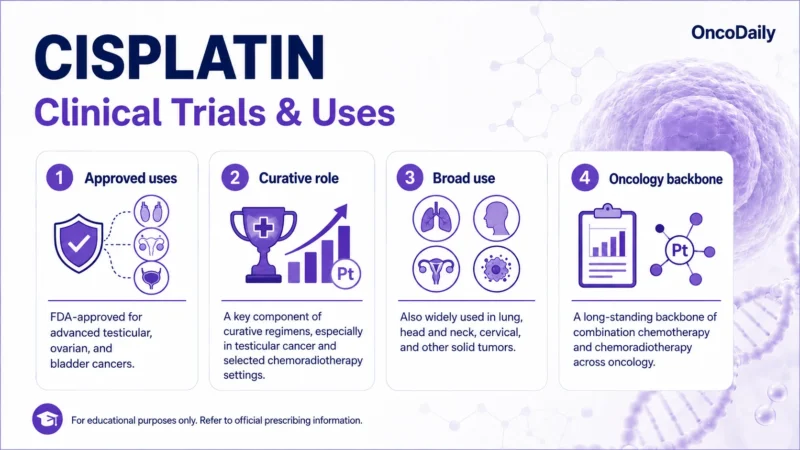
The FDA label specifically identifies cisplatin for:
Advanced Testicular Cancer
Cisplatin is an important component of combination chemotherapy for advanced testicular germ-cell tumors and has contributed substantially to the high cure rates achievable in this disease.
The P3BEP trial, NCT02582697 evaluates accelerated versus standard BEP, a cisplatin-containing first-line regimen for intermediate- and poor-risk metastatic germ-cell tumors.
Advanced Ovarian Cancer
Cisplatin is FDA-approved for advanced ovarian cancer and historically played a central role in platinum-based ovarian-cancer treatment.
Advanced Bladder Cancer
Cisplatin is also FDA-approved for advanced bladder cancer and remains an important platinum component of systemic treatment strategies for patients who can tolerate cisplatin-based therapy.
The NCT03732677 trial evaluated perioperative durvalumab with gemcitabine and cisplatin in patients with muscle-invasive bladder cancer.
Other Cancer Types
Beyond its labeled indications, cisplatin-containing regimens have become important across numerous malignancies, including lung, head and neck, cervical, esophageal, mesothelioma, and other solid tumors, often in combination with additional systemic agents or radiotherapy.
The Phase 3 NCT02466971 trial evaluated radiation therapy and cisplatin with or without triapine in locally advanced cervical or vaginal cancer.
Read more: weekly versus tri-weekly cisplatin in locally advanced cervical cancer on OncoDaily.
Watch more: Learn about the transformative role of cisplatin-based chemotherapy in testicular cancer in this discussion with Darren Feldman, MD.
What Are the Side Effects of Cisplatin?
Major adverse effects include:
- Nephrotoxicity
- Nausea and vomiting
- Ototoxicity
- Peripheral neuropathy
- Myelosuppression
- Electrolyte disturbances
- Hypersensitivity reactions
Kidney toxicity is one of cisplatin’s most important treatment limitations and may become more pronounced with cumulative exposure. Hearing damage and peripheral neuropathy can also be cumulative.
What Is the Current Status of Cisplatin?
Cisplatin remains FDA-approved and continues to be an important chemotherapy backbone in modern oncology.
Its labeled indications include advanced testicular, ovarian, and bladder cancers, while cisplatin-containing combinations are used much more broadly across oncology. NCI continues to list cisplatin as an FDA-approved platinum chemotherapy.
Despite the availability of newer systemic therapies, cisplatin remains especially important where platinum chemotherapy is associated with curative treatment or is incorporated into definitive chemoradiotherapy.
Written by Mirna Antabian, MD