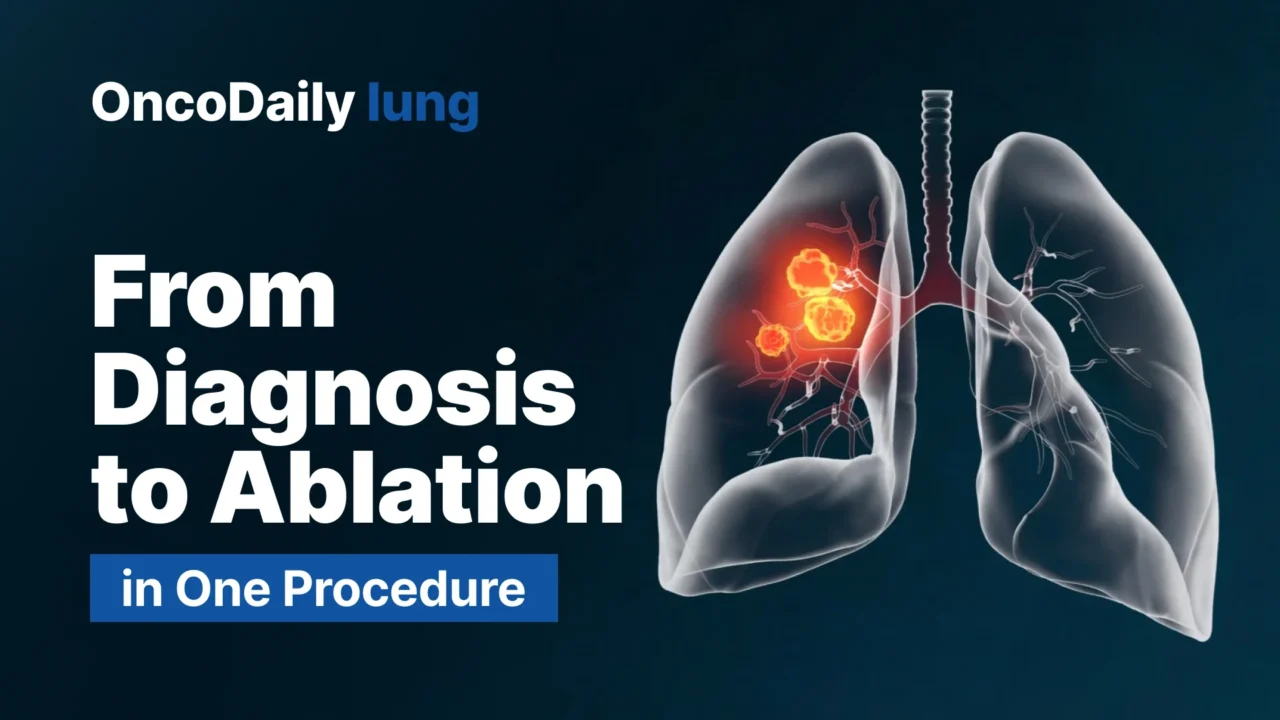
The field of lung cancer diagnosis and treatment is rapidly evolving, driven by technological innovation and a growing emphasis on minimally invasive, high-precision interventions. Two recent milestones, reported from leading clinical and academic centers, highlight how the integration of advanced bronchoscopic platforms and next-generation ablation technologies is beginning to redefine what is possible in thoracic oncology.
The first comes from Elliot Hospital, where a multidisciplinary team successfully completed 100 consecutive lung procedures without complications, utilizing a combination of robotic bronchoscopy, radial endobronchial ultrasound (EBUS), and pulsed electric field (PEF) ablation. The second represents a world-first clinical application of G20 pulsed electric field ablation, achieved through collaboration between The Chinese University of Hong Kong and Galvanize Therapeutics.
Together, these two developments stand among the most significant recent advances in endobronchial oncology, signaling a paradigm shift toward safer, more efficient, and highly targeted lung cancer care.
From Screening to Same-Day Diagnosis and Treatment
Lung cancer remains the leading cause of cancer-related mortality worldwide, largely due to late-stage diagnosis (Sung et al., 2021). However, the increasing implementation of low-dose CT screening has enabled earlier detection of suspicious pulmonary nodules, creating new opportunities for curative intervention (Aberle et al., 2011).
Traditionally, the pathway from detection to treatment has been fragmented. Patients often undergo separate procedures for biopsy, staging, and therapy, leading to delays and increased healthcare burden.
The integration of advanced bronchoscopic technologies is now transforming this model. In the emerging paradigm, clinicians can navigate to peripheral lesions, confirm their location, obtain tissue diagnosis, and initiate treatment, all within a single outpatient session.
This approach not only streamlines care but also reduces patient anxiety and accelerates time to treatment, both of which are critical in oncology.
Robotic Bronchoscopy: Expanding Reach and Precision
A key enabler of this transformation is robotic-assisted bronchoscopy, particularly platforms such as ION Endoluminal System.
Conventional bronchoscopic techniques have historically been limited in their ability to access small or peripherally located lung nodules. Robotic systems overcome these limitations by providing enhanced navigation, stability, and control, allowing clinicians to reach lesions that were previously difficult or impossible to access.
Clinical studies have demonstrated improved diagnostic yield and safety with robotic bronchoscopy compared to traditional approaches (Fielding et al., 2019). When combined with advanced imaging modalities, it forms the backbone of a new generation of minimally invasive lung interventions.
Radial EBUS: Real-Time Confirmation
The use of Radial EBUS further enhances procedural accuracy. By providing real-time ultrasound imaging of the lesion, radial EBUS allows clinicians to confirm precise positioning before biopsy or treatment.
This step is essential in ensuring diagnostic accuracy and minimizing sampling error, particularly in small or heterogeneous tumors. The combination of robotic navigation and EBUS imaging represents a powerful synergy, enabling highly targeted interventions.
Pulsed Electric Field Ablation: A Non-Thermal Revolution
Perhaps the most transformative component of this integrated approach is pulsed electric field ablation. Delivered using systems such as Aliya PEF System, this technology introduces a fundamentally different mechanism of tumor destruction.
PEF ablation is based on Irreversible Electroporation, where high-voltage electrical pulses disrupt cell membranes, leading to apoptosis without the use of heat.
This non-thermal mechanism offers several advantages over traditional ablation techniques. It preserves the extracellular matrix and critical structures such as blood vessels and airways, reducing the risk of complications. This is particularly important in the lung, where tumors are often located near vital anatomy.
Preclinical and clinical studies have demonstrated the safety and efficacy of irreversible electroporation across multiple tumor types (Davalos et al., 2005; Scheffer et al., 2014), and its application in lung cancer is now rapidly expanding.
The G20 Technology: Expanding Ablation Capabilities
The world-first application of G20 PEF technology marks a significant step forward in this field. Compared to earlier systems, G20 is capable of delivering substantially larger ablation volumes, up to tenfold greater in some reports.
This advancement addresses a critical limitation of earlier ablation techniques: the inability to achieve sufficient coverage of larger or irregularly shaped tumors. By expanding the treatment zone while maintaining precision, G20 technology has the potential to improve local control rates and reduce recurrence.
The collaboration between The Chinese University of Hong Kong and Galvanize Therapeutics highlights the importance of academic-industry partnerships in bringing such innovations to clinical practice.
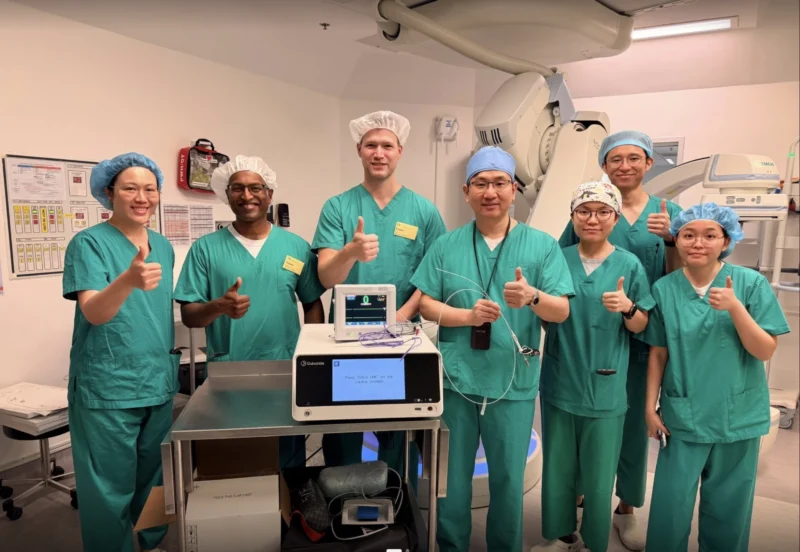
The Chinese University of Hong Kong Thoracic Oncology Team
Elliot Hospital’s 100-Case Milestone: Proof of Safety and Feasibility
Equally impactful is the report from Elliot Hospital, where clinicians achieved 100 consecutive procedures without complications using a combination of robotic bronchoscopy, radial EBUS, and PEF ablation.
In the context of lung interventions, this is a remarkable achievement. Procedures involving the lung carry inherent risks, including pneumothorax, bleeding, and airway injury. The absence of complications across 100 cases underscores the safety, reliability, and reproducibility of this integrated approach.
Moreover, these procedures were performed in an outpatient setting, demonstrating the feasibility of delivering advanced cancer care with minimal disruption to patients’ lives. This represents a significant shift toward more patient-centered models of care.
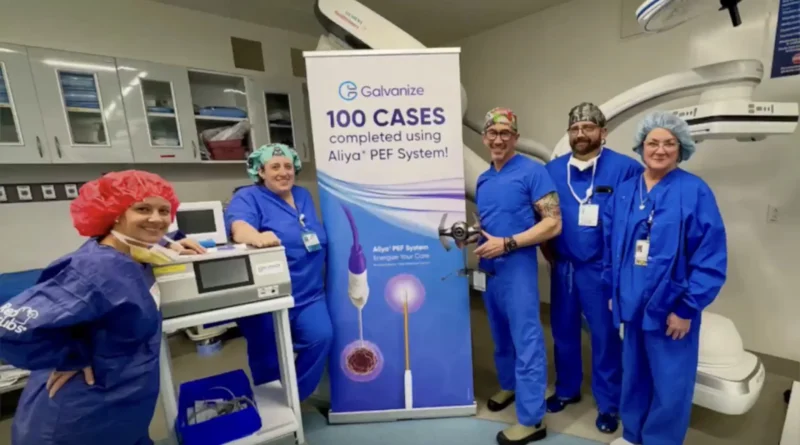
© Elliot Hospital Thoracic Team.
Clinical Implications: A New Standard of Care?
The convergence of these technologies has far-reaching implications for lung cancer management.
First, it enables earlier intervention, as small nodules detected through screening can be diagnosed and treated promptly. Second, it expands treatment options for patients who are not candidates for surgery, including those with comorbidities or centrally located tumors.
Third, it introduces the possibility of combined diagnostic and therapeutic procedures, reducing the need for multiple hospital visits and accelerating care pathways.
In addition, the non-thermal nature of PEF ablation may allow treatment of lesions in anatomically challenging locations, further broadening its applicability.
Immunologic Potential and Future Directions
Beyond local tumor control, there is growing interest in the immunologic effects of non-thermal ablation. Early evidence suggests that electroporation-induced cell death may enhance antigen presentation and stimulate systemic immune responses (Bulvik et al., 2016).
This raises the possibility of combining PEF ablation with immunotherapy, potentially amplifying treatment efficacy. Such strategies are currently under investigation and represent an exciting frontier in oncology.
Future research will need to address key questions, including long-term outcomes, optimal patient selection, and comparative effectiveness with established modalities such as stereotactic body radiation therapy (SBRT).
The Power of Multidisciplinary Collaboration
Both of these milestones, the Elliot Hospital experience and the G20 first-in-human application, highlight the importance of multidisciplinary collaboration.
Thoracic specialists, interventional pulmonologists, anesthesiologists, pathologists, and research teams all contribute to the successful implementation of these technologies. Industry partners, including Intuitive Surgical, Olympus Corporation, and Galvanize Therapeutics, play a critical role in driving innovation.
Such collaborations are essential for translating technological advances into real-world clinical impact.
Conclusion
The integration of robotic navigation, advanced endobronchial imaging, and non-thermal pulsed electric field ablation represents a meaningful evolution in the management of lung cancer. By enabling precise lesion targeting, real-time confirmation, and effective tissue ablation within a single minimally invasive procedure, this approach addresses several limitations of traditional diagnostic and therapeutic pathways.
From a scientific perspective, the non-thermal mechanism of irreversible electroporation offers a distinct advantage by preserving surrounding tissue architecture while achieving effective tumor cell death. This characteristic is particularly relevant in anatomically complex regions such as the lung, where proximity to critical structures often limits the use of conventional thermal techniques.
Early clinical experience suggests that this combined strategy is feasible, reproducible, and associated with a favorable safety profile. Beyond local tumor control, the potential immunologic effects of electroporation-induced cell death introduce an additional layer of interest, particularly in the context of combination approaches with systemic therapies.
As further prospective data emerge, this integrated model may contribute to a broader shift toward precision-guided, minimally invasive, and biologically informed lung cancer care, where diagnosis and treatment are increasingly streamlined and individualized.