Key takeaways
- Infusion reactions can occur during or shortly after intravenous cancer treatment.
- Symptoms may range from mild flushing or chills to severe breathing problems or anaphylaxis.
- Not every infusion reaction is a true allergy.
- Early reporting helps the care team manage symptoms quickly and safely.
- Future infusions may require premedication, a slower rate, closer monitoring, or another treatment approach.
Infusion reactions during cancer treatment are a recognized side effect of some medicines given intravenously. They can occur unexpectedly and may vary widely from one patient to another, both in the type of symptoms and how severe they become. Some reactions are mild and short-lived, while others may require the infusion to be paused and additional treatment to control symptoms.
Most infusion reactions can be managed successfully when they are recognized early. Knowing what to watch for can help patients feel more prepared, report symptoms promptly, and communicate important changes to their cancer care team during and after treatment.
Infusion Reactions During Cancer Treatment
An infusion reaction is an unwanted response that develops during or after a cancer medicine is given through an intravenous infusion. These reactions can occur with several types of anticancer treatment, including chemotherapy, monoclonal antibodies, immunotherapy, and other targeted or biological therapies.
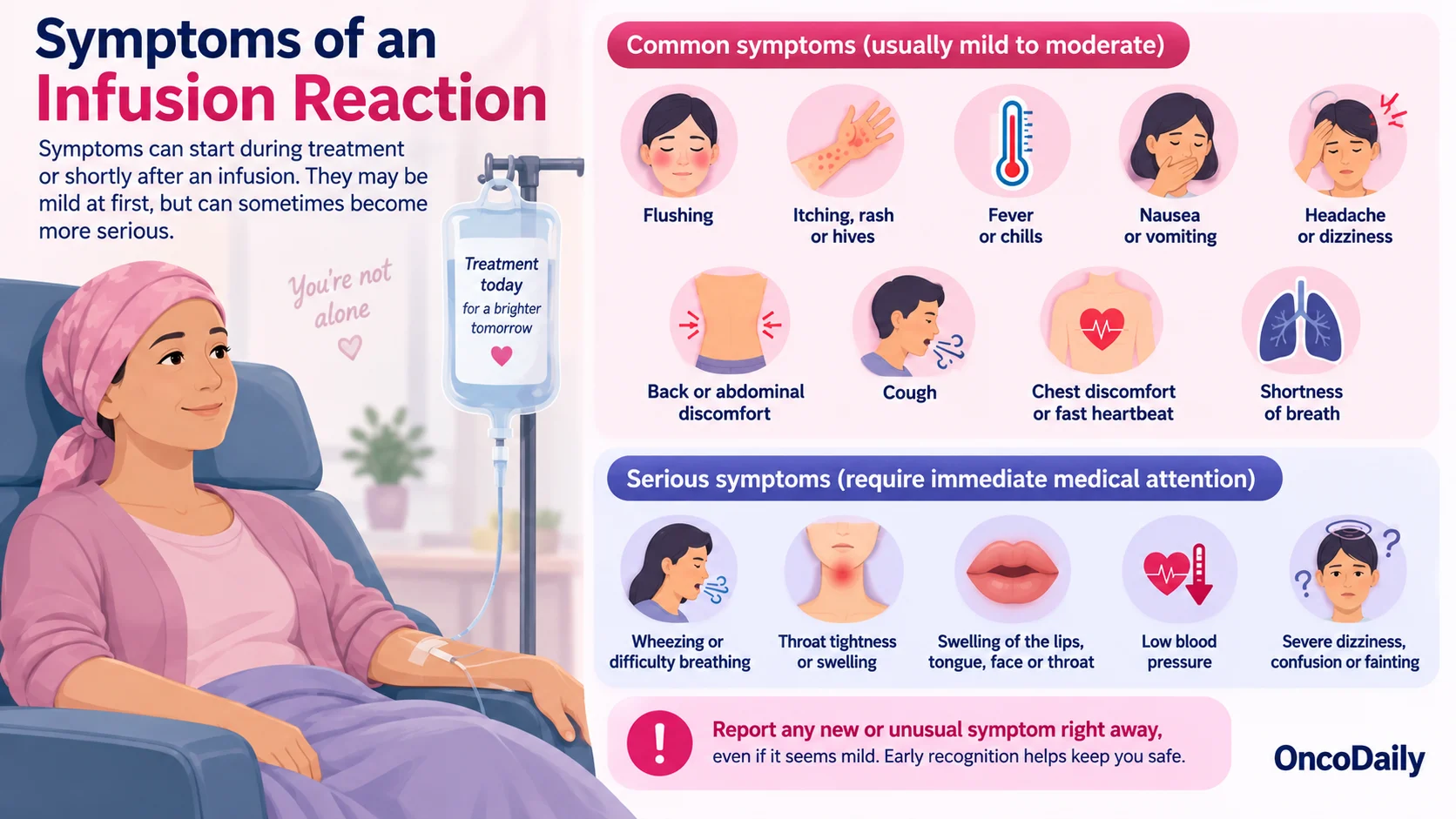
Most infusion reactions develop during treatment or within the first few hours afterward, although delayed reactions can occasionally occur later. Symptoms can range from mild flushing, itching, fever, chills, nausea, or headache to more serious breathing problems, changes in blood pressure, swelling, or, in some cases, anaphylaxis (Barroso et al., 2024; American Cancer Society, 2024).
Some infusion reactions are caused by an allergic immune response, while others occur through non-allergic mechanisms related to how a particular medicine affects the immune system. Most reactions are mild to moderate and can be managed when recognized quickly, but severe reactions require immediate medical attention. Patients should therefore report any new or unusual symptom during an infusion as soon as it appears rather than waiting to see whether it improves on its own (Roselló et al., 2017; Barroso et al., 2024).
What Causes Infusion Reactions in Cancer Patients?
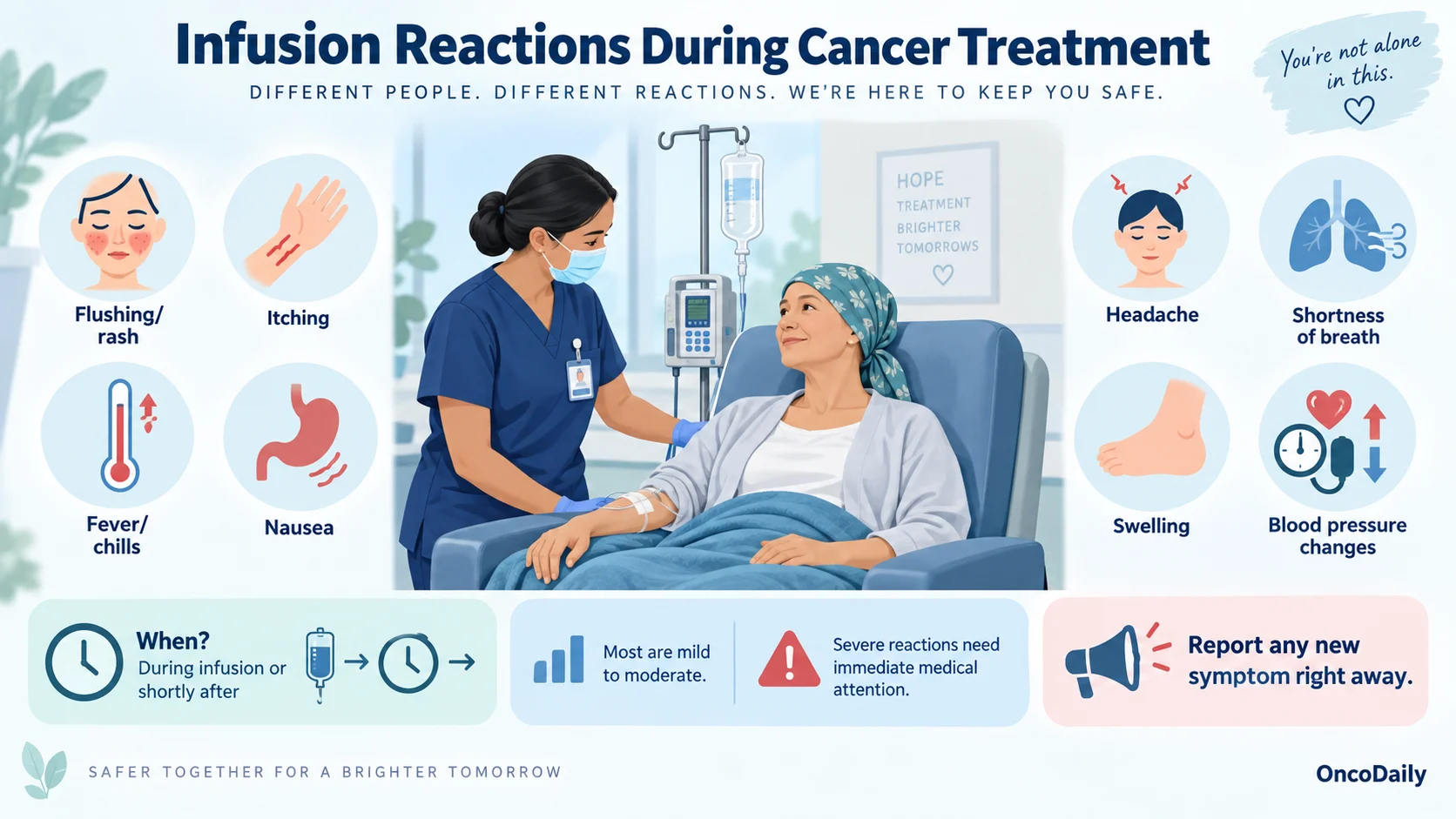
Infusion reactions can occur when the body responds to a cancer medicine or one of its components. The exact mechanism depends on the treatment, and not every infusion reaction is a true allergy.
Some reactions are allergic, involving activation of immune cells and the release of substances such as histamine. Others are non-allergic and may occur when a treatment activates immune cells and causes the release of inflammatory substances called cytokines. These different mechanisms can produce similar symptoms, including fever, chills, flushing, rash, breathing difficulty, or changes in blood pressure (Chung, 2008; Barroso et al., 2024).
The risk also depends on the specific medicine, previous exposure, infusion rate, and individual patient factors. Some medicines are more likely to cause reactions during the first or second infusion, while reactions to certain drugs, particularly some platinum-based chemotherapies, may become more likely after repeated exposure. Components used in a drug formulation can sometimes contribute as well (Barroso et al., 2024).
Because allergic and non-allergic reactions can look very similar, the exact cause may not be immediately clear. The oncology team considers the timing, symptoms, severity, and medicine involved when deciding how the reaction should be managed and whether future treatment can be given safely.
Symptoms of an Infusion Reaction
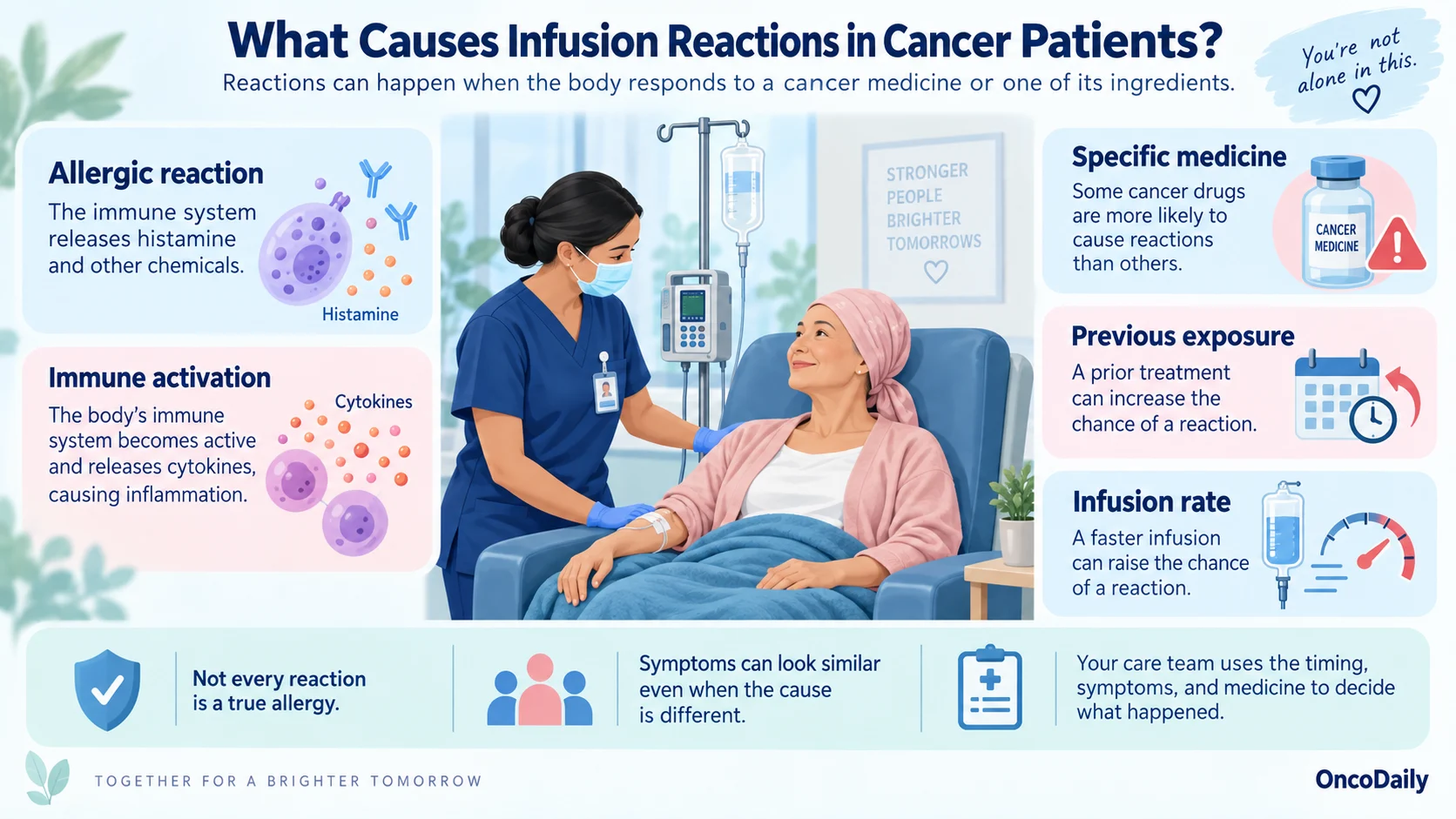
Symptoms of an infusion reaction can develop during treatment or shortly after an infusion has finished. They may begin suddenly and range from mild skin or flu-like symptoms to more serious breathing or circulatory problems.
Common symptoms include flushing, itching, rash or hives, fever, chills, nausea, vomiting, dizziness, headache, back or abdominal discomfort, cough, chest discomfort, a fast heartbeat, and shortness of breath (American Cancer Society, 2024).
More serious reactions may cause wheezing, chest or throat tightness, swelling of the lips, tongue, face, or throat, a significant fall in blood pressure, severe dizziness, confusion, fainting, or difficulty breathing. These symptoms may indicate a severe hypersensitivity reaction or anaphylaxis and require immediate medical treatment.
Patients should tell the healthcare team about any new or unusual symptom during an infusion, even if it initially seems mild. Some reactions can progress quickly, and early recognition allows the treatment team to assess and manage symptoms promptly (American Cancer Society, 2024; Cancer Care Ontario, 2019).
Cancer Treatments Linked to Infusion Reactions
Infusion reactions can occur with several types of cancer treatment, although the risk varies considerably between medicines.
Among chemotherapy drugs, taxanes such as paclitaxel and docetaxel and platinum-based treatments such as carboplatin, cisplatin, and oxaliplatin are well-recognized causes. Etoposide and some other intravenous chemotherapy medicines can also cause infusion reactions. Taxane reactions often occur during early treatment, whereas reactions to platinum drugs may become more common after repeated exposure (Barroso et al., 2024).
Monoclonal antibodies are another important group associated with infusion reactions. Medicines such as rituximab, cetuximab, trastuzumab, daratumumab, and intravenous amivantamab can cause reactions, with some occurring more frequently during the first few doses (Barroso et al., 2024).
Infusion reactions may also occur with immunotherapies, including immune checkpoint inhibitors such as pembrolizumab and nivolumab. The likelihood, timing, and severity of a reaction depend on the specific medicine, previous treatment exposure, infusion conditions, and individual patient factors (American Cancer Society, 2024; Barroso et al., 2024).
How Infusion Reactions Are Managed
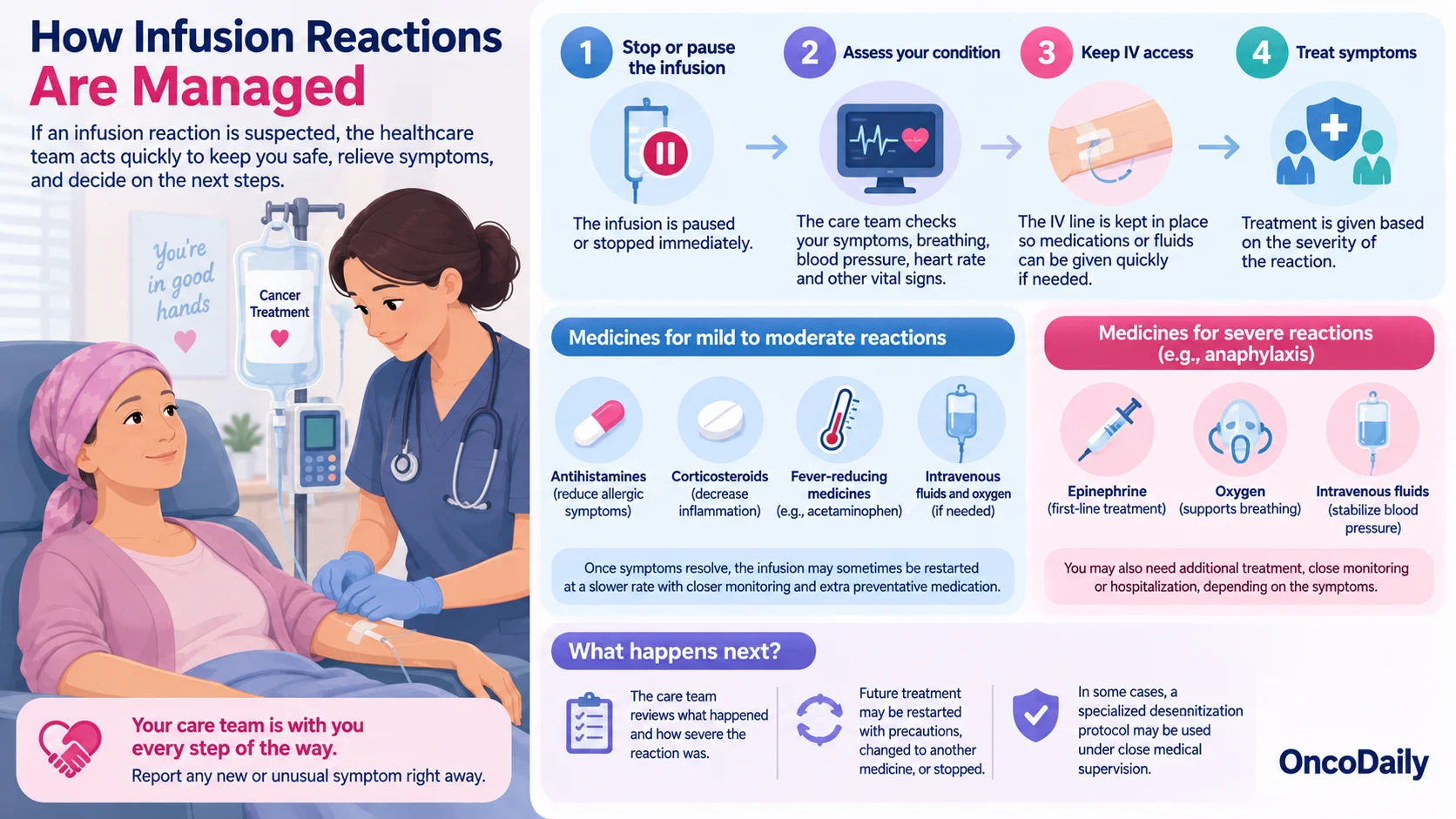
When an infusion reaction is suspected, the healthcare team will usually pause or stop the infusion and assess the patient’s symptoms, breathing, circulation, blood pressure, heart rate, and other vital signs. The intravenous line is generally kept available so that medications or fluids can be given quickly if needed (Roselló et al., 2017; Cancer Care Ontario, 2019).
Treatment depends on the type and severity of the reaction. Mild or moderate reactions may be managed with antihistamines, corticosteroids, fever-reducing medicines, intravenous fluids, oxygen, or other medications depending on the symptoms. Once symptoms have completely resolved, some treatments may be restarted at a slower rate with closer monitoring and additional preventive medication.
Severe reactions require immediate emergency management. Epinephrine is the first-line treatment for anaphylaxis, together with supportive measures such as oxygen, intravenous fluids, and close monitoring. Patients with significant breathing or blood-pressure problems may require additional treatment or hospitalization.
After the reaction has been controlled, the oncology team decides how future treatment should proceed. Depending on the medicine and severity of the reaction, treatment may be restarted with additional precautions, changed to another therapy, permanently discontinued, or given through a specialized desensitization protocol under close medical supervision (Roselló et al., 2017; Cancer Care Ontario, 2019).
Can Infusion Reactions Be Prevented?
Infusion reactions cannot always be prevented, but the risk or severity can often be reduced. Before treatment, the oncology team considers the medicine being given, the patient’s allergy and treatment history, and whether a previous infusion reaction has occurred.
For some cancer medicines, patients receive premedication before treatment. This may include antihistamines, corticosteroids, acetaminophen, or other medications selected according to the treatment being given. These medicines can reduce the likelihood or severity of certain infusion reactions (Roselló et al., 2017; Barroso et al., 2024).
Some medicines are also started at a slower infusion rate, particularly during early doses, while closer monitoring allows the healthcare team to recognize symptoms quickly. If a patient has experienced a previous reaction, future treatment may require additional premedication, a slower infusion rate, or a specialized desensitization protocol. Desensitization involves giving carefully controlled, gradually increasing amounts of the medicine under close medical supervision.
Patients should always tell their oncology team about previous infusion reactions or medication allergies and should not take additional antihistamines, corticosteroids, or other preventive medicines unless instructed to do so (American Cancer Society, 2024).
When an Infusion Reaction Needs Urgent Medical Attention
An infusion reaction requires urgent medical attention when symptoms suggest a severe hypersensitivity reaction or anaphylaxis. Warning signs include difficulty breathing, wheezing, chest or throat tightness, swelling of the lips, tongue, face, or throat, widespread hives, severe dizziness, fainting, confusion, or rapidly worsening symptoms. (American Cancer Society, 2024).
If these symptoms develop during treatment, patients should alert the oncology team immediately. The infusion can be stopped and appropriate treatment started without delay. Severe reactions may progress quickly and affect breathing, blood pressure, or circulation.
If serious symptoms develop after leaving the treatment center, emergency medical help should be sought immediately rather than waiting for the next oncology appointment. Delayed infusion reactions are less common but can occur after treatment, so patients should follow the instructions given by their cancer care team about symptoms that need urgent assessment.
Even symptoms that initially seem mild should be reported during an infusion. The healthcare team can determine whether they are likely to remain mild or may represent the beginning of a more significant reaction.
FAQ
Can an infusion reaction happen after treatment has finished?
Yes. Most infusion reactions happen during treatment or shortly afterward, but some delayed reactions can occur later.
Is an infusion reaction the same as an allergic reaction?
No. Some infusion reactions are allergic, while others are caused by non-allergic immune or inflammatory responses.
What should I do if I feel different during an infusion?
Tell the healthcare team immediately, even if the symptom seems mild. Early assessment can help prevent the reaction from becoming more serious.
Can I receive the same cancer medicine again after an infusion reaction?
Sometimes. Depending on the severity and cause of the reaction, the medicine may be restarted more slowly, given with additional premedication, or replaced with another treatment.
Can infusion reactions be prevented?
Not always, but the risk can sometimes be reduced with premedication, slower infusion rates, closer monitoring, or a desensitization protocol.