Cosmetics are part of daily life for millions of people. Makeup, fragrances, hair products, creams, and personal care items are used so routinely that most people rarely stop to think about what they contain. Yet the question continues to come up in both public health discussions and everyday conversations: can cosmetics increase cancer risk? The answer is not simple. Current evidence does not support a clear conclusion that normal cosmetic use directly causes cancer, but it does show that some cosmetic ingredients and contaminants have raised concern and deserve careful attention.
This is exactly why the topic matters. Cosmetics are not used once or twice. They are often applied repeatedly, sometimes for years, and sometimes on sensitive areas such as the lips, eyelids, scalp, and underarms. While many products are considered safe within regulatory limits, the long-term health effects of repeated low-dose exposure, mixed ingredients, and chronic use are still not fully understood.
Why This Question Is So Difficult To Answer
One of the biggest challenges in studying cosmetics and cancer is that real-life exposure is complex. A person may use several products each day, each containing multiple ingredients. Researchers do not just have to study one chemical, but also how many chemicals may interact over time, how much is absorbed through the skin, whether some ingredients are inhaled, and how formulations change over the years. Cancer also takes a long time to develop, which makes it difficult for studies to capture the full picture.
There is also an important gap between laboratory data and everyday use. Some chemicals may show harmful effects in animal or cell studies, especially at high doses, but that does not always translate directly into the same level of risk in humans using small amounts in daily life. At the same time, the absence of definitive proof of harm does not automatically mean the absence of risk. This uncertainty is what keeps the discussion active.
What Is a Carcinogen?
A carcinogen is any substance, chemical, or exposure that can increase the risk of cancer. Some carcinogens directly damage DNA, while others promote cancer indirectly by affecting hormones, causing chronic inflammation, or interfering with normal cell repair. Exposure to a carcinogen does not always lead to cancer, but repeated or long-term exposure can increase risk.
How Does Cancer Develop?
Cancer develops when normal cells acquire genetic damage over time and begin to grow in an uncontrolled way. This usually happens gradually, as mutations build up and affect the genes that regulate cell division, DNA repair, and cell death. In this way, long-term exposure to certain chemicals may contribute to carcinogenesis, especially when exposure is repeated over many years.
Which Substances Are Proven Carcinogens?
It is important to distinguish between confirmed carcinogens and substances that are only suspected or under investigation.
Among the ingredients or contaminants discussed in your article, some are already well-established:
- Formaldehyde – classified as a Group 1 carcinogen; associated with nasopharyngeal cancer and leukemia, especially with inhalation exposure
- Arsenic – Group 1; linked to skin, lung, and bladder cancers
- Cadmium – Group 1; associated with lung cancer
- Crystalline silica (inhaled) – Group 1; linked to lung cancer
- Carbon black (inhaled, certain forms) – classified as possibly carcinogenic (Group 2B)
Other substances mentioned in cosmetics are not definitively proven carcinogens in real-life cosmetic use, but remain under scrutiny:
- Parabens – concern due to endocrine (estrogen-like) activity
- Ethanolamines (DEA, TEA) – may form potentially carcinogenic nitrosamines under certain conditions
- 1,4-dioxane – classified as possibly carcinogenic; appears as a contaminant, not intentional ingredient
What Has Raised Concern In Cosmetics?
A 2023 analysis of 50 facial makeup products sold on the European market identified at least one substance with potential carcinogenic relevance in all analyzed products. These included parabens, ethoxylated compounds such as PEG-related ingredients, formaldehyde donors, ethanolamines and their derivatives, carbon black, and silica. The same review also discussed the possibility of contamination with heavy metals such as arsenic, cadmium, lead, and mercury.
Formaldehyde and formaldehyde-releasing compounds are among the most frequently discussed examples. In the material you shared, formaldehyde exposure was linked to concern particularly in hair straightening products, where heating may release formaldehyde gas. The FDA notes that higher exposure over time may increase health risks, and product labels may list terms such as formaldehyde, formalin, or methylene glycol.
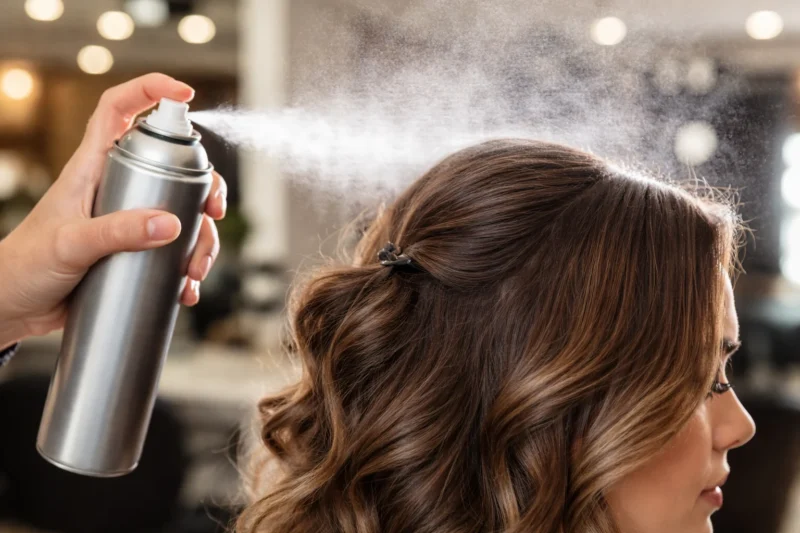
Another concern is 1,4-dioxane, which is not usually added intentionally but may appear as a byproduct of manufacturing. It has been associated with certain detergents, emulsifiers, and solvents, and the FDA recommends paying attention to ingredients such as PEG, polyethylene glycol, polyoxyethylene, or names containing “-eth-” or “-oxynol-.” The same source notes that detected levels have decreased over time and that evaporation limits how much the skin absorbs, which shows that the issue is not only the presence of a substance, but also dose and route of exposure.
Parabens remain one of the most debated ingredient groups. They are widely used as preservatives and have been studied because of their estrogen-like activity. Since many cancers, including breast, ovarian, and prostate cancer, are hormonally driven, endocrine-disrupting chemicals continue to attract attention. At the same time, the evidence remains incomplete, and the current discussion is less about certainty and more about caution.
How Does Formaldehyde Cause Cancer?
According to the American Cancer Society, formaldehyde is a common chemical found in many industrial and household products, and long-term exposure has been associated with an increased risk of cancer.
Researchers use 2 main types of studies to try to figure out if something causes cancer:
Lab studies (studies done using lab animals or cells in lab dishes)
Studies in people
Exposure to formaldehyde has been shown to cause cancer in lab animals. Exposure to relatively high amounts of formaldehyde in medical and other workplaces has been linked to some types of cancer in humans, but the effect of exposure to small amounts is less clear.
Studies in the Lab
In rats, inhaled formaldehyde has been linked to cancers inside the nose and to leukemia. Formaldehyde given in drinking water has been linked with an increase in tumors in the stomach and intestines.
Applying formaldehyde to the skin of lab animals has also been linked to quicker development of cancers caused by other chemicals.
Studies in People
Some, but not all, studies of people exposed to formaldehyde in the workplace have reported a link between formaldehyde exposure and cancer of the nasopharynx (the upper part of the throat, behind the nose). These studies looked at people who work in places that use or make formaldehyde and formaldehyde resins, as well as at people who work as embalmers.
Studies of people exposed to formaldehyde at work have also found a possible link to cancer of the nasal sinuses.
Several studies have found that embalmers and medical professionals who use formaldehyde have an increased risk of leukemia, particularly myeloid leukemia. Some studies of industrial workers exposed to formaldehyde have also found increased risks of leukemia, but not all studies have shown an increased risk. One study found that workers exposed to formaldehyde had higher than normal levels of chromosome changes in early forms of white blood cells in their bone marrow. This finding supports the possible link between formaldehyde exposure and leukemia.
Studies looking at possible links between workplace exposure to formaldehyde and other types of cancer have not found a consistent link.
What Expert Agencies Say
Several national and international agencies study different substances in the environment to determine if they can cause cancer. (A substance that causes cancer or helps cancer grow is called a carcinogen.) The American Cancer Society looks to these organizations to evaluate the risks based on evidence from lab, animal, and human research studies.
Based on the available evidence, some of these expert agencies have evaluated the cancer-causing potential of formaldehyde.
The International Agency for Research on Cancer (IARC) is part of the World Health Organization (WHO). One of its major goals is to identify causes of cancer. IARC has concluded that formaldehyde is “carcinogenic to humans” based on sufficient evidence it can cause nasopharyngeal cancer and leukemia.
The US National Toxicology Program (NTP) is formed from parts of several different US government agencies, including the National Institutes of Health (NIH), the Centers for Disease Control and Prevention (CDC), and the Food and Drug Administration (FDA). The NTP lists formaldehyde as “known to be a human carcinogen.”
The US Environmental Protection Agency (EPA) maintains the Integrated Risk Information System (IRIS), an electronic database that contains information on human health effects from exposure to various substances in the environment. The EPA has classified formaldehyde as “carcinogenic to humans by the inhalation route of exposure.” The EPA states that evidence demonstrates an increased risk of nasopharyngeal cancer, nasal sinus cancer, and myeloid leukemia, and evidence suggests an increased risk for some other types of cancer.
Contaminants Matter Too
Not every concerning substance in a cosmetic product is intentionally added. Some may appear as contaminants during manufacturing or from raw materials. Heavy metals are a major example. The review you shared discussed arsenic, cadmium, lead, and mercury as unwanted contaminants that may be present in cosmetics, especially in pigmented products. Although absorption through the skin is generally considered low, long-term repeated use raises concern because some of these substances can accumulate in the body over time.
This does not mean every product is dangerous or that routine cosmetic use inevitably leads to cancer. It means that contamination, chronic exposure, and ingredient transparency remain important public health issues. The concern is stronger when products are applied frequently to areas where absorption or ingestion may be more likely, such as the lips or around the eyes.
Do Deodorants And Antiperspirants Cause Breast Cancer? Myths Vs Scientific Evidence
Regulation Does Not Eliminate Every Question
Cosmetics are regulated, but not in the same way as drugs. In the United States, the FDA oversees cosmetics, yet companies generally do not have to prove the safety and effectiveness of cosmetic products before marketing them in the way drug manufacturers must. Ingredient labeling is required, but labels do not always include fragrance components or certain trade-secret ingredients. This means regulation exists, but it does not remove all uncertainty.
This is one reason the debate remains divided. One view is that cosmetics should be considered safe unless proven harmful. The other is that any signal of possible carcinogenicity should be taken seriously, especially when exposure is frequent and long-term. The material you provided makes clear that both positions exist, but it also points to the same conclusion: more research is needed.
What Is Best to Avoid?
A practical approach is to be more cautious with products that may release formaldehyde, products with unclear ingredient labeling, and low-quality items that may carry a higher risk of contamination. It is also reasonable to limit unnecessary daily exposure by choosing simpler formulations and using fewer products when possible..
The Real Takeaway
The current evidence does not justify a blanket statement that cosmetics cause cancer. But it also does not support complete reassurance. Some ingredients and contaminants in cosmetics have biological properties that raise concern, and long-term exposure remains an area where knowledge is still incomplete. The most honest conclusion is that this field sits in a space between routine use and unresolved scientific questions.
For now, the strongest message is a balanced one: cosmetics are common, regulation exists, and many products are used without obvious immediate harm, but ingredient scrutiny, better long-term research, and stronger transparency are still needed. Until science provides clearer answers, caution, label awareness, and thoughtful product choices remain the most reasonable path.
Written by Nare Hovhannisyan, MD