Welcome to OncoDaily Weekly, your all-in-one roundup of this week’s oncology news, policy shifts, scientific advances, and leadership moves from December 1 to 7.
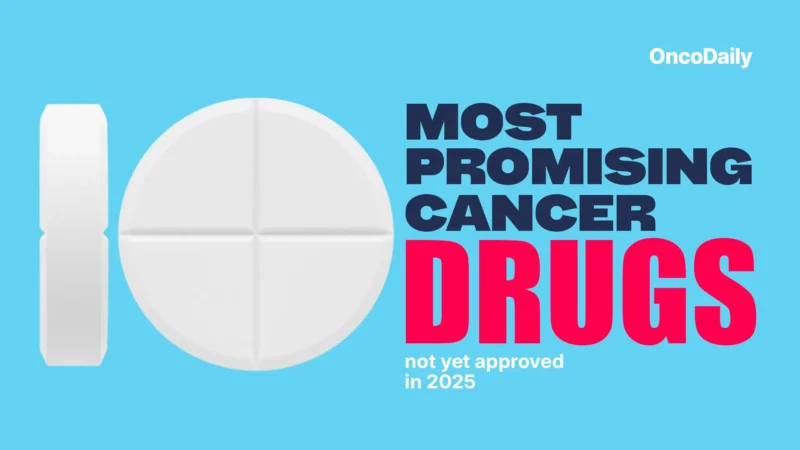
We start where many readers have been waiting for us to return: our “10 Most Promising Cancer Drugs Not Yet Approved” series is back for 2025, expanding the solid-tumor pipeline story that became one of OncoDaily’s most-read features in 2024. The new edition reviews late-stage agents across targets and tumor types, focusing on mechanisms, trial readouts, and where each drug might fit into future standards of care – serving as a practical map of what’s likely to reshape oncology in the next few years.
FDA & Policy: A System in Transition
This week brought a wave of FDA signals that together suggest a still changing environment – almost from ground-up:
- The FDA issued 81 new product-specific guidance to help companies develop generics for complex drugs—aimed at improving competition and bringing cheaper alternatives sooner.
- The Agency also said it may accept single pivotal trials more often, which could shorten approval timelines for selected drugs when evidence is strong.
- New draft guidance encourages reduced non-human primate testing in monoclonal antibody development, pointing toward more modern and ethical toxicology models.
- And the FDA expanded its internal agentic AI tools, using LLMs to support review workflows and post-market monitoring.
ASCO’s Leadership Development Program opened its Central and Eastern Europe track, supporting oncologists in systems undergoing rapid modernization.
And on the prevention front, the American Cancer Society updated cervical cancer screening guidance, formally endorsing HPV self-collection and clarifying exit criteria for average-risk individuals.
Mikaela Naylon Give Kids a Chance Act advanced in U.S. Congress – strengthening incentives for pediatric and rare-disease drug development.

Richard Pazdur wants to leave FDA after 26 years of service and very recent appointment as the Director of the FDA’s Drug Center.
Marty Makary argued that more drugs should be over-the-counter, hinting on possible further policy changes in the US.
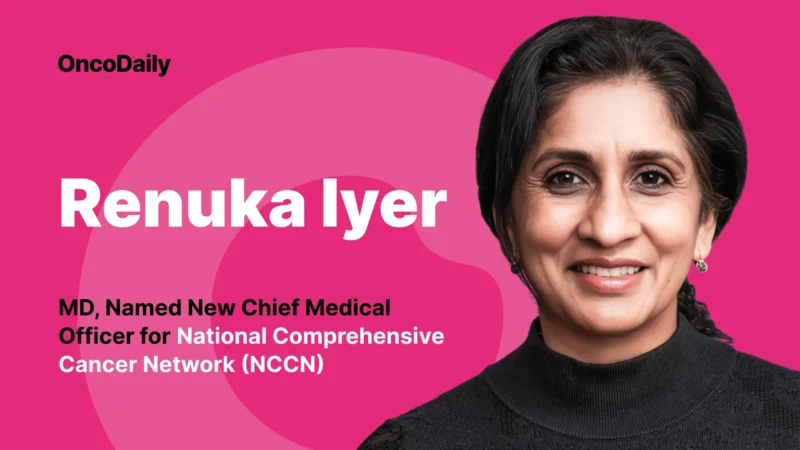
Renuka Iyer became Chief Medical Officer of NCCN.
Biotech, Industry & AI: The Ecosystem Accelerates
OncoDaily’s OncoBiotech continues to follow the developments within the oncology industry and technology highlighting reshaping companies and teams:
Astrin Biosciences unveiled Certitude Breast, a non-imaging blood test for breast cancer, with a U.S. launch planned for early 2026.
Natera acquired Foresight Diagnostics, integrating phased-variant MRD technology into Signatera.
Flatiron Health’s clinical trial network was acquired by Paradigm Health, paired with a major Series B to expand AI-enabled, decentralized clinical research.
Walid Kamoun, Vice President, Global Head of R&D Oncology at Servier, welcomed Peter Adamson as Servier’s new Global Head of Oncology Clinical Development.
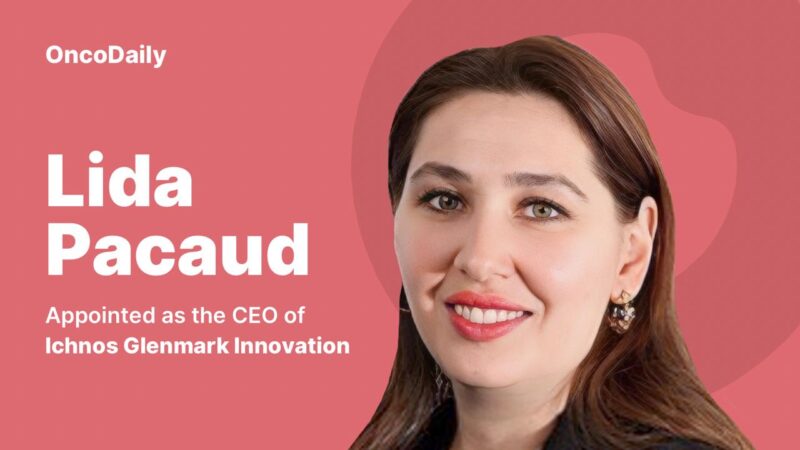
Ichnos Glenmark Innovation appointed Lida Pacaud as interim CEO as the company advances bispecific antibody programs.
And in tech, Chief Operating Officer and President of Security Products at Google Cloud Francis deSouza introduced Gemini 3, Google’s new multimodal model designed to handle complex health data and build AI-driven interfaces – fueling our AI enthusiasm too.
Science & Research: Trials, Immunotherapy, MRD and Radiation
On the research side, several stories pushed the boundaries of where and how we use systemic therapy and radiotherapy.
The ESO-Shanghai 17 and 9 trials compared small T-field vs extensive-field postoperative chemoradiotherapy for resected esophageal squamous cell carcinoma. Small-field IMRT with weekly paclitaxel–carboplatin achieved strong local control with a safer toxicity profile, suggesting that tighter volumes may better balance benefit and harm after surgery.
DART (NCI/SWOG S1609) – the largest immunotherapy rare-cancer trial to date – showed that prior PD-1/PD-L1 exposure does not blunt responses to nivolumab plus ipilimumab in multiple rare tumor types, an important message for real-world sequencing in ultra-rare settings.
The “beyond MSI-high” notion in colon cancer, with responses seen even in some pMMR tumors, continues to shift focus on short-course neoadjuvant ICB, organ preservation, and biomarker refinement, with responses seen even in undifferentiated pleiomorphic sarcoma.
FDA cleared FOLR1-CAR-T trial for relapsed/refractory osteosarcoma, opening enrollment for patients aged 1–75 and planning expansion to other FOLR1-positive malignancies.
On the hematology side, new AML guidelines for older adults and multiple groups are out, presenting early MRD, cell therapy, and lymphoma data. And Lisocabtagene Maraleucel was approved for Relapsed/Refractory Marginal Zone Lymphoma by the FDA based on the TRANSCEND FL-MZL trial.
Events and What to Watch: ASH25 and ESMO Asia 2025
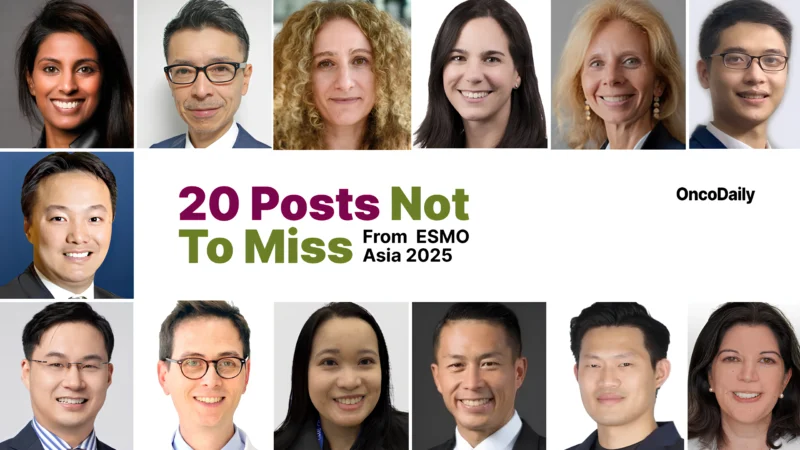
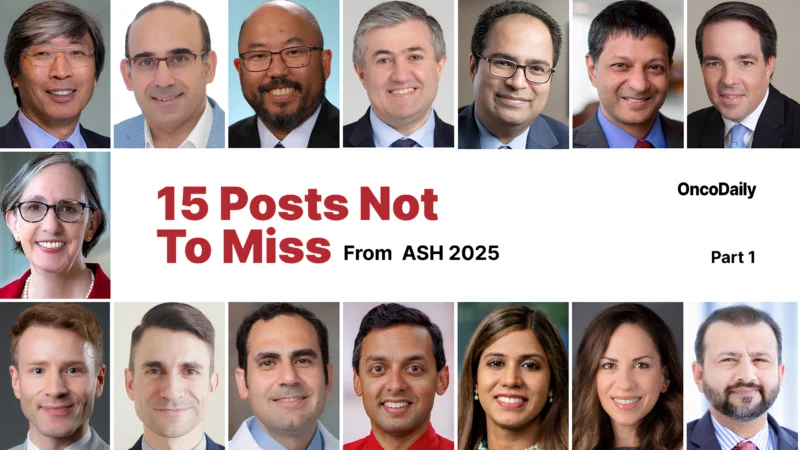
The week was busy with multiple events including ESMO Asia 2025 which we summarized for you with the attendee voices themselves in our “20 Posts Not to Miss from ESMO Asia 2025”, and ASH 2025 which is still ongoing with a whirlwind of hematology news coming our way. Catch up with “15 Posts Not to Miss from ASH25 – Part 1” and stay tuned for part 2 and the grand finale.
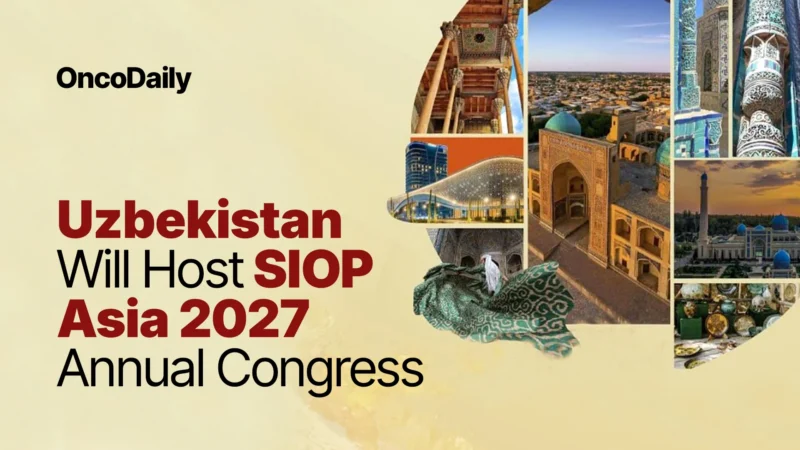
Looking ahead, SIOP announced Uzbekistan as the host for SIOP Asia 202.
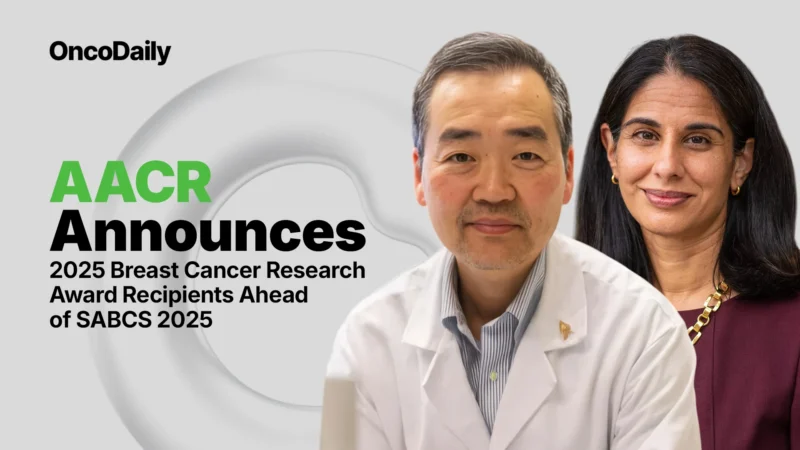
AACR previewed its breast cancer research awards, announcing Ben Ho Park as the recipient of the 2025 AACR Distinguished Lectureship in Breast Cancer Research Award, and Sara M. Tolaney as the recipient of 2025 AACR Outstanding Investigator Award for Breast Cancer Research Award, such, setting the momentum for SABCS 2025.
ESMO Immuno-Oncology Congress 2025 will take place in London on December 10-12, 18th Breast Gynecological International Cancer Conference (BGICC) is coming in January in Cairo and the 2026 ASCO Gastrointestinal Cancers Symposium in San Francisco, the 10th Anniversary Liquid Biopsy for Precision Oncology Summit, organized by Hanson Wade, will take place on February 3–5, 2026, in La Jolla, San Diego, California, and more about upcoming events can be accessed in our daily updated OncoCalendar.
Stay tuned with OncoDaily as we are coming to close the year 2025 with bigger news and hopeful projections.
Written by Elen Baloyan, MD, Managing Editor of OncoDaily