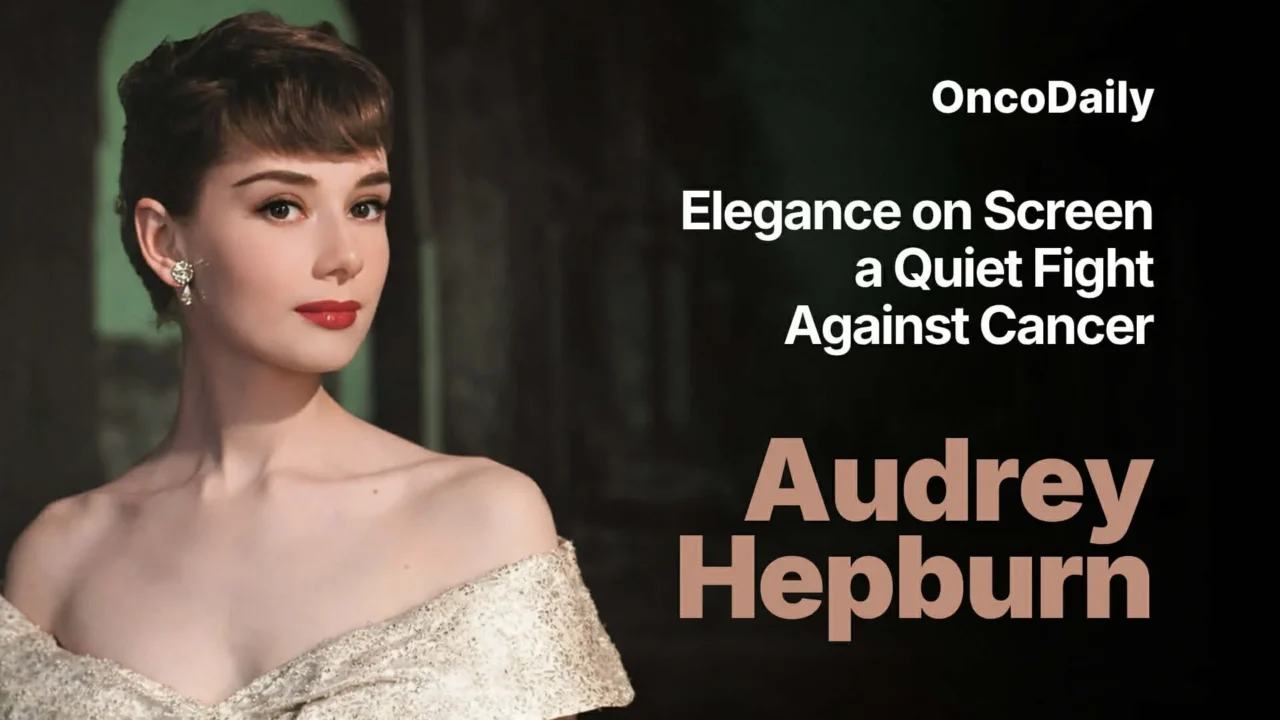
Audrey Hepburn remains one of the most enduring icons of 20th‑century cinema, remembered for her luminous presence in classics like Roman Holiday (1953), Breakfast at Tiffany’s (1961), and My Fair Lady (1964). Her blend of elegance, vulnerability, and timeless style made her a global symbol of grace and sophistication.
In the final chapter of her life, however, she stepped away from the red carpet and into a different kind of spotlight: as a UNICEF Goodwill Ambassador, traveling to some of the world’s poorest regions to advocate for children. After a lifetime in the public eye, she died quietly at the age of 63 from a rare abdominal cancer, closing a remarkable story that bridged Hollywood glamour and humanitarian dedication.
Stepping Away From Hollywood
After the birth of her two sons, Sean and Luca, Audrey Hepburn deliberately slowed her acting career, choosing to spend more time with her family and step back from the demanding schedules of Hollywood. While she still took occasional film roles, her pace became selective and far less frequent than in the 1950s and 1960s.
Even as her on‑screen appearances grew rarer, she remained a powerful global style and cultural icon her simple elegance, trademark little black dress, and understated chic continued to influence fashion, photography, and popular imagination for decades.
What Was Audrey Hepburn’s Defining Humanitarian Role?
In 1988 Audrey Hepburn formally became a UNICEF Goodwill Ambassador, a role she later described as the most meaningful and important of her life. Having spent decades as a celebrated film star and fashion icon, she deliberately chose to redirect her global influence toward humanitarian advocacy, using her name and visibility to shine a light on the world’s most vulnerable children.
Over the following years she undertook numerous field missions to some of the poorest and most crisis‑affected regions in Africa, Asia, and Latin America. She visited refugee camps, rural clinics, and overcrowded schools, bearing witness to the impact of war, famine, displacement, and extreme poverty on children and their families. Her presence in these settings helped draw international attention to emergencies that might otherwise have gone unnoticed by the global public.
Through interviews, public appeals, and UNICEF campaigns, Hepburn translated complex humanitarian crises into personal, human stories that resonated across cultures. Her calm dignity, visible compassion, and deep sense of responsibility made her a credible and respected advocate, capable of engaging both policymakers and ordinary citizens.
In December 1992, shortly before her death, her humanitarian commitment was formally recognized when she was awarded the Presidential Medal of Freedom by the United States. The honor underscored that, in the final phase of her life, her most significant contribution was not measured by film roles or fashion trends, but by her unwavering dedication to improving the lives of children around the world.
First Sign of Illness
After returning from a UNICEF mission to Somalia in September 1992, Audrey Hepburn began experiencing persistent abdominal pain, marking the first clear sign of a serious underlying health issue. Concerned by her symptoms, she underwent medical tests in Switzerland, but the initial examinations failed to provide a definitive diagnosis.
As her condition did not improve, she was later referred to specialists in Los Angeles, where further evaluation would ultimately reveal the presence of a rare abdominal cancer. This quiet shift from humanitarian fieldwork to intensive medical scrutiny marked the beginning of the final chapter in her life.
Diagnosis and Type of Cancer
In early November 1992, Audrey Hepburn underwent a laparoscopy at Cedars‑Sinai Medical Center in Los Angeles, a procedure that led to the discovery of a rare abdominal cancer. The tumor was identified as belonging to the group known as pseudomyxoma peritonei, a condition sometimes referred to in media reports as “appendix cancer” because it often originates in the appendix and spreads within the abdominal cavity.
Pathological findings indicated that the cancer had grown slowly over many years, spreading as a thin, gelatinous coating over the surface of her small intestine and surrounding peritoneal tissue. By the time it was detected, the disease was already advanced, explaining both the delayed diagnosis and the limited treatment options available.
Diagnosis and Type of Cancer
In early November 1992, Audrey Hepburn underwent a laparoscopy at Cedars‑Sinai Medical Center in Los Angeles, a procedure that led to the discovery of a rare abdominal cancer. The tumor was identified as belonging to the group known as pseudomyxoma peritonei, a condition sometimes referred to in media reports as “appendix cancer” because it often originates in the appendix and spreads within the abdominal cavity.
Pathological findings indicated that the cancer had grown slowly over many years, spreading as a thin, gelatinous coating over the surface of her small intestine and surrounding peritoneal tissue. By the time it was detected, the disease was already advanced, explaining both the delayed diagnosis and the limited treatment options available.
Treatment and Final Months
After her diagnosis, Audrey Hepburn underwent surgery at Cedars‑Sinai Medical Center in Los Angeles to remove as much of the abdominal tumor as possible, followed by chemotherapy to address the remaining disease. These treatments were demanding, and once her condition stabilized sufficiently, she chose to return home to Tolochenaz, Switzerland, where she could be with her family in a calm and private setting.
During these final months, she remained emotionally devoted to her UNICEF mission and the children she had met through her field visits. Accounts from those close to her indicate that she did not want to give up on helping children, even as her own health declined, reflecting her lifelong commitment to humanitarian work over personal comfort or fame.
You Can Also Read The Angelina Jolie Effect: A Lasting Global Impact on Cancer Prevention by OncoDaily

Photo: Depositphotos
Why Audrey Hepburn’s Cancer Story Matters
Audrey Hepburn’s cancer journey highlights the silent and often delayed nature of rare abdominal tumors such as pseudomyxoma peritonei, which can grow slowly over many years with few early symptoms. Because this type of cancer does not always trigger obvious warning signs, diagnosis is frequently delayed, underscoring the importance of awareness and thorough investigation when chronic abdominal discomfort or other subtle symptoms persist.
Her illness was also kept largely private, even as she remained a global icon. This quiet approach reflects how high‑profile women and people in the public eye more broadly can experience cancer battles away from media scrutiny, balancing personal dignity with the expectations of public life.
Finally, some observers have noted that her severe childhood malnutrition during World War II raises an open, but unproven, question about long‑term health consequences, including possible cancer risk. However, there is currently no established evidence linking her wartime hunger directly to this rare cancer, and medical experts emphasize that the exact cause of pseudomyxoma peritonei remains unknown. Her story therefore serves both as a reminder of how much is still uncertain about rare cancers and as a call for greater research and compassion for those facing them.
You Can Also Read Luciano Pavarotti and Pancreatic Cancer: A Tenor’s Late-Stage Battle by Article
Written by Aharon Tsaturyan, MD, Editor at OncoDaily Intelligence Unit
FAQ
What type of cancer did Audrey Hepburn die from?
She died from a rare abdominal cancer belonging to the group known as pseudomyxoma peritonei, often described in media as “appendix cancer” because it originated in or near the appendix and spread within the abdominal cavity.
How old was Audrey Hepburn when she died?
She was 63 years old, dying on January 20, 1993, at her home in Tolochenaz, Switzerland.
When was Audrey Hepburn diagnosed with cancer?
Her cancer was discovered during a laparoscopy at Cedars‑Sinai Medical Center in Los Angeles in early November 1992, after she developed abdominal pain following a UNICEF mission to Somalia.
What was pseudomyxoma peritonei (PMP) and how did it affect her?
Pseudomyxoma peritonei is a rare, slow‑growing abdominal tumor that spreads as a thin gelatinous coating over the peritoneum and intestines. It often causes no clear symptoms for years, which is why her disease was advanced by the time it was found.
What treatment did Audrey Hepburn receive for her cancer?
She underwent surgery to remove the abdominal tumor at Cedars‑Sinai, followed by chemotherapy, before returning home to Switzerland to be with her family.
How did Audrey Hepburn’s cancer start and progress?
After a UNICEF trip to Somalia in September 1992, she developed abdominal pain; tests in Switzerland were inconclusive, and the cancer was only clearly identified in Los Angeles. Because PMP grows silently, it had already spread for years by the time it was diagnosed.
Why is Audrey Hepburn’s cancer called a “jelly belly” cancer?
Pseudomyxoma peritonei is nicknamed “jelly belly” because it produces large amounts of mucinous (gel‑like) fluid in the abdomen, creating a characteristic “jelly” appearance during surgery or imaging.
How private was Audrey Hepburn about her illness?
She kept her cancer largely out of the public eye, handling much of her illness in private with family and close friends, which reflects how even major celebrities can face cancer with minimal media exposure.
Is there any proven link between her childhood malnutrition and her cancer?
No clear causal link has been established. Some commentators have noted that her wartime childhood malnutrition raises questions about long‑term health, but experts emphasize that the exact cause of her rare cancer (PMP) remains unknown and is not proven to be related to her early‑life hunger.