Imagine Henri Matisse, post-1941 cancer surgery, too frail for brushes, wielding scissors from his bed to craft The Swimming Pool’s vibrant cut-outs “My only rival to earlier works.” Dorothea Lange, defying esophageal cancer’s grip, immortalized desperate migrants in Migrant Mother, her lens unflinching amid pain. Crystal Maes, mid-breast cancer chemo, transformed lemons into defiant symbols in her Detour series, bitterness yielding beauty.
Photo: Depositphotos
Celebrated just two days ago on April 15 World Art Day and amid this vibrant Art Week, cancer fueled masterpieces by these artists with cancer, birthing cancer-inspired art of resilience: famous cancer artworks that turned agony into timeless legacies of defiance and hope.
Historical Icons
Early 20th-century legends like Henri Matisse, Dorothea Lange, and Georgia O’Keeffe transformed terminal illnesses into innovative art, adapting techniques to their weakening bodies.
Henri Matisse (Duodenal Cancer)
In 1941, post-surgery for duodenal cancer, Matisse bedridden and unable to paint traditionally invented “painting with scissors.” He cut vibrant paper forms for The Swimming Pool (1952), a wall-sized gouache work of floating figures that rivaled his Fauvist canvases in joy and abstraction. This shift from brush to scissors reflected his physical frailty while amplifying bold, liberated lines cancer birthing his final, luminous phase.
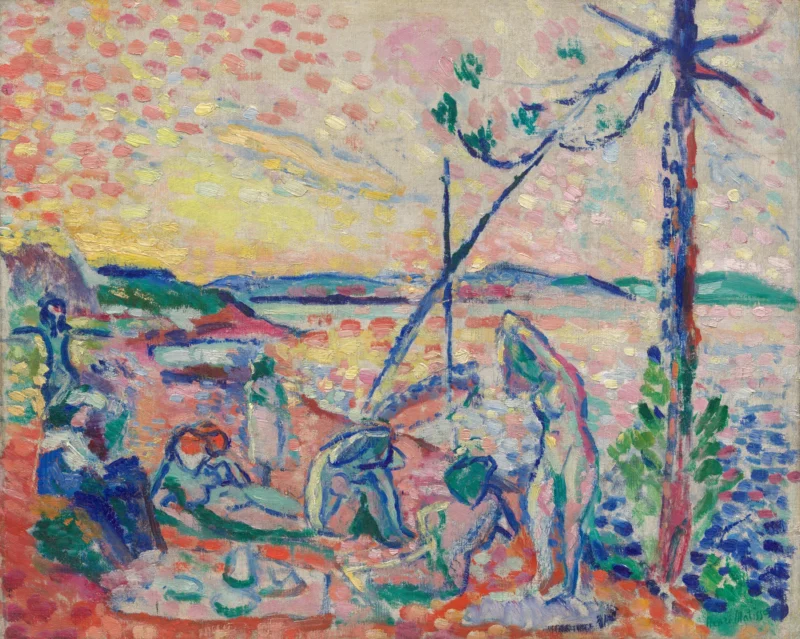
Henri Matisse. Study for “Luxe, calme et volupté”. 1904 |
Dorothea Lange (Esophageal Cancer)x
Diagnosed with terminal esophageal cancer in the early 1940s, Lange continued her documentary photography, capturing Migrant Mother (1936) amid Great Depression poverty though predating her diagnosis, her later prints and social advocacy intensified during illness. Pain sharpened her unflinching gaze, turning personal suffering into empathetic exposures of human endurance, with raw compositions emphasizing worry-worn faces.
Georgia O’Keeffe (Various Cancers)
Battling macular degeneration and later cancers into her 90s, O’Keeffe’s late abstract florals like Sky Above Clouds IV (1965) echoed bodily fragility through vast, ethereal skies and magnified petals. Vision loss forced bolder, simplified forms, where organic curves symbolized life’s persistence, blending intimacy with cosmic scale in her New Mexico retreat.
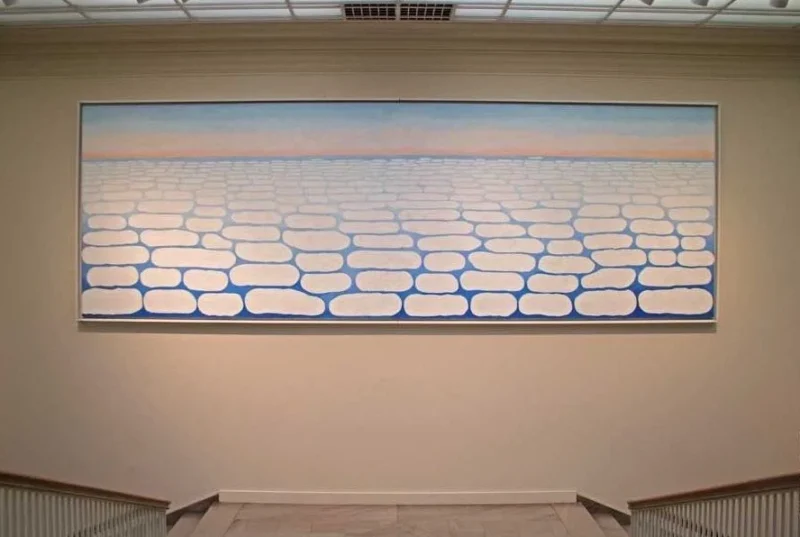
Photo of Sky Above Clouds , by Georgia O’Keeffe
Modern Survivor Stories
Contemporary artists like Crystal Maes, Phil Batty, Carole Ellis, and Patricia Markos Dolan have turned breast and skin cancer diagnoses into bold series and exhibitions, reclaiming narratives through vivid symbolism and personal testimony.
Crystal Maes (Breast Cancer)
Diagnosed in her 50s, painter Crystal Maes channeled her emotional and physical “detour” into a 10-painting series titled Detour, starting with Bowl of Lemons (oil on panel, 36×36 inches). “Life handed me a big bowl of lemons,” she reflected, visualizing chemo fears and mastectomy dread from a haunting magazine image decades prior; works like Under the Knife (18×21 inches) confront surgery head-on, evolving into symbolic recovery where bitterness becomes artful triumph.
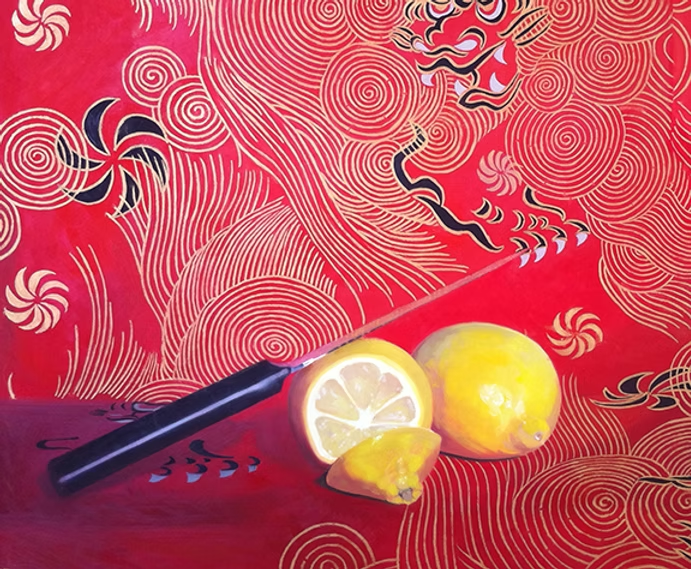
Crystal Maes Detour- Under the Knife, oil on panel
Phil Batty (Melanoma)
Stage 3 malignant melanoma survivor Phil Batty, from Wiltshire, UK, picked up her brush during 2020 treatment at Royal United Hospital Bath. Her Still Alive exhibition floral designs, still lifes, and collages fills the same hospital halls today, with one-third of sales aiding it. “Art brought me joy and creative focus during treatment,” she shared; now cancer-free but monitored, her vibrant pieces celebrate persistence:
“It’s all about life and that I’m still here making the art I love.”
Carole Ellis (Breast Cancer)
Fluid artist Carole Ellis, funded by Arts Council England, produced the unflinching 42-piece Breast or Beast collection in 2022, exhibited at Nottingham Society of Artists. From health’s freedom to diagnosis, treatment’s vulnerability, and survival’s complexity, it honors carers and researchers at a “cellular level.” Reviews praise its “fearless visual language” transforming lived trauma into resilience, blending science, emotion, and identity.
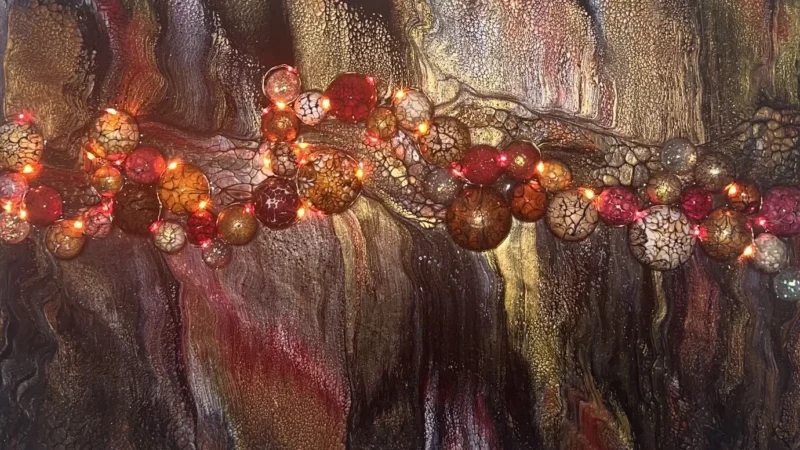
Patricia Markos Dolan (Cancer Experience)
Chicago-based painter Patricia Markos Dolan donates proceeds from Θετικα (“Positively”) to the Hippocratic Cancer Research Foundation, inspired by her Greek heritage and holistic healing ethos.
“Look at your journeys as a white canvas you create what you want“
She advises her children; the optimistic piece channels “visual and emotional healing,” surfacing inner positivity amid illness, with ethereal oils blending intuition and evolution.
Emerging and Community Voices
Lesser-known artists like Mandi Chambless and Julia Kito Kirtley represent rising voices from cancer survivor communities, using mixed media and abstracts to explore identity and healing often amplified through global contests like the AYA Art Competition and exhibitions such as Hillstrom Museum’s “Artists Who Had Cancer.”
Mandi Chambless (Ovarian Cancer)
Mandi Chambless, featured in cancer wellness communities, crafts mixed-media works probing femininity’s fragility post-ovarian cancer diagnosis. Her layered collages blending fabric, paint, and personal relics juxtapose scarred bodies against lush patterns, reclaiming womanhood from treatment’s toll; “Art became my mirror to shattered self-image,” she notes, with pieces evoking fertility myths amid medical scars for intimate, empowering narratives.
Julia Kito Kirtley (Breast Cancer)
Breast cancer survivor Julia Kito Kirtley channels recovery into healing abstracts, shared via YouTube testimonies and global exhibits. Her fluid, ethereal paintings swirls of turquoise and gold evoking emotional rebirth emerged during chemotherapy, transforming isolation into communal hope; “Art healed where words couldn’t,” she shares, with works circulating in survivor networks and tying to AYA competitions that spotlight young adult cancer art for awareness.
Exhibitions and Impact of Artists With Cancer
Exhibitions like the Hillstrom Museum’s “Artists Who Had Cancer” have showcased over 30 cases, from historical icons to contemporaries, highlighting how cancer fueled diverse masterpieces and fostering public dialogue on resilience.
Hospital displays amplify this power. Phil Batty’s Still Alive graces the halls of Royal United Hospital Bath, where she received her melanoma treatment, and sales from her vibrant works directly fund patient care. Similarly, Carole Ellis’ Breast or Beast inspires radiology patients, transforming stark clinical spaces into empathy zones that foster hope and connection.
These efforts tie directly to awareness campaigns. They align with World Art Day on April 15 to celebrate creativity’s healing role. They also support broader cancer initiatives, urging viewers to see art as an act of defiance and a vital source of encouragement for survivors worldwide.
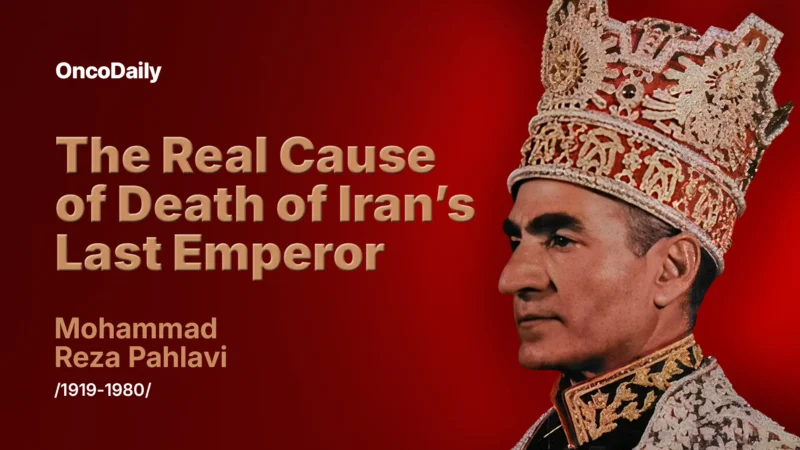
You Can Also Read The Shah of Iran’s Hidden Cancer: How Leukemia and Medical Secrecy Shaped His Fall by OncoDaily
Written by Aharon Tsaturyan, MD, Editor at OncoDaily Intelligence Unit
FAQ
What famous artworks did Henri Matisse create after his 1941 cancer surgery?
Henri Matisse created The Swimming Pool (1952), a vibrant gouache cut-out work made from his bed using scissors due to frailty from duodenal cancer surgery.
How did Dorothea Lange's esophageal cancer influence her photography like Migrant Mother?
Diagnosed with terminal esophageal cancer in the 1940s, Lange's pain sharpened her unflinching gaze; though Migrant Mother (1936) predated her diagnosis, her later prints and advocacy intensified, turning suffering into empathetic exposures of endurance.
Which innovative technique did Matisse invent due to frailty from duodenal cancer?
Matisse invented "painting with scissors," cutting bold paper forms for wall-sized works like The Swimming Pool, rivaling his earlier Fauvist style amid physical decline.
What is Crystal Maes' Detour series about, and how does it relate to her breast cancer?
Crystal Maes' 10-painting Detour series, including Bowl of Lemons and Under the Knife, visualizes her breast cancer "detour" through chemo fears and mastectomy dread, transforming bitterness into symbolic recovery.
Who is Georgia O'Keeffe, and how did her cancers shape her late abstract paintings?
Georgia O'Keeffe battled macular degeneration and cancers into her 90s; her late works like Sky Above Clouds IV (1965) feature simplified, ethereal forms echoing bodily fragility and life's persistence.
What is Phil Batty's Still Alive exhibition, and where is it displayed?
Phil Batty's Still Alive exhibition features florals, still lifes, and collages made during her stage 3 melanoma treatment; it displays in Royal United Hospital Bath's halls, with sales funding care.
How did Carole Ellis turn her breast cancer experience into the Breast or Beast collection?
Carole Ellis created the 42-piece Breast or Beast collection in 2022, using fluid art to explore diagnosis, treatment vulnerability, and survival from health's freedom to cellular resilience.
What themes does Patricia Markos Dolan's Θετικα series explore amid her cancer journey?
Patricia Markos Dolan's Θετικα ("Positively") series channels visual and emotional healing through ethereal oils, embracing journeys as blank canvases amid her cancer experience and Greek heritage.
Who are Mandi Chambless and Julia Kito Kirtley, and what cancer-inspired art do they create?
Mandi Chambless crafts mixed-media collages probing femininity post-ovarian cancer; Julia Kito Kirtley paints healing turquoise-gold abstracts from breast cancer recovery, shared in survivor networks.
How do exhibitions like Hillstrom Museum's "Artists Who Had Cancer" highlight resilience?
Hillstrom Museum's "Artists Who Had Cancer" showcases over 30 cases from icons to contemporaries, illustrating how illness fueled masterpieces and fostering dialogue on creativity's healing power.