The management of gastric cancer requires a multidisciplinary approach integrating advances in diagnostics, systemic therapy, and surgical techniques. Over recent years, treatment strategies have evolved significantly, particularly with the incorporation of biomarker-driven therapies and immunotherapy across disease stages.
The updated French Intergroup clinical practice guidelines aim to provide a comprehensive framework for the diagnosis, staging, treatment, and follow-up of gastric cancer. These recommendations reflect a synthesis of available scientific evidence and expert consensus, with the goal of optimizing clinical decision-making and standardizing care in daily practice.
The article is published in the European Journal of Cancer (March 24, 2026).
Title: Gastric cancer: French Intergroup clinical practice guidelines for diagnosis, staging, treatment and follow-up (TNCD, SNFGE, FFCD, UNICANCER, GERCOR, SFCD, SFED, AFEF, SFRO, SFP, SFR, ACHBPT, RENAPE, SNFCP)
Authors: Aziz Zaanan, Juliette Palle, Florence Renaud, Maximilien Barret, Meher Ben Abdelghani, Bruno Buecher, Nicolas Chapelle, Olivier Dubreuil, Jerome Durand-Labrunie, Nadim Fares, Johan Gagniere, Marine Jary, Antoine Mariani, Lola-Jade Palmieri, Michel Ducreux, Olivier Bouché

How These Guidelines Were Developed
The development of these guidelines is based on a multidisciplinary consensus involving numerous French scientific societies representing the full spectrum of specialties engaged in gastric cancer management. Rather than relying on a formal voting process, the recommendations were established through iterative discussions among experts, integrating evidence derived from the literature up to January 2026. This includes data from randomized clinical trials, meta-analyses, and results presented at major international oncology meetings such as ASCO, ASCO-GI, ESMO, and ESMO-GI.
To ensure clarity and consistency, the strength of each recommendation is graded according to the level of evidence, ranging from high-quality data derived from large randomized trials (grade A) to lower levels of evidence and expert opinion where robust data are lacking. This structured approach allows clinicians to interpret recommendations within the appropriate evidentiary context while maintaining flexibility for individualized patient care.
Key Clinical Context
Gastric cancer remains a major contributor to global cancer burden, ranking as the fifth most diagnosed malignancy worldwide with almost 1 million new cases diagnosed annually, leading to more than 650,000 deaths. Despite a general decline in incidence over recent decades, this trend has reached a plateau in recent years in France, and emerging data suggest a concerning increase among younger populations in low-incidence countries. These epidemiological shifts are thought to be multifactorial, involving changes in environmental exposures, alterations in gastric microbiota, and the rising prevalence of obesity and autoimmune disorders. Such observations highlight the dynamic nature of gastric cancer epidemiology and underscore the importance of continued surveillance and research.

Diagnosis and Staging Approach
The diagnostic pathway for gastric cancer is centered on upper gastrointestinal endoscopy with histological confirmation obtained through multiple biopsies (at least 10). Adequate tissue sampling is essential not only for establishing the diagnosis and histological subtype but also for enabling comprehensive biomarker testing, which has become increasingly important in guiding therapeutic decisions.
Staging is primarily based on computed tomography of the thorax, abdomen, and pelvis, which allows for the assessment of locoregional disease and detection of distant metastases. Endoscopic ultrasonography is more sensitive than CT scan for evaluating superficial tumor infiltration and locoregional lymph node involvement, particularly in patients considered for preoperative therapy. In cases of locally advanced disease, staging laparoscopy plays a critical role in identifying occult peritoneal metastases that may not be detected by imaging alone.
Beyond imaging, clinical assessment remains fundamental, including evaluation of nutritional status, comorbidities, and functional reserve. Such factors are essential in determining treatment tolerance and guiding therapeutic strategy, particularly in older or frail patients.
Biomarker Testing
A defining feature of the updated guidelines is the emphasis on systematic biomarker assessment at diagnosis. Mismatch repair (MMR) status should be evaluated in all patients, as it is a predictive marker of response to immune checkpoint inhibitors and contributes to the screening of Lynch syndrome.
In metastatic disease, the evaluation of HER2, PD-L1 expression, and claudin18.2 is essential for therapeutic decision-making. These biomarkers enable the selection of targeted therapies and immune checkpoint inhibitors, thereby facilitating a more individualized treatment approach. The recommendation for reflex testing at diagnosis reflects the need to minimize delays in treatment initiation and to optimize the use of available tumor tissue.
Management of Localized Disease
The management of localized gastric cancer requires careful coordination within a multidisciplinary team, incorporating surgical, medical, and endoscopic expertise. For very early-stage tumors, endoscopic resection may be considered in selected cases with a low risk of lymph node involvement, although such cases represent a minority of patients.
For the majority of patients with resectable disease, surgical resection remains the cornerstone of treatment, with the extent of gastrectomy determined by tumor location and histological characteristics. Adequate lymphadenectomy is essential, with D2 dissection representing the standard approach for locally advanced disease.
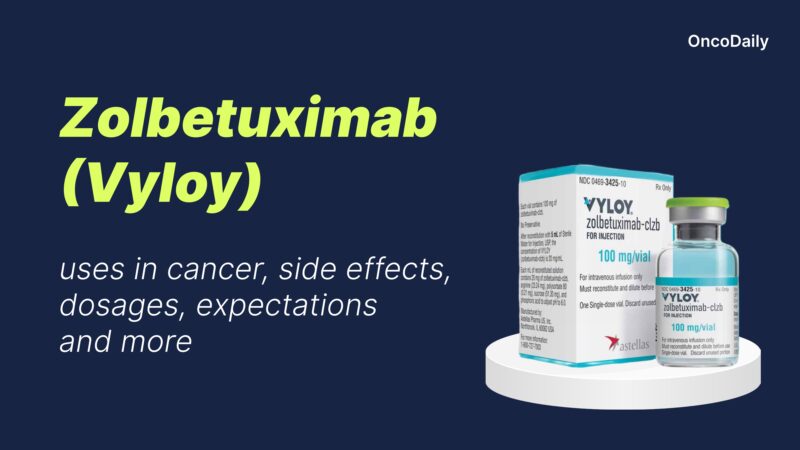
Perioperative chemotherapy with the FLOT regimen continues to be the standard of care for tumors staged as ≥cT2 or node-positive, based on robust evidence demonstrating improved survival outcomes. Importantly, recent data from the MATTERHORN trial have introduced a new dimension to perioperative management, showing that the addition of durvalumab to FLOT, followed by maintenance therapy, significantly improves event-free survival (HR 0.71), pathological complete response rates (19.2% vs 7.2%), and overall survival (HR 0.78; 3-year OS 68.6% vs 61.9%). These findings represent a meaningful advance and support the incorporation of immunotherapy into perioperative treatment strategies in selected patients with resectable gastric cancer, particularly in ≥cT3 and/or node-positive disease.
Patients with dMMR/MSI tumors constitute a distinct subgroup with unique biological and clinical characteristics. In this population, the benefit of chemotherapy appears limited, whereas phase II studies (NEONIPIGA and INFINITY) have demonstrated approximately 60% pathological complete response rates with neoadjuvant dual immunotherapy, suggesting a potential role for chemotherapy-free strategies in selected patients.
Management of Advanced Disease
In metastatic gastric cancer, treatment is primarily based on systemic therapy with the dual aim of prolonging survival and maintaining quality of life. Platinum–fluoropyrimidine doublet chemotherapy remains the foundation of first-line treatment; however, therapeutic decisions are increasingly guided by biomarker status.
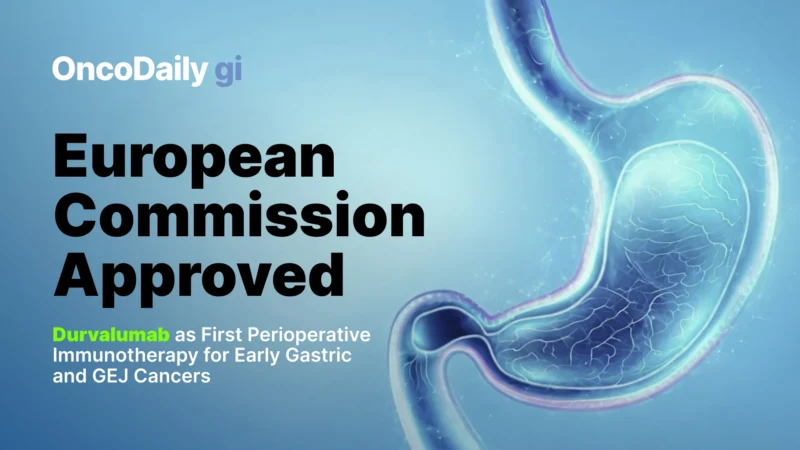
In HER2-positive disease, trastuzumab combined with chemotherapy remains the standard of care, with additional benefit observed when immune checkpoint inhibitors are incorporated in PD-L1–positive tumors. In HER2-negative disease, the addition of anti-PD1 therapy (nivolumab, pembrolizumab, or tislelizumab) to chemotherapy has demonstrated significant survival improvements, particularly in PD-L1–positive populations. Furthermore, the identification of claudin18.2 as a therapeutic target has led to the incorporation of zolbetuximab in combination with chemotherapy in tumors with claudin18.2 expression ≥2+ in ≥75% of tumor cells.
The role of surgery in metastatic disease remains limited and is generally not recommended outside highly selected cases of oligometastatic disease demonstrating favorable response to systemic therapy. Overall, treatment strategies in this setting require careful balancing of efficacy, toxicity, and quality-of-life considerations.
Subsequent Treatment and Follow-up
Second-line treatment options include ramucirumab, either as monotherapy or in combination with paclitaxel, both of which have demonstrated significant improvements in overall survival and progression-free survival in randomized trials. In HER2-positive disease, trastuzumab deruxtecan represents an important therapeutic option following progression on trastuzumab-based therapy. For patients who have received multiple prior lines of treatment, trifluridine/tipiracil provides a modest but meaningful survival benefit.
Follow-up strategies are primarily focused on symptom management, nutritional support, and the detection of recurrence in patients eligible for further treatment. Although intensive surveillance has not been shown to improve survival, regular clinical and radiological assessments remain an important component of patient care.

What These Guidelines Mean
The updated French Intergroup clinical practice guidelines provide a comprehensive and contemporary framework for the management of gastric cancer, reflecting both established standards and recent therapeutic advances. The integration of immunotherapy into perioperative treatment, particularly with the addition of durvalumab to FLOT, represents an important recent advance in the management of localized disease.
In the metastatic setting, the increasing reliance on biomarker-driven strategies underscores the transition toward precision oncology, with HER2, PD-L1, MSI, and claudin18.2 guiding treatment selection. These developments highlight the importance of early and comprehensive molecular profiling and reinforce the need for multidisciplinary care.
As new clinical data continue to emerge, these guidelines are expected to evolve further, providing an adaptable framework to support evidence-based, individualized treatment approaches in gastric cancer.
The full article is available in European Journal of Cancer.