Immunotherapy is rapidly evolving in triple-negative breast cancer (TNBC), expanding beyond single-agent checkpoint blockade into multi-targeted, biomarker-driven, and stage-specific strategies. Across advanced, neoadjuvant, and adjuvant settings, new trials are testing TIGIT inhibition, dual and triple checkpoint combinations, immune-priming radiotherapy, antiangiogenic partnerships, antifibrotic modulation, and personalized tumor vaccines to overcome resistance and improve outcomes in this highly aggressive disease.
From platform studies like TONIC-3 and InCITe to multimodal approaches integrating SBRT, chemotherapy, and PD-1 blockade, these strategies aim to enhance immune activation, reshape the tumor microenvironment, and extend benefit to PD-L1–low or previously treated populations. At the same time, adjuvant intensification trials such as CAPPA and rechallenge approaches like PRELUDE are addressing the critical unmet need of recurrence after modern chemo-immunotherapy.
Together, these innovations reflect a broader shift toward precision immuno-oncology in TNBC—leveraging combination biology, translational insights, and earlier intervention to achieve deeper responses, delay resistance, and ultimately improve long-term survival in high-risk patients.
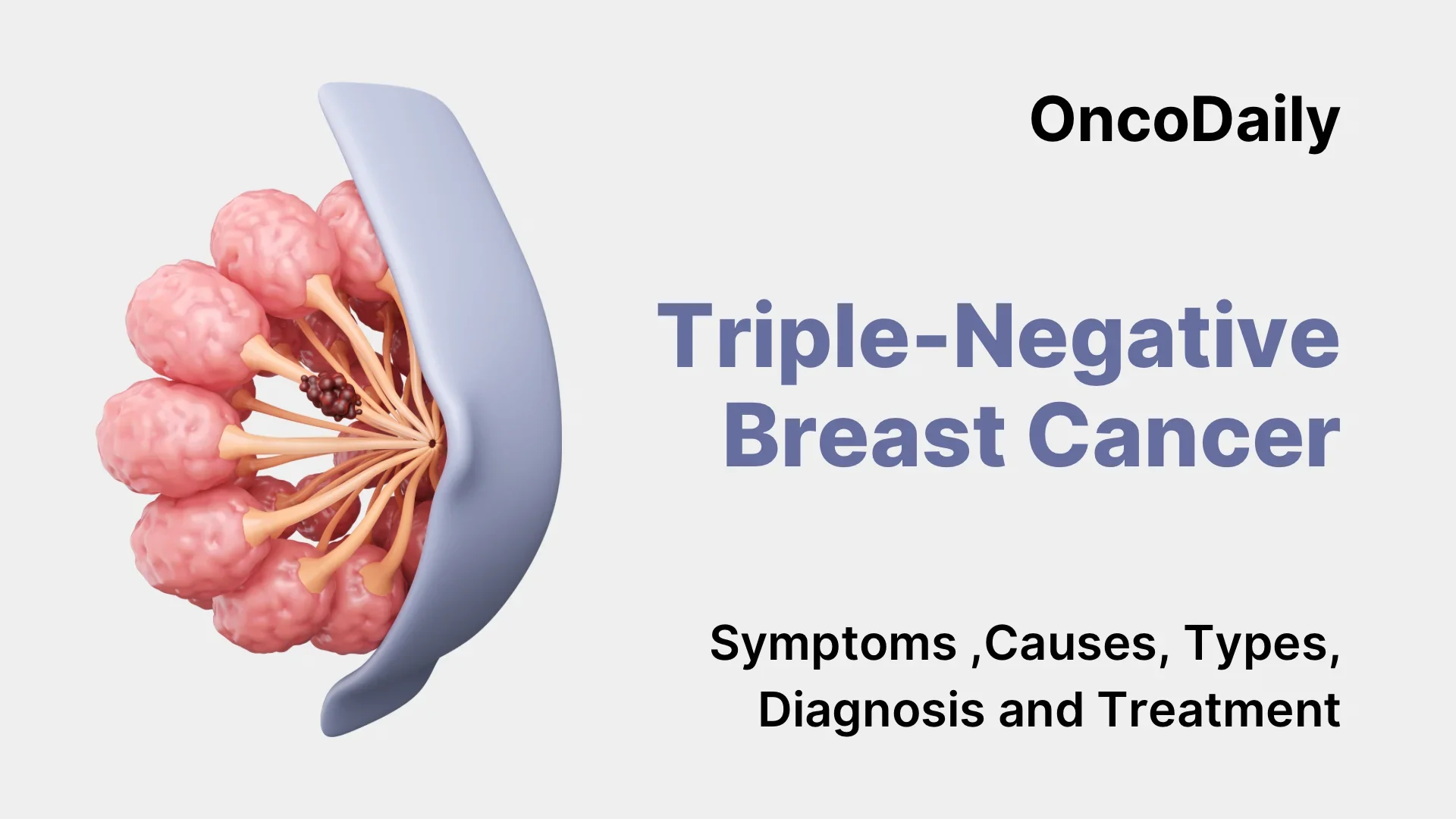
Triple-Negative Breast Cancer: Symptoms ,Causes, Types, Diagnosis and Treatment
TONIC-3 Trial: Novel Immunotherapy Strategies in Advanced Triple-Negative Breast Cancer
The TONIC-3 trial is a phase II, randomized, open-label study evaluating new immunotherapy combinations in patients with advanced triple-negative breast cancer (TNBC), particularly in those with PD-L1–negative disease or prior exposure to checkpoint inhibitors, where current treatment options remain limited and responses are often suboptimal.
This study explores whether targeting multiple immune pathways simultaneously can improve outcomes. The trial focuses on combinations built around tiragolumab (anti-TIGIT) together with checkpoint inhibitors:
- Tiragolumab + Atezolizumab (anti–PD-L1)
- Tiragolumab + Ipilimumab (anti–CTLA-4)
- Tiragolumab + Atezolizumab + Ipilimumab (triple immunotherapy)
All drugs are administered every 3 weeks, with ipilimumab limited to the first 4 cycles.
The primary objective is to assess progression-free survival at 12 weeks (PFS-12) and overall safety. Secondary endpoints include objective response rate, clinical benefit rate, progression-free survival, and overall survival.
Importantly, TONIC-3 is not only a therapeutic study but also a translational platform, aiming to better understand tumor–immune interactions in TNBC and identify more reliable biomarkers beyond PD-L1.
Neoadjuvant SBRT, PD-1 Blockade, and Chemotherapy in Triple-Negative Breast Cancer
This Phase II, single-arm study evaluates a multimodal neoadjuvant strategy for patients with triple-negative breast cancer (TNBC) and PD-L1 CPS <10, a group in whom immunotherapy benefit may be less predictable.
The treatment approach combines stereotactic body radiotherapy (SBRT), PD-1 blockade, and chemotherapy before surgery, followed by adjuvant immunotherapy after surgery. The rationale is that focused radiation may enhance tumor immunogenicity, potentially improving response to checkpoint inhibition and chemotherapy.
Patients receive:
- SBRT: one 10 Gy fraction to the primary breast tumor
- PD-1 inhibitor: given after SBRT
- Chemotherapy + immunotherapy: 6 cycles ofPD-1 inhibitor
- Albumin-bound paclitaxel
- Carboplatin
Surgery is performed after completion of neoadjuvant treatment, and patients then continue adjuvant PD-1 therapy for up to 1 year. The primary endpoint is pathologic complete response (pCR), defined as no residual invasive cancer in the breast and no axillary lymph node metastasis at surgery. This trial explores whether adding local immune-priming radiation to standard chemo-immunotherapy can deepen pathologic response in early-stage but higher-risk TNBC, particularly in PD-L1–low disease.
CAPPA Trial: Adjuvant Capecitabine Plus Pembrolizumab in Residual Triple-Negative Breast Cancer
The CAPPA trial is a Phase II study evaluating whether adding capecitabine to adjuvant pembrolizumab can improve outcomes in patients with localized triple-negative breast cancer (TNBC) who have residual disease after neoadjuvant chemo-immunotherapy and surgery.
This is an important population because patients who do not achieve a pathologic complete response after neoadjuvant pembrolizumab-based treatment remain at high risk of recurrence. The study is testing whether intensifying postoperative therapy can improve 2-year invasive disease-free survival (iDFS).
In the experimental arm, patients receive:
- Pembrolizumab 200 mg IV every 3 weeks for 9 cycles
- Capecitabine 1250 mg/m² twice daily on days 1–14 of a 21-day cycle for 8 cycles
- Local radiotherapy if indicated by standard practice
The trial also includes an external standard-of-care cohort of similar patients treated with adjuvant pembrolizumab alone after surgery, allowing comparison between the intensified strategy and real-world postoperative pembrolizumab treatment.
The primary endpoint is 2-year iDFS. Secondary endpoints include:
- Overall survival (OS)
- Distant disease-free survival (DDFS)
- Safety and late toxicity
- comparative efficacy versus the external pembrolizumab-treated cohort
Overall, CAPPA is exploring whether postoperative capecitabine plus pembrolizumab can provide additional benefit in TNBC patients with residual disease after neoadjuvant chemo-immunotherapy, a group with substantial unmet need despite modern preoperative treatment.
RELUDE Trial: Pembrolizumab and Paclitaxel With or Without Bevacizumab in Recurrent Triple-Negative Breast Cancer
The PRELUDE trial is a randomized Phase II study evaluating whether adding bevacizumab to pembrolizumab plus paclitaxel can improve outcomes in patients with PD-L1–positive recurrent triple-negative breast cancer (TNBC)who previously received perioperative immune checkpoint inhibitor therapy.
This is a clinically important setting because pembrolizumab is increasingly used in early TNBC, but it remains unclear whether re-treatment with pembrolizumab after relapse still provides benefit. PRELUDE is designed to address that question and to test whether bevacizumab may further enhance activity through its antiangiogenic and potential immune-modulating effects.
Patients are randomized to one of two arms:
- Pembrolizumab + paclitaxel
- Pembrolizumab + paclitaxel + bevacizumab
Treatment includes:
- Pembrolizumab 400 mg IV every 6 weeks
- Paclitaxel 90 mg/m² IV on days 1, 8, and 15 of each 28-day cycle
- Bevacizumab 10 mg/kg IV on days 1 and 15 in the experimental arm
The primary endpoint is progression-free survival. Secondary endpoints include:
- Overall response rate
- Disease control rate
- Overall survival
- Safety and adverse events
Overall, PRELUDE explores whether checkpoint inhibitor rechallenge remains useful in recurrent TNBC after prior perioperative immunotherapy, and whether adding bevacizumab can further improve disease control in this difficult treatment setting.
Camrelizumab, Pirfenidone, and Chemotherapy in Advanced Triple-Negative Breast Cancer
This exploratory phase I/II study is testing a new combination for advanced triple-negative breast cancer (TNBC) in patients who have already received first-line treatment with chemotherapy plus PD-1/PD-L1 blockade and then progressed.
The regimen combines:
- Camrelizumab every 3 weeks
- Pirfenidone, started at a lower dose and increased as tolerated
- Chemotherapy, chosen by the investigator, such as paclitaxel or capecitabine
Treatment continues until disease progression, unacceptable toxicity, or discontinuation.
The main goal of the study is to measure objective response rate (ORR). Secondary endpoints include:
- Disease control rate (DCR)
- Clinical benefit rate (CBR)
- Progression-free survival (PFS)
- Overall survival (OS)
What makes this trial interesting is the addition of pirfenidone, a drug better known for antifibrotic effects, to camrelizumab and chemotherapy. The study is exploring whether this combination can help restore or enhance antitumor activity after prior checkpoint inhibitor exposure in TNBC.
Personalized TMV Vaccine With Checkpoint Inhibition in Triple-Negative Breast Cancer
This Phase I study evaluates a personalized tumor membrane vesicle (TMV) vaccine for patients with triple-negative breast cancer (TNBC), either as monotherapy or in combination with checkpoint inhibitors. The vaccine is created from each patient’s own tumor tissue, with the goal of stimulating a more specific and durable antitumor immune response.
The trial is divided into two parts. In Phase Ia, patients with early-stage TNBC receive the TMV vaccine alone, given intradermally at weeks 1, 3, and 5. This part focuses on defining safety, immune activation, and the optimal biologic dose. In Phase Ib, the vaccine is combined with either pembrolizumab or ipilimumab. Patients in the pembrolizumab arm receive the vaccine together with pembrolizumab every 3 weeks for 6 to 9 cycles, while those in the ipilimumab arm receive the vaccine with ipilimumab every 3 weeks for 4 cycles.
The study includes both early-stage TNBC and metastatic or inoperable locally advanced TNBC, depending on the phase and cohort. A key requirement is that enough tumor tissue must be available to manufacture the personalized vaccine.
The main goals are to assess safety and tolerability, identify the best biologic dose, and measure whether the vaccine can stimulate immune activity. In the metastatic setting, the study also evaluates disease control rate, overall response rate, progression-free survival, and overall survival. Correlative analyses are built into the trial as well, including evaluation of PD-L1 expression, tumor-infiltrating lymphocytes, and BRCA1/2 mutation status, to better understand which tumors may be most likely to respond.
Neoadjuvant Dupilumab, Pembrolizumab, Paclitaxel, and Carboplatin in Locally Advanced TNBC
This early-phase pilot trial is evaluating a novel neoadjuvant immuno-chemotherapy strategy for patients with locally advanced triple-negative breast cancer. The study tests whether adding dupilumab, an IL-4 receptor antagonist, to pembrolizumab plus weekly paclitaxel and carboplatin can be given safely and potentially improve pathologic response before surgery.
The main goal is to assess safety, especially the rate of severe immune-related adverse events within the first four months of therapy. Secondary objectives include evaluating pathologic complete response (pCR), residual cancer burden 0–1, recurrence-free survival, overall survival, and the broader toxicity profile of the regimen.
Patients enrolled in the study receive the following neoadjuvant treatment:
- Dupilumab: 600 mg subcutaneous loading dose, then 300 mg every 3 weeks for 4 cycles
- Pembrolizumab: 200 mg IV every 3 weeks for 4 cycles, followed by one 400 mg IV dose after chemotherapy
- Paclitaxel: 80 mg/m² IV weekly for 12 weeks
- Carboplatin: AUC 1.5 IV weekly for 12 weeks
Eligible patients must have previously untreated, localized TNBC with either tumors ≥2 cm or node-positive disease, and must not have metastatic disease. Overall, this study explores whether targeting IL-4 signaling with dupilumab can safely enhance the immune and treatment response of standard pembrolizumab-based neoadjuvant therapy in TNBC.
Avelumab-Based Combination Strategies in Metastatic or Unresectable Recurrent TNBC (InCITe)
This Phase II, multi-arm trial explores several avelumab-based combination strategies for patients with stage IV or unresectable recurrent triple-negative breast cancer. The main idea of the study is that checkpoint inhibition may work better if the immune system is first “primed” with an induction treatment. For that reason, each arm includes a short lead-in period before the full combination begins.
Patients are randomized to one of three currently active treatment arms:
- Arm A: avelumab + binimetinib + liposomal doxorubicin
- Arm B: avelumab + sacituzumab govitecan
- Arm C: avelumab + liposomal doxorubicin
Binimetinib (Mektovi): Uses in Cancer, Side effects, Dosage, Expectations, and more
In Arm A, patients first receive binimetinib alone for 15 days, then continue binimetinib together with avelumab every 2 weeks and liposomal doxorubicin every 4 weeks. In Arm B, patients receive a short lead-in with sacituzumab govitecan, followed by ongoing sacituzumab govitecan plus avelumab. In Arm C, patients begin with a lead-in dose of liposomal doxorubicin, then continue it together with avelumab on a 28-day schedule.
The primary goal of the study is to evaluate the anti-tumor activity of these avelumab-based regimens. Secondary objectives include additional efficacy outcomes, safety and tolerability, and patient-reported outcomes. The trial also includes extensive translational research, examining biomarkers such as PD-L1 expression, TILs, CD4/CD8 cells, immune gene signatures, TCR clonality, ctDNA, tumor mutational burden, and even the microbiome to better understand which patients may benefit most.
Overall, InCITe is designed as a biomarker-rich immunotherapy platform study, testing whether pairing avelumab with immune-priming targeted therapy, antibody-drug conjugates, or chemotherapy can improve outcomes in advanced TNBC.
QL1706 Plus Chemotherapy as Neoadjuvant Therapy in Triple-Negative Breast Cancer
This Phase II, single-arm study is evaluating QL1706 combined with standard neoadjuvant chemotherapy in patients with stage II–III triple-negative breast cancer. The trial is designed for patients with newly diagnosed, treatment-naïve disease who are candidates for surgery after preoperative therapy.
The treatment is given in two sequential phases. Patients first receive QL1706 plus carboplatin and albumin-bound paclitaxel for 4 cycles, followed by QL1706 plus doxorubicin or epirubicin with cyclophosphamide for another 4 cycles. Each cycle lasts 21 days. After completion of neoadjuvant treatment, patients proceed to definitive surgery.
The primary goal of the study is to determine the pathologic complete response (pCR) rate, defined as the absence of residual invasive cancer in the breast and sampled lymph nodes at surgery. Secondary endpoints include objective response rate, 3-year event-free survival, overall survival, and treatment-related adverse events.
The regimen includes:
- QL1706
- Carboplatin + albumin-bound paclitaxel
- Doxorubicin or epirubicin + cyclophosphamide
Overall, this trial is exploring whether adding QL1706 to a standard platinum-taxane followed by anthracycline-cyclophosphamide neoadjuvant backbone can improve pathologic response and long-term outcomes in operable TNBC.