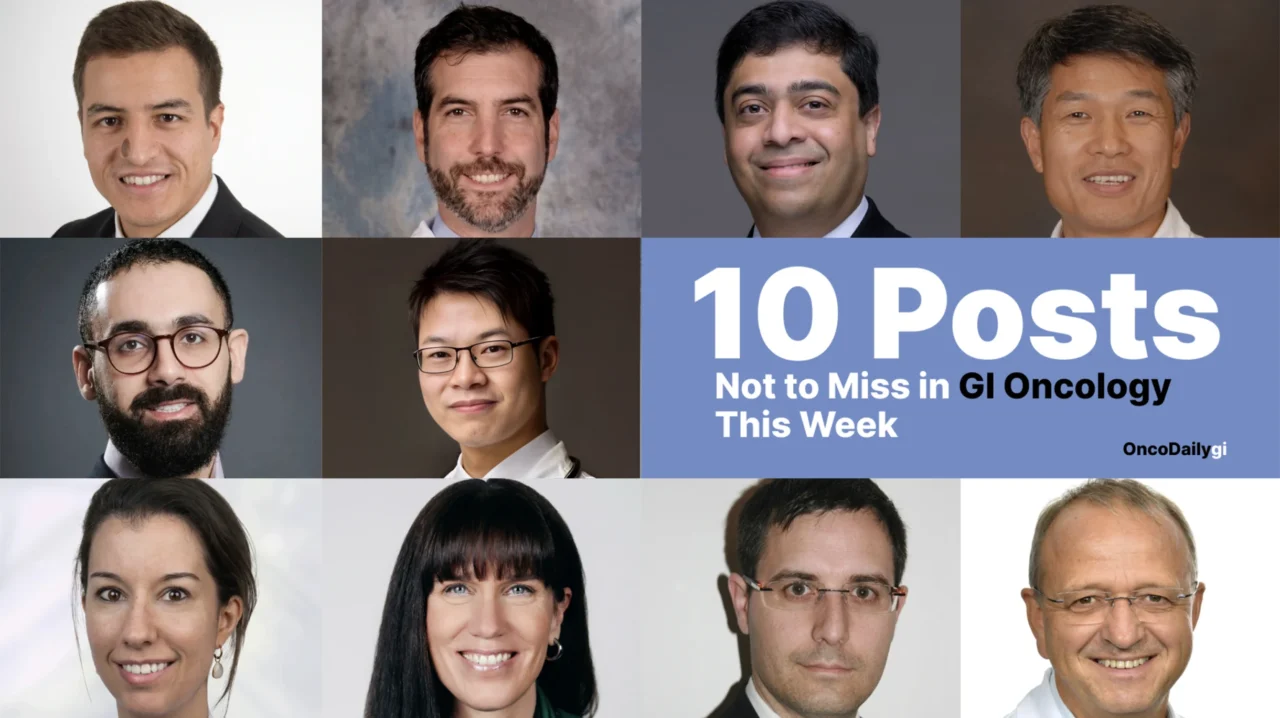
The final week of April transitioning into May brings a diverse set of updates across GI Oncology, highlighting emerging scientific insights alongside continued progress in clinical development.
This week’s selection reflects strong momentum in early-phase and translational research, from novel immunotherapy strategies in microsatellite stable colorectal cancer to new approaches in locally advanced rectal cancer and preclinical advances targeting pancreatic cancer resistance mechanisms. Encouraging developments are also seen in biliary tract cancer, alongside progress in fully enrolled hepatocellular carcinoma trials and signals from regulatory pathways in pancreatic cancer.
At the same time, real-world and population-based evidence continues to inform clinical practice, including nationwide outcomes after chemoradiotherapy in anal cancer and evolving surgical standards such as complete mesocolic excision. Broader trends also emerge, including accelerating clinical trial enrollment, strong international collaboration, and growing interest in risk prediction and early detection strategies.
Together, these insights highlight a field advancing across translational science, clinical research, and multidisciplinary care, while continuing to address significant unmet needs across GI malignancies.
Vivek Subbiah — Professor at Stanford University | Medical Oncologist | Drug Development & Precision Oncology Specialist | United States
“Wow! It’s BIG news on Friday F.D.A. Grants Early Access to Promising Drug for Pancreatic Cancer
Patients with one of the deadliest cancers have been pleading for an unapproved treatment that may prolong their lives.
Looking forward to American Society of Clinical Oncology (ASCO) for the data.”
Victor Moreno — Director of Clinical Research, Early Phase Clinical Trials at START Madrid-FJD | Medical Oncologist | Spain
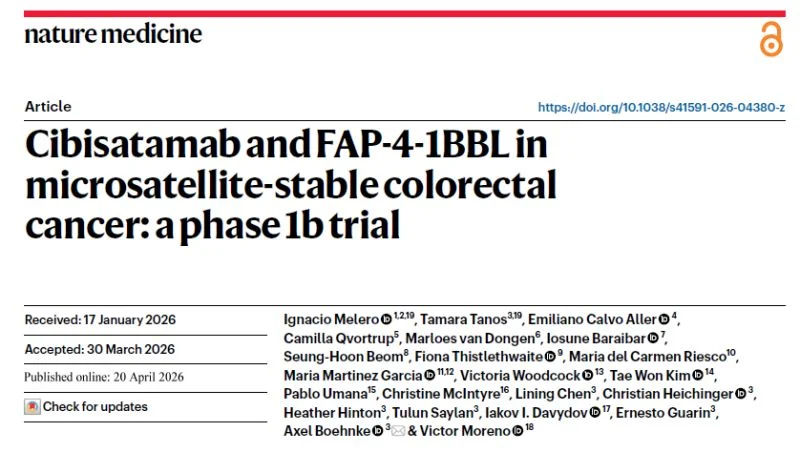
“Very pleased to share our latest publication in Nature Medicine.
In this phase 1b trial, we explored a novel immunotherapy strategy for MSS metastatic colorectal cancer: combining CEA-directed T cell engagement with tumor-localized 4-1BB co-stimulation.The study shows manageable safety, clear pharmacodynamic immune activation, and preliminary antitumor activity in a population with major unmet need.
A step forward in bringing T cell–redirecting therapies to solid tumors.”
Rashid Lui — Physician, Oncology & Gastroenterology Research | Focus on early-onset digestive cancers, screening, genetics, and onco-gastroenterology | Hong Kong
“Happy to share our latest study from CUHK Medicine led by Prof Brigette B.Y. Ma and hashtag#SimonNg on the promising role of neoadjuvant modified FOLFOXIRI followed by capecitabine-based chemoradiation in Chinese patients with high-risk locally advanced rectal cancer (LARC)!
ORR for mFOLFOXIRI 30.8%
pCR 20.5%
Manageable toxicities with no treatment-related deaths or perioperative mortality encountered
Exploratory analyse”
Charlotte Deijen — Radiation Oncologist (M.D., Ph.D.) | The Netherlands
“Outcomes after (chemo)radiotherapy for anal cancer – A nationwide cohort study
Highlights (462 patients):
• (C)RT for anal cancer results in LRFS of 80% and CFS of 88% at 3 years.
• estimated median overall survival (OS) time was 6.9 years.
• negative risk factors for LRFS and CFS were: greater tumour size and HPV negative tumour status; for CFS additional WHO ≥ 2.
• negative risk factors for OS were: WHO ≥ 2, tumour stage IIIb-IV and HPV negative tumour status.
• there was no institutional case load effect for LRFS, OS or CFS.”
Stacie Lindsey — CEO at Cholangiocarcinoma Foundation | United States
” An important step forward for the cholangiocarcinoma community:
New data from the COMPANION-002 study show that tovecimig, in combination with paclitaxel, significantly improved progression-free survival for patients with advanced biliary tract cancer, reducing the risk of disease progression by 56%.
For a patient population that has long faced limited second-line treatment options, this is meaningful progress.
What stands out just as much as the data is the patient-centered design of this trial. More than half of patients in the control arm were able to cross over and receive tovecimig, and many experienced extended survival.
We are encouraged by this progress and look forward to continued collaboration with researchers, industry partners, and regulators to help educate patients about promising therapies like tovecimig as quickly as possible.
Thank you to the patients, families, investigators, and clinical teams who made this research possible.”
Read about COMPANION-002 Trial on OncoDaily.
Duxin Sun — Associate Dean for Research, Charles Walgreen Jr. Professor of Pharmacy and Pharmaceutical Sciences at University of Michigan | Drug Development, Cancer Nanomedicine, Cancer Vaccines, Pharmacokinetics | United States
“Excited to share our new paper in Nature Cancer!
Pancreatic cancer’s resistance to immunotherapy is driven by immune suppression from both myeloid cells and regulatory B cells (Bregs). We found that STING agonists, while activating myeloid cells independent of PI3Kγ, paradoxically expand Bregs via PI3Kγ. Our dual-targeting drug, Nano-273, overcomes both simultaneously, and extends median survival to 201 days in KPC mice with no observed toxicity.We hope to move this toward a Phase I trial soon.
Congratulations to Chengyi Li, Wei Gao, our incredible team and collaborators across University of Michigan, Yale, University of Basel, and Fred Hutchinson Cancer Center!”
Najib Ben Khaled — PD Dr. med. | Lead Gastrointestinal Oncology Group | Head of Phase II MONTBLANC Trial | Germany
” The MONTBLANC trial is fully enrolled!
Sincere thanks to all patients and their families for their trust and willingness to participate in this study.
About MONTBLANC (AIO-HEP-0325/ass):
MONTBLANC is our investigator-initiated, international, randomized Phase II trial evaluating sequential versus upfront triple immunotherapy with durvalumab, tremelimumab, and bevacizumab in advanced HCC.Many thanks to all investigators, study teams, and collaborating colleagues across participating sites in Germany and Italy for their dedication and excellent work!
More about MONTBLANC in our recently published trial protocol.”
Read about MONTBLANC Trial on OncoDaily.
Stefan Benz — Surgical Innovator | AI in Surgery | Developer of AI-Anatomy Engine | Germany
“Can we close the files on the search for evidence for CME?
The latest meta-analysis by Kitaguchi found a clear benefit for CME (Complete Mesocolic Excision) in right hemicolectomy in terms of Disease-Free Survival (DFS) and overall survival. I am pleased that the authors especially valued the quasiexperimental design of our RESCTAT trial:“In the study by Benz et al., a clear, predefined criterion for distinguishing CME from non-CME procedures was established prior to the study. However, this definition was not disclosed to the participating surgeons to prevent any potential bias. Given such considerations, we believe that the integration of such rigorously conducted studies in our meta-analysis provides a reliable and meaningful interpretation of the comparative outcomes of CME + CVL and surgery without the concept of CME + CVL.”
Elie Rassy — Medical Oncologist, Hematologist & Researcher at Gustave Roussy | MD, MSc, MPH | France
“A validated model that flags individuals at high risk of PancreaticCancer could help identify candidates for surveillance who would otherwise remain unscreened under current recommendations. Ideally, such a model should be easily deployable in primary care, without reliance on expensive testing, and allows an Interception of risk.”
David Tougeron — Professor at Poitiers University Hospital | MD, PhD | France
“We are happy to share the TIP of COLOSOTO trial in KRAS G12C frail patients.
Enrollment go two times faster than plan ! More than half of inclusions are done in 6 months !
European academic digestive cancer groups are stronger together thanks to ENGIC group.”
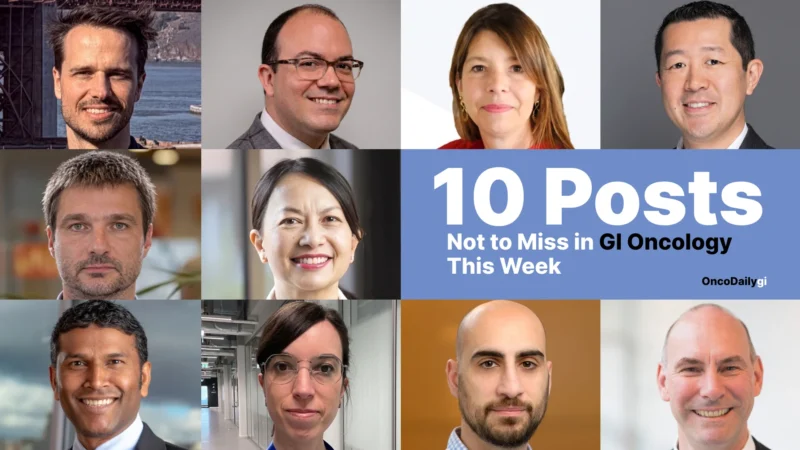
Find out 10 Must-Read Posts in GI Oncology from the fourth week of April on OncoDaily.