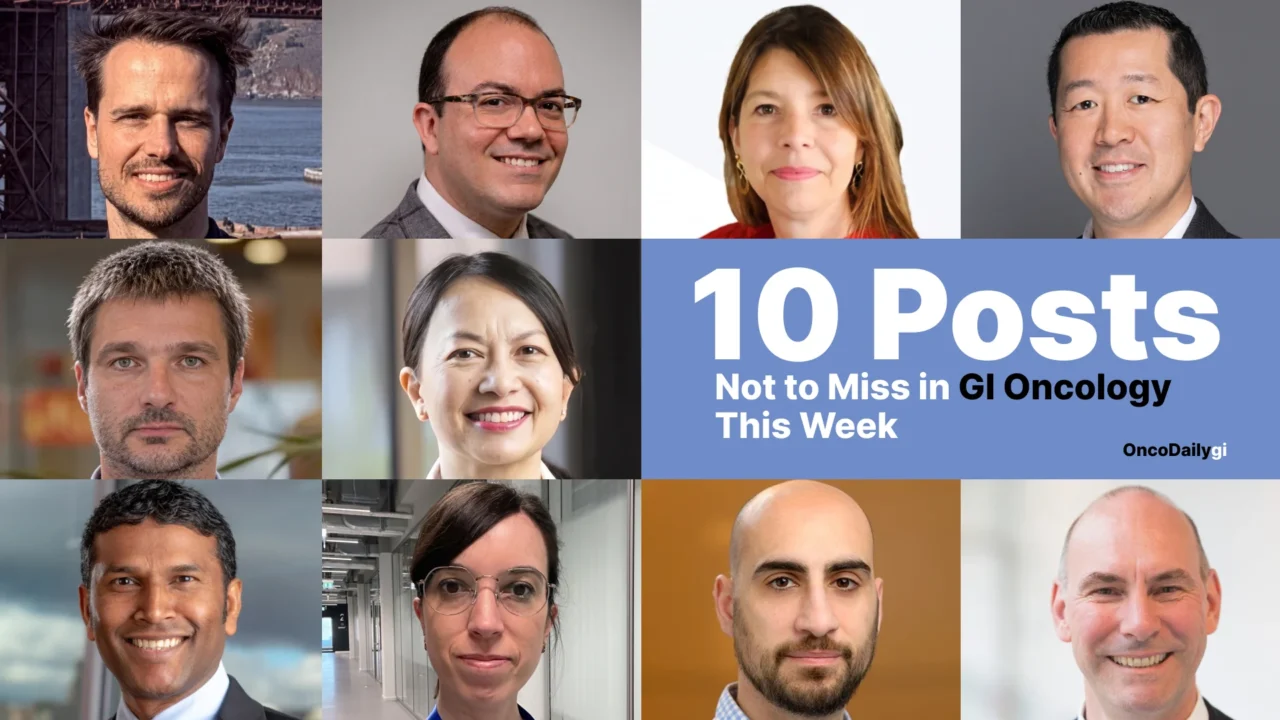
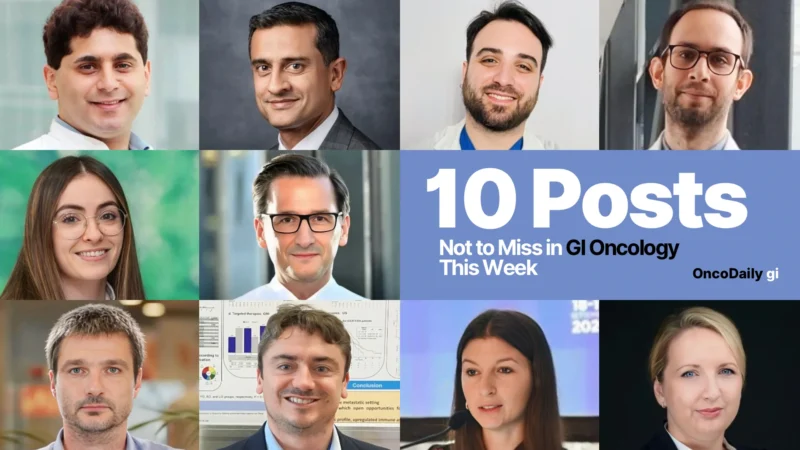
The fourth week of April (April 20–26) brings a broad range of updates across GI Oncology, reflecting continued progress in both research and clinical practice. Recent contributions span pancreatic, gastric, colorectal, and hepatocellular cancers, highlighting advances from translational science to clinical strategies and real-world insights.
Several key themes emerge. There is a strong focus on therapeutic innovation and resistance mechanisms, particularly in pancreatic cancer, where novel approaches and deeper biological understanding are shaping more personalised strategies. At the same time, biomarker-driven insights and comparative analyses are refining treatment selection in hepatocellular and colorectal cancers, while simple clinical markers continue to demonstrate relevance in everyday practice.
Unmet needs remain a central topic, especially in complex settings such as peritoneal carcinomatosis in gastric cancer, where lack of global consensus and evidence gaps continue to challenge decision-making. In parallel, translational research and early-phase trials are advancing new therapeutic targets, supported by increasingly sophisticated technologies such as multi-omics profiling.
Beyond treatment, awareness and prevention also remain critical, with ongoing initiatives emphasising the importance of screening and early detection. Together, these contributions reflect a field that is steadily moving toward more precise, evidence-based, and patient-centred approaches in GI oncology.
Michael Chuong – Vice Chair, Medical Director, Lead GI Radiation Oncologist, Department of Radiation Oncology, Miami Cancer Institute, USA
“Thanks to Medscape for highlighting our recent IJROBP The Red Journal publication in which we demonstrated among the lowest locoregional failure rates ever reported for pancreatic cancers that could not undergo surgery and instead received ablative MRI-guided radiation therapy at Baptist Health Miami Cancer Institute Florida International University – Herbert Wertheim College of Medicine
We believe these results were achieved through both significant radiation dose escalation to the visible tumor as well as comprehensive targeting of regional areas at high risk for harboring microscopic cancer cells, both of which are routine at our institution but uncommon at many others”
Florian Lordick – Oncologist, Professor of Medicine at the University of Leipzig, Head of Medical Oncology, Director of the Comprehensive Cancer Center Central Germany, Germany
“Peritoneal carcinomatosis in gastric cancer remains one of the most pressing unmet clinical needs in oncology.
It is the most frequent metastatic site and is associated with a particularly poor prognosis, with outcomes still disappointingly limited despite current treatment approachesOur latest consensus work highlights a critical reality:
- There is still no global agreement on optimal management, and
- key evidence gaps persist across diagnosis, systemic therapy, and peritoneum-directed strategies
This underscores the urgent need for stronger, high-quality clinical and translational evidence to guide decision-making and improve patient outcomes.
Grateful to collaborate with the dedicated working group of the International Gastric Cancer Association, bringing together global expertise to define standards and research priorities.
Special thanks to Jimmy So and Brian Badgwell for their outstanding leadership in this important initiative.”
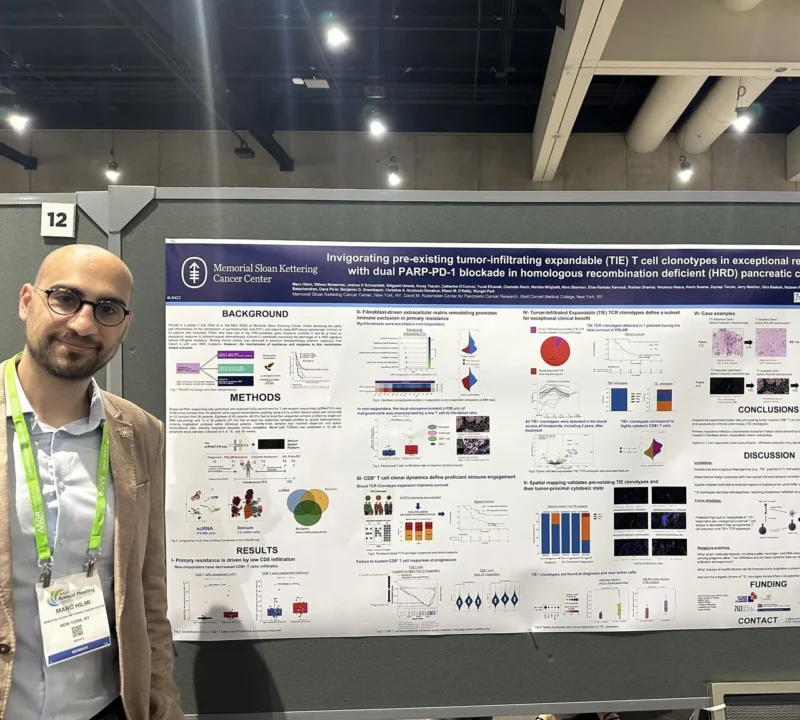
Marc Hilmi – MD, PhD, GI Oncologist, Research Scholar, France
“Just came back from American Association for Cancer Research where I had the honor of presenting our translational work from the POLAR trial, led by the outstanding Wungki Park! Results of the trial were published recently in Nature Portfolio. In this study, we leverage single-cell sequencing, spatial transcriptomics, and TCR sequencing across multiple timepoints to better understand why some patients achieve durable responses while others experience rapid progression.
This work represents a major team effort at Memorial Sloan Kettering Cancer Center.
Many thanks to Institut Curie for the fantastic support, and to Le Monde for highlighting this work.”
Andrea Casadei Gardini – Associate Professor, Associate Professor, Vita-Salute San Raffaele University, Milan, Italy
“Proud to share our new work on survival dynamics of first-line immunotherapy combinations in advanced hepatocellular carcinoma, now accepted in the European Journal of Cancer.
In this study, we compared atezolizumab + bevacizumab and durvalumab + tremelimumab (STRIDE) through three complementary frameworks: an anchored indirect comparison of phase III trials, a MAIC-adjusted international real-world cohort, and an external validation in TriNetX.
The key message is that these regimens appear to have different timing of benefit rather than a simple overall winner. Across analyses, A+B showed a more consistent early survival advantage, particularly within the first 6 months, whereas STRIDE was associated with a more durable long-term benefit beyond 24–36 months.
These findings suggest that treatment choice in advanced HCC may also need to reflect the temporal therapeutic goal: rapid disease control versus greater long-term durability. At the same time, they reinforce the need for biomarkers able to predict early versus sustained benefit from immunotherapy-based strategies.
A sincere thank you to all co-authors and collaborators involved in this international effort.”
Cathy Eng – MD, Associate Director for Strategic Relations and Research Partnerships, Vanderbilt-Ingram Cancer Center, Executive Director, Young Adult Cancers Program, Co-Chair, NCI GI Steering Committee, USA
“Out of press: ORIGAMI-1 In the Journal of Clinical Oncology American Society of Clinical Oncology (ASCO): The role of Amivantamab the fully human, bispecific IgG1 monoclonal antibody that simultaneously targets EGFR and MET in met colorectal cancer! Johnson & Johnson. Pls consider enrolling to Origami2 (NCT06662786) and Origami3 (NCT06750094) Vanderbilt University Medical Center”
Read more about OrigAMI-1 trial on OncoDaily.
Gaël Roth – MD, PhD, Professor of GI Oncology, Grenoble Alpes University – Grenoble Alpes University Hospital, President of ACABi, Biliary Tract Cancer FFCD/PRODIGE Study Group, France
“FOLFIRINOX + NP137: a new promising therapeutic approach in advanced pancreatic cancer !
I am very proud to share the publication of the results of the LAPNET-1 trial officially online today on Nature website – Nature Portfolio.
Study highlights:
- LAPNET-01 Phase 1b study shows netrin-1 blockade may overcome and prevent chemoresistance in patients with pancreatic ductal adenocarcinoma (PDAC) with locally advanced PDAC (LAPC).
- NP137 is the first-in-class anti-netrin-1 monoclonal antibody (mAb) in clinical testing for LAPC and other cancers
- LAPC patients treated with NP137 and mFOLFIRINOX achieved a median progression free survival (PFS) of 10.85 months, median overall survival (OS) of 16.43 months and a 23% conversion-to-surgery rate in the whole cohort
- Patients with high tumor netrin-1 receptor neogenin expression achieved a median PFS of 15.65 months and an unreached OS !
- Neogenin emerged as a good candidate predictive biomarker for NP137 efficacy
LAPNET-1 was coordinated by Gaël Roth (Université Grenoble Alpes/CHU Grenoble Alpes), promoted by CHU Grenoble Alpes with the support of NETRIS Pharma, Fondation ARC pour la recherche sur le cancer and the collaboration of many partners.
We sincerely thank the patients and their families.
We thank all the co investigators, collaborators, and their teams for the clinical study and the translational work.”
Sendurai Mani – Associate Director of Translational Oncology, Legorreta Cancer Center, Professor of Medicine (Cancer Biology), Brown University, Chief Scientific Officer, Iylon Precision Oncology, USA
“𝗔𝗱𝘃𝗮𝗻𝗰𝗶𝗻𝗴 𝗽𝗿𝗲𝗰𝗶𝘀𝗶𝗼𝗻 𝗺𝗲𝗱𝗶𝗰𝗶𝗻𝗲 𝗶𝗻 𝗽𝗮𝗻𝗰𝗿𝗲𝗮𝘁𝗶𝗰 𝗰𝗮𝗻𝗰𝗲𝗿 𝘂𝘀𝗶𝗻𝗴 𝗻𝗼𝘃𝗲𝗹 𝗯𝗶𝗼𝗺𝗮𝗿𝗸𝗲𝗿𝘀 𝗮𝗻𝗱 𝗰𝗹𝗶𝗻𝗶𝗰𝗮𝗹 𝘁𝗮𝗿𝗴𝗲𝘁𝘀
Pancreatic cancer remains one of the most lethal malignancies and is known to be resistant to therapeutics. The recent review by Murthy et al. in Molecular Aspects of Medicine, from my lab (Mani lab, Brown University, Legorreta Cancer Center), critically examines the underlying mechanisms of this resistance.
Despite advances in molecular profiling and therapy, patient outcomes remain poor, with a five-year survival rate around 13%. This is both a clinical challenge and a significant biological obstacle.
Pancreatic cancer is primarily driven by a core set of mutations, including KRAS (present in over 90% of cases), TP53, CDKN2A, and SMAD4. Although targeting these genetic drivers is a critical initial step, further progress necessitates addressing additional complexities such as tumor heterogeneity, the tumor microenvironment, and metabolic and systemic influences, including diabetes, inflammation, and the microbiome. These factors actively contribute to therapy resistance and influence clinical outcomes.
A comprehensive precision oncology approach that integrates multi-omics data, liquid biopsy for real-time monitoring, and functional models such as organoids and patient-derived xenografts (PDX), as well as AI-driven patient stratification, will facilitate the transition beyond “one-size-fits-all” treatment paradigms toward personalized precision oncology solutions grounded in a thorough understanding of the disease’s full biology.
Proud of the team behind this work. Thanks to John and Pat Tarantino Charitable Foundation and Papitto Opportunity Connection for support. To learn more, please review the attached article.”
Michael Sapienza – Chief Executive Officer, Colorectal Cancer Alliance, USA
“I’m incredibly proud to share that the Colorectal Cancer Alliance LEAD FROM BEHIND initiative won a The Webby Awards, the Internet’s highest honor, in the 30th Annual Webby Awards.
Our campaign featuring Katie Couric, “Ready For Her Close-Up,” received the top award for Best Social in the Public Service, Social Impact & Activism category.
This recognition is shared with our partners, Ryan Reynolds’s Maximum Effort and with Katie, a tireless advocate who has championed colon cancer awareness for decades. Together, we set out to do something simple but powerful: break the stigma and get people screened.
Special thank you to Sharon Byers, Angie Lawry, John Deschner and the entire Colorectal Cancer Alliance team.
Additionally thank you to Pascale M. White, MD, MBA, MS, FACG for her time and support in making this campaign a reality.
Colon cancer doesn’t discriminate. It is The Preventable Cancer and screening saves lives.”

Giulia Turri – MD, PhD, General Surgeon, Young SICO Executive Board Member, Italy
“Happy to share our most recent publication in Annals of Surgical Oncology
- 436 stage I-III CRC undergoing curative laparoscopic resection
- High post-operative CRP correlates with poor prognosis
- A simple marker, real impact on risk stratification”
Christelle de La Fouchardière – MD, PhD, Medical Oncologist, France
“Delighted to share our consensus paper on peritoneal carcinomatosis in gastric cancer. This works reflects a collaborative effort to better define management strategies in this challenging setting.
Open access in BJS”
Find out 10 Must-Read Posts in GI Oncology from the third week of April on OncoDaily.