The third week of April brings a diverse set of updates across GI Oncology, reflecting ongoing progress in both research and clinical practice. Recent contributions span colorectal, pancreatic, hepatocellular, and upper gastrointestinal cancers, highlighting advances from translational biology to real-world evidence and evolving treatment strategies.
Several key themes emerge. There is a growing focus on tumor biology and biomarker-driven approaches, from epigenetic mechanisms in hepatocellular carcinoma to metabolic and immune pathways linking liver disease and cancer. At the same time, real-world data are increasingly complementing clinical trials, while guideline updates and long-term research efforts continue to shape treatment approaches in metastatic colorectal cancer.
The importance of patient stratification is also becoming clearer, with distinct subgroups such as very early-onset colorectal cancer and increasing attention to rare malignancies. In parallel, surgical expertise, hospital volume, and multidisciplinary care remain critical factors influencing outcomes, alongside the development of dedicated programmes for younger patients.
Together, these insights reflect the continued shift toward more precise, evidence-based, and patient-centered approaches in GI oncology.
Elena Adán Villaescusa – PhD Student, CIMA Universidad de Navarra, Spain
“I am especially happy to share my first publication as first author
Our work, “Histone methyl-transferase G9a inhibition boosts the efficacy of immune checkpoint inhibitors in experimental hepatocellular carcinoma”, has been published in Cell Reports Medicine by Cell Press.
In this study, we identify the epigenetic regulator G9a (EHMT2) as a potential driver of immune resistance in hepatocellular carcinoma, showing that its expression inversely correlates with transcriptional signatures associated with response to immune checkpoint inhibitors. We further demonstrate that G9a inhibition restores IFN-γ signaling, promotes viral mimicry, and enhances tumor immunogenicity, ultimately reshaping the tumor microenvironment toward a more immunostimulatory state and synergizing with anti-PD1 therapy to improve antitumor responses in HCC models.
This has been a very valuable experience for me, and I am very grateful to the team for their hard work and collaboration.
I’m excited to keep building on this work during my PhD!”
Andrea Casadei Gardini – Associate Professor,Vita-Salute San Raffaele University, Italy
“New publication in Liver International
I’m pleased to share our latest work; In this study, we evaluated real-world data on patients with advanced hepatocellular carcinoma treated with durvalumab + tremelimumab (STRIDE) in routine clinical practice.Key findings:
-Reproducible effectiveness outside clinical trials
-Manageable safety profile, with adverse events mainly occurring early during treatment
-Central role of liver function in shaping clinical outcomesThese results help bridge the gap between randomized clinical trials and real-world practice, providing insights that better reflect the complexity of patients we treat every day.
Importantly, this work represents a strong regional collaborative effort within the LOR-HCC (Lombardy Real-World HCC Group), involving multiple centers across Lombardy.
A special thanks to all collaborators, and in particular to Massimo Iavarone and Lorenza Rimassa , with whom we coordinated this work, together with the entire team involved.
Collaboration remains key to generating meaningful evidence that can truly impact clinical practice.”
Shubham Pant – Professor, Department of Gastrointestinal Medical Oncology and Investigational Cancer Therapeutics, MD Anderson Cancer Center, Houston, USA
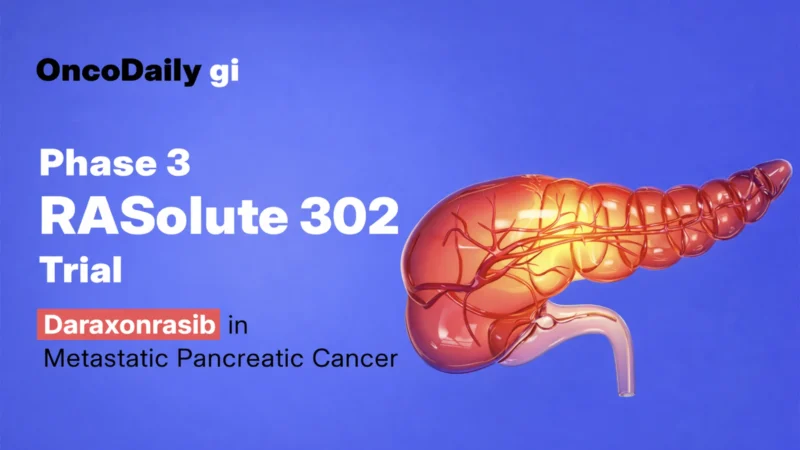
“Having treated Pancreatic Cancer for almost 20 years and having seen innumerable negative trials, I’m truly overcome with emotion today for our patients. This is truly transformational for our patients and their caregivers. Honored to have played a small part in this amazing journey!!! And…. We are just getting started… RASolute302”
Jessie Elliott – Consultant Upper Gastrointestinal Surgeon, ICS Clinician Academic, and Academic Lead for Upper GI Surgery, National Centre for Oesophageal and Gastric Cancer, Trinity St. James’s Cancer Institute, Dublin, Ireland
“So proud of the brilliant Oana Deac driving this really important project examining current trends in young onset upper gastrointestinal cancers in Ireland. A really critical step representing a needs analysis to inform the development of our young onset cancer programme at Trinity St. James’s Cancer Institute. Well done Oana and team!!”
Davide Ciardiello – Medical Oncologist, Division of Gastrointestinal and Neuroendocrine Tumors, European Institute of Oncology (IEO), Italy
“It seems like yesterday, however it was 2017, at the time I was enrolled in the first year of specialization in medical oncology. On a hot day in June, together with Erika Martinelli and Fortunato Ciardiello we worked on the idea of the CAVE-GOIM study that evaluated the rechallenge with cetuximab and avelumab in patients with chemorerefractory RAS WT colon cancer.
Thus began a line of research and a path that would take the next 9 years.
A few days ago, the new ESMO guidelines were published, the rechallenge with anti-EGFR drugs was fully included in the therapeutic algorithm (evidence IIB).
As a young oncologist, seeing how the fruit of your work has influenced and contributed to changing the guidelines is a source of pride.
To date, however, excluding the absence of RAS/BRAF and EGFR-ECD mutations on liquid biopsy analysis, there are no other biomarkers, moreover there are no randomized studies comparing with the current standard of care (trifluridine/tipiracile + bevacizumab).
In this scenario, the ROMANCE-GOIM study (NCT07381764) will compare the treatment of rechallenge with cetuximab+irinotecan vs trifluridine/tipiracile + bevacizumab in patients with colorectal cancer without alterations in resistance to anti-EGFR drugs (“negative hyperselected”).”
Andrea Pretta – Researcher, University of Cagliari, Italy
“Our abstract on early-onset colorectal cancer, focusing on two predefined age subgroups (30–39 vs 40–49 years), has been published in the Proceedings of the American Association for Cancer Research Annual Meeting 2026 (Cancer Research).
In this study, we investigated the biological and clinical heterogeneity of metastatic early-onset colorectal cancer.
We observed that patients aged 30–39 years represent a distinct subgroup, characterised by:
• Shorter overall survival
• A different genomic landscape, with higher KRAS mutation rates and fewer APC alterations
• A higher prevalence of peritoneal involvement despite similar performance statusTaken together, these findings support the concept of a “very early-onset” colorectal cancer subtype, suggesting that early-onset disease should not be regarded as a single entity.
Looking forward to presenting these data at AACR 2026.
Grateful to all co-authors and collaborating centres for this shared work.”
Irene Sole Zuin – General Surgery Resident, Azienda Ospedaliera Padova, Italy
“Excited to share our latest research on the impact of hospital volume on postoperative outcomes for esophagectomy and gastrectomy
In this systematic review and meta-analysis, we examined how treatment volume influences surgical outcomes in upperGI cancer surgery. Our findings support the centralization of care, showing that higher-volume centers are associated with improved postoperative outcomes after complex procedures, such as esophagectomy and gastrectomy.
Grateful to collaborate with Cezanne Kooij, Richard van Hillegersberg, Jelle Ruurda, Alexandre Challine, Jessie Elliott, and Lucas Goense”
Anthony Turpin – MD, PhD, GI Oncologist, Lille University Hospital, France
“Happy to share our latest publication in concerning the role of targeted therapies in advanced small bowel adenocarcinoma, a rare and orphan disease.
Antiangiogenics plus chemotherapy improved outcomes in first-line treatment.
No clear benefit of anti-EGFR, likely due to small cohorts.
In the absence of a standard in this situation and lack of randomized data, this study may be practice changing.A huge thanks to Dr Emeric Boisteau and all AGEO investigators
Alice Boilève, David TOUGERON, Dewi VERNEREY
Alice de Malet, Thierry Lecomte, Thomas Aparicio, Simon Pernot, Julien Pinot, Anna Pellat, Vincent Hautefeuille, Nadim Farès, Romain Desgrippes
Romain Coriat, Aziz Zaanan, Julien Edeline, Sara Philonenko, Olivier Dubreuil, Julie HenriquesLooking forward ongoing trials FOLFIRINOX SBA (PI Pr Thomas Aparicio) in first line setting and NIMOGRELE, a personnalized medicine phase II trial in small bowel adenocarcinoma that I will coordinate, funded by the french national grant PHRC-K with the support of Oncoscience GmbH”
Arndt Vogel – Head of the Center for Personalized Medicine, MHH at Medical University of Hanover, Germany
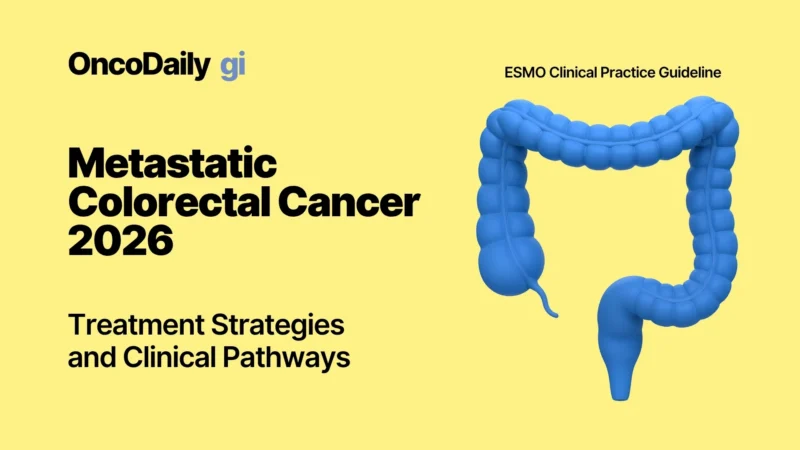
“Metastatic colorectal cancer: ESMO Clinical Practice Guideline for diagnosis, treatment and follow-up
get the latest updates in CRC”
Mohammad Rahbari – Medical Doctor, Clinician Scientist, University Hospital Tuebingen; German Cancer Research Center; The M3 Research Center, Germany
“Steatotic liver diseases, including alcohol-associated liver disease (ALD) and metabolic dysfunction-associated steatotic liver disease (MASLD), are among the most prevalent chronic liver diseases worldwide and major contributors to liver cancer. More effective approaches to prevention, surveillance, and treatment are urgently needed.
I’m happy to share our review article, published in Nature Reviews Cancer, in which we examine how metabolic dysfunction, chronic inflammation, immune alterations, and changes in the liver microenvironment may drive the link between steatotic liver disease and liver cancer:”
Find out 10 Must-Read Posts in GI Oncology from the second week of April on OncoDaily.