The final week of February delivers a clinically dense and biologically nuanced set of updates across GI Oncology, reflecting how the field continues to mature at the intersection of biomarker precision, translational science, and real-world validation.
This week’s selected posts focus on cholangiocarcinoma, advanced gastroesophageal cancer, pancreatic ductal adenocarcinoma, metastatic colorectal cancer, biliary tract cancer, surgical oncology, radiation oncology, and computational genomics. From updated ASCO guideline recommendations and early endpoint analyses in perioperative immunotherapy to stage-resolved transcriptomic mapping of PDAC and real-world outcomes paralleling phase III data, the contributions underscore a consistent shift toward biologically informed treatment strategies.
Across these publications and perspectives, several themes converge: the expanding role of biomarker testing (HER2, PD-L1, MSI/MMR, CLDN18.2, FGFR2), refinement of prognostic stratification in the immunochemotherapy era, and continued investment in functional genomics and multidisciplinary optimization of care.
Together, these posts illustrate how late February continues to shape a more data-driven, biomarker-integrated, and translationally anchored era of GI cancer care.
Enes Erul – Oncology Fellow, Ankara University
“I’m happy to share that our review, prepared together with my inspiring colleagues from IDEA, has been published. Conquer Cancer, the ASCO Foundation Sergio Cifuentes-Canaval Dr Akhil Santhosh (MD, DM Med Onc , MRCP UK) Emir Sokolović
In this paper, we provide a comprehensive overview of FGFR inhibitors in cholangiocarcinoma, covering:
the molecular background (especially FGFR2 alterations),
clinical efficacy data,
toxicity management (particularly hyperphosphatemia),
acquired resistance mechanisms, and
the role of liquid biopsy/cfDNA in tracking resistance mutations. International Society of Liquid Biopsy
We also highlight that much of the current evidence comes from single-arm and relatively small studies, underlining the need for stronger prospective data, better patient selection, and rational combination strategies.I would especially like to thank the mentors I always feel grateful for—particularly Pınar Kubilay Tolunay and Alessandro Rizzo—for their support, guidance, and inspiration throughout this journey. Ankara Üniversitesi
Grateful as well to my IDEA colleagues and co-authors for this meaningful collaboration.”
Sarbajit Mukherjee, MD, MS – Chief of GI Medical Oncology
“The new ASCO Guideline Update on immunotherapy and targeted therapy for advanced gastroesophageal cancer is now published in Journal of Clinical Oncology
The emphasis is on biomarker testing and biomarker-driven treatment.
Key highlights:
• Upfront testing for HER2, PD-L1, MSI/MMR, and CLDN18.2 is essential
• PD-L1 ≥1: Immunotherapy + platinum/fluoropyrimidine chemotherapy (with greater benefit as PD-L1 increases, especially ≥10)
• CLDN18.2-positive disease: Zolbetuximab + chemotherapy is now a standard option
• HER2-positive, PD-L1 ≥1: Pembrolizumab + trastuzumab + chemotherapy
• dMMR/MSI-H: Immunotherapy-based strategies remain foundationalGrateful to American Society of Clinical Oncology (ASCO) and Manish Shah for the opportunity to contribute alongside an exceptional panel.
And this is just the beginning — antibody–drug conjugates and bispecific antibodies are poised to further reshape the treatment landscape in the years ahead.”
Kohei Shitara – Medical oncologist at National Cancer Center Hospital East, Japan
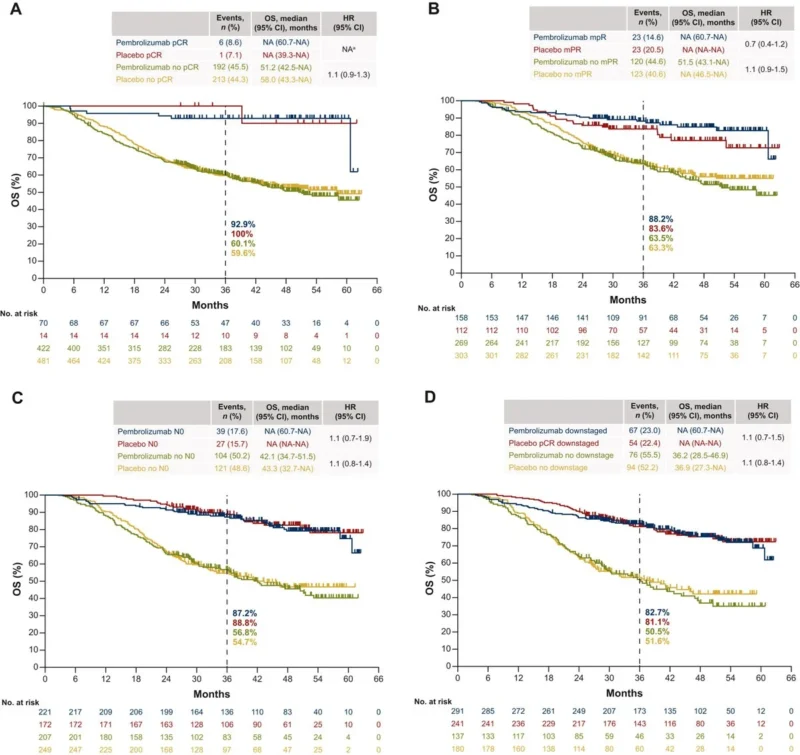
“Pleased to share analysis of early endpoints in KEYNOTE585
pCR, mPR, and downstaging showed associations with favorable EFS and OS in gastric/GEJ adenocarcinoma treated with perioperative pembro+chemo. Further validation is warranted.”
Nelson Dusetti – Research Director, INSERM | Pancreatic Cancer & Translational Oncology | Co-founder of Predicting Med, developing transcriptomic tools for precision oncology
“I am very pleased to share our new publication:
‘Stage-Dependent Transcriptional Analysis Reveals Key Genes Driving Pancreatic Ductal Adenocarcinoma Progression and Therapeutic Vulnerabilities’.It represents the first scientific publication of the Franco-Argentinian Network on Pancreatic Cancer, a long-term collaborative initiative established under the scientific leadership of Juan Iovanna (Inserm, CRCM) and bringing together CRCM – Centre de Recherche en Cancérologie de Marseille, Inserm / CNRS / Aix-Marseille University / Institut Paoli-Calmettes (IPC) in Marseille and major Argentinian partners including UBA and CONICET.
In this study, we analyzed 443 treatment-naïve human PDAC samples and generated a stage-resolved transcriptomic atlas spanning resectable disease to liver metastases.
Key findings:
• Identification of dynamic transcriptional programs evolving across clinical stages
• A metabolic transition from glycolytic profiles in early stages to increased mitochondrial and OXPHOS dependence in metastatic disease
• Progressive collapse of immune-stimulatory signals and establishment of an “immune-cold” microenvironment in advanced PDAC
• Compact early- and late-stage gene signatures validated in independent TCGA and ICGC cohorts
• Functional validation in patient-derived cultures showing increased invasiveness, redox imbalance, and mitochondrial dependency in advanced tumorsBeyond the data, this work reflects a shared vision: Building coordinated, progression-aware translational research in pancreatic cancer, integrating transcriptomics, tumor biology, patient-derived models, and clinical expertise across continents.
I would like to sincerely thank all co-authors who made this project possible.
And to all institutions supporting this Franco-Argentinian scientific bridge.
This is only the beginning!!Pancreatic cancer progression is not a binary event, it is a dynamic biological trajectory. Understanding it stage by stage is essential if we want to design smarter and more effective therapeutic strategies.”
Giuseppe Santabarbara – Medical Oncologist, Azienda Ospedaliera di Rilievo Nazionale San Giuseppe Moscati
“No differences in terms of Overall Survival, no differences!!!
‘After a median follow-up of 7.7 years (IQR, 6.0-10.9) for disease-free surviving patients, 54 (38%) and 51 (36%) patients had died in the adjuvant chemotherapy and hepatectomy-alone arms, respectively.
OS did not significantly differ between the two arms in all randomly assigned patients (HR, 1.07 [95% CI, 0.73 to 1.57]; P = .736) or all eligible patients (HR, 1.16 [95% CI, 0.78 to 1.73]; P = .468;).’”
Read about JCOG0603 Long-Term Results: Adjuvant mFOLFOX6 After Hepatectomy in Resectable Colorectal Liver Metastases on OncoDaily.
Maliha Nusrat – Gastrointestinal Medical Oncologist, Memorial Sloan Kettering Cancer Center
“Our analysis of a heterogeneous US-based real world dataset shows longer OS with FTD–TPI+bevacizumab vs FTD–TPI in patients with metastatic CRC, similar to the results of the phase 3 SUNLIGHT trial. We also explored clinical outcomes in patient subgroups underrepresented in the phase 3 trial. NEJM Evidence”
Sebastian Adeberg – Professor and Director of the Clinic for Radiotherapy and Radiation Oncology, UKGM and Marburg Ion-Beam Therapy Centre (MIT)
“Out now
from Philipps-Universität Marburg & Marburg Ion-Beam Therapy Center MIT / Radiation Oncology Marburg”
Andrea Casadei Gardini – Associate Professor, Università Vita-Salute San Raffaele
“New Publication in Targeted Oncology
I’m proud to share, and especially proud to present, this new article from our group, with Silvia Camera as first author, reflecting an outstanding team effort.
Our international study evaluated the prognostic impact of metastatic sites in patients with advanced biliary tract cancer (BTC) treated with cisplatin, gemcitabine, and durvalumab (CGD).
This real-world analysis included 666 patients and explored whether the number or location of metastatic sites influences outcomes in the era of chemoimmunotherapy.
Key Findings:
• No specific metastatic site independently impacted overall survival (OS) in multivariable analysis.
• Patients with 1–2 metastatic sites showed longer OS and PFS compared with those with 3–5 sites in univariable analysis; however, this association was not confirmed after adjustment.
• Changes in metastatic pattern at progression did not significantly affect post-progression survival (OS2).Why This Matters
Historically, metastatic burden and distribution have been considered important prognostic factors in BTC. Our findings suggest that in patients treated with CGD, these traditional negative prognostic indicators may be attenuated.
This study contributes to a better understanding of prognostic stratification in the immunochemotherapy setting and may have implications for patient counseling, trial design, and clinical decision-making.
Grateful to all collaborators who made this possible.”
Prem Chana – Consultant Oesophagogastric Surgeon, Gloucestershire Hospitals NHS Foundation Trust
“Proud of this paper which explores the use of feeding adjuncts at the time of oesophagogastric cancer resection.
This remains a long-standing area of debate within our community with significant variation in practice between centres and individual surgeons, reflecting differences in perceived benefits, risks, and alternative nutritional strategies.
I would be very interested to hear colleagues’ views and experiences:
How do you approach nutritional steategies during oesophagogastric cancer resections?
Is jejunostomy placement routine or selective in your practice, and what factors most influence your decision-making?”
Rafia Wasi – Bioinformatics Researcher | MS Bioinformatics Student | Computational Genomics | NGS, RNA-Seq & SNP Analysis | Functional Enrichment | Molecular Docking | R & Linux
“I’m pleased to share that our research article titled ‘Computational Identification of Rare Pathogenic Genomic Variants in Esophageal Cancer Markers: Transcript-Level Analysis, Sequence-Based Insights, and Structural-Functional Impacts of Non-Synonymous SNPs’ has been published in Biochemistry and Biophysics Reports.
This study explores rare pathogenic variants in esophageal cancer markers using comprehensive computational and structural analysis to better understand their functional impact at the transcript and protein levels. It has been a valuable learning journey in genomic data interpretation, variant prioritization, and structural-functional assessment.
I am especially grateful to my supervisor, Dr Muhammad Bilal Azmi, for his constant guidance and mentorship. He truly taught me the foundations of computational genomics and research methodology, and this achievement would not have been possible without his support.
The article can be accessed through the following link”
Find out 10 Must-Read Posts in GI Oncology from the third week of February on OncoDaily.