
The third week of February delivers a wide-ranging and conceptually rich set of updates across GI Oncology, reflecting how the field continues to evolve along two parallel tracks: refinement of biological stratification and recalibration of clinical implementation.
This week’s must-read posts span the continuum of care—from screening strategies and liquid biopsy integration in colorectal cancer, to mechanistic insights into BRAFV600E resistance, metabolically defined pancreatic cancer subtypes, and biologically enriched perioperative immunotherapy in gastroesophageal malignancies. At the same time, emerging data in early-onset colorectal cancer, POLE-mutant GI tumors, and appendiceal adenocarcinoma underscore how increasingly granular molecular characterization is reshaping long-held clinical assumptions.
Across these contributions, a consistent theme becomes evident: precision in GI Oncology is moving beyond static genomic labels toward functional profiling, dynamic biomarkers, and biology-driven therapeutic selection. Together, these posts illustrate how mid-February 2026 continues to refine a more integrated, evidence-informed, and biologically grounded approach to gastrointestinal cancer care.
Davide Ciardiello – Medical Oncologist, Division of Gastrointestinal and Neuroendocrine Tumors, IEO, Istituto Europeo di Oncologia
“In recent years, what appears increasingly evident is the key role of liquid biopsy in oncology, from early diagnosis to personalization of therapy in the most advanced stages.
Yet, despite an increasing number of data to support the rationale for the use of liquid biopsy in colorectal cancer (CRC), we are far from applying it in clinical practice.
In this narrative review just published in Nature Reviews in Clinical Oncology, we analyze the potential role of liquid biopsy in CRC.”
Arndt Vogel – Medical Oncologist
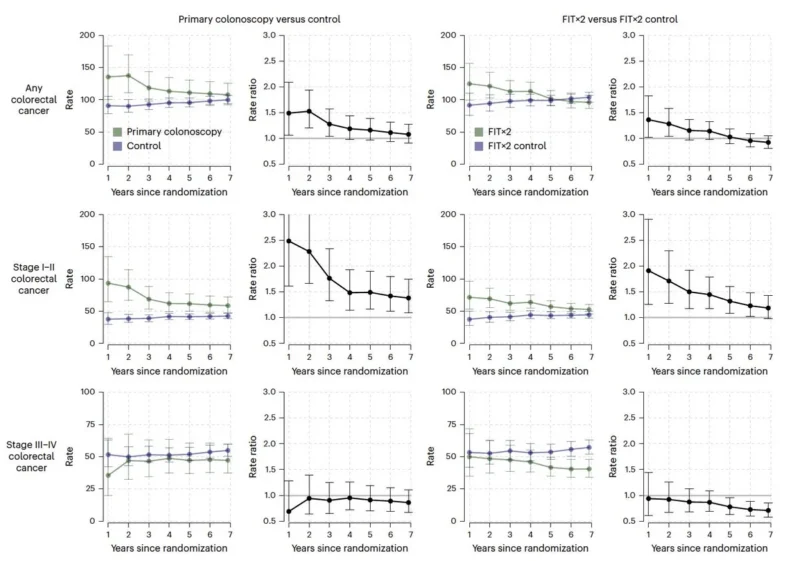
“Colonoscopy & fecal immunochemical testing vs usual care in diagnostic CRC screening: the SCREESCO trial
Largest study so far
More CRCs detected indicate benefit of screening while more AEs suggests some initial harm”
Elizabeth Smyth – Oncology Research, Education & Policy, Oxford, ESMO, EORTC
“Delighted to share that I’ve been appointed Associate Editor for GI Oncology at ESMO Open.
ESMO Open is the European Society for Medical Oncology’s open access journal, publishing peer-reviewed clinical and translational research across oncology, with a clear focus on innovation in cancer care.
Looking forward to working with the editorial team — and to seeing your best GI oncology papers!”

Nelson Dusetti – Research Director, INSERM | Pancreatic Cancer & Translational Oncology | Co-founder of Predicting Med, developing transcriptomic tools for precision oncology
“We are pleased to share our collaborative publication in Advanced Science:
‘Decoding the Integrated Stress Response of Pancreatic Cancer: Identifying a Serine-dependent Tumor Subset Under Metabolic Relationships With CAFs.’Transcriptomic classifications of pancreatic ductal adenocarcinoma (PDAC) have significantly refined prognostic stratification, but they still fall short of defining actionable personalized therapies.
In this study, tumors were stratified based on mRNA translation rates, a functional layer of gene expression frequently altered in cancer but rarely used for classification. This approach revealed a distinct PDAC subtype characterized by:
• Low global protein synthesis
• Activation of the Integrated Stress Response (ISR)
• Resistance to chemotherapy and apoptosis
• Serine auxotrophy due to altered serine and cysteine biosynthesis pathwaysImportantly, this vulnerability is associated with improved overall survival in patients and is sustained through a metabolic symbiosis with cancer-associated fibroblasts (CAFs), which may supply serine to support tumor growth.
Our team contributed PDAC patient-derived models and participated in transcriptomic and functional analyses, helping to validate this subtype biologically and to characterize tumor–stroma metabolic interactions.
Why is this important?
This work refines PDAC classification beyond conventional transcriptomic subtypes by integrating a functional translational layer. It demonstrates that translatomic profiling can identify resistant tumor subsets while uncovering actionable metabolic dependencies within the tumor microenvironment.
These findings open the door to new therapeutic strategies targeting metabolic crosstalk between tumor cells and CAFs, a potentially druggable vulnerability in a disease still lacking effective precision approaches.
A very special thank you to Yvan Martineau for his trust and for a truly productive and intellectually stimulating collaboration.
Congratulations to all co-authors involved.”
Anirudh Prahallad – Associate Director, Novartis
“Back in 2012, we addressed a very important clinical question: why do BRAFV600E mutant CRC does not respond to BRAF inhibitors in the clinic? Our findings, published in the Nature article, suggested that combining BRAFV600E inhibition with EGFR inhibition led to significant responses. We uncovered a mechanism in which BRAFV600E inhibition led to feedback activation of EGFR, which was overcome by co-targeting EGFR together with BRAFV600E.
Cut to today, in 2026 — it is heartening to see that the Pfizer BREAKWATER trial has demonstrated meaningful clinical benefit for patients with BRAFV600E-mutant colon cancer who received the combination of BRAFV600E inhibitor plus EGFR inhibitor plus chemotherapy (BRAFTOVI) — indicating that robust mechanistic preclinical data have the potential to translate into meaningful clinical benefits.”
Sarbajit Mukherjee, MD, MS – Chief of GI Medical Oncology
“Who truly benefits from perioperative immunotherapy in gastric and GEJ cancer?
Our latest data suggest the answer is clear: tumor biology matters.I’m excited to share that our team’s meta-analysis has just been published in JNCI Cancer Spectrum, synthesizing evidence from 7 randomized trials and 2,510 patients evaluating perioperative chemo-immunotherapy in resectable gastric/GEJ adenocarcinoma.
Key findings:
• Adding immunotherapy to perioperative chemotherapy improves outcomes overall:
• pCR: 17.6% vs 6.1%
• EFS: HR 0.76
• OS: HR 0.82
However, benefit is biologically enriched:
• PD-L1–positive tumors show consistent improvement in pCR, EFS, and OS
• PD-L1–negative disease demonstrates no statistically significant survival signal at the meta-analysis levelImportantly, these findings align closely with the National Comprehensive Cancer Network (NCCN) guidelines.”
Andrea Pretta – Researcher (TDA), University of Cagliari
“I am very proud to share our new multicenter study just accepted in Clinical Colorectal Cancer:
‘The impact of surgical resection in early-onset colorectal cancer patients with liver-limited disease.’
Early-onset colorectal cancer is rapidly increasing worldwide and is now emerging as a leading cause of cancer-related death in younger adults.
The key question is no longer whether it exists — but what kind of disease it actually is.In this real-world cohort we evaluated patients undergoing curative-intent strategies for liver-limited metastatic disease.
Even in a setting traditionally considered favorable, younger patients did not behave as expected.
Clinical behaviour suggests a distinct disease trajectory
Outcomes do not simply mirror those of older patients
Molecular patterns point toward a specific biology rather than just earlier onset
Treatment intensity alone does not explain prognosis differencesWe are progressively learning that early-onset CRC is not the same tumor anticipated in time — it is a tumor with its own biological identity, and this has implications for prognosis, surgical strategies and future trial design.”
Shaheenah Dawood – Consultant Medical Oncologist, Mediclinic Middle East
“5-year follow-up from CheckMate 649
Nivolumab + chemotherapy as 1L gastroesophageal adenocarcinoma
Five-year OS and PFS rates were 16% vs 6% and 10% vs 6%
Benefit in OS and PFS across PD-L1 CPS groups, enriched at higher CPS cutoffs.
now published in annals of oncology”
Read about CheckMate 649: 5-Year Results of First-Line Nivolumab Plus Chemotherapy in Advanced Gastric, GEJ, and Esophageal Adenocarcinoma on OncoDaily.
Khurum Khan MD(Res) FRCP FAcaMEd MRCP (Medical Oncology) – Consultant Medical Oncologist, HCA Healthcare
“Dear all, I’m pleased to share our newly published paper in Frontiers in Immunology on ctDNA-guided management in POLE-mutant gastrointestinal (GI) cancers.
In this study, we demonstrate the clinical utility of serial ctDNA testing at key decision points to guide immunotherapy selection and monitoring in patients with rare POLE mutations. Using a liquid biopsy approach, we observed exceptional treatment responses and extended survival in all evaluated patients when therapy was informed by ctDNA dynamics.
The findings support ctDNA not only as a predictive biomarker for immunotherapy benefit but also as a real-time tool for personalised treatment strategies that can meaningfully change clinical outcomes.”
Vivek Subbiah, MD – Medical Oncologist
“PIK3CA Mutations in Early-Onset Appendiceal Adenocarcinoma | JCO Precision Oncology”

Find out 10 Must-Read Posts in GI Oncology from the second week of February on OncoDaily.