Calculators
 OncoCalendar





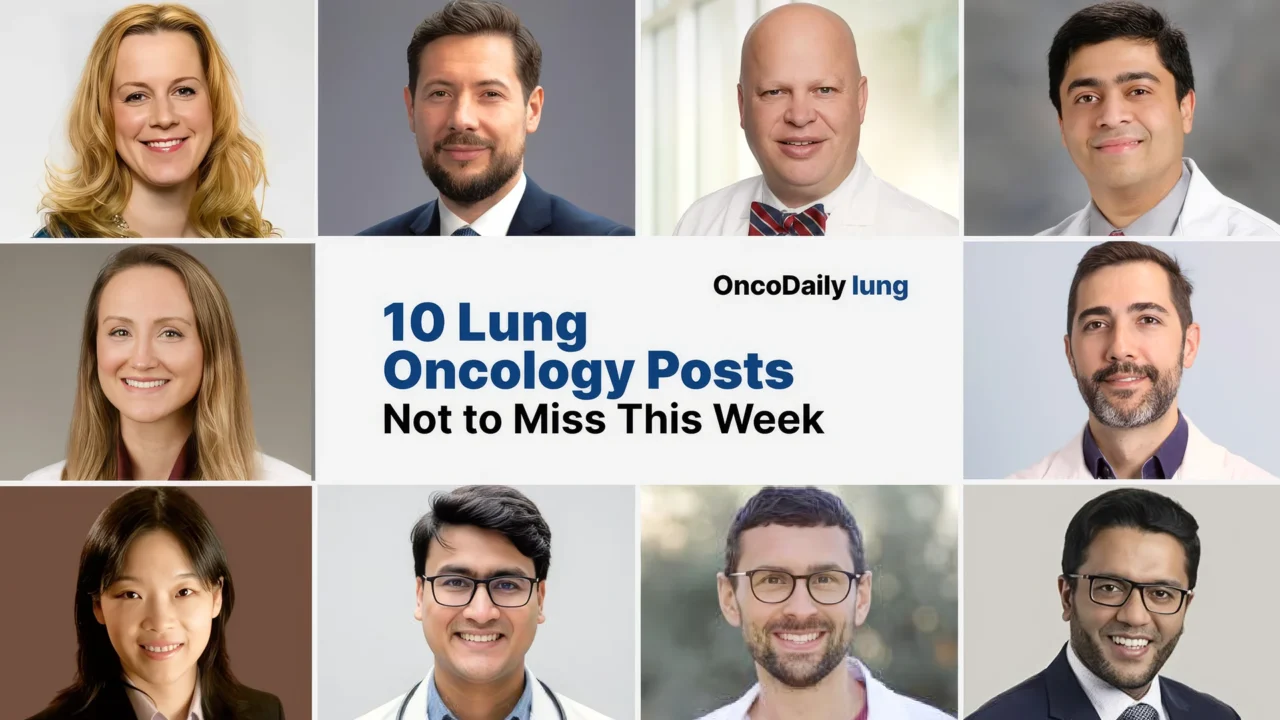
This week in lung oncology highlights how clinical decision-making continues to evolve across diagnostics, targeted therapy, and multidisciplinary care, driven by both clinical trial data and real-world insights shared by global experts.
A central theme is the growing importance of precision diagnostics, with advances in minimally invasive techniques such as EBUS-TBNA improving access to high-quality molecular profiling. At the same time, biomarker-driven therapies continue to reshape treatment pathways, as illustrated by ongoing progress in RET-positive and HER2-mutant NSCLC.
Emerging agents like zongertinib are demonstrating promising systemic and intracranial activity, underscoring the increasing need for therapies capable of addressing CNS disease. In parallel, innovations in antibody-drug conjugates are expanding the therapeutic landscape, with more sophisticated designs aimed at overcoming resistance and improving efficacy.
Beyond treatment advances, experts emphasized the importance of standardization in diagnostic workflows, particularly in specimen handling and pathology interpretation, which remain critical yet underrecognized determinants of clinical outcomes.
Together, these developments reflect a field that is becoming increasingly precise, integrated, and focused on translating scientific progress into meaningful improvements in patient care.
Luís Vaz Rodrigues – MD, PhD, Consultant Pulmonologist, Interventional Pulmonology
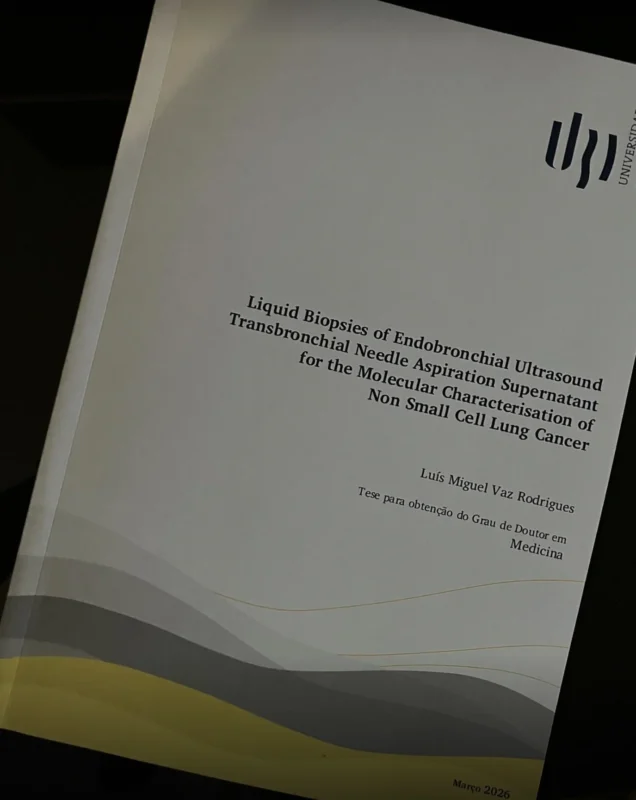
I am pleased to share that I have concluded my PhD on the role of minimally invasive techniques in the molecular characterization of non-small cell lung cancer.
This work highlights the potential of EBUS-TBNA-derived samples, including the supernatant fraction, as reliable sources for next-generation sequencing, supporting more efficient diagnostic pathways and timely access to targeted therapies.
The full work will be available soon on the RENATES platform and on UBibliorum.
I am grateful to all supervisors, colleagues, and patients involved, with special thanks to my main supervisor, Prof. Vitor Sousa , for his guidance and support throughout this journey.
Watch post here
Vivek Subbiah – Drug Development | Precision Oncology | Tumor- Agnostic Precision Medicine | Medical Oncologist
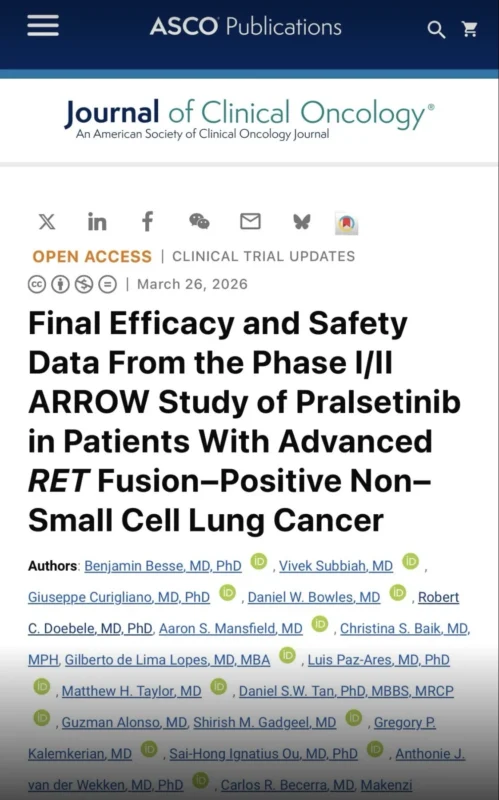
“Just published. Pleased to share our work on RET‑positive lung cancer published in American Society of Clinical Oncology (ASCO) – Journal Of Clinical Oncology. Final Efficacy and Safety Data from the Phase I/II ARROW Study of Pralsetinib in Advanced RET Fusion–Positive NSCLC.
Still remember the very first RET+ patient in the universe enrolled on this drug. Knew this baby will graduate & this molecule was going to deliver
Kudos to the global collaborators & amazing colleagues who pushed this all the way to the finish line OncoAlert OncoDaily Benjamin Besse Justin Gainor Giuseppe Curigliano Stephen Liu #RET #PrecisionMedicine.”
Watch post here
Erika Hamilton – Chief Development Officer, Late- Phase; Director, Breast Cancer Research Program; Sarah Cannon Research Institute Practices at SCRI Oncology Partners, Nashville, TN
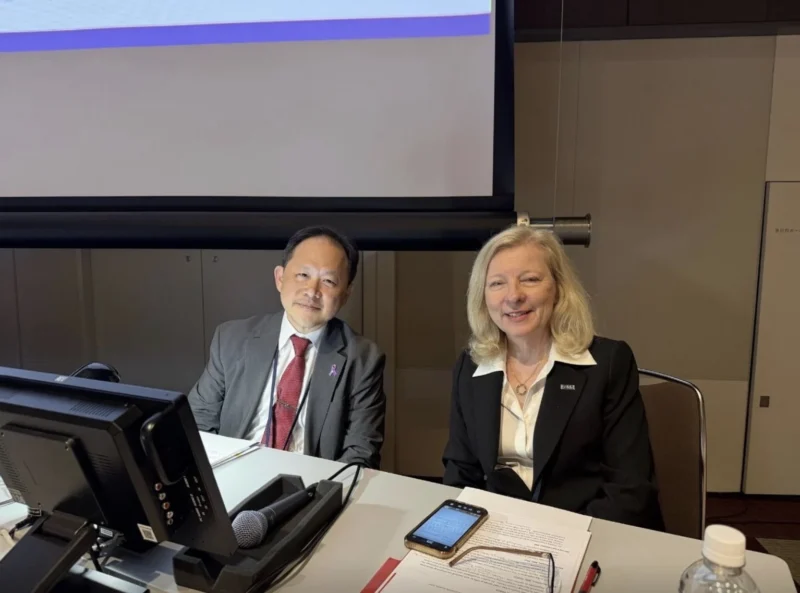
“Beautiful joint session of American Society of Clinical Oncology (ASCO) and #JSMO yesterday focusing on #breast, #lung, #GI, and #GU cancers.
Watch post here
Dr Rishabh Jain – Medical Oncologist (AllMS, Delhi)
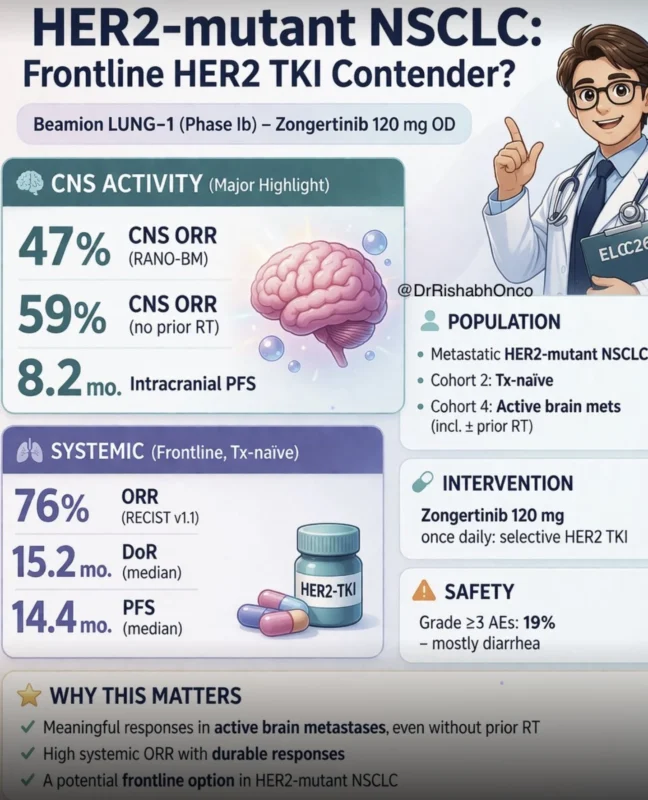
“HER2-mutant NSCLC finally getting a true frontline contender
Beamion LUNG-1 (Phase Ib) – Zongertinib #ELCC26
Population
Advanced HER2-mutant NSCLC
Cohort 2: Tx-naïve
Cohort 4: Active brain mets (incl. no prior RT)Intervention
Zongertinib 120 mg OD (selective HER2 TKI)Key Results
Systemic (Frontline)
•ORR: 76%
•DoR: 15.2 mo
•PFS: 14.4 moCNS Activity (major highlight)
•CNS ORR: 47%
•CNS ORR (no prior RT): 59%
•Intracranial PFS: 8.2 moSafety
•Grade ≥3 AEs: 19%
•Mostly low-grade diarrheaWhy this matters
•High ORR + durability in frontline HER2 NSCLC
•Real intracranial activity, even without prior RT
•Potential to challenge current HER2 sequencing paradigmZongertinib may be one of the first HER2 TKIs with meaningful CNS penetration in lung cancer.”
Watch post here
Xiuning Le – Associate Professor at MD Andersen Cancer Center
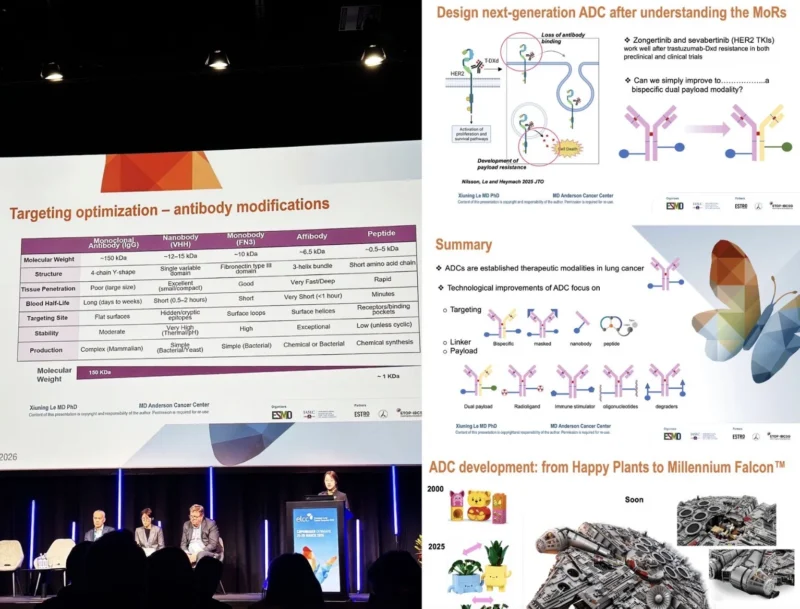
“We had a great discussion on ADC innovations to overcome topo-payload resistance #ELCC26 International Association for the Study of Lung Cancer ESMO – European Society for Medical Oncology Drs. Pasi Janne,USA , Ross Soo, Singapore , and Hye Ryun Kim, South Korea
Three key components:
Target optimization: from full antibodies to nanobodies to peptides
Linker technologies: precise conjugation and controlled cleavage
Payload innovation: dual-cytotoxic, radioligands, immune stimulators or engagers, oligonucleotides (siRNA), degraders, and small molecule inhibitors, and combinations of the above
We will have massive yet intricate “Any-Drug Conjugates [ADCs]” very soon!
#ADCs #Oncology #DrugDevelopment #TargetedTherapy #Biotech #lungcancer #EGFR #HER2”
Watch post here
Otis Rickman – Board-Certified Interventional Pulmonologist | Professor – UTHSC |Director of Bronchoscopy & Interventional Pulmonology at Ascension Saint Thomas | Expert in Medical Devices, Lung Cancer & Bronchoscopy
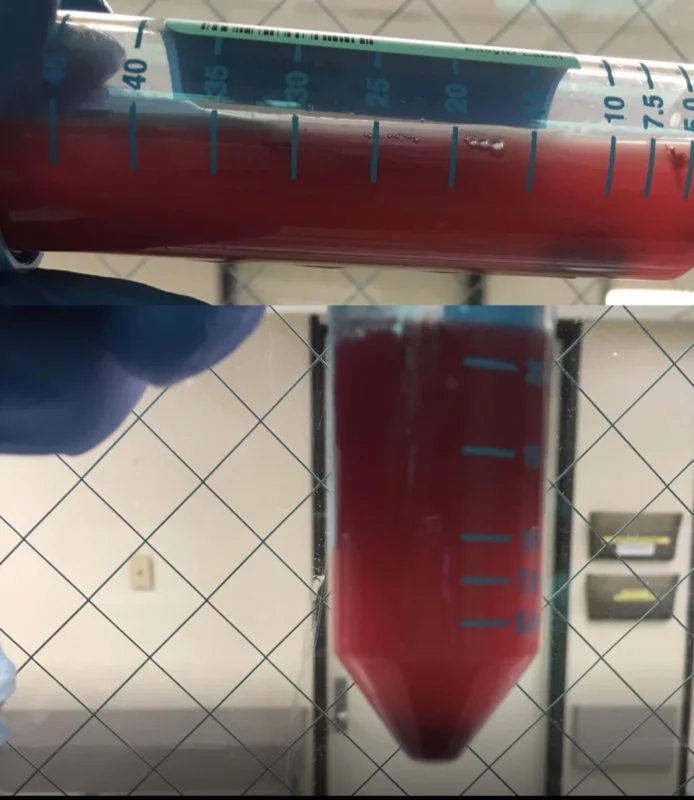
“Your “diagnostic yield” is only as good as what happens after the biopsy. A call to action!
We spend a lot of time debating navigation platforms, biopsy tools, and “diagnostic yield” in bronchoscopy. (On LinkedIn we are all )
BUT the moment the specimen leaves the tool, we STOP controlling the process (confounders). We start making assumptions. (I know what my Dad told me about doing that)
ROSE is inconsistent. Tech vs cytopathologist is not the same. Specimens get put in Cytolyt, RPMI, formalin, alcohol. Processing varies. Smear vs cell block. Pellet preparation. FFPE techniques. How many sections are cut. None of this is standardized.
Then we assume pathology is a constant. It isn’t. Training, experience, subspecialty focus, and whether there is consensus review all matter. We already know from ILD work that interobserver variability is real. All of this directly impacts sensitivity, specificity, diagnostic yield and accuracy. Especially for benign disease where the margin for error is thin and misclassification is common.
We would never tolerate this level of variability in the procedural phase of a trial. Yet we ignore it in the diagnostic phase.
If we want honest data, we need to standardize what happens after the biopsy just as much as what happens before it.
For those designing clincal trials or writing consensus statements. DEFINE specimen handling. STANDARDIZE processing. TRACK pathologist variability. BUILD IN central or consensus review.
Otherwise, we are not measuring the procedure. We are measuring noise.
It is time to fix this.”
Watch post here
Huzaifah Salat, MD – Regional Medical Director & Med Staff President | Advisor | Pulmonary & Lung Cancer | Public Ivy Faculty | Help Bring real-world clinical perspective to executive decision making and innovation
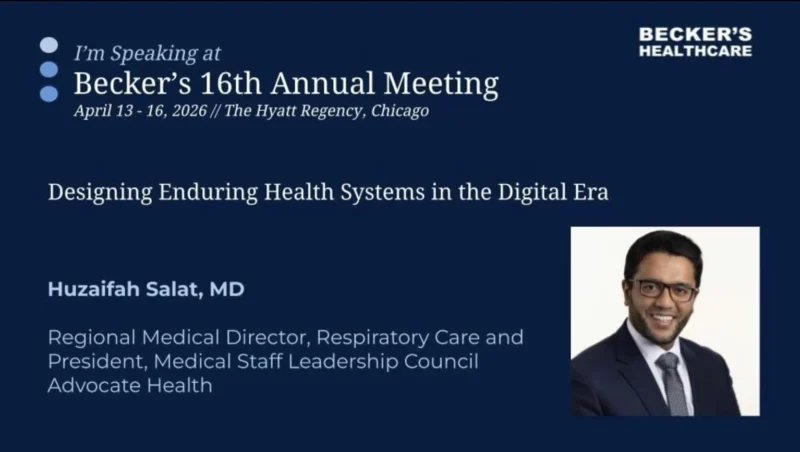
Thrilled to be sharing the stage with such an exceptional group of leaders at Becker’s Healthcare 16th Annual Meeting!
I’ll be joining Marty Mann , Melissa Cohen , and Sanjeev Sah, MHA, FACHE for a panel on “Designing Enduring Health Systems in the Digital Era”.
Excited to explore how clinical insight, digital innovation, and strategic thinking can help health systems stay resilient and future-ready.
As a clinician & healthcare executive, I throughly enjoy exchanging ideas with founders and executives on how to accelerate innovation and improve care delivery. If you’d like to grab a coffee at the event, please reach out ; I’d love to connect.
Watch post here
Bruna Pellini – Chief of Thoracic Medical Oncology, Miami Cancer Institute, Baptist Health South Florida; Co-Chair, NIH Liquid Biopsy Scientific Interest Group
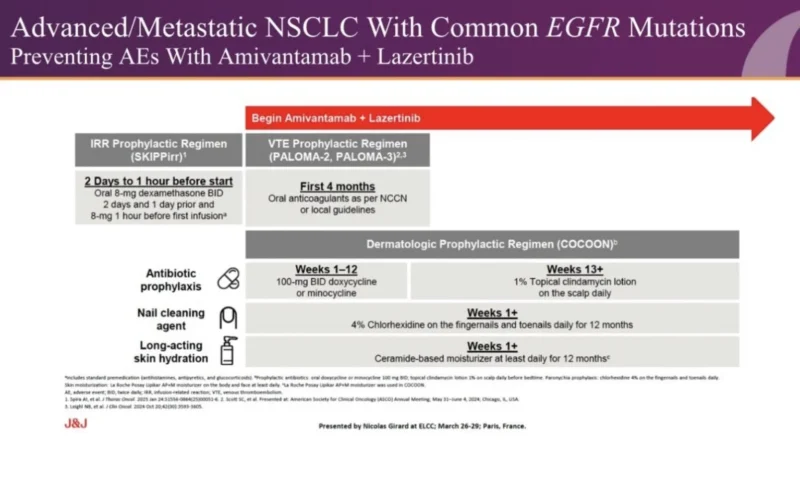
“Very important slide on how to prevent #toxicity and #support our patients with #EGFR mutant #NSCLC receiving #amivantamab plus #lazertinib
Watch post here
Benoit Roch – MD, PhD, Pneumo-oncologist
“Back from #ELCC2026 in Copenhagen!
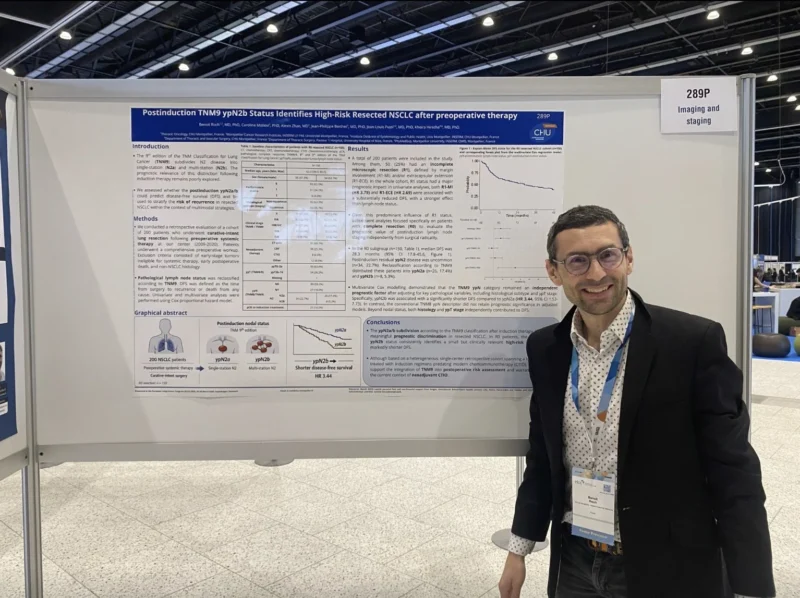
Honored to present our work on postinduction TNM9 nodal staging
Key message:
This is the first study to validate the TNM9 ypN2a/b subdivision in NSCLC patients treated with induction therapy before surgery. Our results show that ypN2b identifies a clinically meaningful high‑risk subgroup — with markedly shorter DFS — and should be integrated into perioperative risk stratification.A step forward for improving outcomes in locally advanced NSCLC and guiding future perioperative strategies.
Grateful for the great discussions and feedback from the thoracic oncology community!.”
Watch post here
Antonio Passaro – Medical Oncologist at European Institute of Oncology
“Not just a congress. A defining moment for thoracic oncology.
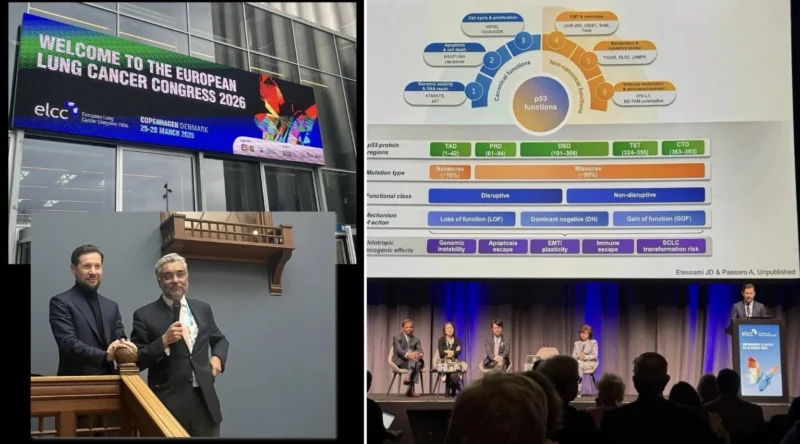
#ELCC26 is now behind us, after bringing together around 2900 delegates in Copenhagen for a truly global exchange in thoracic oncology.
Serving as Scientific Committee Co-Chair alongside Sanjay Popat has been a true privilege, and I am deeply grateful for his leadership and partnership. Together, we shaped a programme with a clear ambition: translating science, biology, and evidence into better clinical decision-making.What made this edition truly exceptional was the quality of the global faculty and the intensity of the scientific dialogue: connecting cutting-edge advances with real-world impact for our patients.
Personally, this edition carried a deeper meaning.
ELCC26 was also a moment of tribute from our community to two giants we have recently lost, Filippo de Marinis and Masahiro Tsuboi, whose legacy continues to shape our field.
My sincere gratitude to the Scientific Committee members, and to all speakers, chairs, discussants, patient advocates, and colleagues who made this meeting so strong scientifically and so meaningful.A special thank you to ESMO and IASLC for their outstanding support and tireless dedication.
In particular, my sincere appreciation to Federica Pedalino, Costanza Ceroni, and Federica Frigerio for their exceptional work behind the scenes.
We leave Copenhagen not only with new data, but with a stronger direction.
See you in Monaco for #ELCC27.”
Watch post here