





Every year on March 4, the global health community observes International HPV Awareness Day, a moment dedicated to spotlighting one of the most common yet most misunderstood viral infections in the world: Human Papillomavirus (HPV).
HPV is not rare. It is not confined to specific regions. It is not a niche public health issue. It is a universal infection that affects millions of people across continents, cultures, and socioeconomic groups. Yet despite its prevalence, awareness remains insufficient and that gap in knowledge carries consequences.
What Is HPV?
Human Papillomavirus refers to a group of more than 200 related viruses. Most HPV infections are transmitted through intimate skin-to-skin contact, and the majority of sexually active individuals will encounter the virus at some point in their lives. In many cases, the immune system clears the infection naturally without causing symptoms or long-term harm.
However, certain high-risk HPV types can persist. When they do, they may trigger cellular changes that, over time, lead to cancer. Among these, HPV-16 and HPV-18 are responsible for the majority of HPV-related malignancies worldwide.
The silent nature of HPV is part of the challenge. Because infection often causes no immediate symptoms, individuals may carry and transmit the virus unknowingly. Awareness, therefore, becomes the first line of prevention.
HPV and Its Direct Link to Cancer
HPV is responsible for nearly all cases of cervical cancer and contributes significantly to anal, oropharyngeal, vulvar, vaginal, and penile cancers. According to the World Health Organization, cervical cancer alone claims more than 300,000 lives each year, with the overwhelming burden falling on women in low- and middle-income countries.
This is what makes HPV unique in oncology. Unlike many other cancer risk factors, HPV represents a clearly identifiable, preventable cause. The scientific link between persistent HPV infection and certain cancers is well established. The tools to intervene already exist.
The tragedy is not scientific uncertainty. The tragedy is unequal implementation.
Why HPV Awareness Day Matters
HPV Awareness Day is not merely symbolic. It is a strategic opportunity to address misinformation, reduce stigma, and emphasize prevention. Many individuals remain unaware that HPV affects both men and women. Others mistakenly associate it solely with sexual behavior, overlooking its broader cancer implications. Misunderstanding fosters hesitation, and hesitation limits prevention.
Awareness creates informed decision-making. It encourages vaccination at the appropriate age. It reinforces the importance of screening. It strengthens public trust in preventive healthcare.
Importantly, this awareness extends beyond individuals. It calls upon policymakers, healthcare systems, and global health leaders to prioritize vaccination programs and screening access, particularly in underserved regions.
Cervical Cancer Screening’s Global Evolution: From Pap Smears to HPV Testing
HPV Vaccines: A Milestone in Cancer Prevention
Few medical advances have transformed cancer prevention as profoundly as HPV vaccination. The currently available vaccines protect against the high-risk HPV types responsible for most cervical cancers, including HPV-16 and HPV-18, along with additional oncogenic strains depending on the formulation.
Vaccination is recommended primarily for girls and boys between the ages of 9 and 14, ideally before exposure to the virus. When administered at the recommended age, the vaccine offers robust and long-lasting protection.
Countries that have achieved high vaccination coverage are already witnessing measurable impact. Reductions in HPV infections, declines in genital warts, and significant decreases in precancerous cervical lesions demonstrate that prevention is not theoretical. It is measurable and real.
In oncology, where treatment innovations often dominate headlines, HPV vaccination stands as a reminder that prevention may be our most powerful intervention.
Screening Remains Essential
Vaccination does not eliminate the need for screening. Regular cervical screening, including HPV testing and Pap tests, plays a critical role in detecting precancerous changes before they progress. When cervical abnormalities are identified early, treatment is highly effective and survival rates are dramatically improved.
The integration of vaccination and screening forms a comprehensive prevention strategy, one capable of transforming population-level cancer outcomes.
Remarkable Impact: Professor Martin Kast’s Leadership in HPV Vaccines and Cancer Education

Here are some of the most impactful social media posts that amplified the importance of HPV vaccination, screening, and equitable access to prevention on this year’s HPV Awareness Day.
“On International HPV Awareness Day, I remember we now have the knowledge and tools to prevent several cancers caused by HPV.
Across Europe, vaccine uptake is increasing, and countries have moved towards gender neutral vaccination. And yet, as usual, the picture across Europe remains uneven. In some parts of Europe vaccines are free and for boys and girls, in others access is still limited so your access to health and prevention is defined by your country (and even your postcode)
Daniel Kelly OBE and colleagues of the European Cancer Organization have worked hard to reduce inequalities . A few weeks ago I was reading this that reflected on next steps.
For oncology nurses, prevention is daily practice: explaining risk, addressing fears, supporting informed decisions and advocating for equitable access to vaccination and screening. Aiming for the right intervention, for the right population, at the right time.”
Title: Prevention and Diagnosis of Cervical Cancers in the UK and Europe: What Have We Learned in the Last 10 Years and What Is Next?
Authors: Hannah R. Williams, Daniel Kelly
Read The Full Article

“Cervical cancer is preventable, but prevention does not reach everyone equally. This is one of today’s key challenges in public health.
Our latest report shows that screening participation drops sharply among women with lower income, disability, migrant backgrounds, or limited digital access.
Countries that integrate equity into program design, through targeted outreach, accessible services and options like self-sampling, reach more women, reduce inequalities and save more lives.
Read more: ECO’s Closing the Gaps report. ECO’s Women and Cancer paper.”
“Today is International HPV Awareness Day 2026. HPV is extremely common, yet many people still believe it only affects women.
In Malaysia, more than 900 women die from cervical cancer every year, and most cases are linked to HPV.
In this conversation with Prof. Dr. Jamiyah Hassanon, we explore how vaccination, screening, and awareness can help prevent HPV-related cancers and why prevention must include both women and men.”
Read article here.”
“Some great work going on here-keep an eye on our posts for the next 8 weeks to see what we are doing to make a step change in HPV vaccination rates across the 508 secondary schools in NWL and SWL.
We are committed to making cancer prevention a reality for all our 3.7m residents, across their lifespan and this campaign is about ensuring real awareness, myth busting, direct liaison with schools, parents and young people in partnership with our brilliant public health teams, vaccination teams Vaccination UK Ltd, Kingston and Richmond NHS Foundation Trust.
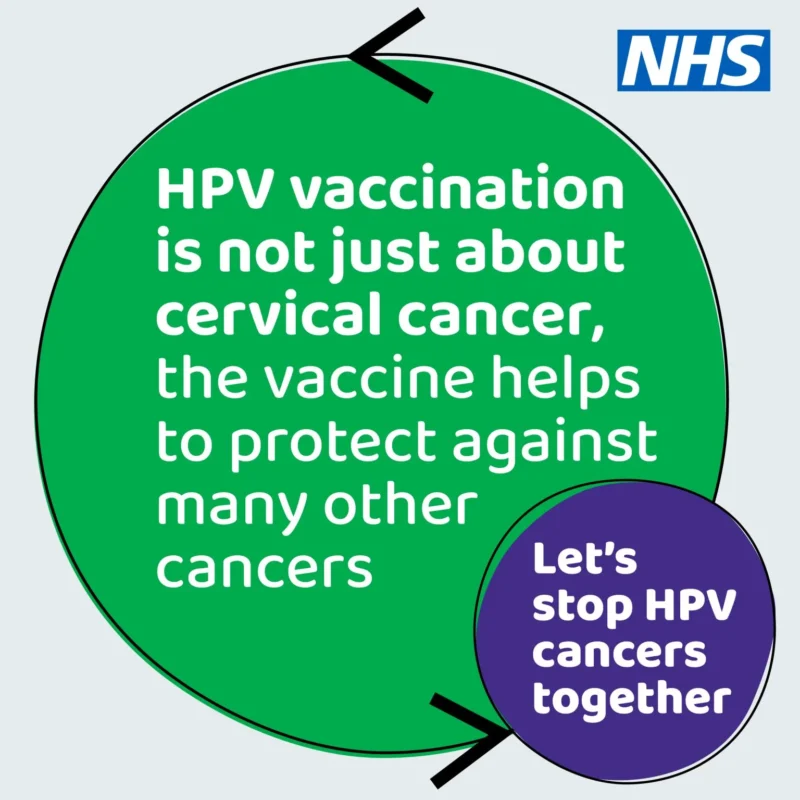
Most people associate HPV vaccination with cervical cancer, but this virus causes several types of cancer including many head and neck cancers, with 70% of oropharyngeal cancers linked to HPV (Cancer Research UK (CRUK) ).”
RM Partners NHS Cancer Alliance:
“Tomorrow marks International HPV Awareness Day.
The human papillomavirus (HPV) is a group of over 200 viruses that are spread by skin-to-skin contact. Most of the time HPV doesn’t cause any problems but some types of HPV can increase the risk of cancer in the mouth and throat, cervix, vagina, vulva, anus and penis.
We can prevent HPV and reduce the risk of HPV-related cancer through increased awareness, HPV vaccination and cervical screening.
For further information about HPV and to find out how to protect you and your loved ones visit.”
International Gynecologic Cancer Society:
“For HPV Awareness Day (March 4), we are proud to share the first Impact Report from the International Gynecologic Cancer Society Preinvasive Disease Program.
Nearly 90% of cervical cancer cases are caused by persistent HPV infection.
We have the tools to prevent it – vaccination, screening, and early treatment. Yet more than 90% of cervical cancer deaths occur in low- and middle-income countries, where access to screening and timely treatment remains limited.
Awareness is key, but alone is not enough.
Women need:
- Access to high-quality screening.
- Timely treatment of precancerous lesions.
- Clinicians trained to detect and safely manage disease before it becomes invasive cancer.
That is why IGCS expanded into preinvasive disease training – shifting from treating late-stage cancer to building local capacity for prevention and early intervention.
Through online education, hands-on workshops, and a global mentorship network, we are equipping providers across disciplines to strengthen health systems and accelerate cervical cancer elimination.
Prevention requires systems. Training makes prevention possible.
Read the full report below and see how this growing global network is advancing equitable access to screening and treatment worldwide.”
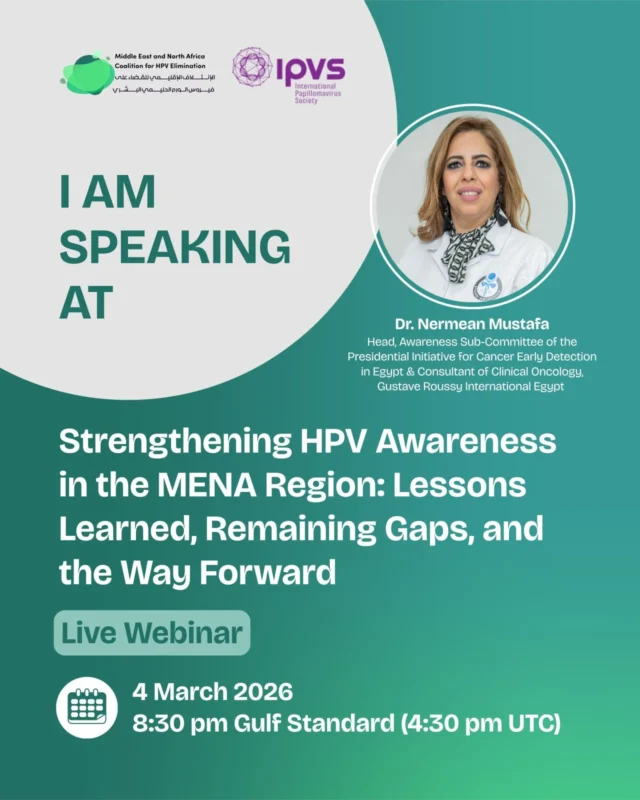
“I am speaking at Strengthening HPV awareness in the MENA region: Lessons learned Remaining gaps and the way forward.
Bringing together global leadership behind the International HPV Awareness Day IHAD and expert voices from across the Middle East and North Africa MENA , this session will explore remaining gaps in HPV awareness across the region, lessons learned from different country experiences, and the way forward.
International Panel:
- Dr Joel Palefsky International Papillomavirus Society – IPVS – Honorary Board Member and Co-Chair, Global Awareness Committee, International Papillomavirus Society – IPVS.
- Dr. Noreen Zafar – Chairwoman, Pakistan Alliance for Cervical Cancer Elimination.
- Dr. Eiman Altawheed – President, Kuwait Women Health Society.
- Dr. Maisam Akroush – Vice President, Mediterranean Task Force for Cancer Control (MTCC), Jordan.
- Dr. Balkiss Abdelmoula, MD. MPH. , MD. MPH. – Secretariat lead, MENA Coalition for HPV Elimination & Co-Chair, IPVS Awareness Committee Regional Working Group for MENA.
Registration link.”
“March 4th is International HPV Awareness Day.
When many people hear HPV (Human Papillomavirus), they think of cervical cancer but HPV is linked to multiple cancers -including anal, vulvar, vaginal and oropharyngeal (throat) cancers, affecting both women and men. Check out this video to find out more about HPV.”
European Society of Gynaecological Oncology:
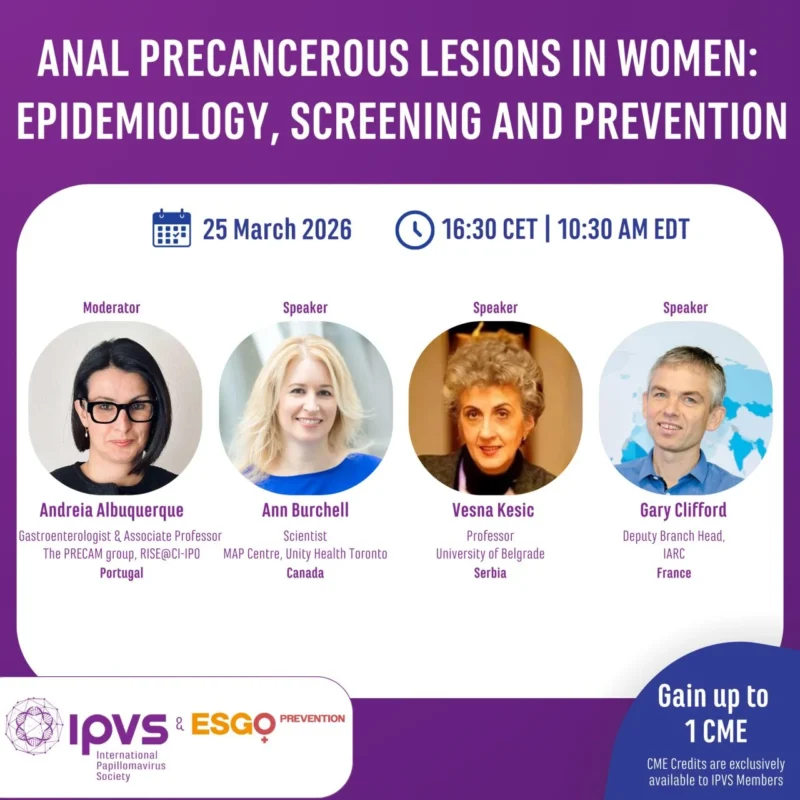
“Tomorrow is International HPV Awareness Day – and so today is a great day to sign up for the ESGO Prevention Committee’s new webinar with IPVS on Anal Precancerous Lesions in Women: Epidemiology, Screening and Prevention.
This session will highlight high-risk groups of women, review the new ESGO anal cancer screening guidelines with Vesna Kesic and explore comprehensive prevention strategies beyond screening, including HPV vaccination, patient education, & lifestyle modification.
Register.”
Other articles about HPV on OncoDaily.