





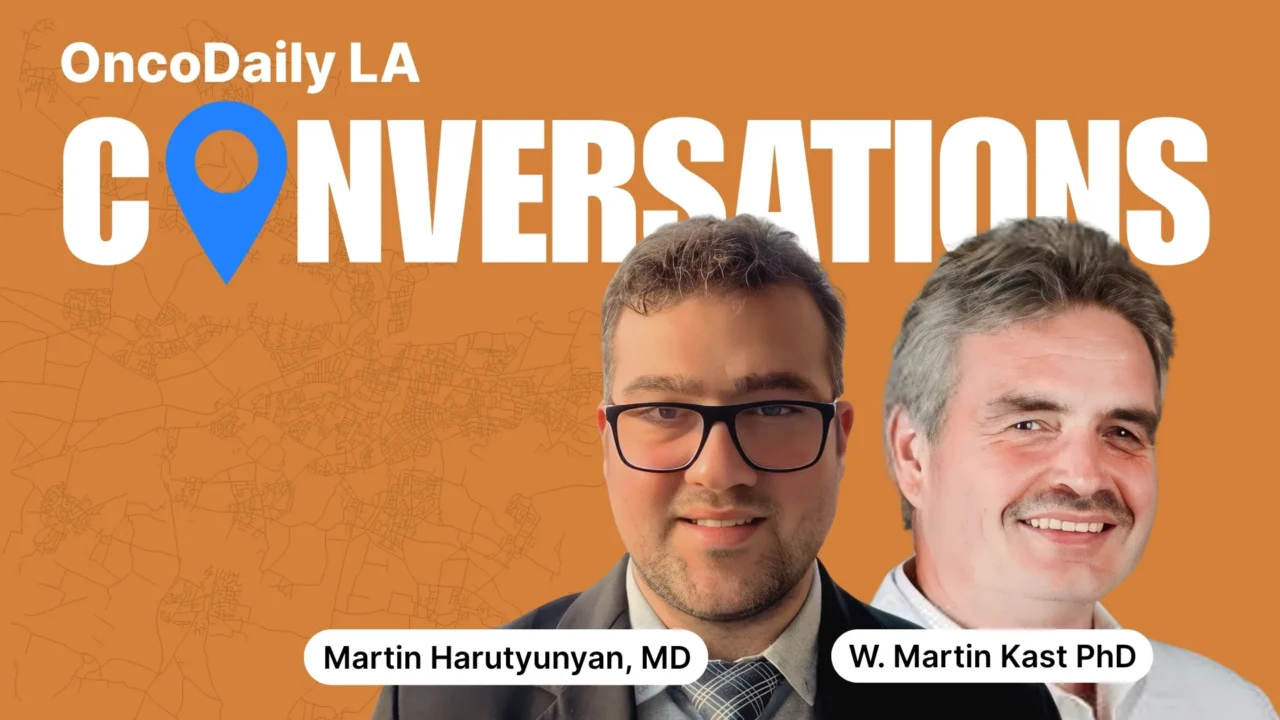
Professor W. Martin Kast, the Walter A. Richter Cancer Research Chair at the University of Southern California, has spent more than twenty years advancing the scientific understanding of HPV‑related cancers and pioneering new therapeutic vaccine approaches. In a recent conversation with Dr. Martin Harutyunyan, Director of OncoDaily LA, he reflected on the pivotal scientific moments, translational challenges, and personal experiences that continue to shape his work.
Prof. Martin Kast’s Unexpected Path Into Science
Prof. Martin Kast’s scientific journey began with an unforeseen twist. Raised in the Netherlands, he set his sights on becoming a physician, only to be denied admission to medical school five consecutive times due to the country’s lottery‑based selection system. What started as a temporary shift into biology soon became a lifelong passion. He completed a degree in medical biology, earned a PhD in Medicine, and entered the field of viral immunology — first studying Sendai virus, then human adenovirus, where he discovered how specific viral proteins could transform healthy cells into cancer cells.
The Turning Point That Redirected His Career
A single moment in 1989 redirected his career. After publishing a high‑impact paper showing that T‑cells could eradicate adenovirus‑induced tumors in mice, the director of his cancer center congratulated him — then noted that the work had “no implication for human cancers.” At the same time, emerging evidence from Harald zur Hausen showed that HPV oncoproteins E6 and E7 inactivate the same tumor‑suppressor pathways as the adenoviral proteins Prof. Kast had studied. The parallel was unmistakable, and Prof. Martin Kast shifted his focus to HPV, launching the research program that defines his career today.
Clinical Translation at USC
At USC, Prof. Martin Kast holds appointments in immunology, gynecology, and otolaryngology — a reflection of HPV’s role in cervical and head‑and‑neck cancers. These clinical affiliations allow him to collaborate closely with physicians, access patient‑derived samples, and translate laboratory discoveries into clinical trials. Over his 22 years at USC, six clinical trials have emerged directly from his lab, including five phase I studies and an active phase II trial, with another trial planned for 2026.
Therapeutic HPV Vaccines: A Different Approach
A major focus of his work is the development of therapeutic HPV vaccines, which differ fundamentally from preventive vaccines like Gardasil 9. Preventive vaccines block infection, but they cannot eliminate an existing HPV infection or reverse precancerous changes. Therapeutic vaccines instead activate T‑cells to recognize HPV‑infected or transformed cells through viral peptides presented on MHC/HLA molecules. Kast’s lab develops therapeutic vaccines for cervical cancer, HPV‑positive head and neck cancers, and precancerous lesions such as CIN.
The IL-23 Discovery That Shifted the Field
Despite decades of effort worldwide, most therapeutic HPV vaccines have struggled in clinical settings. Prof. Martin Kast explains that HPV‑driven tumors reshape the tumor microenvironment, making it difficult for T‑cells to infiltrate or function effectively. His team recently uncovered a key mechanism behind this suppression. In a study published in the Journal of Immunotherapy of Cancer, they showed that HPV‑expressing tumor cells reprogram surrounding macrophages to produce high levels of IL‑23. Therapeutic vaccines upregulate the IL‑23 receptor on activated T‑cells, and IL‑23 then suppresses their proliferation and cytotoxicity.
By combining therapeutic vaccines with FDA‑approved IL‑23 neutralizing antibodies — already used for psoriasis — his team restored vaccine efficacy in animal models, even in late‑stage tumors. The study generated global attention, with more than 80 media stories and over two million views.
Cancer Education for Children
Beyond the laboratory, Prof. Martin Kast leads one of the largest cancer education programs for elementary schools in Los Angeles. The curriculum introduces children to the basic science of cancer in clear, age‑appropriate language. As the program describes, “the curriculum teaches underserved elementary students basic cancer concepts, including how healthy cells differ from cancer cells.” It also helps children understand that cancer is not contagious and empowers them to participate in family conversations about the disease. His book, Oncology for Elementary Schools, is used across LAUSD and supported by online lesson plans accessible nationwide.
For readers interested in the broader mission behind this work, Dr. Harutyunyan reflects on the importance of oncology storytelling in an OncoDaily Voices piece: Unique Educational Initiative – The STEAM-Powered Careers Children’s Book Series: Oncology
Preparing the Next Generation of Cancer Researchers
Prof. Martin Kast believes the next generation of cancer researchers must master genomics, multi‑omic sequencing, spatial biology, and large‑scale computational analysis — fields increasingly powered by high‑speed computing and AI. His own recent study relied on these emerging tools, driven by students trained in methods that did not exist when he began his career.
What Motivates Prof. Martin Kast
Despite his many roles — researcher, mentor, educator, advisor, even actor — Prof. Martin Kast says the real fuel for his work comes each morning as he walks through the cancer center. Passing patients waiting for their appointments, he sees the fear in their eyes. Years ago, he sat in those same chairs with his wife during her cancer treatment. That experience, he says, never leaves him and continues to motivate his work in immunology and translational science.
Who He Recommends Next
Before concluding the interview, Kast recommended a future guest: Peter Wang, a USC bioengineer whose innovative ideas in cancer immunotherapy he deeply admires.