Cancer treatments are changing quickly. In recent years, scientists have developed new types of medicines designed to target cancer cells more precisely while reducing damage to healthy tissues. One of the most promising new approaches is called antibody–drug conjugates (ADCs).
Sacituzumab tirumotecan is one of these newer medicines. Researchers are studying it in several cancers, including breast cancer, lung cancer, and gastrointestinal cancers. Although studies are still ongoing, early clinical trials suggest that this therapy may help patients whose cancers have stopped responding to other treatments.
This article explains what sacituzumab tirumotecan is, how it works, and what patients should know about ongoing research.
What Is Sacituzumab Tirumotecan?
Sacituzumab tirumotecan is a type of targeted cancer treatment known as an antibody–drug conjugate.
These medicines combine two parts:
- A targeting antibody that recognizes a specific marker on cancer cells
- A chemotherapy drug attached to the antibody
The antibody acts like a guidance system. It helps deliver the chemotherapy directly to cancer cells instead of affecting many healthy cells.
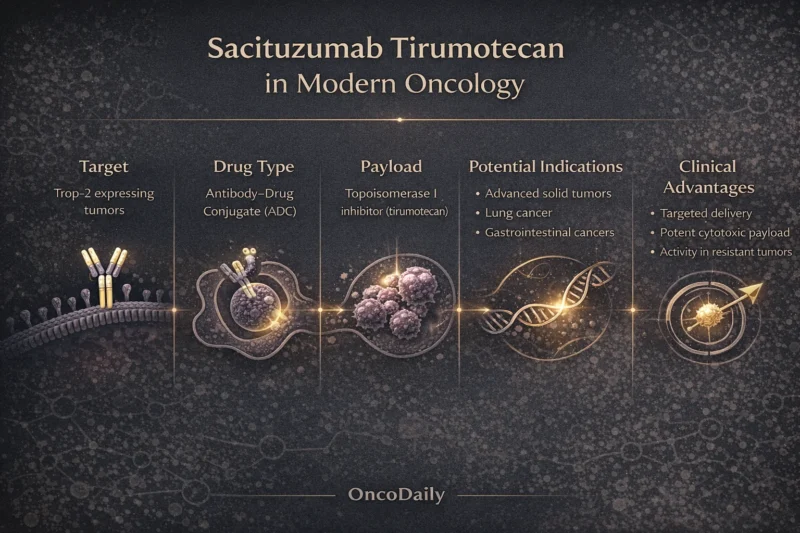
Sacituzumab tirumotecan targets a protein called Trop-2. This protein is found on the surface of many cancer cells, especially in breast, lung, and gastrointestinal cancers. Because many tumors produce large amounts of Trop-2, scientists can use it as a target for treatment.
How Does Sacituzumab Tirumotecan Work?
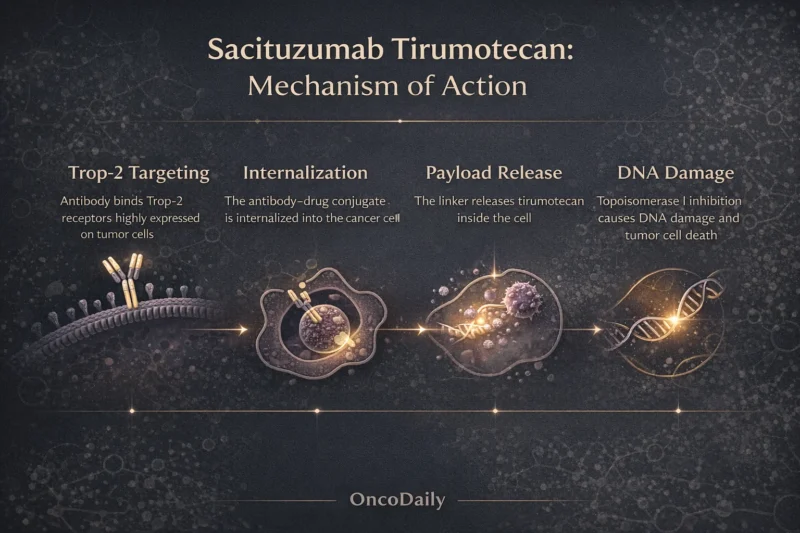
Sacituzumab tirumotecan works in several steps. First, the antibody portion of the drug attaches to Trop-2 on the surface of cancer cells. Once attached, the cancer cell absorbs the drug into the cell.
Inside the cancer cell, the medicine releases a powerful chemotherapy compound called tirumotecan, which belongs to a group of drugs known as topoisomerase I inhibitors.
This drug damages the DNA inside cancer cells. When the DNA becomes too damaged, the cancer cell cannot divide and eventually dies. Because the drug is delivered directly to cancer cells, the goal is to destroy tumors while limiting exposure to healthy tissues.
Why Are Antibody–Drug Conjugates Important?
Traditional chemotherapy travels through the bloodstream and affects many types of rapidly dividing cells. This is why chemotherapy often causes side effects such as hair loss, nausea, and low blood counts.
Antibody–drug conjugates are designed to improve this process by delivering chemotherapy more precisely. Instead of exposing the entire body to the drug, ADCs bring the chemotherapy directly to the tumor.
This approach may improve effectiveness and sometimes reduce certain side effects compared with traditional chemotherapy. In recent years, several ADCs have become important treatments for cancers such as breast cancer and lung cancer.
Sacituzumab Tirumotecan in Breast Cancer
One of the most important areas of research for sacituzumab tirumotecan is metastatic breast cancer, which means the cancer has spread to other parts of the body.
Researchers are studying this drug in patients whose cancer has already been treated with other therapies. Two important clinical trials have investigated the drug in breast cancer:
OptiTROP-Breast01
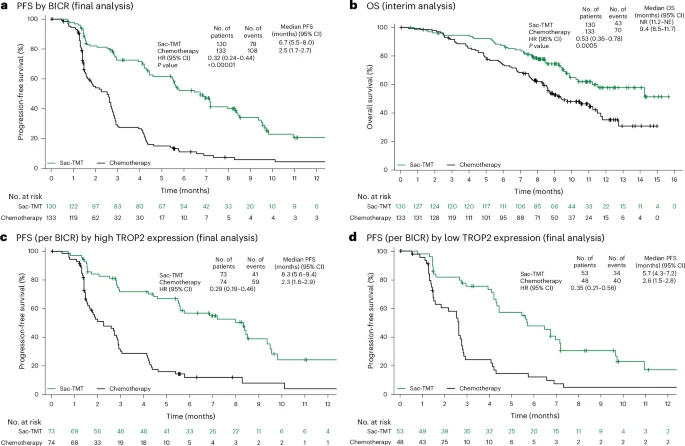
This study focused on triple-negative breast cancer (TNBC). TNBC is an aggressive type of breast cancer that does not respond to hormone therapy or HER2-targeted therapy. Because of this, treatment options are often limited once chemotherapy stops working.
In this trial, sacituzumab tirumotecan was compared with standard chemotherapy in patients with metastatic TNBC.
Results showed that patients who received sacituzumab tirumotecan experienced:
- Longer time before the cancer grew again
- Higher response rates
- Improved survival compared with chemotherapy
These results suggest that the drug may provide a new option for patients with difficult-to-treat breast cancer.
OptiTROP-Breast02
Another study, OptiTROP-Breast02, looked at patients with hormone receptor–positive, HER2-negative metastatic breast cancer, the most common type of breast cancer.
Patients in this study had already received several treatments, including hormone therapy and chemotherapy. The trial found that sacituzumab tirumotecan helped delay cancer progression compared with chemotherapy and produced meaningful responses in many patients.
Together, these studies show that sacituzumab tirumotecan may work in multiple types of breast cancer, not only triple-negative disease.
Other Cancers Being Studied
Researchers are also testing sacituzumab tirumotecan in other cancers where Trop-2 is commonly found.
These include:
- Non–small cell lung cancer
- Gastric (stomach) cancer
- Colorectal cancer
- Other solid tumors
Early studies suggest that the drug may have activity in several of these cancers, but more research is needed to understand where it will be most effective.
Possible Side Effects
Like many cancer treatments, sacituzumab tirumotecan can cause side effects.
The most common side effects seen in clinical trials include:
- Low white blood cell counts (neutropenia)
- Anemia
- Nausea
- Diarrhea
- Fatigue
Doctors closely monitor patients during treatment to manage these side effects. Dose adjustments or supportive medications may be used if needed.
Because sacituzumab tirumotecan delivers chemotherapy directly to cancer cells, some side effects may differ from traditional chemotherapy, but careful monitoring is still necessary.
What This Means for Patients
Sacituzumab tirumotecan represents an example of how cancer treatment is becoming more targeted and personalized.
Instead of relying only on traditional chemotherapy, researchers are developing therapies that combine the power of chemotherapy with the precision of targeted treatments.
For patients whose cancers have stopped responding to standard therapies, drugs like sacituzumab tirumotecan may offer new possibilities.
However, it is important to remember that this medicine is still being studied in clinical trials. More research is needed to confirm its long-term benefits and determine exactly which patients will benefit most.
The Future of Targeted Chemotherapy
Antibody–drug conjugates are one of the fastest-growing areas of cancer research. Scientists are developing dozens of new ADCs targeting different proteins found on cancer cells.
As we learn more about tumor biology, treatments like sacituzumab tirumotecan may become part of a new generation of therapies designed to attack cancer more precisely.
For patients and families, these advances represent an important step toward more effective and individualized cancer care.
Written by Armen Gevorgyan, MD