Breast cancer management in 2026 is being transformed not by a single therapeutic breakthrough, but by the convergence of earlier detection, increasingly sophisticated biomarkers, molecular residual disease assessment, treatment de-escalation, antibody-drug conjugates, next-generation endocrine therapies, and more individualized sequencing strategies.
These themes defined the MAMMÔ 2026 Global Breast Cancer Virtual Congress, held on October 8–9 as part of the OncoDaily Ô Series. Under the scientific leadership of Giuseppe Curigliano, Antonio Marra and Sara M. Tolaney, the two-day international program brought together specialists across medical oncology, surgery, radiation oncology, pathology, radiology, translational research and global health.
Rather than focusing only on new drugs, MAMMÔ 2026 addressed a broader question increasingly central to contemporary breast oncology: how can treatment become simultaneously more effective, more precise and less burdensome?
Across early and metastatic disease, the congress repeatedly returned to the same principle, treatment intensity should increasingly reflect the biology of the tumor, the depth of response, molecular evidence of residual disease, and the priorities of the individual patient.
Early Detection Is Moving Beyond Conventional Mammography
Day 1 began with the changing landscape of breast cancer detection and risk assessment. Digital breast tomosynthesis, particularly for women with dense breasts, was discussed alongside emerging approaches combining artificial intelligence, biosensors and circulating tumor DNA. The underlying direction is clear: screening is gradually moving away from a uniform imaging-only model toward one that may eventually integrate radiological, molecular and individualized risk information.
The program also examined one of the long-standing challenges of screening, ductal carcinoma in situ. Detecting DCIS earlier is technically achievable, but determining which lesions are likely to become invasive remains much more difficult. MAMMÔ discussions therefore emphasized risk stratification and interception rather than assuming that every detected lesion carries the same biological threat.
Hereditary risk assessment similarly extended beyond BRCA1 and BRCA2, with attention to PALB2, CHEK2 and ATM and their increasingly relevant role in genetic counseling, surveillance and preventive decision-making.
The broader message was that the next generation of screening may be defined less by simply detecting more abnormalities and more by determining which abnormalities and which patients actually require intervention.
HER2-Low and HER2-Ultralow Make Pathology More Clinically Consequential
The expansion of antibody-drug conjugates has changed the clinical meaning of HER2 expression. Historically, distinguishing HER2-positive from HER2-negative disease was often sufficient for systemic treatment selection. That binary model has become less adequate as therapies increasingly depend on identifying HER2-low and even HER2-ultralow expression.
Giuseppe Viale addressed the challenge of pathological standardization in these lower HER2-expression categories. The issue is particularly important because small differences in immunohistochemical interpretation can now influence access to therapies.
MAMMÔ 2026 also explored digital pathology, artificial intelligence and spatial multi-omics as potential tools for extracting additional information from tumor tissue. Presentations examined invasive lobular carcinoma biology, tumor plasticity, epithelial-to-mesenchymal transition, cancer stem cells and microenvironment-mediated resistance.
A parallel discussion compared traditional genomic assays such as Oncotype DX and MammaPrint with emerging AI-based pathology models for recurrence prediction in hormone receptor-positive early breast cancer.
Rather than one technology replacing another, the emerging model appears increasingly multimodal: histology, genomic assays, computational pathology and clinical variables may eventually work together to refine recurrence risk and treatment selection.
Neoadjuvant Therapy Is Becoming Response-Adaptive
One of the strongest themes of MAMMÔ 2026 was the transition from fixed neoadjuvant regimens toward response-guided treatment. In luminal breast cancer, discussions covered endocrine optimization, early treatment escalation and how response to systemic treatment may influence axillary management.
For triple-negative breast cancer, Rita Nanda discussed the I-SPY 2.2 adaptive platform, which investigates whether early treatment response and predictive biomarkers can identify patients in whom conventional cytotoxic exposure might safely be reduced.
In HER2-positive disease, HER2DX was discussed as a potential tool for refining recurrence risk and treatment escalation, while real-world TCHP data highlighted continued interest in identifying predictors of pathological complete response. oncodaily.com These approaches point toward a fundamental shift.
Neoadjuvant therapy is increasingly becoming more than treatment delivered before surgery. It functions as an in vivo test of tumor biology, providing an opportunity to observe treatment sensitivity and potentially adapt subsequent therapy accordingly.
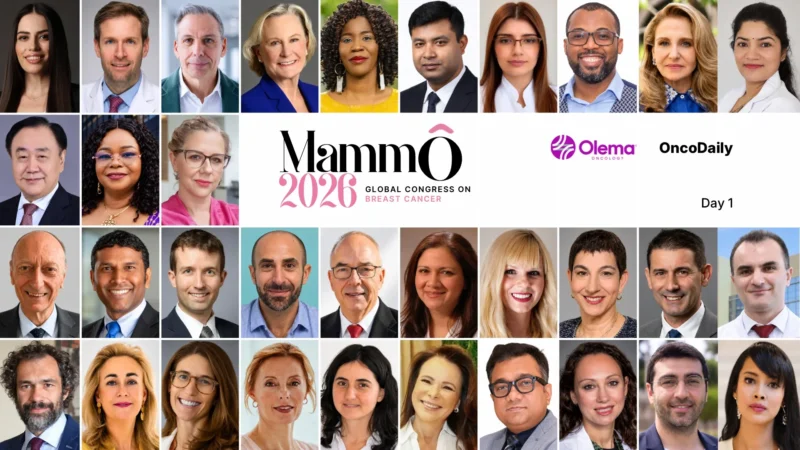
Read About MammÔ 2026 Day 1 Highlights on OncoDaily
The De-Escalation Question Extends to Surgery and Radiotherapy
MAMMÔ 2026 repeatedly returned to treatment de-escalation, not as an attempt to provide less effective therapy, but to avoid interventions that may no longer add meaningful benefit in carefully selected patients.
The surgical program addressed axillary de-escalation following neoadjuvant therapy, advanced oncoplastic breast conservation, contralateral prophylactic mastectomy and the role of shared decision-making in choosing between breast-conserving surgery, mastectomy and aesthetic flat closure.
Radiation oncology discussions pushed this concept further. Single-fraction preoperative radiation approaches were explored as part of a broader research question: could highly selected patients eventually receive sufficiently effective local therapy that conventional surgery might be minimized or, in investigational settings, potentially avoided?
At present, such approaches remain research strategies rather than routine standards. Yet their inclusion reflects how far the field has moved from the historical assumption that more extensive local therapy necessarily produces better oncologic outcomes.
Do We Still Need the Same Amount of Chemotherapy in the ADC Era?
One of the congress’s central panel discussions directly addressed this question. The session “Do We Still Need Chemo? De-escalation in the ADC Era” examined how antibody-drug conjugates and response-adapted approaches might change the role of conventional cytotoxic therapy.
DESTINY-Breast11 was discussed in the context of reducing reliance on anthracycline-containing regimens in HER2-positive early breast cancer. PHERGain-2 represented another model of treatment adaptation, using imaging response to investigate chemotherapy omission in selected HER2-positive disease. ASCENT-04 was considered within the rapidly evolving first-line landscape of advanced triple-negative breast cancer.
The congress did not suggest that conventional chemotherapy has become obsolete. Instead, the emerging question is whether cytotoxic therapy can become more selective, with exposure reduced when biomarkers, imaging or treatment response indicate that targeted strategies are sufficient.
Global Access Remains Part of the Precision Oncology Discussion
MAMMÔ 2026 deliberately placed global oncology alongside precision oncology rather than treating them as separate conversations. Presentations from Africa, Asia, the Middle East, Latin America and Europe highlighted how stigma, geography, diagnostic capacity, radiotherapy infrastructure, pathology quality and drug access continue to determine outcomes.
Sessions addressed community-based screening in low-resource settings, mobile breast health services in sub-Saharan Africa, breast conservation in resource-constrained health systems, young women with breast cancer in Kenya, and efforts to reduce diagnostic delays through legislation and advocacy in Latin America.
Julie Gralow and Felicia Marie Knaul focused on the broader challenge of translating advances in cancer research into equitable access to diagnosis, clinical trials and effective treatment.
This global perspective was particularly relevant given the rapid expansion of high-cost genomic assays, targeted treatments and ADCs. Scientific progress can widen disparities if implementation, reimbursement and infrastructure do not evolve alongside it.
ctDNA Moves Closer to the Center of Early Breast Cancer Research
Day 2 shifted toward adjuvant optimization, metastatic disease and systemic treatment sequencing. A major emerging theme was molecular residual disease.
Ilana Schlam discussed post-surgical ctDNA monitoring as a potential method for identifying patients with persistent microscopic disease before recurrence becomes clinically detectable.
The appeal is considerable. Traditional adjuvant therapy decisions rely on clinicopathological characteristics and estimates of recurrence risk. ctDNA could theoretically provide something different: evidence that residual malignant disease is actually present after apparently curative treatment.
Such an approach could eventually help distinguish patients who need escalation from those in whom additional treatment might provide little benefit.
For now, however, ctDNA-guided intervention remains an emerging research strategy rather than a routine basis for adjuvant treatment changes.
Metastatic HR-Positive Disease Is Becoming a Sequencing Problem
As the number of active drugs increases, the challenge in metastatic hormone receptor-positive breast cancer is increasingly not whether an effective therapy exists, but which therapy should come next. MAMMÔ 2026 examined treatment after CDK4/6 inhibitor progression, with discussions of cross-class resistance mechanisms and the need to align treatment sequencing with molecular changes that develop under therapeutic pressure.
The PI3K/AKT/mTOR pathway remained central to biomarker-driven treatment, while attention also shifted toward next-generation oral selective estrogen receptor degraders. A dedicated discussion of the oral SERD era examined camizestrant, elacestrant, imlunestrant and giredestrant and how these agents might be positioned across the treatment pathway.
Of particular importance was the concept of detecting ESR1 mutations through serial liquid biopsy before radiographic progression, including the strategy investigated in SERENA-6. This reflects another major change in metastatic breast cancer.
Instead of waiting until imaging confirms progression, future treatment strategies may increasingly attempt to detect molecular resistance while the disease remains clinically controlled and intervene before overt progression occurs.
The challenge will be proving that such earlier molecular intervention improves meaningful clinical outcomes while remaining feasible and affordable.
ADCs Are Redrawing Traditional Breast Cancer Subtypes
Few areas illustrate the changing breast cancer landscape as clearly as antibody-drug conjugates. The MAMMÔ 2026 ADC session examined the increasingly complex sequencing of monoclonal antibodies, ADCs and TKIs across overlapping phenotypes. This complexity partly reflects the erosion of traditional treatment boundaries.
HER2 expression increasingly exists on a therapeutic continuum rather than simply as positive or negative. ADCs developed for one molecular subgroup are moving into others, while the definition of which tumors are targetable continues to evolve.
Discussions led by Ana Garrido-Castro and Carlos Barrios examined the growing influence of ADCs in metastatic triple-negative and HER2-negative disease, while real-world implementation sessions focused on biomarker requirements and treatment access.
Sara Tolaney’s keynote addressed the changing first-line metastatic breast cancer landscape, particularly in TNBC and HER2-positive disease, where new systemic strategies are challenging established sequencing paradigms.
The practical consequence is that clinicians increasingly need to think across treatment classes rather than within isolated disease categories.
Precision Oncology Must Include Survivorship
MAMMÔ 2026 also emphasized that longer survival brings new responsibilities. Sessions on survivorship examined metabolic health, obesity, treatment-induced symptoms, genitourinary syndrome of menopause, vasomotor symptoms, anemia, surgical outcomes in young women, navigation and patient education.
Neil Iyengar discussed the metabolic microenvironment and lifestyle intervention, while Coral Omene explored obesity management and the potential relevance of GLP-1 receptor agonists through the FITWISE framework. The congress also highlighted a less technological but equally important therapeutic issue: adherence.
A dedicated panel noted that a substantial proportion of patients discontinue adjuvant endocrine therapy prematurely. Discussions considered toxicity, socioeconomic factors, patient education and whether newer oral therapies with improved tolerability might help sustain long-term treatment. oncodaily.com The message was straightforward: an effective therapy only produces benefit if patients can realistically continue taking it.
Molecular Tumor Boards Reflect the Complexity of Modern Breast Oncology
MAMMÔ 2026 closed with a multidisciplinary molecular tumor board addressing scenarios that rarely fit neatly into treatment algorithms.
Topics included asymptomatic intracranial progression, postpartum breast cancer biology, therapy sequencing across TNBC and ER-positive disease, endocrine resistance beyond PIK3CA and ESR1, inflammatory TNBC and targeting the PI3K pathway outside conventional hormone receptor-positive settings.
The session provided an appropriate conclusion to the congress. Precision oncology increasingly involves interpreting multiple layers of information simultaneously: tumor phenotype, genomic alterations, prior therapies, mechanisms of resistance, metastatic site, CNS involvement, patient preference, toxicity and access.
The challenge is no longer simply selecting a guideline-recommended drug. It is determining which evidence is most relevant to the individual patient at a particular point in the disease trajectory.
The Major Themes Emerging From MAMMÔ 2026
Across both days, several broad directions became clear. Breast cancer care is moving toward earlier and more biologically informed intervention, with AI, genetics, ctDNA and increasingly detailed pathological characterization complementing conventional imaging and histology.
Treatment is simultaneously becoming more intensive and less intensive, but in different patients. Molecularly high-risk disease may justify escalation, while strong response or favorable biology may allow surgery, radiation or chemotherapy to be reduced.
In metastatic disease, treatment sequencing is becoming increasingly dependent on resistance biology, particularly after CDK4/6 inhibitors and within ESR1-mutated disease. ADCs are reshaping conventional subtype boundaries and moving progressively earlier in treatment.
And across every stage of disease, the value of scientific progress depends on whether treatment is accessible, tolerable and aligned with patient priorities.
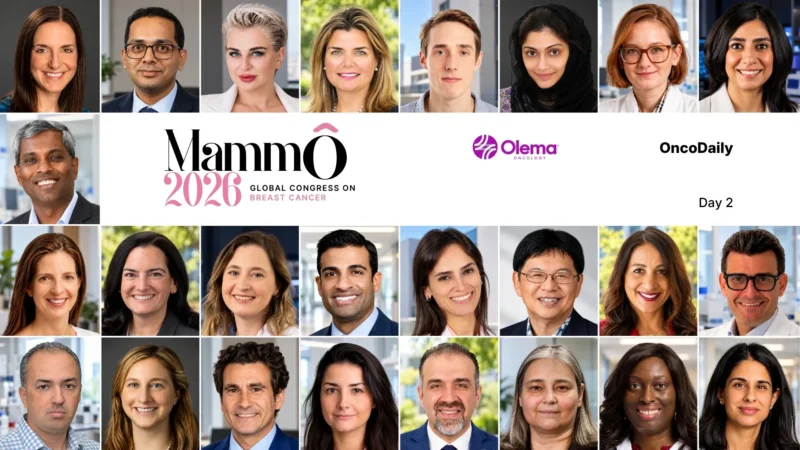
Read About MAMMÔ 2026 Day 2 Highlights on OncoDaily
OncoDaily Takeaway
The defining message from MAMMÔ 2026 was not simply that breast cancer has more treatment options. It is that breast cancer care is becoming increasingly adaptive.
The same patient may now be evaluated through imaging, conventional pathology, genomic assays, AI-based tissue analysis, germline testing and potentially ctDNA. Treatment can then be escalated, de-escalated or resequenced according to biological risk and response.
The next stage of precision oncology will therefore require more than developing new drugs. It will require knowing who needs more treatment, who can safely receive less, when resistance should trigger a change in therapy, and how increasingly sophisticated care can be implemented beyond highly resourced cancer centers.
MAMMÔ 2026 demonstrated that the future of breast cancer management lies at the intersection of precision, de-escalation, sequencing and access, with the ultimate goal not simply of treating disease more aggressively, but of treating each patient more intelligently.