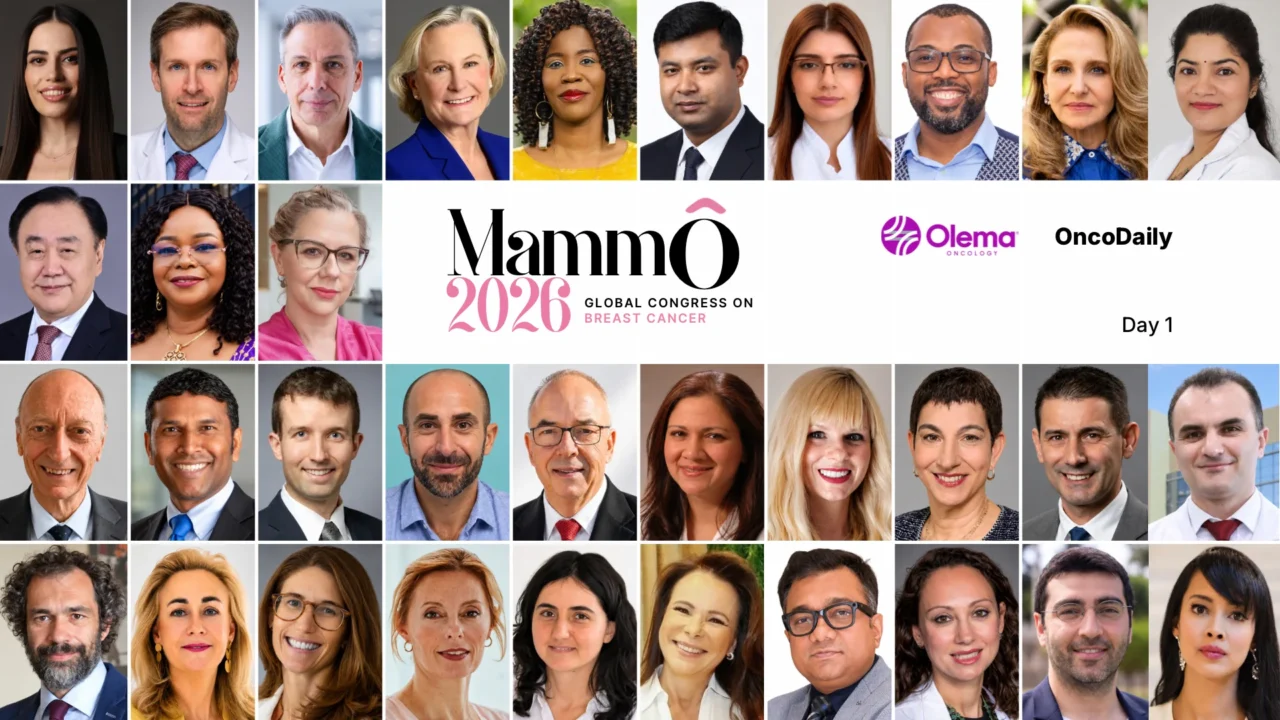
The MAMMÔ 2026 Global Breast Cancer Virtual Congress opened its scientific program with a comprehensive examination of the developments shaping breast cancer diagnosis, risk assessment, early-stage treatment, and access to care worldwide.
Under the theme “Risk, Diagnostics, Early-Stage Escalation & Local Therapy,” Day 1 brought together international experts in medical oncology, surgical oncology, radiation oncology, pathology, radiology, translational research, and global health to discuss the clinical challenges and emerging opportunities in breast cancer management.
The program addressed advances in artificial intelligence-assisted screening, hereditary cancer genetics, molecular diagnostics, neoadjuvant treatment, endocrine therapy, surgical and radiation de-escalation, and the integration of precision medicine into routine clinical practice. Dedicated discussions also examined disparities in breast cancer care, particularly in low- and middle-income countries, where timely diagnosis and access to effective treatment remain major challenges.
Breast cancer continues to represent a substantial global health burden, with more than 2.3 million new diagnoses and approximately 670,000 deaths annually. While improvements in screening, systemic therapies, and multidisciplinary care have contributed to significant reductions in mortality, differences in access to diagnosis and treatment continue to influence outcomes across populations.
The opening day of MAMMÔ 2026 reflected these priorities, bringing together scientific innovation and practical approaches to improving breast cancer care across diverse healthcare settings.
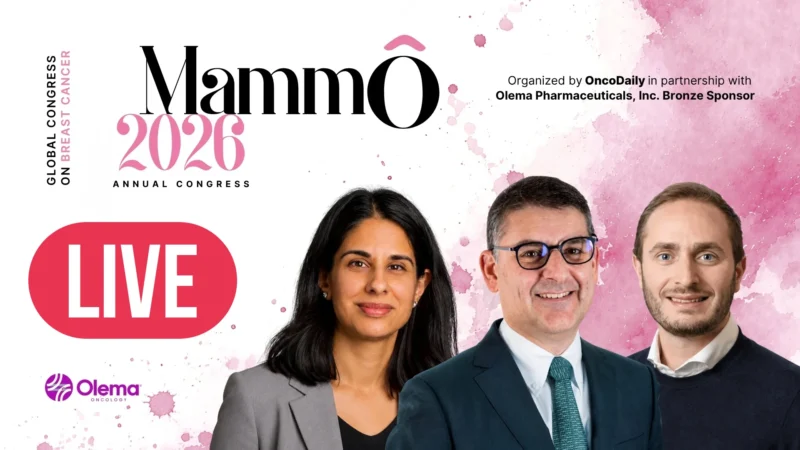
Olema joined MAMMÔ 2026 as a Bronze Sponsor, supporting the congress and its commitment to advancing scientific exchange and international collaboration in breast cancer care.
Session 1: Rethinking Early Detection — From AI Screening to Hereditary Risk and Global Access
The first scientific session, “Global Health, AI-Driven Screening & Genetics,” moderated by Timur Ceric, examined how advances in breast imaging, molecular technologies, genetic risk assessment, and community-based screening could improve the early detection of breast cancer.
The session opened with Nehmat Houssami, who addressed “Digital Breast Tomosynthesis and Mammography Screening: Maximizing Cancer Detection in Dense Breasts.” The presentation focused on the challenges associated with mammographic screening in women with dense breast tissue and the potential role of digital breast tomosynthesis in improving cancer detection. The discussion placed particular emphasis on optimizing screening approaches for women in whom conventional mammography may have reduced sensitivity.
Giovanna Rossi continued with “The Convergence of AI, Biosensors, and Dynamic ctDNA for Early Breast Cancer Detection.” Her presentation explored the integration of artificial intelligence, biosensor technologies, and circulating tumor DNA analysis into emerging diagnostic approaches. The topic highlighted opportunities for combining imaging and molecular information to support earlier identification of breast cancer, while raising important questions about clinical validation and implementation.
The session then turned to ductal carcinoma in situ (DCIS), with Aditi Hazra presenting “Early Detection of DCIS: Risk Stratification and Interception Before Invasive Breast Cancer.” Her lecture addressed the importance of distinguishing lesions with a greater likelihood of progression from those that may remain indolent. Risk stratification and early intervention were central to the discussion, reflecting the ongoing effort to prevent invasive disease while avoiding unnecessary treatment.
Hereditary breast cancer risk was addressed by Nihat Buğra Ağaoğlu in “Beyond BRCA1/2: The Rising Clinical Relevance of CHEK2, PALB2 and ATM in Hereditary Breast Cancer.” The presentation examined the growing importance of additional susceptibility genes in genetic counseling, risk assessment, and clinical decision-making. Beyond BRCA1 and BRCA2, genes such as CHEK2, PALB2, and ATM have become increasingly relevant to discussions about individualized surveillance and hereditary cancer management.
Lily Gutnik brought a global health perspective with “From Stigma to Screening: Community-Centred Strategies for Early Breast Cancer Detection in Low-Resource Settings.” Her presentation addressed the social and structural barriers that can delay breast cancer diagnosis, including stigma, limited awareness, and restricted access to screening services. Community engagement and locally adapted approaches were highlighted as important considerations for improving early detection in underserved populations.
Keynote Lecture: Closing the Gap Between Scientific Progress and Access to Care
The session concluded with a keynote lecture by Julie Gralow, titled “Bridging the Disparity Gap: Global Implementation Strategies and Maximizing Clinical Trial Access.”
The lecture addressed one of the central challenges in contemporary breast cancer care: ensuring that advances in research and treatment become accessible to patients across different healthcare systems.
The presentation focused on global implementation strategies, disparities in clinical trial participation, and the need to expand access to innovative therapies and research opportunities.
Together, the opening presentations established a central message for the congress: improvements in early detection must be accompanied by effective risk assessment, appropriate clinical intervention, and equitable access to care.
Session 2: Beyond Conventional Pathology — Molecular Profiling, AI and the Future of Treatment Selection
The second session, “Next-Gen Diagnostics & Computational Pathology,” moderated by Giuseppe Viale and Christos Sotiriou, examined the evolving role of pathology, molecular characterization, artificial intelligence, and genomic data in breast cancer treatment decisions.
Giuseppe Viale opened the session with “Navigating the Gray Zone: Pathological Standardisation of HER2-Low and HER2-Ultralow Expressions.”
The presentation addressed the diagnostic challenges associated with identifying and reporting low levels of HER2 expression. With HER2-low and HER2-ultralow categories becoming increasingly relevant in the context of antibody-drug conjugate therapies, accurate pathological assessment and reproducibility between laboratories are important considerations. The lecture focused on standardization and the difficulties encountered when evaluating tumors with minimal HER2 expression.
Sendurai Mani followed with “Tumour Plasticity, EMT, and Cancer Stem Cells: Resolving Microenvironmental Resistance via Spatial Multi-Omics.”
His presentation explored the biological mechanisms underlying tumor adaptation and therapeutic resistance, including epithelial-to-mesenchymal transition, cancer stem cell populations, and interactions within the tumor microenvironment. Spatial multi-omics was discussed as an approach to investigating these complex biological processes and identifying potential mechanisms of treatment resistance.
Christos Sotiriou presented “Unlocking the Biology of Invasive Lobular Carcinoma: Multi-Omic Biomarkers and Genomic Sequencing Realities.”
The lecture focused on the distinct biological characteristics of invasive lobular carcinoma and the role of molecular profiling in understanding its clinical behavior. Multi-omic biomarkers and genomic sequencing were examined in the context of improving disease characterization and supporting more individualized treatment strategies.
The application of computational technologies in treatment selection was further explored by Frederick Howard, who presented “Digital Pathology and AI to Guide Breast Cancer Treatment: Predicting Response to Neoadjuvant and Adjuvant Therapy.”
His presentation examined the potential of artificial intelligence-assisted pathology to extract clinically relevant information from tissue specimens and support predictions of treatment response. The discussion reflected growing interest in computational pathology as a complementary approach to established clinicopathological and molecular assessments.
Philippe Aftimos concluded the individual presentations with “The AURORA Paradigm: Moving National Clinico-Genomic Databases and Molecular Tumor Boards into Daily Practice.”
The lecture addressed the clinical application of integrated genomic and clinical information, focusing on how large-scale molecular databases and multidisciplinary molecular tumor boards can contribute to treatment decisions. The presentation also considered the practical challenges of translating genomic research into routine oncology care.
Panel Discussion: Genomic Assays Versus AI in Predicting Recurrence
The session continued with the panel discussion “Predicting Recurrence in HR+ Early Breast Cancer — Genomic Assays vs AI,” moderated by Christos Sotiriou, with Giuseppe Viale participating as a panelist.
The discussion focused on the clinical strengths and limitations of established genomic assays, including Oncotype DX and MammaPrint, compared with emerging artificial intelligence-based computational pathology models.
Particular attention was directed toward recurrence risk assessment in hormone receptor-positive early breast cancer and the potential role of these technologies in informing decisions about adjuvant CDK4/6 inhibitor therapy.
The panel addressed an important question in contemporary breast oncology: how established genomic testing and emerging computational approaches may complement one another in identifying patients who could benefit from treatment escalation while limiting unnecessary toxicity.
Session 3: Personalizing Neoadjuvant Therapy — Biomarkers, Endocrine Strategies and Treatment Escalation
The afternoon continued with “Neoadjuvant Paradigms & Predictive Biomarkers,” a session dedicated to treatment individualization in early-stage breast cancer.
The presentations addressed developments in hormone receptor-positive, HER2-positive, and triple-negative breast cancer, with particular attention to response-adapted treatment, endocrine optimization, and the use of predictive biomarkers.
Michael Gnant opened with “Neoadjuvant Strategies for Luminal Disease: Axillary Surgery Management and Early Endocrine Escalation.”
The lecture examined neoadjuvant treatment approaches in luminal breast cancer, including the relationship between systemic treatment response, axillary surgical management, and endocrine treatment intensification. The presentation considered how treatment strategies may be adapted according to tumor biology and individual patient characteristics.
Rita Nanda presented “The I-SPY 2.2 Paradigm in Early-Stage TNBC: Utilizing Adaptive Neoadjuvant Sequencing and Predictive Biomarkers to Safely Omit Cytotoxic Chemotherapy.”
Her lecture focused on the I-SPY 2.2 adaptive trial framework and its approach to biomarker-guided neoadjuvant treatment in triple-negative breast cancer. The presentation examined how treatment sequencing and early response assessment may help identify patients for whom conventional chemotherapy exposure could potentially be reduced. The possibility of chemotherapy omission was considered within the context of investigational, response-adapted strategies.
The management of younger patients was addressed by Megan Tesch, who presented “Optimizing Ovarian Function Suppression (OFS) in Young Patients with Breast Cancer.”
The lecture focused on ovarian function suppression as an important component of endocrine treatment in selected premenopausal patients. The topic included considerations relevant to treatment selection, optimization, and the clinical management of younger women with breast cancer.
Claudine Isaacs continued with “Optimizing Endocrine Therapy Options and Targeted Therapy for Early-Stage Breast Cancer.”
Her presentation examined the selection of endocrine treatment strategies and the integration of targeted therapies into early-stage breast cancer management. The discussion addressed treatment personalization according to disease characteristics and recurrence risk, reflecting the expanding therapeutic options available for patients with hormone receptor-positive disease.
In HER2-positive breast cancer, Evandro de Azambuja presented “Predicting Recurrence and Customising Escalation in Early HER2+ Breast Cancer: Clinical Utility of the HER2DX Genomic Assay.”
The lecture focused on HER2DX as a genomic assay developed to provide additional information about prognosis and treatment response in HER2-positive breast cancer. Its potential clinical utility was considered in the context of recurrence prediction and individualized decisions about treatment escalation.
Faris Tamimi concluded the session with “Bridging Clinical Trials to Real-World Practice: Multi-Center Analysis of TCHP Neoadjuvant Outcomes and pCR Predictors in HER2+.”
The presentation addressed real-world outcomes associated with neoadjuvant docetaxel, carboplatin, trastuzumab, and pertuzumab (TCHP) in HER2-positive breast cancer. The discussion centered on pathological complete response and the identification of factors that may help predict treatment effectiveness across clinical practice settings.
Collectively, the session reflected a continuing transition toward more individualized neoadjuvant management, in which molecular characteristics, treatment response, and patient-specific factors increasingly influence therapeutic decisions.
Session 4: Less Treatment, Better Selection — The Changing Landscape of Breast Surgery and Radiation Oncology
The fourth scientific session, “Surgical & Radiation Innovation: The Precision De-escalation Era,” moderated by Vivek Ghosh, examined contemporary approaches to reducing the extent and burden of local treatment while maintaining oncological safety.
The session brought together surgical and radiation oncology perspectives, addressing breast conservation, axillary management, patient preferences, innovative radiation techniques, and the implementation of de-escalation strategies across different healthcare environments.
Giuseppe Catanuto opened with “The Limits of Surgical De-escalation: Standardising Volume Displacement vs. Volume Replacement in Advanced Oncoplastics.”
The presentation examined the role of advanced oncoplastic techniques in breast-conserving surgery, particularly the selection and standardization of volume displacement and volume replacement approaches. The lecture addressed the balance between adequate tumor resection, breast preservation, and aesthetic outcomes.
Isabel Rubio continued with “Axillary De-escalation Post-Neoadjuvant Systemic Therapy: Real-World Implementation of Current Trial Consensus.”
Her presentation focused on the changing approach to axillary surgery following neoadjuvant systemic treatment. The discussion considered how evidence from clinical trials can inform less extensive axillary management in appropriately selected patients and the challenges of implementing these strategies in routine practice.
Ashley Marumoto presented “Beyond ‘Less Surgery’: Shared Decision-Making, Mastectomy Options and Aesthetic Flat Closure in the Precision De-escalation Era.”
The lecture emphasized the importance of patient preferences in surgical decision-making. Mastectomy options, aesthetic flat closure, and shared decision-making were considered as essential aspects of individualized breast cancer care, extending the concept of de-escalation beyond the reduction of surgical procedures alone.
Radiation Innovation: Shorter Treatment Courses and New Approaches to Local Control
Frederick M. Dirbas followed with “Contralateral Prophylactic Mastectomy in 2026: Global Patterns, Overuse, and Pathways to De-escalation.”
His presentation examined international patterns of contralateral prophylactic mastectomy and concerns regarding its use in patients who may not derive a substantial oncological benefit. The discussion considered risk assessment, surgical decision-making, and opportunities to reduce unnecessary procedures.
Tarek Hijal presented “Flipping the Treatment Paradigm: Single-Fraction Pre-Operative Radiation (SPORT) and the Path to Bypassing Breast Surgery Entirely.”
The lecture examined the investigational use of single-fraction preoperative radiation therapy as an alternative approach to conventional treatment sequencing. The presentation explored the possibility of treating selected early-stage tumors with radiation before surgery and the longer-term research question of whether surgery could eventually be omitted in carefully defined patient populations.
Breast Conservation Across Different Healthcare Systems
The final presentations of the session addressed the practical challenges of delivering breast-conserving treatment in low- and middle-income countries.
Miriam Mutebi presented “Making Breast Conservation Work in LMICs: African Real-World Experience and System-Building Strategies.”
Her lecture focused on the implementation of breast-conserving approaches in African healthcare settings, examining the importance of surgical capacity, multidisciplinary coordination, access to radiation therapy, and broader health system development.
Soumen Das concluded the session with “De-escalation via Innovation: Standardising Volume Preservation and Local Flap Dynamics in Low- and Middle-Income Countries (LMICs).”
The presentation examined surgical techniques designed to preserve breast volume and optimize local tissue reconstruction in resource-constrained settings. The discussion highlighted the need for practical, adaptable surgical strategies that support breast conservation without compromising treatment quality.
Together, the presentations demonstrated that local treatment de-escalation involves more than reducing the extent of surgery or shortening radiation courses. It requires appropriate patient selection, reliable multidisciplinary care, attention to patient preferences, and the resources necessary to deliver safe treatment.
Special Panel: Do We Still Need Chemotherapy in the ADC Era?
One of the central discussions of the evening was the panel “Do We Still Need Chemo? De-escalation in the ADC Era,” moderated by Adrienne Waks, with Adrienne Waks and Ingrid Mayer participating as panelists.
The discussion examined how antibody-drug conjugates, response-adapted treatment strategies, and evolving clinical trial evidence may influence the future use of conventional chemotherapy in breast cancer.
Three important clinical research programs formed the basis of the discussion.
DESTINY-Breast11 was considered in the context of treatment optimization in HER2-positive breast cancer, including the potential to reduce reliance on anthracycline-containing regimens.
PHERGain-2 was highlighted in relation to PET/CT-adapted treatment strategies and the investigation of chemotherapy omission in selected patients with HER2-positive disease.
ASCENT-04 was discussed in the context of the expanding role of antibody-drug conjugates in the first-line treatment of advanced triple-negative breast cancer and their implications for future treatment strategies.
The panel addressed the broader question of how conventional chemotherapy may be repositioned as targeted therapies and biomarker-guided approaches continue to develop.
While chemotherapy remains an essential component of treatment for many patients with breast cancer, ongoing research is investigating whether selected populations may achieve favorable outcomes with less exposure to conventional cytotoxic regimens.
Global Voices in Breast Cancer: From the Himalayas to Africa and Latin America
The final program block, “Global Voices in Breast Cancer,” broadened the discussion beyond clinical trials and technological advances to examine the experiences of patients and healthcare professionals working across diverse health systems.
The session addressed breast cancer care in Nepal, Albania, Iraq, Kenya, China, Ghana, and Latin America, alongside broader perspectives on survivorship, advocacy, stigma, and health policy.
Sarada Khadka opened the session with “The Right Surgery for Every Woman: A Breast Cancer Journey from the Himalayas.”
The presentation examined breast cancer surgical care in the Himalayan region, with attention to the importance of matching treatment recommendations to patient needs and local healthcare realities.
Donjeta Zeqa presented “Breaking the Silence: Tackling Breast Cancer Stigma Across Diverse European Health Systems.”
Her lecture addressed the influence of stigma on breast cancer awareness, diagnosis, and access to care. The presentation considered how social attitudes and differences between healthcare systems can affect the experiences of women seeking breast cancer services.
Vivek Ghosh continued with “Breast Cancer Care in the Himalayas: From Global Evidence to Local Impact.”
The presentation focused on translating international evidence and treatment recommendations into practical care in the Himalayan region, where geography, infrastructure, and resource availability may create additional barriers to treatment.
Karez Namiq presented “Breast Cancer in Iraq,” bringing attention to the national context of breast cancer care and the challenges associated with improving diagnosis, treatment delivery, and outcomes.
Abeid Athman followed with “Breast Cancer in Young Kenyan Women: Epidemiology, Oncofertility Challenges, and Paths to Precision Care.”
The lecture addressed breast cancer in younger women in Kenya, with a focus on epidemiological considerations, fertility preservation, and the difficulties of expanding access to individualized treatment. The topic emphasized the importance of integrating reproductive health concerns into breast cancer management.
Keynote Lecture: Closing the Global Cancer Divide
Felicia Marie Knaul delivered the keynote lecture “Closing the Global Cancer Divide: Lessons from Breast Cancer.”
The presentation examined breast cancer as an important example of the broader inequalities that influence cancer outcomes worldwide.
The lecture focused on the relationship between health system capacity, access to essential cancer services, and the implementation of effective policies to reduce disparities.
The keynote reinforced the importance of ensuring that advances in breast cancer research and treatment are accompanied by sustained efforts to improve access to care.
Expanding Screening and Strengthening Breast Cancer Systems
Professor Daiming Fan presented “The 2026 CACA Guidelines: Standardizing Grassroots Screening and Holistically Raising Five-Year Survival Rates in East Asia.”
The lecture addressed the role of the 2026 Chinese Anti-Cancer Association guidelines in supporting standardized breast cancer screening and management, particularly at the community and primary healthcare levels.
The presentation considered how structured recommendations and coordinated healthcare strategies can contribute to improving early diagnosis and long-term outcomes.
Beatrice Wiafe Addai continued with “Decentralizing Breast Health: Deploying Mobile Health Screening and Navigating Traditional Beliefs in Sub-Saharan Africa.”
Her presentation focused on expanding breast health services beyond major urban centers through mobile screening initiatives and community-based approaches. The discussion also addressed the importance of understanding cultural beliefs and local attitudes when developing effective screening programs.
Patient Perspectives, Advocacy and the Role of Health Policy
The session also provided an opportunity to examine breast cancer care from the perspective of patients and advocacy organizations.
Ana Marjanovikj presented “The Person Behind the Patient: A Breast Cancer Survivor’s Perspective.”
Her presentation placed the lived experience of breast cancer at the center of the discussion, drawing attention to the personal and social dimensions of diagnosis, treatment, and survivorship.
Maira Caleffi followed with “The 30-Day Law and Beyond: How a Latin American NGO Coalition Mobilized Legislative Mandates for Accelerated Cancer Diagnostics.”
The lecture addressed the role of civil society organizations in advancing cancer-related health policy. The presentation focused on legislative initiatives designed to reduce diagnostic delays and improve timely access to cancer services in Latin America.
Day 1 Conclusions: Advancing Precision Medicine While Expanding Access
The first day of MAMMÔ 2026 Global Breast Cancer Virtual Congress provided a broad overview of the scientific, clinical, and global health priorities shaping breast cancer care.
Across the program, several themes emerged: the importance of improving early detection, the increasing role of molecular and computational diagnostics, the need for more precise treatment selection, and the growing interest in safely reducing treatment intensity for appropriately selected patients.
Presentations on hereditary risk, HER2 expression, genomic assays, and artificial intelligence demonstrated the expanding range of tools being investigated to support clinical decision-making. Discussions of neoadjuvant therapy, endocrine treatment, antibody-drug conjugates, and response-adapted strategies highlighted the continuing evolution of systemic breast cancer management.
The surgical and radiation oncology sessions examined how treatment can be individualized to preserve oncological outcomes while reducing unnecessary procedures, toxicity, and treatment burden.
Equally important were the global perspectives presented throughout the day. Contributions from healthcare professionals, researchers, advocates, and survivors across multiple regions emphasized that the benefits of scientific progress remain closely linked to healthcare infrastructure, policy, education, and access.
Day 1 established the central priorities of MAMMÔ 2026: improving the accuracy of diagnosis, refining treatment according to individual risk, and ensuring that progress in breast cancer care reaches patients across different healthcare systems.
Olema Supports MAMMÔ 2026 as Bronze Sponsor
Olema is a biotechnology company focused on the discovery and development of targeted therapies for women’s cancers, with particular emphasis on breast cancer.
As a Bronze Sponsor of the MAMMÔ 2026 Global Breast Cancer Virtual Congress, Olema supports an international scientific forum dedicated to advancing knowledge, encouraging multidisciplinary exchange, and addressing important challenges in breast cancer research and clinical care.
The participation of Olema as a Bronze Sponsor reflects the importance of collaboration between scientific organizations, healthcare professionals, and the biotechnology sector in supporting continued progress in breast cancer care.