





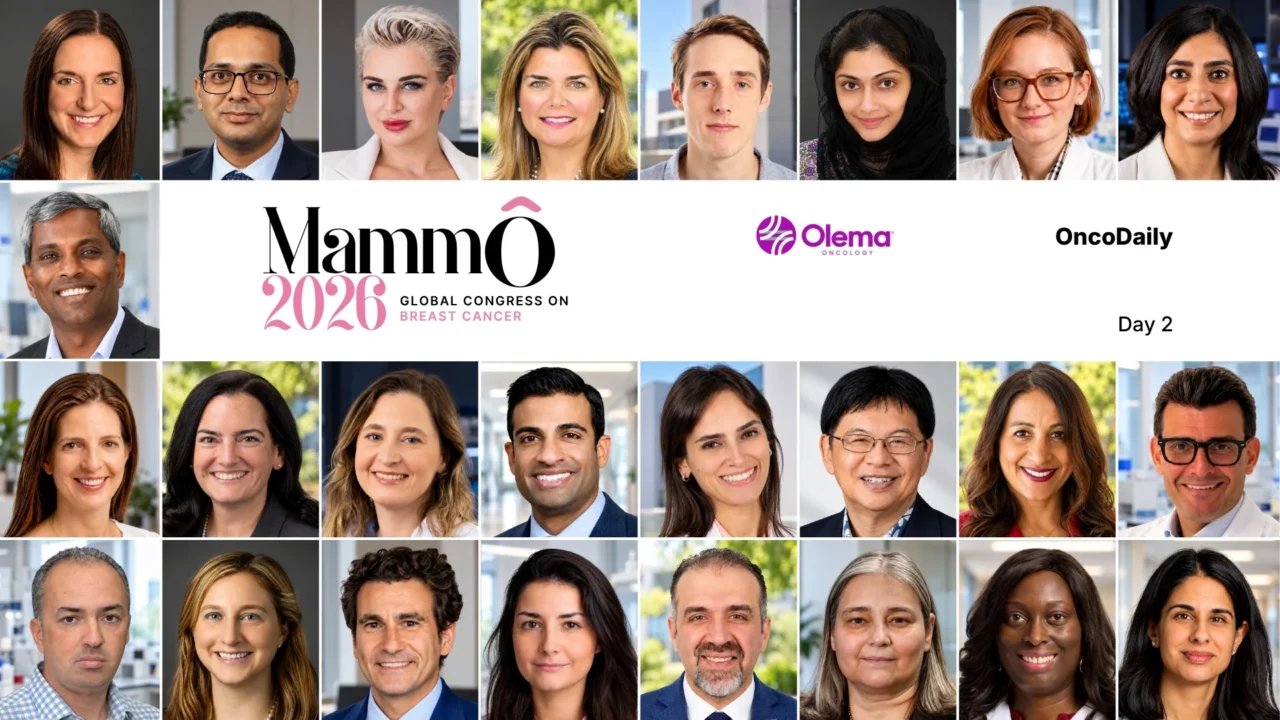
The second day of MAMMÔ 2026 brought together international breast cancer experts for an extensive scientific program addressing some of the most important challenges in contemporary breast cancer management. From optimizing adjuvant systemic therapy and overcoming resistance in metastatic disease to the expanding role of antibody-drug conjugates (ADCs), the discussions reflected the growing complexity of treatment selection across different breast cancer subtypes.
Throughout the day, speakers examined emerging therapeutic strategies, molecular biomarkers, treatment sequencing, and the practical challenges of translating scientific advances into routine clinical care. Particular attention was given to endocrine resistance, the evolving role of oral selective estrogen receptor degraders (SERDs), and the integration of precision medicine into treatment decisions.
Beyond systemic treatment, the program addressed survivorship, treatment-related toxicities, patient-reported outcomes, and equitable access to care. The day concluded with a multidisciplinary molecular tumor board focused on complex clinical scenarios and individualized therapeutic approaches.
Refining Adjuvant Therapy: Molecular Profiling, MRD and Access to Treatment
The morning program opened with Session 5: Adjuvant Systemic Therapy Optimization, moderated by Zhana Babunashvili, focusing on treatment selection in early-stage breast cancer and the role of molecular information in guiding clinical decisions.
Adrienne Waks began with a presentation on Early-Stage HER2-Positive Treatment Selection: Optimising Adjuvant Regimens to Prevent Late Relapses. The session addressed the selection of adjuvant treatment strategies in HER2-positive breast cancer, with particular attention to reducing the risk of late recurrence.
The discussion continued with Shaheenah Dawood, who explored Navigating the Molecular Architecture of HR+/HER2+ Subtypes: Genomic Cross-Talk, Clonal Evolution, and Advanced Systemic Sequencing. Her presentation examined the molecular complexity of hormone receptor-positive, HER2-positive disease and the implications of genomic interactions and clonal evolution for systemic treatment strategies.
Ilana Schlam addressed the role of circulating tumor DNA (ctDNA) in early-stage breast cancer through her presentation, ctDNA Monitoring in Early Disease: Tracking Post-Surgical Minimal Residual Disease (MRD). The topic highlighted the potential of molecular residual disease monitoring to identify persistent disease following surgery and inform future approaches to recurrence risk assessment.
Following the break, Zhana Babunashvili presented Translating Global Genomic and Adjuvant Standards into Regional Practice: Overcoming Economic and Access Barriers in the Caucasus. Her session shifted attention to the practical realities of implementing international treatment recommendations in regional healthcare systems, particularly where economic limitations and access to genomic testing may influence clinical practice.
Vishwanath Sathyanarayanan subsequently discussed Hepatic Visceral Crisis in Breast Cancer, addressing a challenging clinical situation that requires careful assessment and timely therapeutic decision-making.
The session concluded with Antonio Giordano, who examined Targeting the PI3K/AKT/mTOR Axis: Biomarker Stratification and Overcoming Pathway Hyperactivation in HR+ MBC. His presentation focused on the molecular mechanisms underlying pathway activation in hormone receptor-positive metastatic breast cancer and the importance of biomarker-guided therapeutic strategies.
Together, these presentations connected advances in molecular profiling and systemic treatment with the clinical and economic considerations that determine how such approaches are implemented across different healthcare settings.
Beyond CDK4/6 Inhibitors: New Directions in Metastatic Breast Cancer
The scientific program continued with Session 6: Metastatic Breast Cancer (MBC): Sequencing & Overcoming Resistance, moderated by Michail Ignatiadis and Fatima Cardoso.
As treatment options for metastatic breast cancer continue to expand, selecting subsequent lines of therapy after disease progression remains an important clinical challenge.
Michail Ignatiadis opened the session with Sequencing Beyond CDK4/6i Failure: Cross-Class Resistance Mechanisms in Advanced ER+/HER2- Disease. His presentation addressed resistance mechanisms following CDK4/6 inhibitor treatment and their relevance to therapeutic sequencing in advanced estrogen receptor-positive, HER2-negative breast cancer.
Fatima Cardoso followed with The Macro-Sequencing Roadmap for HR+/HER2- MBC: Aligning Global ABC Guidelines with Multi-Line Treatment Realities. The presentation examined how international Advanced Breast Cancer (ABC) guidelines can inform treatment decisions across multiple lines of therapy, while accounting for the complexities encountered in clinical practice.
The session also featured Hadar Goldvaser, who presented Efficacy, Evolving Safety, and Evolving Positioning of Next-Gen Oral SERDs in HR+/HER2- Metastatic Breast Cancer: A Comprehensive Meta-Analysis. Her presentation addressed the developing evidence surrounding next-generation oral SERDs, including their efficacy, safety profiles, and potential positioning within the metastatic treatment landscape.
The discussions underscored the importance of understanding resistance biology and evaluating emerging treatment options within the broader sequence of care.
The Oral SERD Era: Addressing ESR1 Mutations and Treatment Sequencing
A dedicated panel discussion, The Oral SERD Era in ESR1-Mutant HR+/HER2- Disease — Sequencing Across the Class, brought further attention to the expanding role of oral endocrine therapies.
Moderated by Antonio Giordano, the panel featured Michail Ignatiadis, Hadar Goldvaser, and Ingrid Mayer.
The discussion focused on real-world treatment sequencing involving camizestrant, elacestrant, imlunestrant, and giredestrant, examining the clinical considerations associated with selecting therapies within this evolving drug class.
A central topic was the use of serial liquid biopsies to detect emerging ESR1 mutations before clinical progression, including the approach investigated in the SERENA-6 trial.
Panelists also considered the financial and logistical implications of repeated molecular testing, an increasingly relevant issue as biomarker-driven treatment decisions become more integrated into metastatic breast cancer management.
The panel addressed a key question for clinical practice: how to incorporate emerging endocrine therapies and molecular monitoring strategies into treatment pathways that remain both clinically appropriate and practically accessible.
The ADC Revolution: Reshaping Treatment Across Breast Cancer Subtypes
The afternoon continued with Session 7: The Evolving Clinical Landscape of ADCs, moderated by Uddiptya Goswami.
The session examined the changing role of antibody-drug conjugates and other targeted therapies in advanced breast cancer, alongside the challenges of treatment access, sequencing, and implementation.
Sabe S. Sabesan opened with Decentralising Breast Cancer Trial Access: Tele-Oncology Models and Reaching Disadvantaged Populations. His presentation addressed the potential of tele-oncology and decentralized clinical trial models to expand research participation among patients who face geographic, socioeconomic, or healthcare access barriers.
Veronique Debien followed with Overcoming the Therapeutic Maze: Sequencing Antibodies, ADCs, and TKIs Across Overlapping Advanced Phenotypes. Her presentation explored the complexity of treatment sequencing as antibodies, ADCs, and tyrosine kinase inhibitors become available across increasingly overlapping clinical and molecular breast cancer subtypes.
An In Conversation segment brought together Ana Garrido-Castro and Carlos Barrios for The ADC Revolution in Advanced Disease: Reshaping First-Line Treatment for Metastatic TNBC and HER2-Negative Subtypes.
Their discussion focused on the expanding role of ADCs in advanced disease and the evolving therapeutic landscape for metastatic triple-negative breast cancer and HER2-negative subtypes.
Timur Ceric then presented Real-World Implementation Frameworks: Navigating Biomarker Requirements and Access Controls for Next-Gen HER2+ ADCs. His session addressed the practical considerations involved in introducing next-generation HER2-directed ADCs into clinical practice, including biomarker requirements and treatment accessibility.
Keynote Lecture: The Changing First-Line Treatment Landscape
A major highlight of the afternoon was the keynote lecture delivered by Sara Tolaney, titled The Evolving First-Line Landscape in Metastatic Breast Cancer: New Standards for TNBC and HER2-Positive Disease.
The lecture addressed the changing therapeutic landscape in metastatic triple-negative and HER2-positive breast cancer, with a focus on emerging first-line treatment strategies and the evidence shaping contemporary clinical practice.
The keynote provided a broader perspective on how advances in systemic therapy are influencing treatment selection in metastatic disease.
Beyond Tumor Control: Survivorship, Toxicities and the Patient Experience
Following the discussions on advanced systemic therapies, Session 8: Survivorship, Toxicities & Patient-Reported Outcomes, moderated by Emad Shash, shifted attention toward the long-term physical, metabolic, and psychosocial aspects of breast cancer care.
Neil Iyengar opened with The Metabolic Microenvironment: Tailoring Lifestyle Modifications and Metabolic Intervention to Boost Outcomes in TNBC and HER2+ Breast Cancers. His presentation examined the relationship between metabolic factors, lifestyle interventions, and treatment outcomes in triple-negative and HER2-positive breast cancer.
Coral Omene continued with Moving Beyond Lifestyle: The FITWISE Trial and Scaling GLP-1 Receptor Agonists to Combat Obesity and Disparities. Her presentation explored the role of GLP-1 receptor agonists in addressing obesity and the potential implications of metabolic interventions for reducing disparities in cancer care.
Following the break, Christine Brezden-Masley discussed Managing Treatment-Induced Toxicities: Clinical Protocols for Vasomotor Symptoms (VMS), Genitourinary Syndrome of Menopause (GSM), and Targeted Intravenous Iron Therapy (IDA/ICA).
The presentation addressed supportive care strategies for treatment-associated symptoms and complications, emphasizing the importance of managing adverse effects throughout the cancer care continuum.
Laura Dominici subsequently presented Surgical Decision-Making in Young Women With Breast Cancer: Integrating Patient-Reported Outcomes Into Shared Choices. Her session examined the role of patient-reported outcomes in surgical decision-making and the importance of incorporating individual preferences into discussions about treatment options.
Emad Shash concluded the session with Beyond the Prescription: Patient Navigation and Education as Part of Modern Breast Cancer Therapy. His presentation addressed the importance of patient education, navigation, and supportive services in helping individuals understand and access their treatment.
The session placed particular emphasis on the need to consider treatment tolerability, quality of life, and patient participation alongside traditional measures of clinical effectiveness.
The Best Drug Is the One They Take: Adherence in the Oral-Therapy Era
The evening program featured a panel discussion titled The Best Drug is the One They Take — Adherence in the Oral-Therapy Era.
Moderated by Emad Shash and Neil Iyengar, the panel included Emad Shash, Christine Brezden-Masley, and Neil Iyengar.
The discussion examined the challenges of maintaining long-term adherence to oral breast cancer therapies, particularly adjuvant endocrine treatment.
With up to one-third of patients discontinuing adjuvant endocrine therapy prematurely, the panel focused on the factors that influence treatment persistence and the potential consequences of early discontinuation.
Topics included whether better-tolerated oral SERDs, including those investigated in the lidERA trial, could help address adherence challenges, as well as real-world discontinuation of CDK4/6 inhibitors.
The panel also explored the socioeconomic and practical factors that influence whether prescribed treatment translates into sustained clinical benefit.
By addressing adherence as an essential component of effective cancer therapy, the discussion connected pharmacological advances with the realities of long-term treatment.
Complex Cases, Molecular Decisions: The Multidisciplinary Tumor Board
The final scientific session of Day 2 was the Multidisciplinary Molecular Tumor Board.
The session brought together complex clinical scenarios involving metastatic progression, molecular resistance, aggressive breast cancer phenotypes, and targeted treatment selection.
Helena de Souza e Mello Kremer opened with Asymptomatic Intracranial Progression: Aligning ABC Guidelines with Real-World Systemic Sequencing. Her presentation addressed treatment considerations for patients experiencing intracranial disease progression without symptoms, with particular attention to systemic therapy sequencing and international guideline recommendations.
Nimmi Kapoor followed with Targeting the Potential of the Postpartum Tumor Microenvironment in Breast Cancer. The presentation examined the distinct biological environment associated with postpartum breast cancer and its potential relevance to therapeutic development.
The program continued with Cedric Van Marcke, who discussed Navigating Targeted Sequencing Logic for Triple-Negative and ER+ Advanced Diseases.
The discussion also included Carmen Criscitiello, whose topic, Endocrine Resistance in Multi-Class Refractory Disease: Profiling Predictive Biomarkers Beyond PIK3CA and ESR1, addressed the challenge of identifying additional molecular predictors in patients with advanced disease resistant to multiple treatment classes.
Naoto Ueno presented Ultra-Aggressive Inflammatory TNBC Subtypes, bringing attention to the biological and clinical challenges associated with highly aggressive inflammatory triple-negative breast cancer.
The final presentation was delivered by Reva Basho, titled Beyond HR+ Disease in Breast Cancer: Targeting the PI3K Axis. Her presentation examined the potential relevance of PI3K pathway targeting beyond hormone receptor-positive breast cancer.
The molecular tumor board concluded the scientific discussions by bringing together precision oncology, treatment resistance, and multidisciplinary decision-making in challenging clinical settings.
Day 2 Closing: Connecting Scientific Advances With Clinical Practice
Day 2 of MAMMÔ 2026 covered a broad range of issues shaping breast cancer management, from adjuvant treatment optimization and molecular residual disease monitoring to advanced therapeutic sequencing and the growing clinical role of ADCs.
The discussions reflected the increasing importance of molecular characterization in guiding treatment decisions, particularly in metastatic disease, where endocrine resistance, emerging targeted therapies, and new drug classes continue to influence therapeutic strategies.
At the same time, sessions dedicated to treatment access, survivorship, supportive care, and adherence emphasized that advances in oncology must be accompanied by practical approaches that address the needs of patients throughout their treatment journey.
The day concluded with a multidisciplinary molecular tumor board, reinforcing the central role of individualized decision-making in complex breast cancer cases.
From early-stage treatment optimization to the management of heavily pretreated metastatic disease, the second day of MAMMÔ 2026 highlighted the clinical questions, emerging evidence, and implementation challenges that continue to shape the future of breast cancer care.