





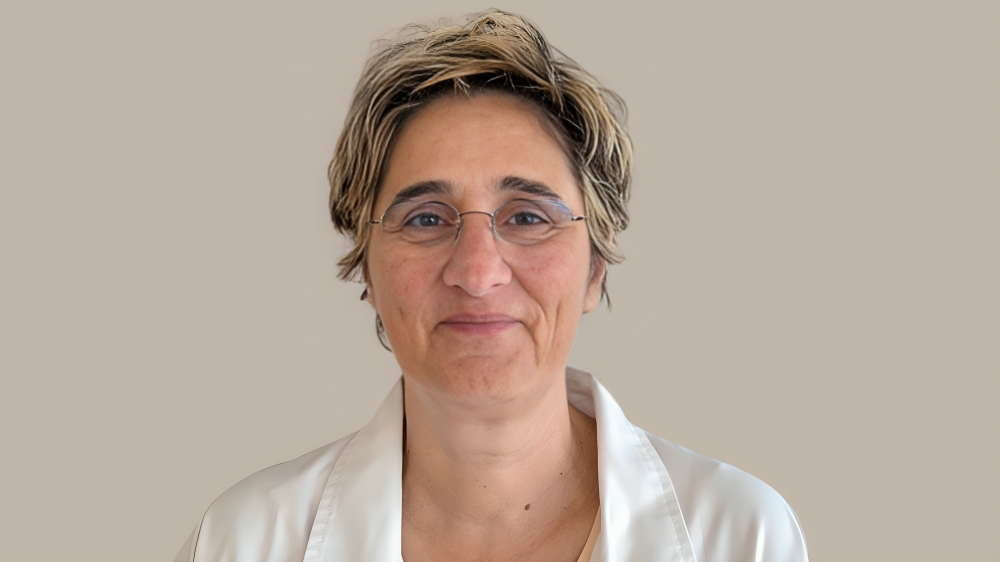
Zacharoula Sidiropoulou, Senior Consultant Breast Surgical Oncologist at Hospital São Francisco Xavier, shared a post by WHO Collaborating Centre for Public Health Education and Training, Imperial College London on LinkedIn, adding:
“Cervical cancer is almost entirely preventable. It is also one of the cruelelest killers of women in the Global South, devastating communities across Sub-Saharan Africa and beyond. And across the Arab world, millions of women remain unprotected. Not because the tools don’t exist.
But because the path to using them is blocked at every level.
This newly published systematic review, spanning 34 studies and 42,781 participants across 22 Arab countries, reveals why screening uptake averages just 18.2% in the region, and why vaccination rates remain in single digits in many places.
The barriers are not one-dimensional. They are layered:
- Cultural religious stigma around discussing sexual health makes screening feel taboo.
- Husband and family disapproval actively prevent women from accessing care.
- Widespread misinformation, including beliefs that the HPV vaccine promotes promiscuity or causes HIV, fuels hesitancy.
- Healthcare providers often lack the time, training, or guidance to recommend vaccination.
- National screening and vaccination programmes are absent or poorly organised across much of the region.
- Cost remains a prohibitive barrier, particularly for lower-income populations.
And yet, willingness exists. 55% of Saudi parents said they’d vaccinate their children. 67% of Moroccan female students said they’d get vaccinated. Educational interventions in Saudi Arabia raised HPV knowledge from 29% to 82%.
The gap between intention and action is not a failure of individuals. It is a failure of systems.
Closing that gap requires coordinated policy action: integrating HPV vaccination into national immunisation programmes, organising cervical screening at scale, training healthcare providers, and tackling misinformation with trusted, culturally sensitive communication.
Cervical cancer elimination is achievable. Countries like the UK and Australia have shown that. The Arab region has the will, it now needs the infrastructure to match.
Honoured to have been included in this work.
This type of work is what separates global health work from global health noise.”
Quoting WHO‘s post:
“Yesterday marked Cervical Cancer Prevention Day, a timely reminder that cervical cancer prevention is possible, but access, awareness and trust remain uneven.
We are pleased to share our new systematic review on cervical cancer prevention in Arab countries, focusing on HPV vaccination and cervical cancer screening uptake.
Across 34 studies, covering 22 Arab countries and 42,781 participants, our review found persistent gaps in knowledge, vaccination uptake and screening participation.
Key findings included:
- Only 14% of Saudi women knew that HPV causes cervical cancer, and only 9.8% were aware of the HPV vaccine.
- HPV vaccination uptake ranged from 4.6% to 18.9%.
- Cervical cancer screening uptake remained low, with substantial disparities across countries.
- Major barriers included limited awareness, safety concerns, misinformation, socio-cultural barriers, conspiracy beliefs and suboptimal healthcare provider engagement.
- Educational interventions showed promise, with one Saudi intervention increasing student knowledge from 29.3% to 82%.
The message is clear: awareness alone is not enough.
To strengthen cervical cancer prevention in the Arab region, we need:
- culturally appropriate public health education
- stronger healthcare provider engagement
- trusted communication to address misinformation
- improved access to HPV vaccination
- organised, acceptable and equitable screening pathways.
Cervical cancer prevention is not only a women’s health issue. It is a health equity, health systems and public trust issue.
As we continue the momentum from Cervical Cancer Prevention Day, we hope this review contributes to stronger evidence-informed action across the region.”
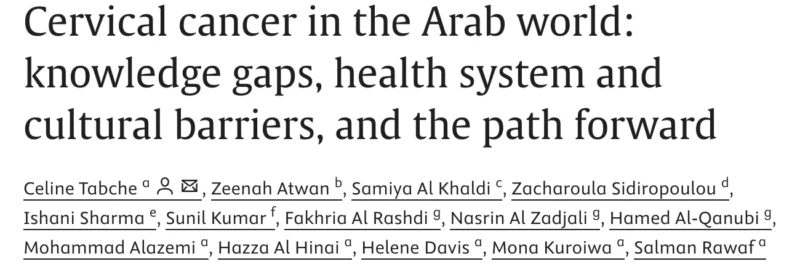
Title: Cervical cancer in the Arab world: knowledge gaps, health system and cultural barriers, and the path forward
Authros: Celine Tabche, Zeenah Atwan, Samiya Al Khaldi, Zacharoula Sidiropoulou, Ishani Sharma, Sunil Kumar, Fakhria Al Rashdi, Nasrin Al Zadjali, Hamed Al-Qanubi, Mohammad Alazemi, Hazza Al Hinai, Helene Davis, Mona Kuroiwa, Salman Rawaf
Read The Full Article
Other articles about Cervical Cancer on OncoDaily.