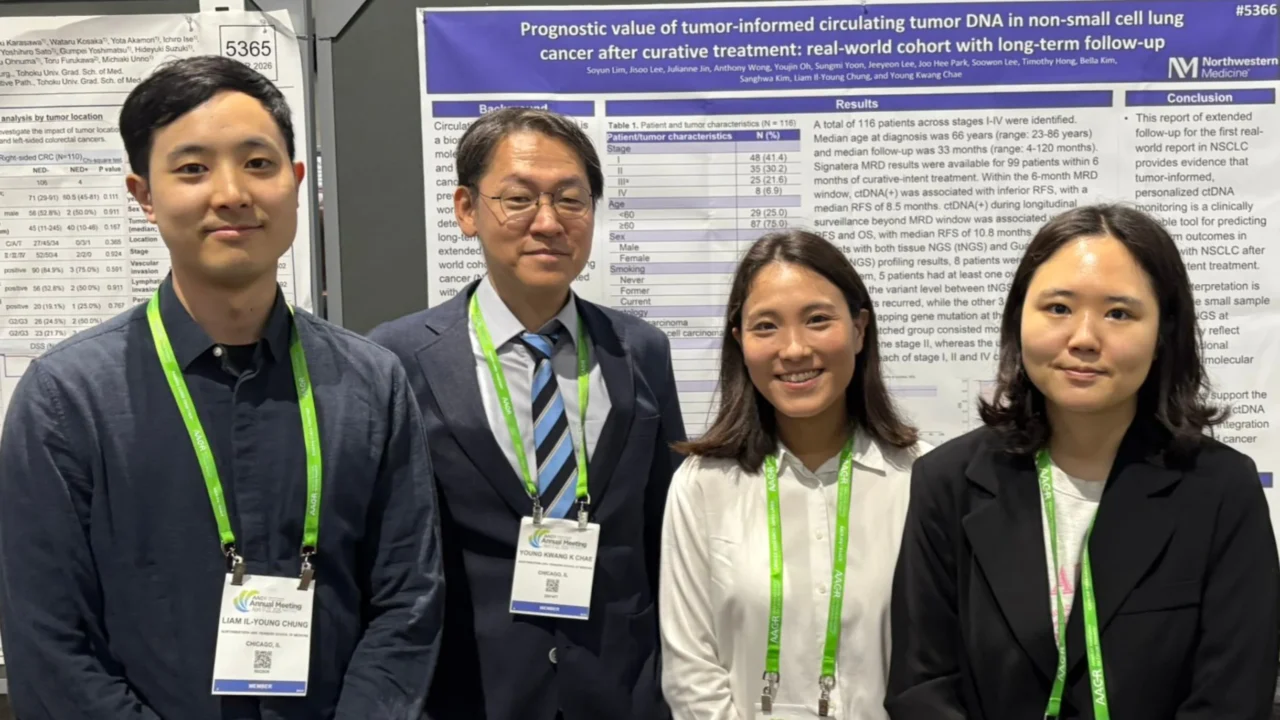
Young Kwang Chae, Professor and Co-Director of Developmental Therapeutics Lurie Cancer Center at Northwestern University shared a post on X:
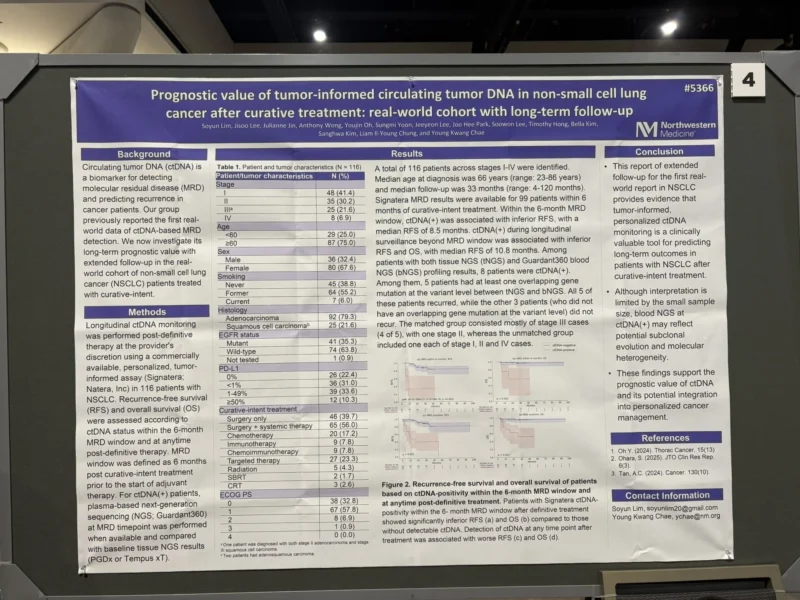
“Exciting new real-world data from ChaeLab Northwestern Medicine on the prognostic value of tumor-informed ctDNA (Natera) in post-curative NSCLC.
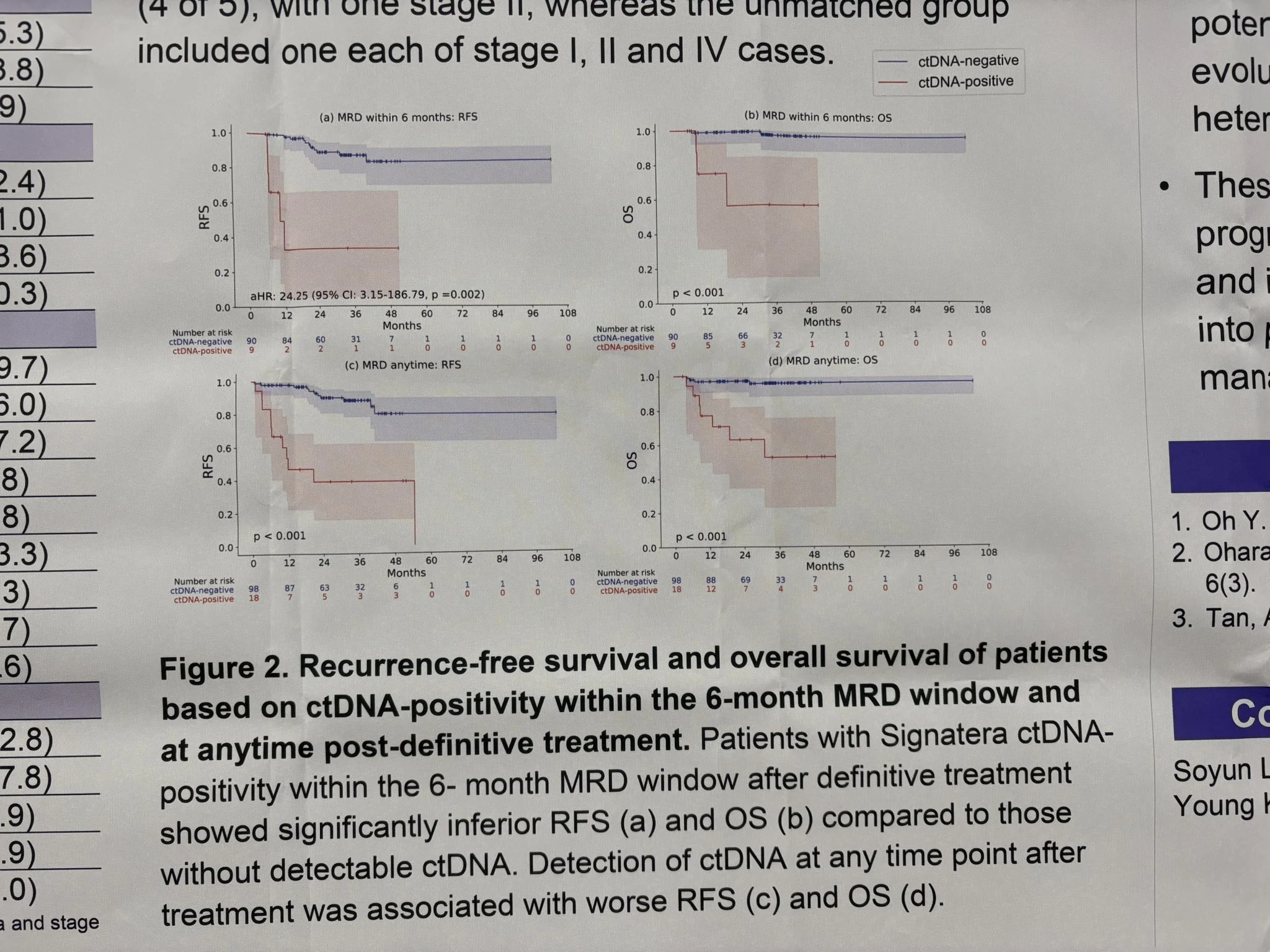
In a cohort of 116 patients, longitudinal monitoring shows clear clinical utility in predicting long-term outcomes. Key Findings on Recurrence-Free Survival (RFS):
- MRD Window (within 6 months post-treatment): ctDNA(+) median RFS: 8.5 months vs. ctDNA(-) median RFS: Not reached (HR: 24.25).
- Longitudinal Surveillance (anytime post-treatment): ctDNA(+) median RFS: 10.8 months vs. ctDNA(-) median RFS: Not reached.
The Clinical Challenge: Mutation Overlap and Clonal Hematopoiesis Among 8 ctDNA(+) patients profiled with both tissue NGS (tNGS) and blood NGS (bNGS):
- 5 patients had overlapping mutations. All 5 recurred.
- 3 patients lacked overlap. Notably, none of these 3 patients recurred.
Clinical Implications: This distinction is vital. ctDNA(+) without tissue mutation overlap may represent clonal hematopoiesis (CHIP) rather than true tumor-derived recurrence. Using tNGS to confirm tissue-blood variant overlap acts as a critical filter, increasing the specificity of liquid biopsy and helping clinicians avoid false positives when deciding on aggressive salvage therapy. ”