
Muna Al-Khaifi, Lead of Breast Cancer Survivorship Program and GP Oncologist at the Mount Sinai Hospital (Toronto), Sinai Health, presents this article on managing low sexual drive in cancer survivors. This piece reviews current evidence on hypoactive sexual desire disorder and highlights the role of non-pharmacological interventions as first-line strategies, emphasizing the importance of integrating sexual wellbeing into routine survivorship care across the cancer continuum.
Managing Low Sexual Drive in Cancer Survivors: What the Latest Evidence Shows
Cancer survivors are often told they should feel grateful simply to be alive. But survival alone does not restore intimacy, confidence, sexual wellbeing, or connection to one’s sense of self.
Many survivors quietly struggle with low libido, arousal changes, pain with intimacy, body image concerns, and emotional disconnection after treatment– yet these conversations are still too often overlooked in oncology care.
Particularly, low libido, also referred to as Hypoactive Sexual Desire Disorder (HSDD), is characterized by difficulty becoming sexually aroused, emotional disconnection from intimacy, reduced sexual responsiveness, and challenges achieving orgasm. Sexual desire, arousal, orgasm, and pain are closely interconnected domains, and dysfunction in one area often contributes to and perpetuates difficulties in another.
Recent evidence suggests that sexual dysfunction affects up to 66% of women with cancer overall, with prevalence rates reaching as high as 75–90% among breast cancer survivors and nearly 90% among gynecologic cancer survivors.
Current Evidence for Non-Pharmacological Interventions
A growing body of evidence supports non-pharmacological interventions as first-line approaches for managing low libido and sexual dysfunction in female cancer survivors.
Table 1. Summary of Non-Pharmacological Interventions for Low Libido in Female Cancer Survivors
| Intervention | Clinical Considerations & Evidence |
| Psychosexual Counseling & Couples Therapy |
|
| Sex Therapy (Sensate Focus, Erotic Reframing) |
|
| Mindfulness-Based Interventions (MBIs) |
|
| Cognitive Behavioural Therapy (CBT) |
|
| Directed Masturbation & Sexual Aids |
|
Pharmacological Approaches: Emerging but Limited Evidence
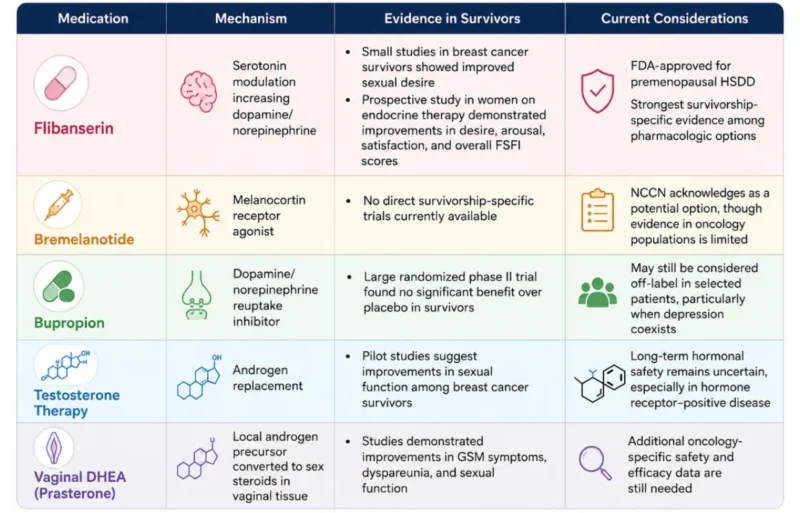
Figure 1. Summary of pharmacological approaches; while non-pharmacological interventions remain first-line, pharmacologic therapies may be considered in survivors with persistent low libido.
Here Are My Thoughts
- Normalize conversations about low libido early.
Discussions about low sexual desire should begin before treatment starts, not only after survivors experience significant distress or relationship strain. Patients deserve anticipatory guidance regarding how chemotherapy, endocrine therapy, ovarian suppression, radiation, and surgery may affect sexual desire, arousal, intimacy, and overall sexual wellbeing throughout survivorship.
- Make low libido screening routine, not optional.
Routine screening using simple validated tools and structured conversations can help identify concerns earlier, reduce stigma, and improve access to supportive care.
- Recognize that low libido is multifactorial.
Physical symptoms such as vaginal dryness, dyspareunia, fatigue, and treatment-induced menopause often overlap with anxiety, body image concerns, depression, medication effects, and relationship stress.
- Use a multidisciplinary survivorship approach.
Managing low libido in cancer survivors requires collaboration across multiple disciplines, including oncology, gynecology, menopause care, pelvic floor physiotherapy, psycho-oncology, rehabilitation, and sexual medicine.
- Survivorship care must include sexual wellbeing.
Low libido can significantly impact identity, confidence, emotional connection, and quality of life long after treatment ends. Survivorship care that ignores sexual health remains incomplete. Addressing low sexual desire should become a standard and integrated component of comprehensive cancer survivorship care.
- Improve healthcare professional training in sexual health communication.
Improving education, communication skills, and survivorship-focused training is essential to help clinicians confidently address low libido, normalize these conversations across all age groups, and provide appropriate support and referrals throughout the cancer care continuum.
Cancer survivorship care cannot be considered comprehensive if sexual wellbeing is excluded from the conversation.
Low libido after cancer is not simply a “quality-of-life issue.” It intersects with identity, relationships, emotional health, body image, and long-term wellbeing.
‘The future of survivorship care must include not only helping patients live longer – but helping them live fully.’
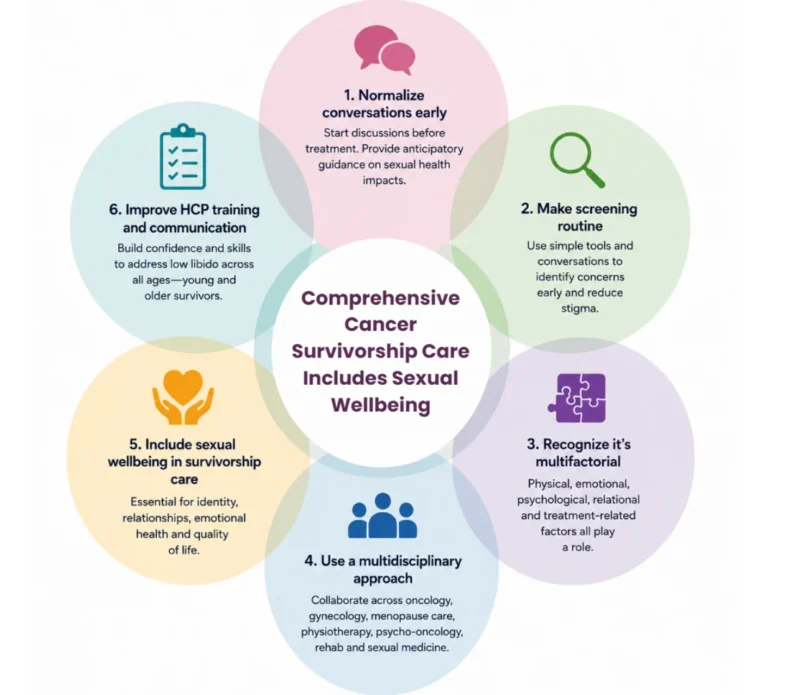
Figure 2. Key principles for addressing low libido and sexual wellbeing in cancer survivorship care, including early communication, routine screening, recognition of multifactorial contributors, multidisciplinary management, integration of sexual health into survivorship care, and improved healthcare professional training.
You can also read: Muna Al-Khaifi: Physical Activity and Improved Survival Outcomes in Oncology