This week in oncology biotech, the conversation shifted from blockbuster deals to the deeper infrastructure of precision medicine, the platforms, data layers, and clinical insights quietly redefining how cancer is detected, treated, and survived. A $2 billion financing from Revolution Medicines and a trio of deals worth over $6 billion kept capital markets firmly in focus, but the week’s most resonant signals came from the science: personalized vaccines holding six years of durable response in Nature, a single-cell platform unlocking the cellular architecture of tumor heterogeneity, and a new chapter in liquid biopsy bringing molecular surveillance into mainstream oncology.
Below are 10 featured posts from scientists, executives, and investors shaping the conversation in oncology and life sciences this week.
Christopher Leidli – Founder & CEO, Genoplex.ai
What if chemotherapy could target tumors without harming the rest of the body?
In this episode of RxforBiotech, I spoke with Christina Coughlin, CEO of Avacta Therapeutics, to explore the company’s approach to cancer treatment using targeted chemotherapy and precision oncology.
Avacta is developing a novel platform designed to activate powerful cancer drugs only inside the tumor, potentially reducing side effects like damage to the heart, bone marrow, and other healthy tissues. This approach, known as tumor-targeted drug delivery, could redefine how chemotherapy is used across cancers such as triple-negative breast cancer, soft tissue sarcoma, and other cancers.
Christina shares her journey from early work in CAR-T cell therapy, TCR-T therapies, and immuno-oncology to now leading Avacta’s innovative pre|CISION peptide drug conjugate platform, including its lead asset AVA6000 (faridoxorubicin) now in clinical trials.
As cancer treatment evolves, innovations like Avacta’s platform could help patients receive more effective, less toxic therapies tailored to their biology.
Watch the full episode on YouTube or listen on Spotify, Apple Podcasts, and SoundCloud – links are in comments below.
ALX Oncology
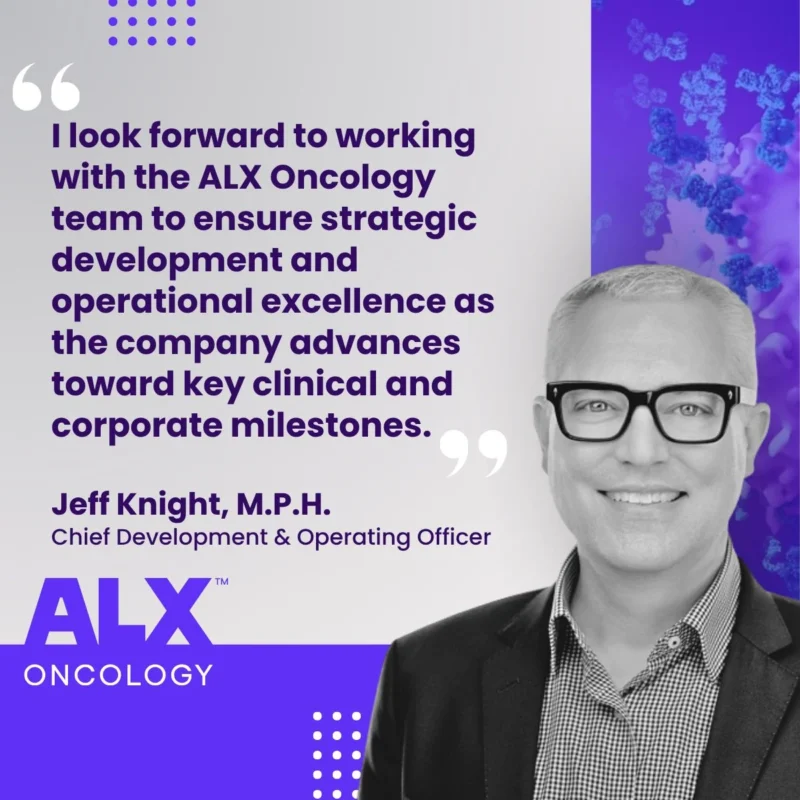
NEWS: We are thrilled to welcome Jeff Knight, M.P.H., to the ALX Oncology leadership team as Chief Development and Operating Officer.
With over 30 years of biopharmaceutical experience, Jeff Knight brings a proven track record of advancing programs from early development through commercialization.
Read more about Jeff’s background and how his expertise will support ALX Oncology’s important upcoming catalysts
ALX Oncology/LinkedIn
Alex Diatlov – COO, HQ Science
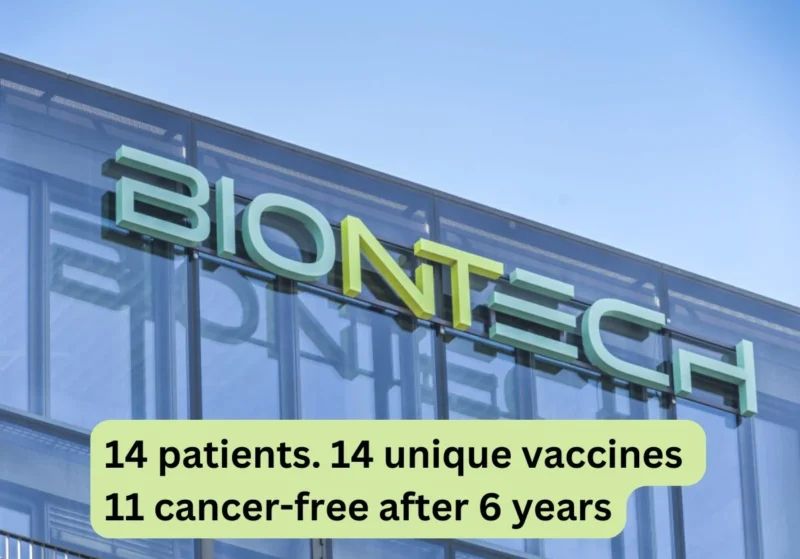
BioNTech built 14 different cancer vaccines for 14 different patients. 11 are still cancer-free 6 years later.
Each vaccine was designed from the patient’s own tumour mutations. No two were alike. The target was triple-negative breast cancer, which is one of the most aggressive forms. The results were recently published in Nature.
The results are impressive: vaccine-induced killer T cells persisted for years without booster shots. In one patient, over 10% of circulating immune cells recognised a single tumour mutation, which is an extraordinary level of immune response.
The three patients who relapsed revealed something equally important. Their tumours found escape routes, losing molecular markers, harbouring genetically distinct second tumours, or mounting too weak an immune response.
This entire approach runs on deep molecular profiling — sequencing, bioinformatics, and neoantigen prediction. At HQ Science, we’re building on the same premise from the diagnostics side: whole-transcriptome sequencing captures molecular complexity that single-marker tests miss.
Will personalised cancer vaccines become standard of care within a decade?
Alex Diatlov/LinkedIn
Mohit Manrao – SVP, Head of US Oncology, AstraZeneca
We are living in a moment of incredible progress in oncology. But the announcements only tell part of the story. I’m launching a newsletter called “Beyond the Breakthroughs” to look beneath and beyond the headlines and understand the full oncology ecosystem. I want to explore the larger forces and innovations driving these advances, where progress is and isn’t reaching patients, and what comes next.
The first edition is about survivorship. As cancer survival rates rise, more and more people are facing a new challenge: how to thrive during and after cancer treatment. Supporting patients through and beyond cancer means thinking differently about access, long-term care, and the full experience of living with the disease. We need to be just as intentional about how we support that part of their journey. As we head into upcoming oncology meetings and forums, let’s put survivorship on equal footing with diagnosis and treatment.
You can read the first edition and subscribe to the newsletter. I welcome your thoughts on survivorship and ideas for future topics in the comments below.
Jack Shuang Hou – Scientific Director, Jtests
SingleCell Biotechnology Unveils High-Throughput Single-Cell Platform — Linking Tumor Behavior to Molecular Profiles at Scale
A meaningful step toward solving one of oncology’s hardest problems: tumor heterogeneity.
Key contributor:
Shiska Raut — Machine Learning Engineer, SingleCell Biotechnology1. From averages → true single-cell resolution
- Measures clonal tumor growth across thousands of microenvironments
- Preserves full distribution of proliferative behaviors
- Captures rare cell states missed by bulk assays
This shifts preclinical research from population-level assumptions → cell-level reality.
2. Bridging phenotype and molecular biology
- Links growth behavior directly to molecular profiles
- Tracks individual cells longitudinally
- Enables recovery of specific subpopulations for downstream analysis
Key value: understanding which cells drive resistance and relapse — and why.
3. Implications for drug development
- Tumor heterogeneity remains a core failure point in oncology
- Traditional assays miss resistant subclones
- Platform enables better target validation + therapy design
This could improve predictive power of preclinical models.
My takeaway:
The future of oncology R&D will depend on:
- functional single-cell insights
- integration of imaging + omics + AI
- identifying the “minority populations” that drive outcomes
Platforms like this are building the data foundation for next-gen precision medicine.
Bottom line
SingleCell Biotechnology is addressing a critical gap — enabling researchers to connect how cancer cells behave with what they are molecularly, which could significantly improve drug discovery success rates.
Jack Shuang Hou/LinkedIn
Douglas Flora – Executive Medical Director, Yung Family Cancer Center at St. Elizabeth Healthcare
The Molecular Revolution in Oncology Has Already Started: How liquid biopsy and the lessons of hematology are about to change what it means to finish cancer treatment
“The future enters into us, in order to transform itself in us, long before it happens.” — Rainer Maria Rilke, Letters to a Young Poet, 1904
Every patient finishing chemotherapy carries one question out of the clinic. The scans are clean. The doctor says the right words. And still: is it really gone? For fifty years, oncology answered that question with a population statistic that belonged to no one in particular.
The blood knew. We just couldn’t read it.
Hematologists solved a version of this problem twenty years ago — quietly, in leukemia units, by treating a molecular signal in the blood before any scan confirmed what it was saying. What they learned is now arriving in breast cancer, lung cancer, and colorectal cancer. The science is further along than most people realize. The limitations are real and worth understanding. And where it goes next is more ambitious than the current conversation suggests.
I hope you’ll check out my full piece below, looking at what driving smarter cancer care looks like in the era of ctDNA.
Joanna Sadowska – Biopharma Account Specialist at Nanolive SA
3 Big Pharma & Biotech News You Need to Know
Watch to See What Happened Last WeekPharma doesn’t stop – another week of deals worth over $6B
1. Gilead Sciences acquires German biotech Tubulis in a $3B deal with Ouro Medicines – Gilead Sciences is strengthening its oncology portfolio with pre-clinical assets from Tubulis.
2. Neurocrine expands into metabolic diseases with $2.9 billion Soleno buyout – Neurocrine currently markets two rare disease drugs, Ingrezza and Crenessity, and with this acquisition adds a third one, Vykat XR, to treat hyperphagia.
3. Roche expands partnership with C4 Therapeutics with a deal worth $1B – This is the third partnership between these 2 companies. In this partnership, the companies will collaborate on degrader-antibody conjugates for undisclosed oncology targets.
What would you add to the list? Drop your thoughts in the comments.
Niraj Kapur – VP, Oncology Strategy & Partnerships – HMP Global
After more than 20 years in oncology across pharma and biotech, I decided to shift where I spend my time and energy.
About a month ago, I joined HMP Global as Vice President of Oncology Strategy and Partnerships.
Throughout my career, I’ve kept coming back to the same question. What actually drives behavior change in oncology. I’ve seen this gap from different sides over the years, and it’s something I keep coming back to. It’s usually not awareness. It’s how clinical data, physician decision making, institutions, and industry come together in real life.
This role lets me spend more time in that space.
At HMP, we’re building education and engagement platforms that bring those groups together around real clinical decisions. Less about more content, more about practical conversations that reflect how care is actually delivered. The team has already built strong relationships across the oncology community, and I’m looking forward to building on that.
I’ve already had the chance to connect with many of you over the past few weeks, and I’ve appreciated those conversations. Looking forward to continuing them.
Tom Weir – Head of Life Sciences – Avetix Group
Revolution Medicines just priced a $2.0B concurrent financing — one of the larger biotech raises we’ve seen recently — combining $1.5B in equity and $500M in convertible notes, both upsized due to strong demand.
At a high level, here’s what’s going on:
This is a late-stage oncology biotech raising significant capital to fund the next phase of its clinical pipeline.
- Signals strong institutional investor demand
- Provides a multi-year cash runway for expensive late-stage trials
- Reflects confidence in the company’s RAS-targeted oncology pipeline
- But also highlights the reality of biotech: high burn, long timelines, and continued reliance on capital markets
Tom Weir/LinkedIn
Ahmad Abdulrahim – NSRI Ambassador
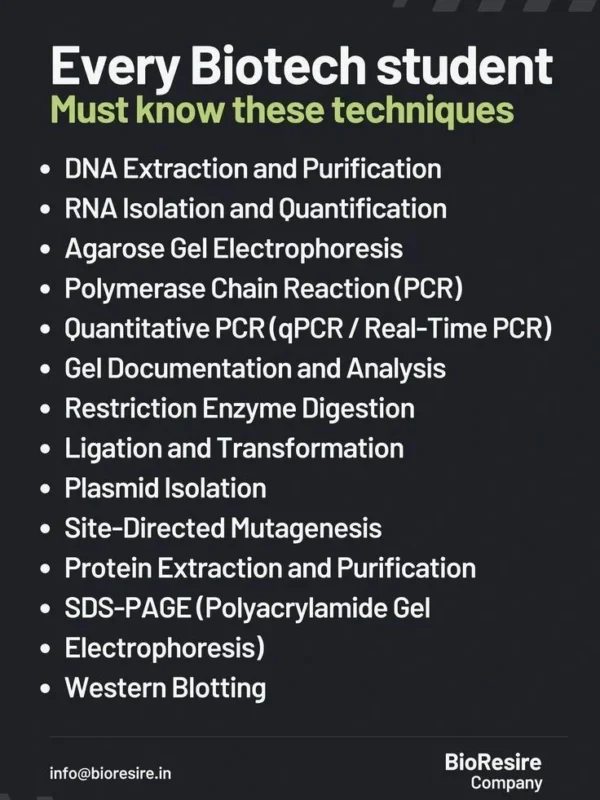
Every biotech student learns the theory… but these techniques are where real science begins
From PCR to Western Blotting, these aren’t just lab methods, they’re the tools behind discoveries, diagnostics, and innovation.
Here’s the truth
Knowing them is good
Understanding them is better
Being able to perform and interpret them? That’s where you stand outIn today’s world of biotechnology, practical skills are your strongest currency.
So don’t just read it.
Don’t just memorize it.
Practice it. Master it. Own it.Because opportunities in biotech don’t go to those who know…
They go to those who can do.
Ahmad Abdulrahim/LinkedIn
From targeted chemotherapy platforms designed to spare healthy tissue, to personalized vaccines that train the immune system against a patient’s own tumor mutations, this week made clear that precision oncology is no longer a promise — it is a pipeline. The deals reflect confidence. The science reflects momentum. And the voices raising questions about survivorship, behavior change, and what patients actually experience beyond the clinical trial remind us that the field’s most important work happens long after the headline.
The pace of transformation in oncology biotech shows no signs of slowing. The platforms, partnerships, and publications from this week are a reminder that the sector’s most consequential outcomes are built long before they make headlines.
Read more biotech insights on OncoDaily Biotech.