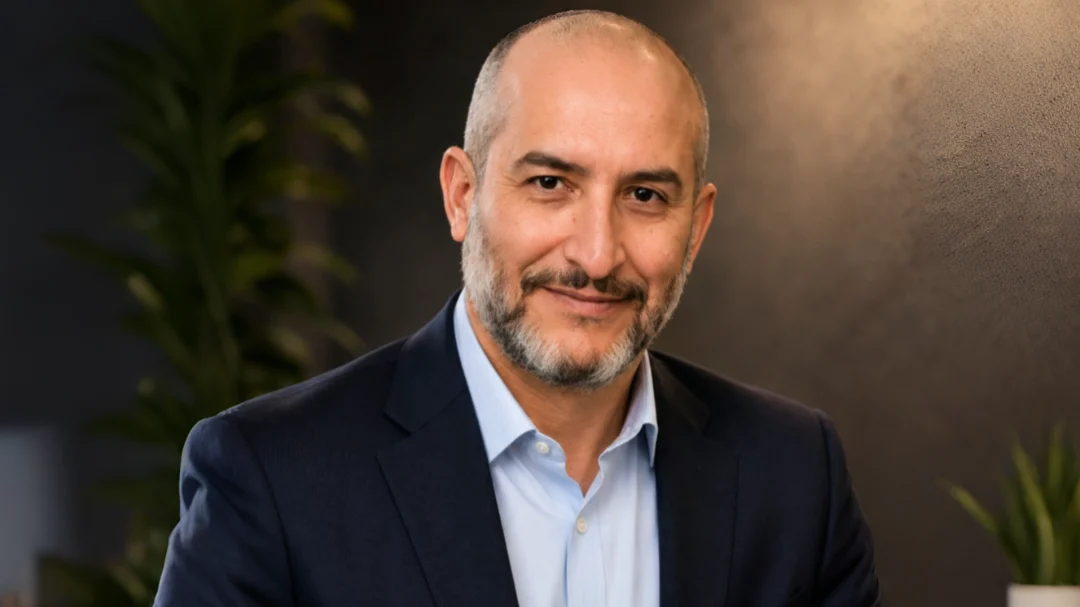
Nassim Zaagoub, Principal at Algaurizin, shared on LinkedIn:
“Stomach-cancer patients who have exhausted standard options often have a median survival of about five months. This week, AstraZeneca’s investigational CLDN18.2-targeted antibody-drug conjugate, sonesitatug vedotin (‘Sone-Ve’), doubled that figure to 10.0 months in patients receiving third-line or later treatment.
But the Phase III CLARITY-Gastric01 trial had two co-primary endpoints, and it met one while narrowly missing the other. That distinction matters as much as the survival headline.
CLARITY-Gastric 01 at ESMO 2026: Sonesitatug Vedotin in CLDN18.2-Positive Gastroesophageal Cancer

Why the comparator matters
The strongest oncology readouts do not merely ask whether a drug works; they ask whether it beats the treatment clinicians would otherwise use. At ESMO 2026, several major trials used active comparators, investigator’s choice, approved targeted drugs, or chemotherapy, making the results more relevant to practice and reimbursement.
That also makes the trade-offs clearer: a survival gain has to be weighed against toxicity, cost, biomarker testing, and the treatment it would displace.
Sone-Ve: survival win, mixed primary endpoints
CLARITY-Gastric01 enrolled patients with previously treated, advanced CLDN18.2-positive gastric or gastroesophageal junction cancer. It compared Sone-Ve with investigator’s choice of therapy in an open-label, sponsor-blinded design.
In the third-line-or-later population, median overall survival was 10.0 months with Sone-Ve versus 5.0 months with investigator’s choice, a 53% reduction in the risk of death (HR 0.47). At 12 months, 38.1% of Sone-Ve patients were alive versus 18.1% of comparator patients.
In the broader second-line-or-later intent-to-treat population, median overall survival was 10.6 versus 6.4 months, a 42% reduction in the risk of death (HR 0.58).
The trial’s second co-primary endpoint was progression-free survival by blinded independent central review in the overall 2L+ population. It favored Sone-Ve numerically, 4.2 versus 3.8 months (HR 0.77), but did not reach its prespecified significance threshold: p=0.053193.
An exploratory investigator-assessed PFS analysis was stronger: 4.4 versus 3.0 months (HR 0.59). But that was exploratory, not the formal co-primary endpoint.
Grade 3 or higher treatment-related adverse events were less common with Sone-Ve: 36.4% versus 44.8%.
AstraZeneca describes Sone-Ve as the first CLDN18.2-targeted therapy to show a survival benefit in this setting, not merely its first such result. The company estimates that up to 60% of patients in this setting could be eligible based on CLDN18.2 expression.
The drug remains investigational, and no regulatory filing has been announced. If it advances, CLDN18.2 testing will determine who can receive it.
Divarasib: a direct challenge to approved KRAS drugs
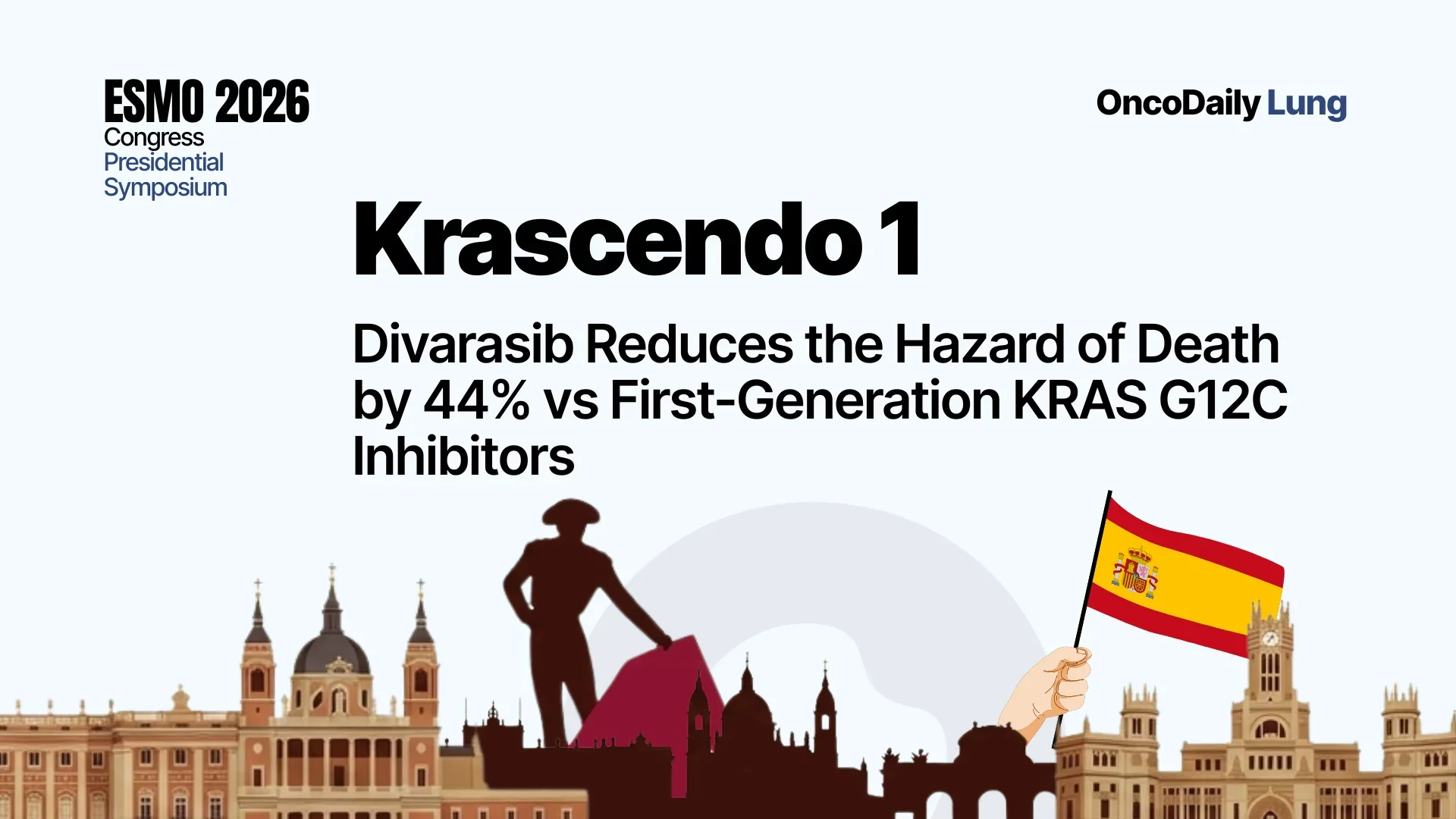
Roche’s Krascendo 1 trial tested divarasib, a next-generation KRAS G12C inhibitor, against the approved KRAS G12C inhibitors sotorasib or adagrasib in previously treated KRAS G12C-mutated advanced or metastatic non-small cell lung cancer.
In 338 patients, divarasib reduced the risk of death by 44%: median overall survival was 17.7 versus 12.0 months (HR 0.56). Median progression-free survival was 9.8 versus 5.7 months (HR 0.58).
Patients remained on divarasib for a median of 11.3 months, versus 5.0 months on the control drugs.
Safety also favored divarasib: serious treatment-related adverse events occurred in 7.8% versus 15.2% of patients, and treatment discontinuations due to treatment-related adverse events occurred in 4.8% versus 11.7%.
This is not simply an ‘add another option’ result. Because the comparators are already approved, a positive result asks whether divarasib should replace them. Roche says it is engaging with health authorities; divarasib remains investigational.
KEYNOTE-C93: a major PFS win, but not against today’s usual standard
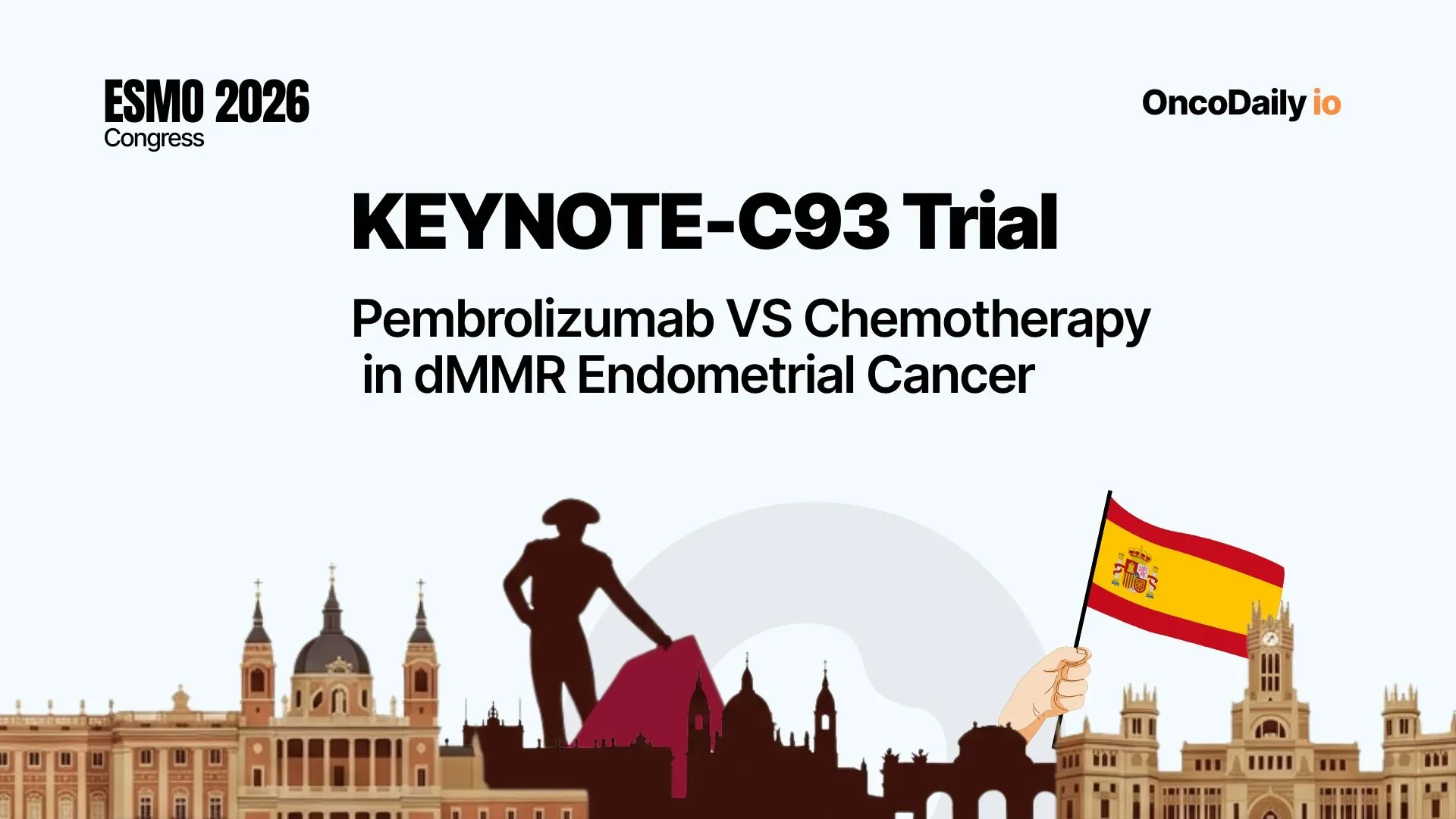
Merck’s KEYNOTE-C93 compared first-line pembrolizumab monotherapy with carboplatin-paclitaxel chemotherapy in 299 patients with mismatch repair-deficient advanced or recurrent endometrial cancer.
Median progression-free survival was 38.2 months with pembrolizumab versus 8.4 months with chemotherapy, a 43% reduction in the risk of progression or death (HR 0.57).
Overall survival showed a favorable but non-significant trend: HR 0.77, p=0.1000. Median overall survival had not been reached in either arm at the analysis.
The important context is that the control arm was chemotherapy alone, not chemotherapy plus a PD-1 inhibitor. The trial therefore supports pembrolizumab as a chemotherapy-free option in this biomarker-selected population; it does not directly test whether it beats the current chemo-immunotherapy approach.
KEYNOTE-C93 Trial: Pembrolizumab Versus Chemotherapy in dMMR Endometrial Cancer
Sac-TMT: survival gain with more toxicity
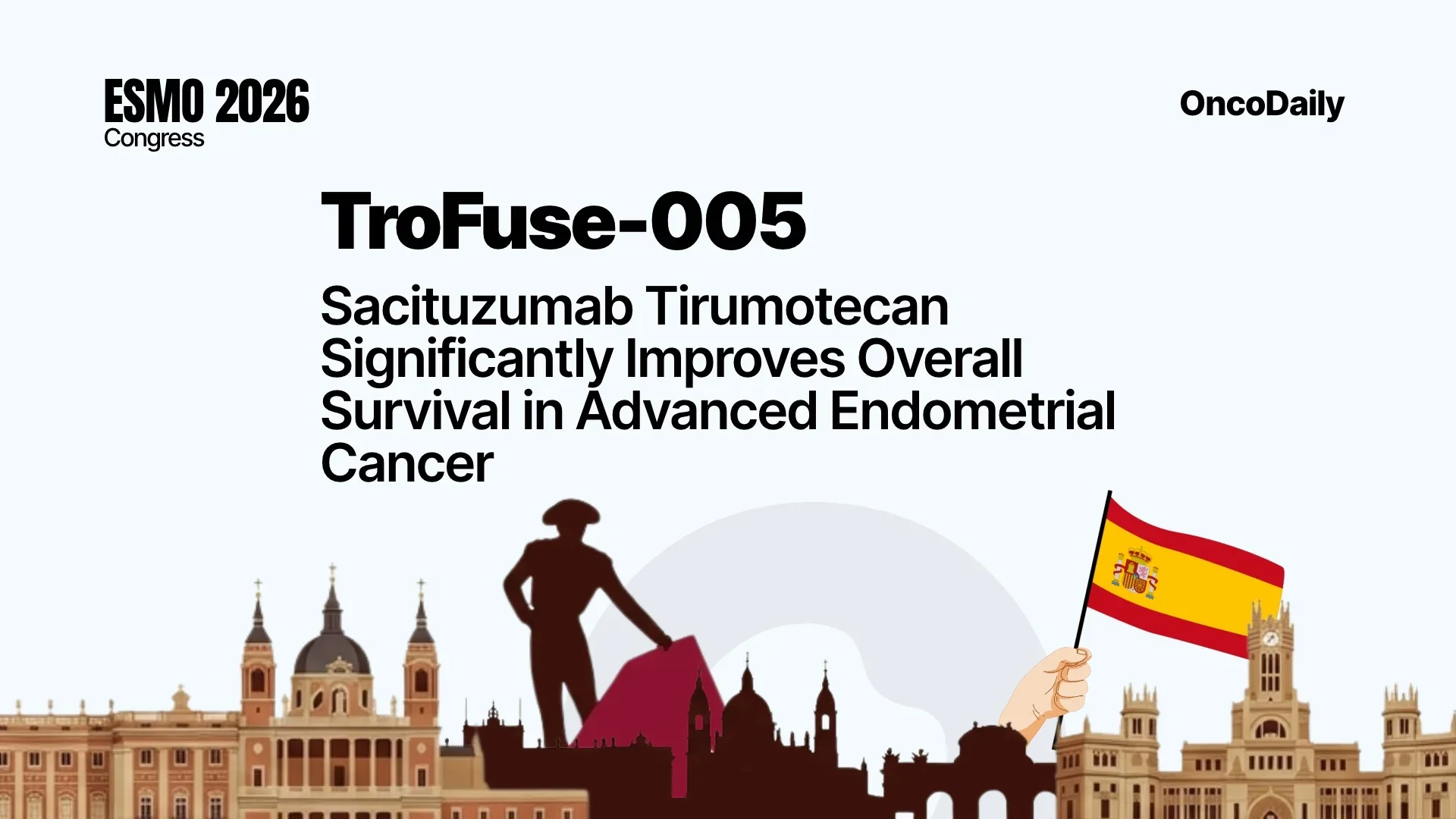
Merck’s TroFuse-005 tested sacituzumab tirumotecan (sac-TMT), a TROP2-directed antibody-drug conjugate, against physician’s choice of doxorubicin or paclitaxel in previously treated advanced or recurrent endometrial cancer.
Median overall survival was 19.0 versus 12.1 months, with a 32% reduction in the risk of death. The trial also met its progression-free survival endpoint.
The trade-off was toxicity: grade 3 or higher treatment-related adverse events occurred in 54.4% of sac-TMT patients versus 41.4% of comparator patients.
Merck says the FDA has granted priority review and set a target action date of June 15, 2027. Sac-TMT remains investigational.
The bigger picture
Across these trials, median overall survival improved by roughly 4 to 7 months against active comparators. For patients, that can be substantial; for payers and guideline committees, the value depends on cost, the treatment displaced, biomarker-test availability, toxicity, and durability of follow-up.
Four issues will shape uptake:
- Biomarkers are the gate. CLDN18.2 and KRAS G12C both require testing; diagnostic availability and cutoffs will pace adoption.
- Overall survival carries the most weight. PFS can generate headlines, but OS and mature follow-up drive regulatory and reimbursement decisions.
- Tolerability is part of the value case. Sone-Ve and divarasib showed favorable safety signals; sac-TMT’s survival benefit came with higher grade ≥3 toxicity.
- Deal terms reveal conviction. Upfront payments, milestones, and financing structures matter as much as headline deal values.
Deal Desk, corrected
- Ferring–Gameto: Ferring agreed to acquire Gameto in a deal valued at up to $1.3825 billion, dependent on milestones. The companies did not disclose an upfront payment.
- BioMarin–GC Biopharma/Hanmi: BioMarin licensed the investigational long-acting Fabry enzyme-replacement therapy HM15421/GC1134A for $70 million upfront, plus up to $405 million in development and commercial milestones and tiered royalties. That is about 14.7% of the potential $475 million deal value guaranteed upfront.
- Corxel: Corxel agreed to go public through a SPAC merger with Amanat Acquisition Corp. Reuters reported that Corxel is expected to receive about $377 million, including proceeds from the business combination and a concurrent private placement. This is expected gross proceeds, not a completed financing.
What remains unknown
It is not yet known whether Sone-Ve’s survival benefit will hold with longer follow-up, whether divarasib can move into earlier treatment lines, or how regulators will weigh a missed co-primary PFS endpoint against a decisive overall-survival benefit.
Those questions – not the headline alone – will determine whether these results change practice.
Disclaimer: This content is for informational purposes only and does not constitute medical or investment advice. All regulatory approvals, market activities, and clinical developments referenced should be verified through official sources including FDA databases and company disclosures. Individual treatment decisions should always be made in consultation with qualified healthcare professionals.
This content is for informational purposes only and does not constitute medical or investment advice. All regulatory approvals, market activities, and clinical developments referenced should be verified through official sources including FDA databases and company disclosures. Individual treatment decisions should always be made in consultation with qualified healthcare professionals.
You can also read: ESMO 2026 Presidential Symposia: From Trial Results to Clinical Implications