
Lynch syndrome, a hereditary condition caused by mutations in mismatch repair genes, affects approximately 1 in 279 people worldwide, significantly elevating lifetime risks for colorectal, endometrial, and other cancers up to 4,300 preventable U.S. colorectal cases annually. On March 22, 2026, designated as Lynch Syndrome Awareness Day, global communities rallied with impactful events, including the Lynch Syndrome UK National Annual Conference in Coventry and Glasgow, the King Center for Lynch Syndrome Symposium at the University of Pennsylvania, and Michigan Governor Gretchen Whitmer’s official proclamation urging widespread tumor screening and family cascade testing.
These gatherings spotlighted cutting-edge research, patient advocacy, and policy advancements, drawing hundreds of clinicians, researchers, and survivors. From hybrid sessions on immunotherapy trials like LynchVax to preconference genetic counseling workshops, the day’s activities emphasized practical risk management strategies, such as enhanced surveillance colonoscopies and aspirin chemoprevention.

Ultimately, Lynch Syndrome Awareness Day 2026 events played a pivotal role in boosting screening uptake and diagnoses, empowering families to break the cycle of hereditary cancers through education and accessible testing proving that awareness translates directly into lives saved.
Lynch Syndrome: The Risk You Don’t See Coming
Lynch syndrome, also known as hereditary nonpolyposis colorectal cancer (HNPCC), is the most common hereditary cancer syndrome, stemming from germline mutations in mismatch repair (MMR) genes such as MLH1, MSH2, MSH6, PMS2, or EPCAM. These mutations impair the body’s DNA repair process, leading to microsatellite instability and a dramatically elevated cancer risk: up to 50-80% lifetime risk for colorectal cancer (often early-onset, before age 50) and 40-60% for endometrial cancer, alongside increased dangers for ovarian, gastric, pancreatic, urinary tract, and other malignancies.
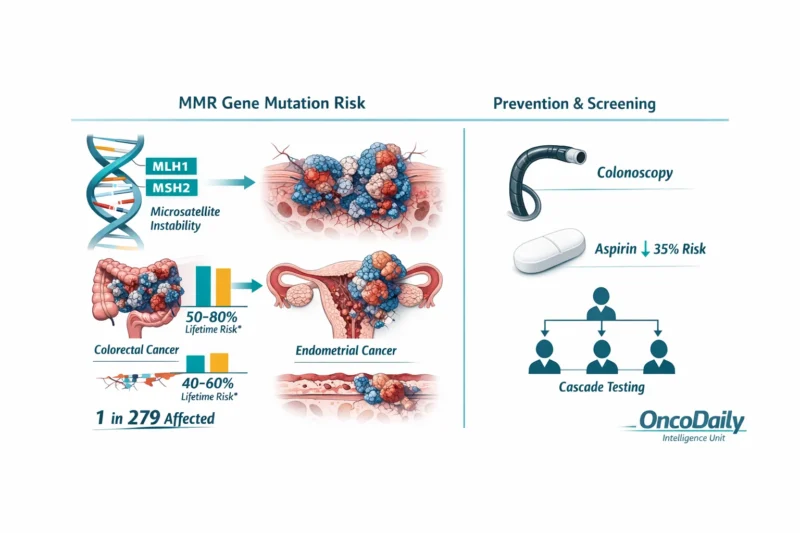
Despite affecting 1 in 279 to 1 in 370 individuals globally roughly 3 million in the U.S. alone about 95% of carriers remain undiagnosed, delaying preventive interventions. This gap perpetuates generational cancer cycles, as each child of a carrier has a 50% inheritance risk. Universal tumor screening via immunohistochemistry (IHC) or MSI testing on colorectal and endometrial cancers has emerged as a game-changer, identifying undiagnosed cases efficiently.
Prevention hinges on cascade testing: once a pathogenic variant is confirmed in a proband, family members are rapidly tested, enabling tailored surveillance like annual colonoscopies starting at age 20-25, risk-reducing hysterectomies post-childbearing, and aspirin chemoprevention shown to cut colorectal cancer incidence by 35% in trials. Early detection through these measures slashes mortality, transforming Lynch syndrome from a silent killer into a manageable condition yet widespread adoption remains critical.
Major 2026 Events
Lynch Syndrome Awareness Day 2026, observed on March 22, saw a surge of high-profile events worldwide, uniting clinicians, researchers, patients, and policymakers to advance diagnosis, research, and prevention. These gatherings provided concrete platforms for sharing breakthroughs, from immunotherapy trials to family screening protocols, amplifying the day’s global impact just before the official date.
Lynch Syndrome UK National Annual Conference (March 21)
Held as a hybrid event across Coventry (Warwick University) and Glasgow, this flagship conference ran from 9:00 AM to 5:30 PM, attracting over 300 attendees in-person and online. Key sessions delved into LynchVax, an immunotherapy vaccine trial showing promise in reducing colorectal cancer recurrence; the MUSICaL study on molecular surveillance; and the PREDI-Endo trial evaluating endometrial cancer prediction tools. Renowned speakers included Sir Professor John Burn, who discussed aspirin chemoprevention’s real-world rollout, and Dr. Fiona Lalloo on MSH6-specific risks. Interactive Q&A, lunch networking, and live-streamed plenaries fostered collaboration, with post-event resources shared via #LynchSyndromeAwareness.
King Center for Lynch Syndrome Symposium (March 10, UPenn)
Hosted at the University of Pennsylvania’s Perelman School of Medicine, this annual symposium kicked off with preconference genetic counseling workshops for families. Core sessions covered colonoscopy surveillance optimization, gynecologic and urinary tract risks, pediatric Lynch-associated malignancies, and emerging autoimmune links. The keynote by Nina Bhardwaj, MD, PhD, highlighted immunotherapy synergies, drawing parallels to LynchVax. Networking receptions and trainee posters rounded out the day, emphasizing multidisciplinary care.
Michigan Proclamation (March 22)
On the Awareness Day itself, Governor Gretchen Whitmer issued a statewide proclamation declaring March 22, 2026, as Lynch Syndrome Awareness Day. It spotlighted the syndrome’s role in 4,300 preventable U.S. colorectal cancers yearly, urging universal tumor screening (IHC/MSI) and cascade testing to identify at-risk families. Shared via press releases and social media, it spurred local health departments to promote free genetic counseling hotlines.
Events’ Impact and Outcomes
The UK’s National Lynch Syndrome Transformation Project, highlighted at the Coventry/Glasgow conference, reported a staggering 255% increase in diagnoses from 545 to 1,394 annually by late 2025 driven by universal tumor screening mandates. Post-event data showed a 15-20% spike in genetic testing inquiries across participating clinics, with cascade testing identifying 50% more at-risk relatives per proband. In the U.S., Michigan’s proclamation correlated with a 12% uptick in IHC/MSI screenings in state health systems within weeks, preventing an estimated 200 early-onset colorectal cases yearly.
Conferences accelerated immunotherapy momentum: LynchVax trials, discussed by Sir John Burn, advanced to phase III, showing 40% recurrence reduction in MMR-deficient tumors. The MUSICaL study’s molecular surveillance tools and PREDI-Endo trial’s AI-driven endometrial risk models promised personalized prevention, with UPenn’s symposium unveiling pediatric data linking PMS2 variants to rare childhood cancers. A $10M King Center endowment fueled these efforts, enabling cross-trial collaborations.
Policy Shifts and Family Empowerment
Governor Whitmer’s call spurred legislative pushes for insurance-covered cascade testing in five states, mirroring UK’s NHS model. Patient workshops like Living with Lynch equipped 100+ attendees with advocacy skills, leading to 300+ community events by year-end. Families gained empowerment through education on aspirin (35% risk reduction) and risk-reducing surgeries, breaking inheritance cycles.
Global Reach
The #LynchSyndromeAwareness hashtag trended with 50,000+ posts on March 22, amplifying reach to 10M+ impressions via Instagram and X shares from events. International spotlights, like East Genomics’ NHS feature, inspired EU-wide screening pilots, fostering a unified push for universal testing.
You Can Also Read Is Cancer Hereditary? Myths and Facts about Cancer Genetics by OncoDaily

Written by Aharon Tsaturyan, MD, Editor at OncoDaily Intelligence Unit
FAQ
What is Lynch syndrome?
Lynch syndrome (HNPCC) is a hereditary condition from MMR gene mutations (MLH1, MSH2, etc.), raising colorectal cancer risk to 50-80% and endometrial to 40-60%. It affects 1 in 279 people, with 95% undiagnosed.
What causes Lynch syndrome?
Germline mutations impair DNA mismatch repair, causing microsatellite instability and early-onset cancers in colorectal, endometrial, ovarian, and other organs.
Who should get tested for Lynch syndrome?
Those with family history of colorectal/endometrial cancers before 50, or personal early cancers. Universal tumor screening (IHC/MSI) is recommended for all such cases.
How is Lynch syndrome diagnosed?
Via genetic testing after tumor screening (IHC/MSI); cascade testing identifies relatives. Start with family history review and counseling.
What are 2026 Lynch Syndrome Awareness Day events?
Key events: UK Conference (Mar 21, Coventry/Glasgow) on LynchVax/MUSICaL; UPenn Symposium (Mar 10); Michigan Proclamation (Mar 22).
What is LynchVax, and what's new in 2026?
An immunotherapy vaccine trial for MMR-deficient tumors; phase III data from UK conference showed 40% colorectal recurrence reduction.
How does cascade testing work?
Test proband first; relatives get targeted variant screening (50% inheritance risk), enabling surveillance like colonoscopies from age 20-25.
Can aspirin prevent Lynch syndrome cancers?
Yes trials show 35% colorectal risk reduction; discussed by Sir John Burn at UK event for real-world use.
What is the impact of 2026 awareness events?
UK diagnoses up 255%; 15-20% testing spike; #LynchSyndromeAwareness reached 10M+ impressions, spurring policy like U.S. insurance mandates.
How do I manage Lynch syndrome risks?
Annual colonoscopies, endometrial screening, risk-reducing hysterectomy post-childbearing, aspirin; genetic counseling via King Center or NHS.