Gel manicures are loved for their glossy look, durability, and clean finish. They last longer than regular polish and are less likely to chip, which is why many people choose them again and again.
But one part of the process continues to raise concern: the use of curing lamps that expose the hands to ultraviolet light. As awareness of skin cancer grows, more people are asking whether this beauty routine carries a hidden cost.
Why Nail Lamps Raise Questions
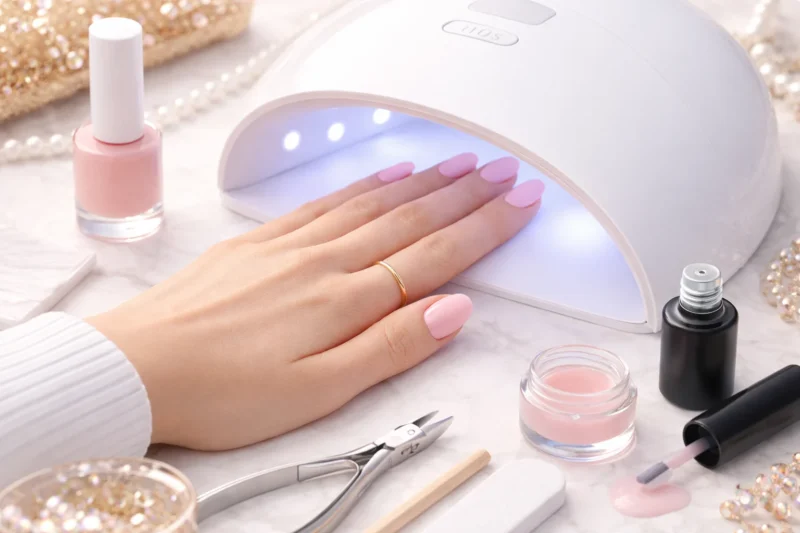
Gel and shellac manicures do not dry on their own like traditional nail polish. They need to be cured under a special lamp, and these lamps usually emit UVA radiation. UVA is one form of ultraviolet light. It is also present in sunlight and tanning devices, and it is known to penetrate deeper into the skin than UVB.
This matters because UVA is linked to skin aging, pigment changes, and long-term cellular damage. It may not cause the obvious redness of sunburn as easily as UVB, but it still affects the skin in ways that are biologically important. That is why dermatologists do not completely dismiss the concern, even when the amount of exposure during a single manicure appears low.
How UV Light Can Damage the Skin
Ultraviolet radiation is a known carcinogen. It can damage the DNA inside skin cells directly, and it can also create oxidative stress through reactive oxygen species. Over time, repeated damage may lead to mutations in the genes that normally control how cells grow, divide, and repair themselves.
This is the same broad process through which chronic sun exposure contributes to skin cancer. It is important to understand that visible burning is not required for damage to occur. Even when the skin does not look red or irritated, ultraviolet exposure can still have effects at the cellular level.
What Makes Nail Lamp Exposure Different
Although UV nail lamps use ultraviolet light, they are not the same as tanning beds or prolonged sun exposure. The hands are exposed for a short period, usually only a few minutes, and the area of skin involved is limited. The amount of radiation from these lamps is far lower than that from tanning beds, which are clearly linked to skin cancer and are widely recognized as dangerous.
That difference is important. For most people, an occasional gel manicure is not considered a major cancer risk. Current expert opinion generally supports that view. The concern becomes more meaningful when exposure is repeated frequently over many years.
What Research Has Found So Far
The research on UV nail lamps has been limited, but several findings have shaped the discussion. Some early reports described women who developed skin cancers on their hands after regular use of UV nail lamps. These cases attracted attention, but they could not prove that the lamps were the direct cause.
Later studies measured the amount of UVA emitted by nail lamps and found that exposure varies from one device to another. Even so, most concluded that the dose from a single manicure was relatively low. The risk from one session appeared small, and even after many visits, the overall cancer risk seemed low compared with stronger UV sources.
A 2023 laboratory study added a new layer to the discussion. It found that radiation from UV nail dryers could cause DNA damage and mutations in human cells under experimental conditions. This was an important result because it showed that the radiation can produce the kind of biological effects linked to cancer development. However, the study was done in the lab, not on living human skin. Cells in isolation are more vulnerable than skin on a person’s hand, so the results should be taken seriously but not overstated.
Why Cumulative Exposure Still Matters
The main issue is not one manicure before a wedding or a holiday. The bigger question is repeated exposure over time. A person who gets gel manicures once or twice a year is in a very different situation from someone who has been doing them every few weeks since adolescence.
Ultraviolet damage builds up over a lifetime. Each exposure may be small, but repeated doses can add to the total burden on the skin. That is why experts often take a balanced position. They do not describe UV nail lamps as a major threat for occasional users, but they also do not call them harmless.
Cosmetics And Cancer Risk: What Do We Really Know? 2026

Who Should Be More Careful
Some people have more reason to be cautious. Those with fair skin, a tendency to burn easily, a history of heavy sun exposure, or a previous diagnosis of skin cancer may be more vulnerable to the effects of repeated UVA exposure. In these individuals, even relatively small avoidable exposures deserve more attention.
Frequent salon visitors may also want to think more carefully about protection. The issue is less dramatic for occasional users and more relevant for people who make gel manicures a long-term routine.
Are LED Nail Lamps Safer?
Many people assume that LED nail lamps are completely safe because they are marketed differently from traditional UV lamps. In reality, many LED devices still emit UVA light. The difference is that they often cure the polish more quickly and may reduce total exposure time. That may make them a better option in some situations, but it does not mean the UV issue disappears entirely.
How To Lower Your Risk
The good news is that this is one of the few cancer-related concerns where simple preventive steps are easy to take. Applying a broad-spectrum sunscreen to the hands before the manicure can help reduce exposure. Fingerless UV-protective gloves offer another practical option, especially for people who get gel manicures often.
Some people may also choose to reduce how often they get gel manicures or switch to methods that do not require UV curing. These are reasonable choices, particularly for those who already have risk factors for skin cancer.
The Bottom Line
Current evidence suggests that gel manicures are unlikely to be a major cause of skin cancer for most people, especially when they are done only occasionally. At the same time, UV nail lamps do emit UVA radiation, and UVA is part of the long-term process that damages skin and contributes to cancer risk. That means the concern is real, even if the overall risk appears low.
The most sensible message is not fear, but caution. A gel manicure is not likely to be one of the biggest threats to skin health, especially compared with regular unprotected sun exposure. Still, when protection is easy and the exposure is avoidable, it makes sense to be careful. Sunscreen, protective gloves, and moderation can go a long way in making this common beauty habit safer.
Discover more articles like this on OncoDaily.
Written by Nare Hovhannisyan,MD