
Key takeaways
- Spider-Man’s gene-silencing concept is rooted in real RNA interference biology.
- siRNA reduces protein production by targeting mRNA without directly changing DNA.
- Cancer researchers are studying siRNA against oncogenes, mutations, resistance pathways, and other tumor dependencies.
- The biggest challenge is delivering enough siRNA safely and selectively into tumor cells.
- Gene silencing could support precision oncology, but it remains investigational in cancer treatment.
Spider-Man: Brand New Day brings an unexpected scientific idea into the superhero world: gene silencing with small interfering RNA, or siRNA. In the film, the technology is imagined as a way to suppress powerful biological traits. The concept sounds futuristic, but the mechanism behind it is rooted in real molecular biology.
RNA interference works by targeting messenger RNA, the molecule cells use to produce proteins. By reducing a specific mRNA, siRNA can lower production of the corresponding protein without directly rewriting DNA.
That makes the idea especially interesting in oncology, where many cancers depend on abnormal proteins produced by altered or overactive genes. Could a technology imagined in Spider-Man have a real place in cancer treatment? The answer begins with understanding how gene silencing actually works.
What Gene-Silencing Technology Does Spider-Man Introduce?
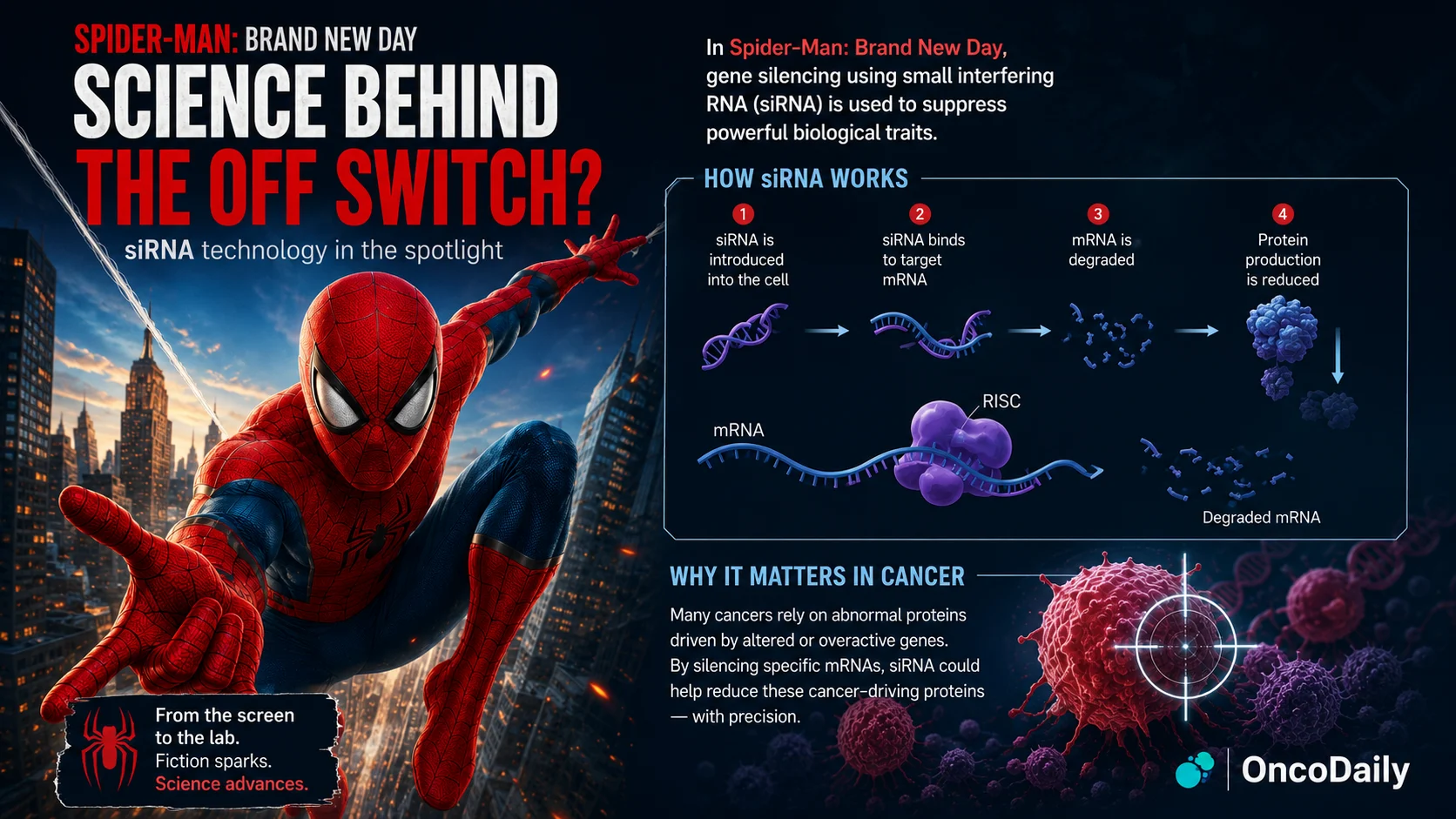
In Spider-Man: Brand New Day, Peter Parker identifies target-specific short interfering RNA (siRNA) as the mechanism behind Bruce Banner’s inhibitor. In the film, the device is designed to suppress the biological changes associated with the Hulk, and Peter later considers whether the same principle could be used to control his own spider-related changes.
The concept is based on RNA interference (RNAi), a real biological mechanism used to reduce the expression of specific genes. siRNA molecules are designed to recognize a particular messenger RNA (mRNA) sequence. Once inside the cell, they guide the RNA-induced silencing complex (RISC) to the matching mRNA, which is then degraded. With less mRNA available, the cell produces less of the corresponding protein.
Importantly, siRNA does not directly remove or rewrite DNA. Its effects are generally temporary and depend on how long the RNA remains active in the cell. The film therefore builds on a real molecular mechanism, but extends it far beyond current capabilities by presenting siRNA as a rapid, adaptable, and potentially universal biological ‘off switch’ (Hough, 2026).
What Is RNA Interference and How Does It Work?
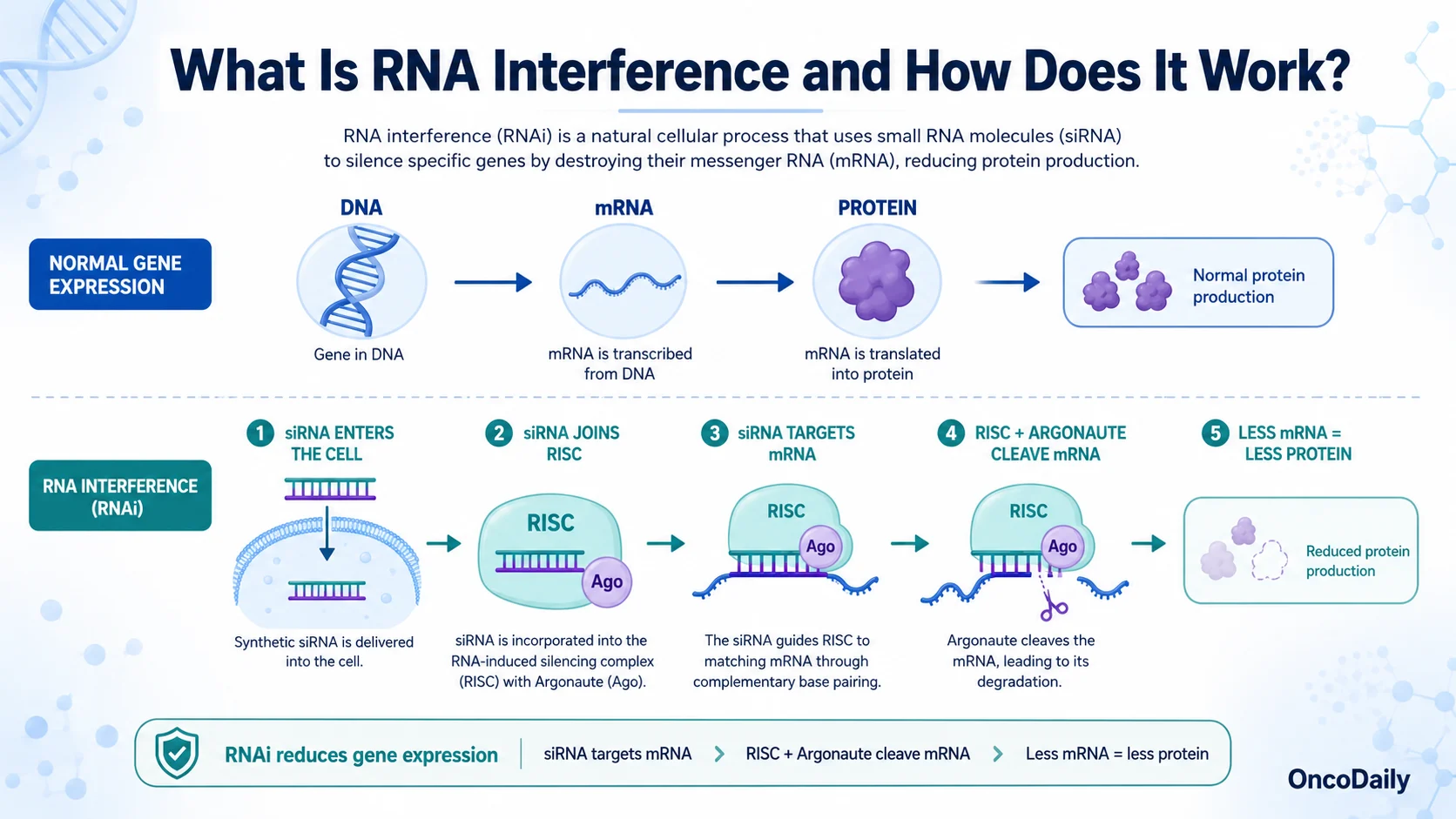
RNA interference (RNAi) is a natural cellular process that controls gene activity by reducing the amount of a specific protein a cell produces. Rather than changing the DNA itself, RNAi acts mainly on messenger RNA (mRNA), the molecule that carries genetic instructions from DNA so they can be used to make proteins.
One of the main molecules involved in this process is small interfering RNA (siRNA). siRNA contains a short sequence designed to match a particular mRNA. Inside the cell, one strand of the siRNA becomes part of a protein complex called the RNA-induced silencing complex (RISC). This strand acts as a guide, helping RISC recognize the matching mRNA. The Argonaute protein within RISC then cleaves the targeted mRNA, which is subsequently degraded.
In simple terms, DNA contains the instructions, mRNA carries those instructions, and proteins are the final product. By destroying a selected mRNA before it can be translated, siRNA can reduce production of a specific protein without removing or rewriting the gene itself. This ability to selectively silence gene expression is what has made RNAi an important area of therapeutic research, including research into diseases driven by abnormal or harmful proteins (Dana et al., 2017).
Why Could Gene Silencing Matter in Cancer?
Cancer develops when genetic changes disrupt the normal control of cell growth, survival, and division. Some tumors become particularly dependent on abnormal genes or signaling pathways to continue growing. Gene silencing offers a way to reduce the activity of these cancer-driving genes by lowering production of the proteins they encode.
With RNA interference, small interfering RNA (siRNA) can be designed to recognize the messenger RNA produced by a specific cancer-associated gene. Once the target mRNA is degraded, less of the corresponding protein is produced. In cancer research, this approach has been explored for silencing oncogenes and other genes involved in tumor growth, treatment resistance, invasion, and survival.
This creates an important possibility for precision oncology. Unlike conventional cytotoxic chemotherapy, gene-silencing strategies could potentially target a molecular dependency that is particularly important to the tumor. However, identifying the correct target and delivering enough siRNA specifically to cancer cells remain major challenges. Gene silencing is therefore not a universal way to “switch off” cancer, but it provides a highly targeted strategy for interfering with some of the molecular processes that allow tumors to survive and progress (Verreault et al., 2006).
You can also read A New Way to Silence Cancer Genes? How DOT1L Shields Leukemia from Polycomb Silence on OncoDaily. 
Can siRNA Target Cancer-Driving Mutations?
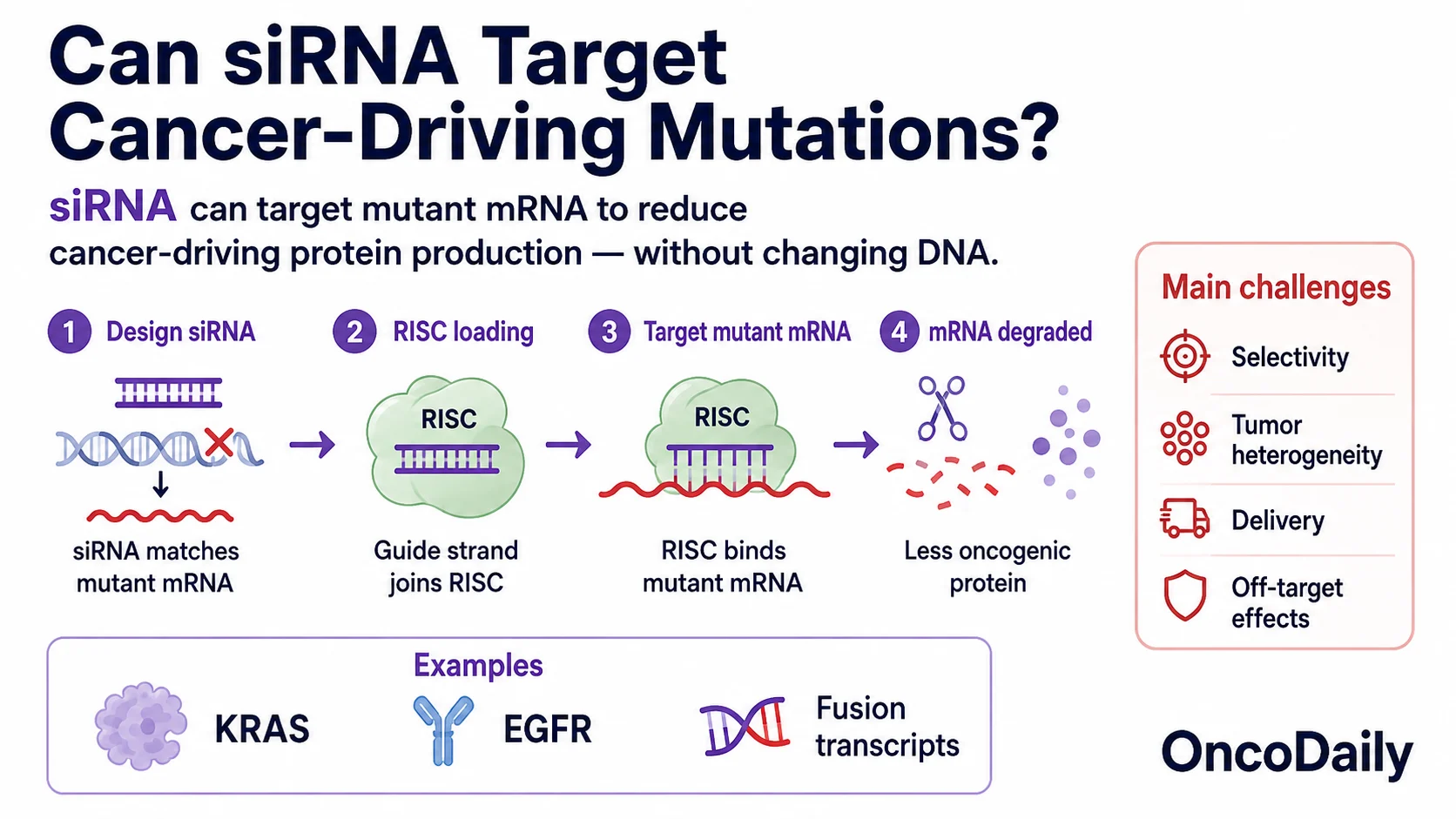
Yes. siRNA can be designed to selectively reduce the expression of some cancer-driving mutations by targeting the mutant messenger RNA rather than altering the mutation in DNA itself. This approach is known as allele-specific silencing and is most effective when the mutant transcript contains a sequence that can be distinguished from the normal version of the gene.
Once the siRNA enters the cell, its guide strand directs the RNA-induced silencing complex (RISC) toward the complementary mutant mRNA. The targeted mRNA is then degraded, reducing production of the abnormal protein that helps drive cancer growth. Researchers have explored this strategy against oncogenic targets including mutant KRAS and EGFR, as well as cancer-specific fusion transcripts. Because siRNA acts at the RNA level, it could also provide a way to suppress proteins that are difficult to target with conventional drugs (Lee et al., 2016; Hu et al., 2020).
However, mutation-specific targeting remains challenging. A single nucleotide difference may not always be sufficient to completely distinguish mutant from normal RNA, and tumors often contain several genetically different cell populations. In addition, siRNA must reach the tumor, enter cancer cells, and escape into the cytoplasm before it can act. These delivery and selectivity challenges remain major barriers to the routine use of mutation-targeted siRNA in cancer treatment (Lee et al., 2016; Hu et al., 2020).
How Is RNA Interference Being Studied in Oncology?
In oncology, RNA interference (RNAi) is being studied both as a research tool and as a potential therapeutic strategy. Researchers use siRNA to reduce the expression of genes involved in tumor growth, metastasis, treatment resistance, angiogenesis, and immune evasion. RNAi screening can also help identify genes that cancer cells depend on, providing potential targets for future therapies.
Therapeutic research has focused on silencing oncogenic targets such as KRAS, MYC, PLK1, VEGF, and other cancer-associated genes, as well as mutation-specific transcripts and fusion genes. RNAi is also being investigated in combination with chemotherapy, targeted therapy, radiation, and immunotherapy, particularly to suppress pathways that contribute to treatment resistance (Lee et al., 2016; Hu et al., 2020).
A major focus of current research is delivery. siRNA must remain stable in the circulation, reach the tumor, enter the appropriate cells, and escape into the cytoplasm before it can silence its target. Lipid and polymeric nanoparticles, extracellular vesicles, targeted conjugates, and local delivery systems have therefore been developed and tested. Several siRNA-based cancer therapies have reached early-phase clinical trials, demonstrating that gene knockdown can be achieved in patients, although clinical benefit and reliable tumor-specific delivery remain important challenges (Zuckerman and Davis, 2015; Hattab et al., 2021).
For now, RNAi remains an investigational approach in oncology rather than a standard cancer treatment. Its potential lies in selectively suppressing molecular drivers that may be difficult to target with conventional drugs, while ongoing research continues to address tumor heterogeneity, off-target effects, and delivery barriers (Ui-Tei, 2026).
You can read KRAS Grows Up: The Breakthroughs and the Reckonings by OncoDaily.
What Are the Biggest Challenges of Using siRNA Against Cancer?
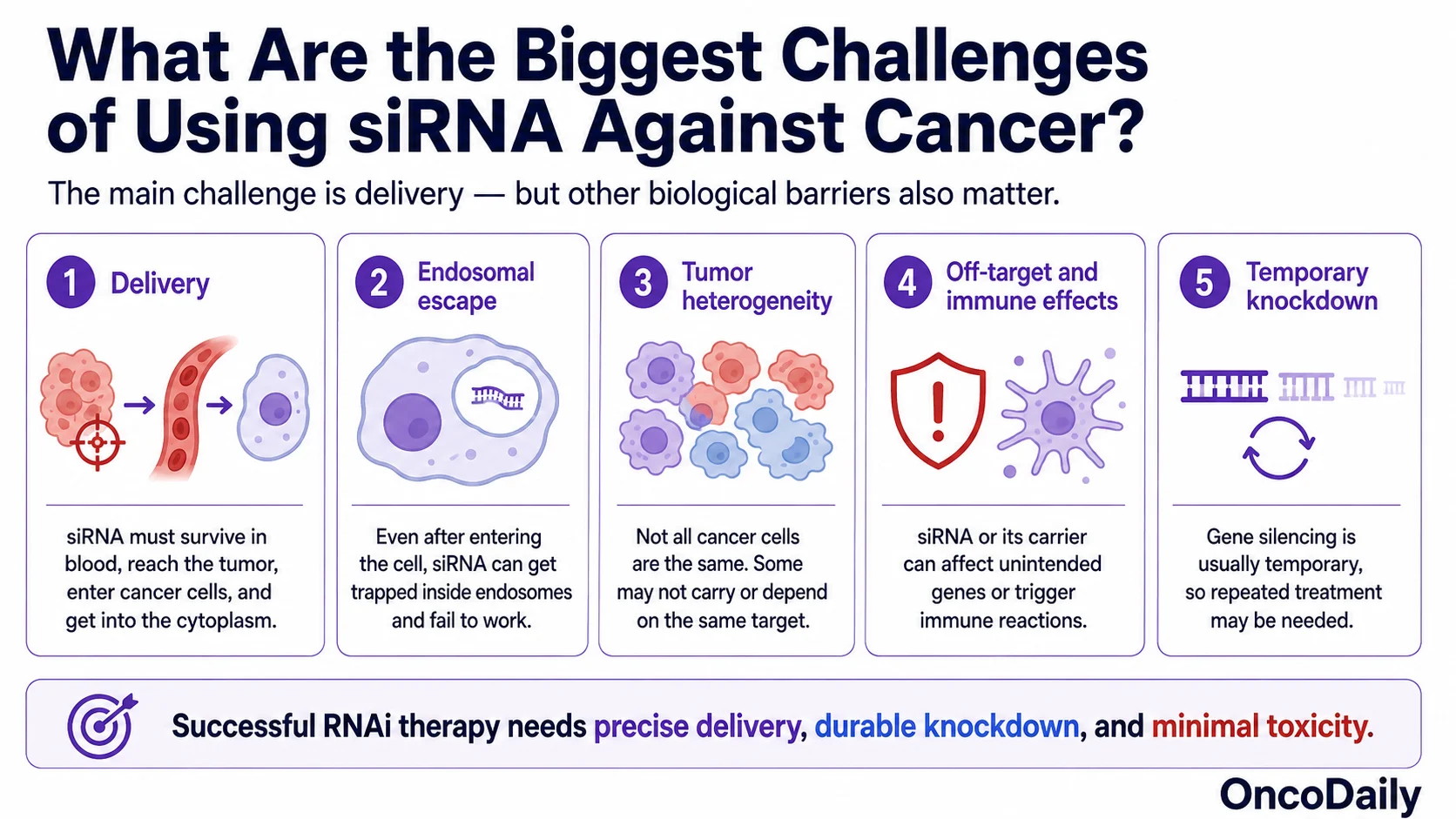
The biggest challenge of using siRNA against cancer is delivery. Designing an siRNA that recognizes a specific mRNA is relatively straightforward, but getting enough of that molecule into the correct tumor cells is much more difficult. siRNA can be degraded in the bloodstream, rapidly cleared from the body, or accumulate in organs such as the liver and spleen before reaching the tumor. Even when it reaches cancer cells, it must escape from intracellular compartments called endosomes and enter the cytoplasm, where RNA interference takes place (Whitehead et al., 2009; Zuckerman and Davis, 2015).
Cancer itself creates additional difficulties. Tumors are often genetically heterogeneous, meaning that different cancer cells may depend on different molecular pathways or may not all carry the same target. Gene silencing can also affect unintended mRNAs, known as off-target effects, while some siRNA molecules or their delivery systems can activate immune responses and cause toxicity (Lee et al., 2016; Hu et al., 2020).
Another limitation is that siRNA usually produces temporary gene knockdown rather than permanent gene inactivation. Repeated treatment may therefore be required to maintain suppression of a cancer-driving protein. Researchers must also determine whether reducing a particular target actually translates into meaningful tumor control without interfering with genes that are important for normal tissues.
These challenges explain why successful RNAi therapy requires much more than identifying the correct genetic target. Effective tumor-specific delivery, sufficient and durable gene suppression, careful target selection, and control of off-target and immune effects all need to be achieved before siRNA can become a widely used cancer treatment (Hu et al., 2020).
Does RNA Interference Change DNA?
No. Conventional RNA interference does not change the DNA sequence. Instead, siRNA acts mainly on messenger RNA (mRNA), the temporary genetic message used by cells to produce proteins. By directing the degradation of a selected mRNA, RNAi reduces production of the corresponding protein while leaving the underlying gene in the DNA unchanged (Agrawal et al., 2003).
This is why RNA interference is described as gene knockdown rather than gene editing. If an siRNA were designed against a cancer-driving mutation such as mutant KRAS, for example, it could reduce production of the mutant KRAS protein, but it would not remove or repair the mutation itself. Once the effect of the siRNA decreases, the gene can continue producing new mRNA.
This is different from technologies such as CRISPR-based genome editing, which can directly alter DNA. Conventional therapeutic siRNA is designed to silence gene expression at the RNA level rather than permanently modify the genome (Agrawal et al., 2003; Park et al., 2004).
Could Gene Silencing Become Part of Precision Oncology?
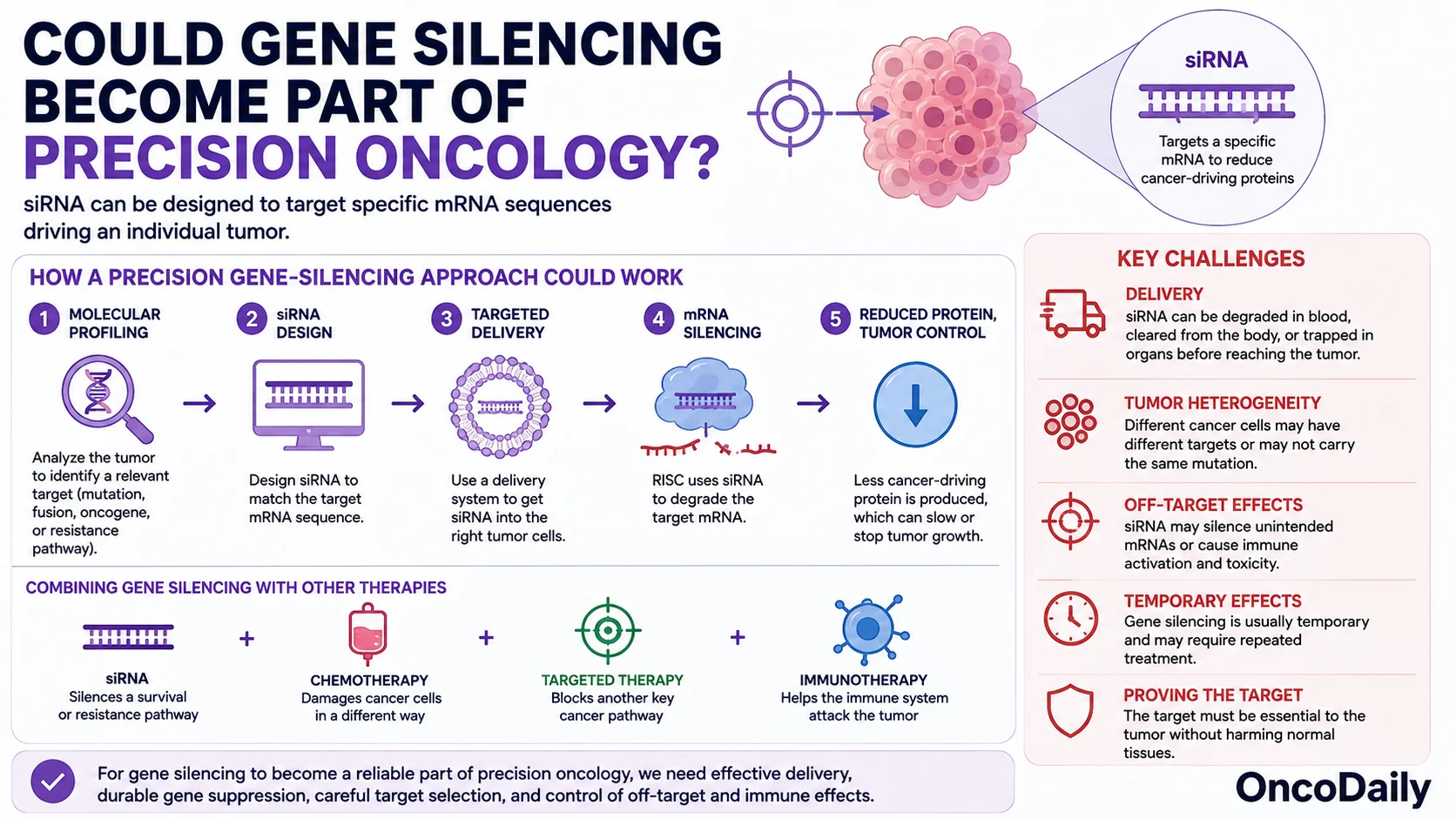
Gene silencing could become part of precision oncology because siRNA can be designed to recognize specific mRNA sequences associated with an individual tumor. This could allow treatment to focus on a particular mutation, fusion transcript, oncogene, or resistance pathway rather than targeting rapidly dividing cells more broadly (Setten et al., 2019; Hu et al., 2020).
A potential precision-oncology approach would begin with molecular profiling of the tumor to identify a relevant target. Researchers could then design an siRNA against that transcript and use an appropriate delivery system to reduce production of the cancer-driving protein. This strategy could be especially useful for molecular targets that are difficult to inhibit with conventional drugs or for tumors that develop new resistance mechanisms during treatment.
Gene silencing could also be combined with existing therapies. For example, siRNA might be used to suppress a survival or resistance pathway while chemotherapy, targeted therapy, or immunotherapy attacks the tumor through a different mechanism. Researchers are also exploring RNA-based approaches that target components of the tumor microenvironment, including immune and stromal cells (Hu et al., 2020).
However, this approach is not yet an established form of personalized cancer treatment. Tumor heterogeneity, incomplete delivery, off-target effects, temporary gene suppression, and the difficulty of proving that a molecular target is truly essential to the tumor remain important barriers. For gene silencing to become a reliable part of precision oncology, molecular selection will need to be matched with effective tumor-specific delivery and clear evidence of clinical benefit (Setten et al., 2019; Hu et al., 2020; Ui-Tei, 2026).
Written by Marine Marachlian, MD
FAQ
What is gene silencing?
Gene silencing is a process that reduces the activity of a gene, usually by lowering the amount of mRNA or protein it produces.
What is siRNA?
Small interfering RNA, or siRNA, is a short RNA molecule designed to recognize a specific messenger RNA and trigger its degradation.
Does siRNA change DNA?
No. Conventional siRNA acts on mRNA rather than directly altering the DNA sequence.
How does RNA interference reduce protein production?
siRNA guides the RNA-induced silencing complex, or RISC, to a matching mRNA. The mRNA is then cleaved and degraded, so less of the corresponding protein is produced.
Can siRNA target cancer-driving mutations?
Yes. Researchers can design siRNA against some mutant transcripts, including cancer-associated mutations and fusion genes, although selectivity and delivery remain important challenges.
Why is RNA interference interesting for cancer treatment?
Many tumors depend on abnormal genes and proteins for growth and survival. Gene silencing could potentially reduce the production of some of these cancer-driving proteins.
Is siRNA already used to treat cancer?
No siRNA-based therapy is currently an established standard cancer treatment. RNA interference remains an investigational approach in oncology.
What is the biggest challenge with siRNA cancer therapy?
Delivery is one of the biggest challenges. The siRNA must remain stable, reach the tumor, enter the correct cells, and reach the cytoplasm before it can work.
How is siRNA different from CRISPR?
siRNA usually causes temporary gene knockdown by targeting RNA, while CRISPR-based technologies can directly modify genomic DNA.
Could gene silencing become part of precision oncology?
Potentially. Because siRNA can be designed against specific molecular targets, it could eventually complement precision oncology by targeting selected mutations, oncogenes, fusion transcripts, or resistance pathways.