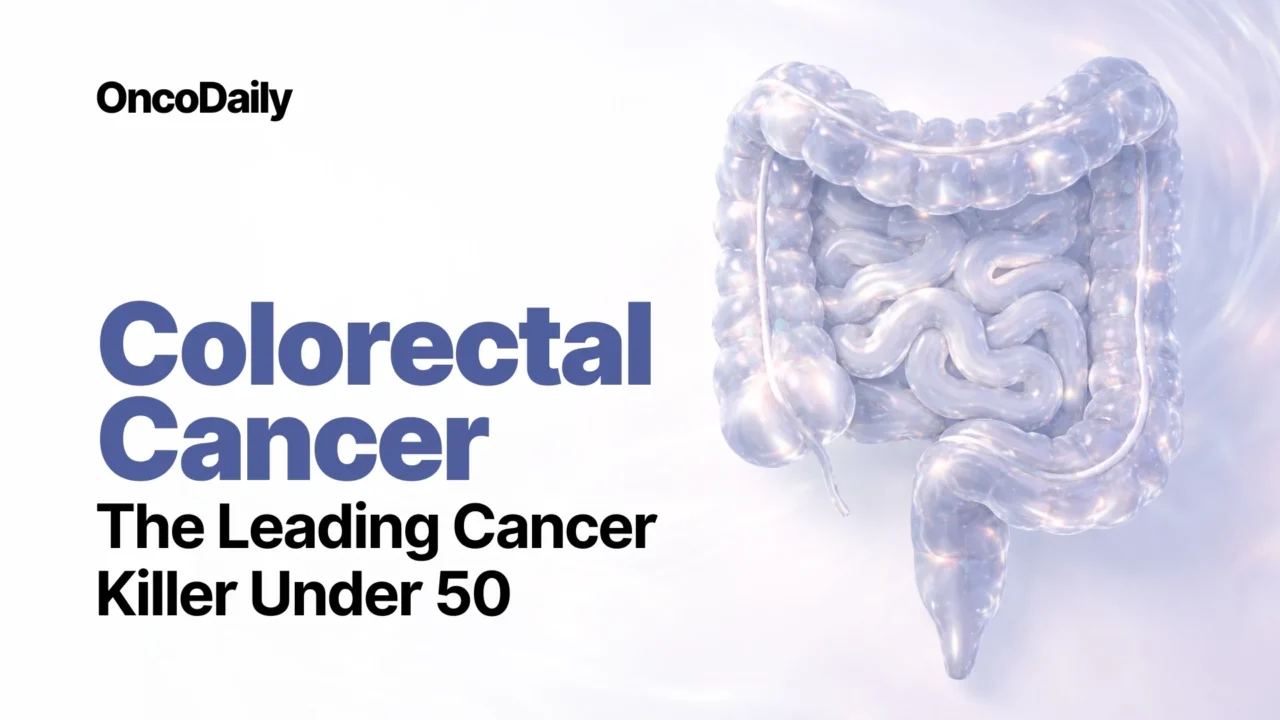
The treatment of colorectal cancer has evolved dramatically over the past three decades. Advances in surgical techniques, systemic chemotherapy, targeted therapy, immunotherapy, and screening strategies have reduced overall mortality across many age groups. Yet new data published in JAMA raise a critical concern: for adults younger than 50 years, colorectal cancer (CRC) mortality is increasing while other leading cancer deaths are declining.
In a study, investigators analyzed US mortality data from 1990 through 2023. Their findings show a 44% overall decline in cancer mortality among people younger than 50 years. However, colorectal cancer was the only major cancer type with rising mortality during this period.
This raises a provocative and urgent question: Is colorectal cancer treatment moving in the wrong direction for younger adults, or are we missing something even more fundamental?
Read About Colorectal Cancer on OncoDaily
A Mortality Signal That Cannot Be Ignored
Between 1990 and 2023, 1,267,520 individuals under age 50 died of cancer in the United States. Age-standardized cancer death rates fell from 25.5 to 14.2 per 100,000 a major public health achievement. Lung cancer, leukemia, breast cancer, and brain tumors all showed sustained declines.
But colorectal cancer tells a different story.
According to the Joinpoint regression analysis in the JAMA study, colorectal cancer mortality has increased by 1.1% annually since 2005 among adults younger than 50 years. This steady rise has shifted CRC from the fifth-leading cause of cancer death in the early 1990s to the leading cause of cancer death in this age group by 2023.
While lung cancer mortality declined by an average of 5.7% annually between 2014 and 2023, and leukemia mortality fell by 2.3% annually, colorectal cancer mortality continued to climb.
This is not a statistical fluctuation. It is a structural shift.
Why Is Treatment Not Reversing the Trend?
Colorectal cancer treatment has improved substantially in the past two decades. For metastatic disease, we now have:
- Oxaliplatin and irinotecan-based combination chemotherapy
- Anti-VEGF therapies such as bevacizumab
- Anti-EGFR monoclonal antibodies for RAS wild-type disease
- Immune checkpoint inhibitors for MSI-high tumors
- Improved surgical and liver-directed interventions
In older populations, these advances have translated into measurable survival gains. Yet in adults younger than 50, mortality is rising. This suggests that the problem may not lie solely in therapeutic innovation. Instead, the issue may involve timing, stage at diagnosis, tumor biology, and systemic barriers.
Late Diagnosis: A Central Driver
The JAMA authors emphasize that three in four patients younger than 50 are diagnosed with advanced colorectal cancer. This is a critical statistic.
Younger adults are typically not screened before age 45 unless they have a known genetic or family history. As a result, symptoms such as hematochezia, abdominal pain, or unexplained weight loss are often misattributed to benign causes. Delays in diagnosis allow tumors to progress to metastatic disease before treatment begins.
No matter how advanced systemic therapy becomes, outcomes for stage IV disease remain inferior to those for stage I or II disease.
In this context, colorectal cancer treatment may not be “moving in the wrong direction”, but it may be arriving too late.
Is Early-Onset CRC Biologically Different?
Another possibility is that early-onset colorectal cancer represents a biologically distinct disease.
Previous research has shown differences in molecular profiles, including variations in microsatellite instability, KRAS mutation patterns, and tumor location (more distal and rectal cancers). Some studies suggest more aggressive behavior in younger patients.
If early-onset CRC is molecularly distinct, current treatment algorithms largely derived from trials dominated by older adults may not fully capture optimal strategies for this population.
Treatment development has not specifically prioritized early-onset CRC as a separate biological entity. This gap may contribute to stagnating outcomes.
Screening Recommendations and Their Limits
Screening guidelines in the United States now recommend beginning average-risk colorectal cancer screening at age 45. This change was implemented in response to rising early-onset CRC incidence.
Evidence suggests that earlier screening reduces incidence and mortality. Published studies demonstrate that early fecal immunochemical testing and expanded screening eligibility are associated with improved early detection and declining incidence trends in certain subgroups.
However, these recommendations are relatively recent. Many individuals currently under age 50 were never screened. Screening expansion may eventually reverse mortality trends, but we have not yet reached that inflection point.
Read About Colorectal Cancer Prevention on OncoDaily
Are We Overestimating Therapeutic Impact?
Another uncomfortable question is whether advances in systemic therapy are being overestimated in younger adults. Immunotherapy has transformed outcomes for mismatch repair–deficient colorectal cancer, but this represents a minority of cases. The majority of young patients have microsatellite-stable tumors, where immunotherapy has limited efficacy.
Targeted therapies improve survival incrementally but do not fundamentally alter long-term metastatic outcomes. If early-onset CRC incidence continues rising while therapeutic gains plateau, mortality trends may continue upward despite medical progress.
A Public Health Failure?
The JAMA authors describe their findings as an “urgent need for CRC prevention and early detection in younger adults.” Mortality trends are less susceptible to detection bias than incidence trends. Rising death rates therefore indicate a genuine public health concern.
Colorectal cancer prevention strategies dietary interventions, obesity reduction, microbiome research, environmental exposure analysis remain incompletely understood in this age group. If etiologic drivers are changing faster than prevention strategies can adapt, treatment alone cannot compensate.
A Shift in Cancer Mortality Leadership
The most symbolic finding in the analysis is that colorectal cancer has overtaken lung cancer as the leading cause of cancer death in adults under 50.
For decades, lung cancer dominated mortality statistics. Aggressive tobacco control, early detection, and improved systemic therapy reversed that trajectory.
Colorectal cancer is now taking its place. This is not merely a statistical reshuffling, it reflects a generational epidemiologic transition.
Is Treatment Moving in the Wrong Direction?
It may be more accurate to say that treatment is not keeping pace with disease dynamics in younger adults.
Therapeutic innovation continues. Clinical trials are exploring novel KRAS inhibitors, bispecific antibodies, antibody-drug conjugates, and combinations of targeted and immunotherapeutic agents.
But without:
- Earlier diagnosis
- Improved symptom awareness
- Dedicated early-onset CRC research
- Risk-adapted screening
- Molecular stratification in younger cohorts
treatment advances alone may not reverse mortality trends.
The direction of therapy is not necessarily wrong. It may simply be insufficient without parallel structural reforms.
What Must Change?
If colorectal cancer mortality continues to rise among adults younger than 50, several priorities become unavoidable:
- Aggressive public education about red flag symptoms
- Broader implementation of screening at age 45 and earlier in high-risk individuals
- Dedicated funding for early-onset CRC biology research
- Clinical trials stratified by age\Policy support for access to timely diagnostic colonoscopy
Colorectal cancer mortality trends are an early warning signal. Ignoring them risks allowing a preventable cancer to dominate younger generations.
Final Perspective
Cancer mortality among adults younger than 50 has declined dramatically over three decades. This is a major success story in oncology.
But colorectal cancer stands as the exception.
If lung cancer and leukemia mortality can fall sharply through coordinated prevention, detection, and treatment strategies, colorectal cancer should not be allowed to move in the opposite direction. The data published in are not a condemnation of treatment advances. They are a call to realign priorities.
Without decisive action, colorectal cancer will remain the leading cancer killer of adults under 50, and the promise of modern oncology will ring hollow for a generation.
You Can Watch More on OncoDaily Youtube TV
Written by Armen Gevorgyan, MD