
The second week of May, from May 11 to May 17, brought together important updates across GU oncology, with 10 posts highlighting new research, regulatory developments, expert perspectives, and clinical discussions in prostate, bladder, kidney, and testicular cancers.
This week’s selection includes updates on 4-weekly avelumab dosing in metastatic renal cell carcinoma, ctDNA-guided adjuvant atezolizumab after cystectomy in muscle-invasive bladder cancer, node-positive bladder cancer and the CHASIT study, metastasis-directed therapy in oligometastatic prostate cancer, the phase 3 VOLGA and POTOMAC trials, testosterone replacement therapy after prostate cancer surgery, HRR testing in the PROpel trial, IMPT with pelvic nodal irradiation in high-risk prostate cancer, and fertility assessment in men with testicular cancer.
Together, these posts reflect the breadth of current GU oncology research and practice, from biomarker-guided treatment and radiotherapy innovation to perioperative bladder cancer strategies, prostate cancer survivorship, renal cancer dosing approaches, and fertility preservation.
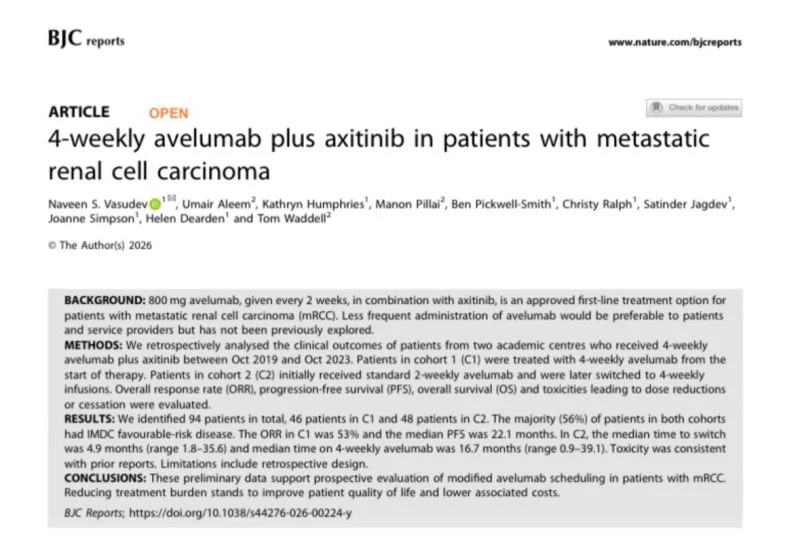
Naveen Vasudev — Clinical Associate Professor and Consultant Medical Oncologist at University of Leeds / St James’s Institute of Oncology | United Kingdom
“Avelumab has a short half-life but RO rates remain high at day 15. Here, we share our experience, across two large centres, of 4-weekly dosing in patients with mRCC. Outcomes look comparable to Q2W. Less frequent dosing is attractive and these data support further evaluation!”
Giacomo Nuvola, MD — Medical Oncologist; Medical Affairs and Medical Monitor | Italy
“A major milestone for precision oncology and bladder cancer
The FDA has approved Atezolizumab for patients with muscle-invasive bladder cancer (MIBC) who are ctDNA-positive after cystectomy, introducing a truly molecularly guided adjuvant approach.
The approval is based on the phase III IMvigor011 trial, in which ctDNA-positive patients were randomized to atezolizumab or placebo after cystectomy. Atezolizumab significantly improved disease-free survival (median DFS 9.9 vs 4.8 months; HR 0.64) and overall survival (median OS 32.8 vs 21.1 months; HR 0.59). Importantly, patients who remained ctDNA-negative during surveillance had excellent outcomes without adjuvant treatment.
This is an important step toward more personalized perioperative treatment:
Escalating therapy for patients at highest risk
Potentially sparing ctDNA-negative patients from unnecessary toxicity
Bringing MRD-guided decision making closer to routine clinical practiceThis approval represents a historic moment in oncology: the first FDA-approved adjuvant treatment strategy in a solid tumor based on ctDNA-defined molecular residual disease positivity.”

Joost Boormans — Professor and Chair of Urology, Board Member of the Erasmus MC Cancer Institute | The Netherlands
“Node-positive bladder cancer: is cure possible?
In the latest issue of European Urology an editorial by Renate Pichler, MD, PhD, FEBU and Petros Grivas on node-positive bladder cancer. Patients with bladder cancer and locoregional lymph node involvement, defined as stage cN2 or cN3, in the absence of distant metastases, stage cM0, have poor survival outcomes. Traditionally, these patients receive induction chemotherapy and, if radiologically responding, undergo radical surgery removing the primary tumor and all regional lymph nodes.
Recent studies, EV-302 (enfortumab vedotin + pembrolizumab) and Checkmate-901 (Gem/Cispt + nivolumab), included subgroups of patients with node-positive disease: 45 out of 886 patients and 76 out of 708, respectively. Renate Pichler, MD, PhD, FEBU showed promising response rates in these subgroups, which were induced by these novel therapeutic strategies. Nevertheless, important limitations were observed:
populations were heterogeneous and included, in addition to stage cN2-N3, stage cN1
clinical versus pathological response rates were not reported for these subgroups
We expect to be able to address these limitations by reporting the results of the CHASIT study, NCT05600127. CHASIT is a multicentre prospective phase II study in patients with invasive urothelial carcinoma of the bladder/urethra/upper tract, stage cT4bN0-N3M0 or cTanyN1-N3M0 who had at least stable disease following platinum-based chemotherapy. Patients receive 3 cycles of avelumab and undergo, in the absence of disease progression, radical surgery. The primary end point is pathological complete response rate, ypT0TisN0.
In total, 64 patients will be included, and accrual is anticipated to run until next month.”
Karamvir Yadav — Medical Oncologist | Canada
“MDT is changing the game in oligometastatic prostate cancer.
The WOLVERINE meta-analysis shows meaningful improvements in:
rPFS
PFS
Delay to CRPCThe era of precision metastasis-directed therapy is here.”
Toni Choueiri — Division Chief of GU Oncology and Medical Director, International Strategic Initiatives at Dana-Farber Cancer Institute; Kohlberg Professor of Medicine at Harvard Medical School | United States
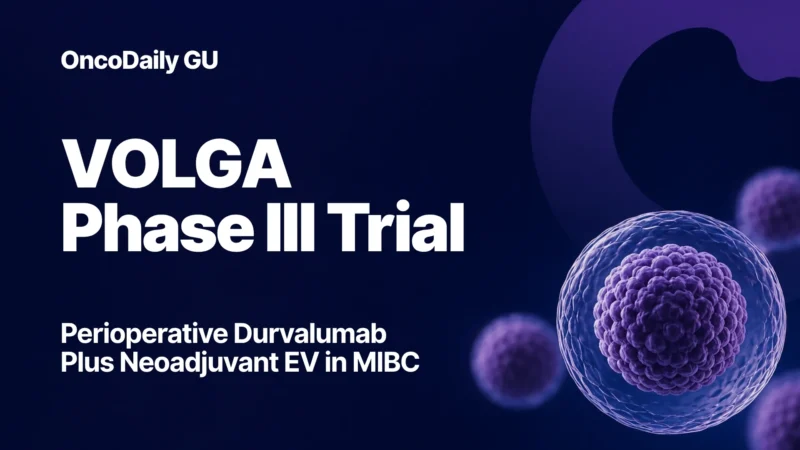
“JUST IN: VOLGA Phase III is (+)=>Neoadjuvant Durva+EV and Adjuvant Durva alone showed a EFS and OS benefit. The shorter period of EV is the major difference in trial designs.”
Adam B. Weiner, MD — Urologic Oncologist | United States
“Testosterone replacement therapy after surgery for prostate cancer
SPIRIT trial
RCT, n=136, low/int-grade PCa, post-RP, hypogonadal men
TRT started ≥2 yrs post-RP w/ undetectable PSA
12 wks testosterone vs placebo
↑ sexual activity (+0.9 events/day), desire, lean mass, VO₂ peak
ZERO biochemical recurrencesShort-term, proof-of-concept.
Bigger/longer trials including patients with higher-risk disease needed”
Giuseppe Procopio — Chief of Genitourinary Oncology; Director Prostate Program; FICOG and Meet-URO President | Italy
“New publication in JCO Journals: “Detection of Homologous Recombination Repair Gene Mutations by Tumor Tissue and Circulating Tumor DNA Testing in Prostate Cancer in the Phase III PROpel Trial”
This work highlights the complementary role of tumor tissue and ctDNA testing in identifying HRR gene alterations in mCRPC.
Key findings from the PROpel biomarker analyses include:
High concordance between tissue and ctDNA testing for HRRm and BRCA mutations
Aggregate testing maximized biomarker characterization, reaching 98% of patients
ctDNA testing proved particularly valuable when tissue samples were unavailable or insufficient
These data support broader implementation of molecular testing strategies in routine clinical practiceA meaningful step toward improving precision oncology approaches and optimizing patient identification for targeted therapies in prostate cancer.
Thanks to all co-authors and collaborators involved in this important research effort.”

Felipe Couñago, MD, PhD — Medical Director at GenesisCare Spain; Radiation Oncologist, Clinical Researcher and Professor | Spain
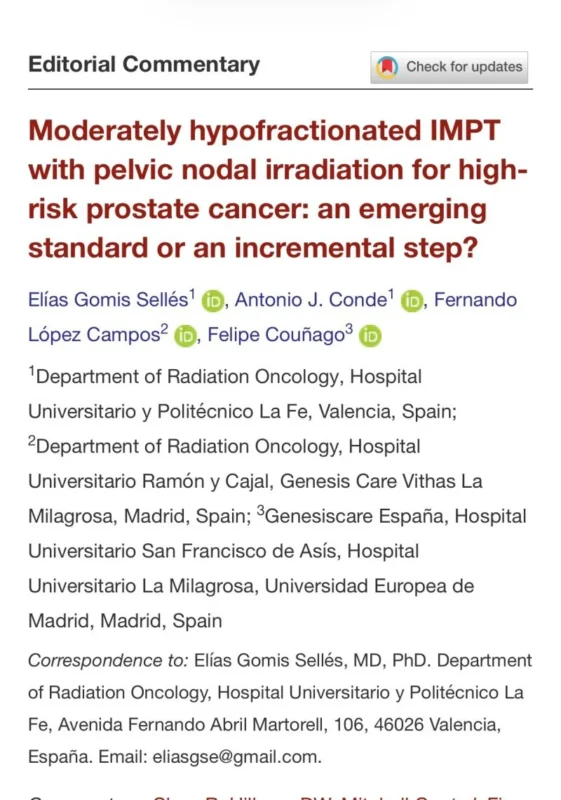
“Happy to share our new publication in Translational Cancer Research:
“Moderately hypofractionated IMPT with pelvic nodal irradiation for high-risk prostate cancer: an emerging standard or an incremental step?”
In this editorial, we discuss the current and future role of intensity-modulated proton therapy (IMPT) combined with pelvic nodal irradiation for high-risk prostate cancer.
While proton therapy remains one of the most advanced radiation technologies available, its real clinical value in prostate cancer is still being defined.
Key points from the article:
IMPT offers attractive dosimetric advantages, particularly in reducing low-dose exposure to surrounding normal tissues
However, convincing evidence of major clinical benefit over modern photon-based radiotherapy is still limited in prostate cancer
The potential role of protons may be more relevant in selected patients requiring pelvic irradiation, dose escalation, reirradiation, or with significant comorbidities
Cost-effectiveness, accessibility, and the lack of mature randomized data remain major challenges
Technology alone is not enough , better outcomes and improved quality of life must remain the real endpointsAs radiation oncologists, we should remain enthusiastic about innovation while also being rigorous and evidence-driven.
Proud to contribute to this discussion together with the authors.”
Mohit Manrao — SVP, Head of US Oncology at AstraZeneca; President of the AstraZeneca Foundation | United States
“This content is intended for US audiences only.
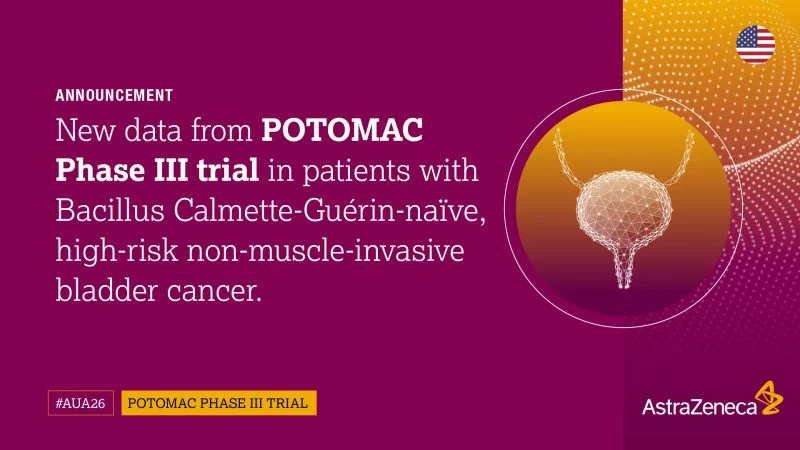
After yesterday’s announcement of positive high-level results in our VOLGA Phase III trial, AstraZeneca is seizing that momentum at the American Urological Association (AUA) Annual Meeting. Today, we kicked off the conference by sharing new data from the POTOMAC Phase III trial in Bacillus Calmette-Guérin (BCG) naïve high-risk non-muscle-invasive bladder cancer (NMIBC) that reinforces the potential of this regimen in a tough-to-treat cancer.
In the first year of treatment with our medicine, patients experienced fewer high-risk disease events and fewer BCG-unresponsive recurrences. Across additional analyses, our medicine improved time to bladder removal surgery (cystectomy) and surgery-free survival compared to patients treated with BCG alone.
About half of patients with NMIBC are classified as high-risk for disease progression or recurrence because of certain characteristics such as their tumor grade, stage and specific tumor features. Up to 80% of these high-risk patients could see their disease return within 5 years, even on current treatment options.
The progress we’re seeing across bladder cancer care underscores the potential of our approach. This is a community that has needed new treatment options for far too long and we’re proud of the commitment that’s brought us this far. But we’re pushing the boundaries even further, until we’ve eliminated bladder cancer as a cause of death.”
Federica Cariati — Embryologist responsible for Preimplantation Genetic Testing | Italy
“I am pleased to share our latest article published in Journal of Personalized Medicine:
“Semen Analysis in Men with Testicular Cancer: Insights from a Large Fertility Preservation Cohort Toward Personalized Fertility Assessment”
In this retrospective study, we analyzed semen parameters in 278 men diagnosed with testicular tumors prior to any oncological treatment, investigating the potential impact of both cancer itself and different histological subtypes on semen quality.
Key findings:
Men with testicular cancer already show significant impairment of semen parameters at diagnosis;
Sperm concentration, motility, and morphology were significantly reduced compared to controls;
Semen impairment appeared to be independent of tumor histology.These findings further highlight the importance of early fertility preservation and personalized reproductive counseling in young cancer patients.
Grateful to all co-authors and collaborators involved in this work.”

Find out 10 Must-Read Posts in GU Oncology from the first week of May on OncoDaily.