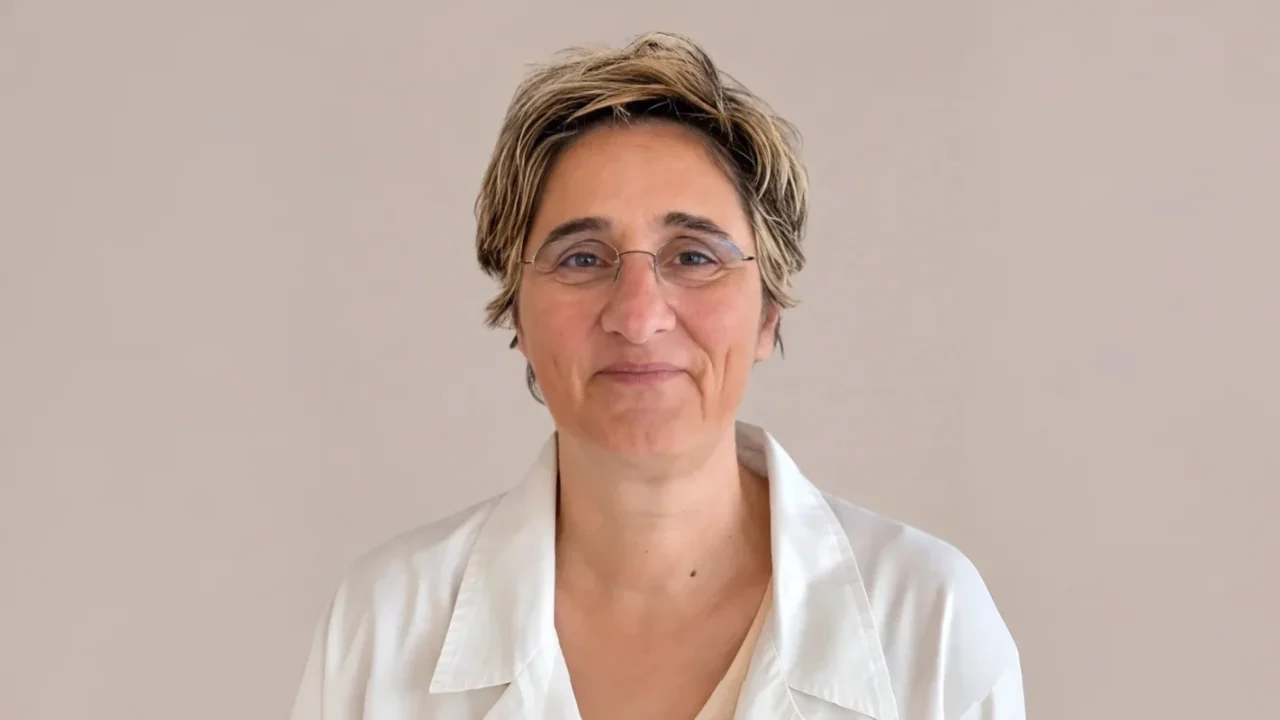
Zacharoula Sidiropoulou, Senior Consultant Breast Surgical Oncologist at Hospital São Francisco Xavier, shared on LinkedIn:
“From Dr Google to Dr GPT: what has changed in my consultation room.
For years, patients have arrived at breast clinic with information from Dr Google.
Sometimes accurate. Sometimes misleading. Often frightening. Usually there was something I could do immediately: open the source, examine the evidence, clarify what applied to that particular patient, and discuss it together.
Now, increasingly, patients arrive with answers from ChatGPT or other conversational AI systems. What has changed? I can check a website. I cannot necessarily reconstruct a conversation. I do not know what the patient asked, which clinical details were omitted, how the questions evolved, or whether repeated exchanges gradually transformed uncertainty into a confident recommendation.
The answer may even be factually correct.
But correct information, applied to the wrong patient or without the necessary clinical context, can become unsafe advice.
A woman may arrive convinced that mastectomy offers better survival. Another may have been reassured about a symptom that required urgent assessment. Another may have modified her treatment after an apparently personalised conversation. The problem is no longer simply misinformation or AI hallucination. It is the emergence of a parallel clinical pathway that we cannot see, verify or take responsibility for but whose consequences we may have to manage.
This is the central argument of our newly accepted paper in Frontiers-Oncology: ‘Patient-Initiated Conversational AI Between Appointments in Breast Cancer Care: A Multidisciplinary Clinical and Policy Perspective.’
Together with Guida Da Ponte, Prof Dr Sunil Kumar and Vasco Fonseca , we examine how conversational AI may influence surgical decisions, treatment toxicity, psychological adaptation and perioperative recovery.
We are not arguing against AI. It can help patients understand, prepare questions and express concerns they might otherwise leave unspoken. But we need to move beyond asking whether an AI answer is accurate. We must also ask what the patient understood, what they did with that information, and whether the conversation brought them closer to appropriate care or further away from it.
Perhaps it is time to add a new question to our consultations: ‘Have you asked an AI about this?’
Not to judge. Not to discourage curiosity. But to bring an invisible conversation back into a relationship where someone can examine the evidence, understand the patient and take clinical responsibility.
Dr Google gave us information to verify. Dr GPT may give us decisions whose origins we cannot see. That is a factual and different patient-safety challenge.”
You can also read: ChatGPT Health: OpenAI Introduces a Dedicated Space for Health and Wellness Conversations