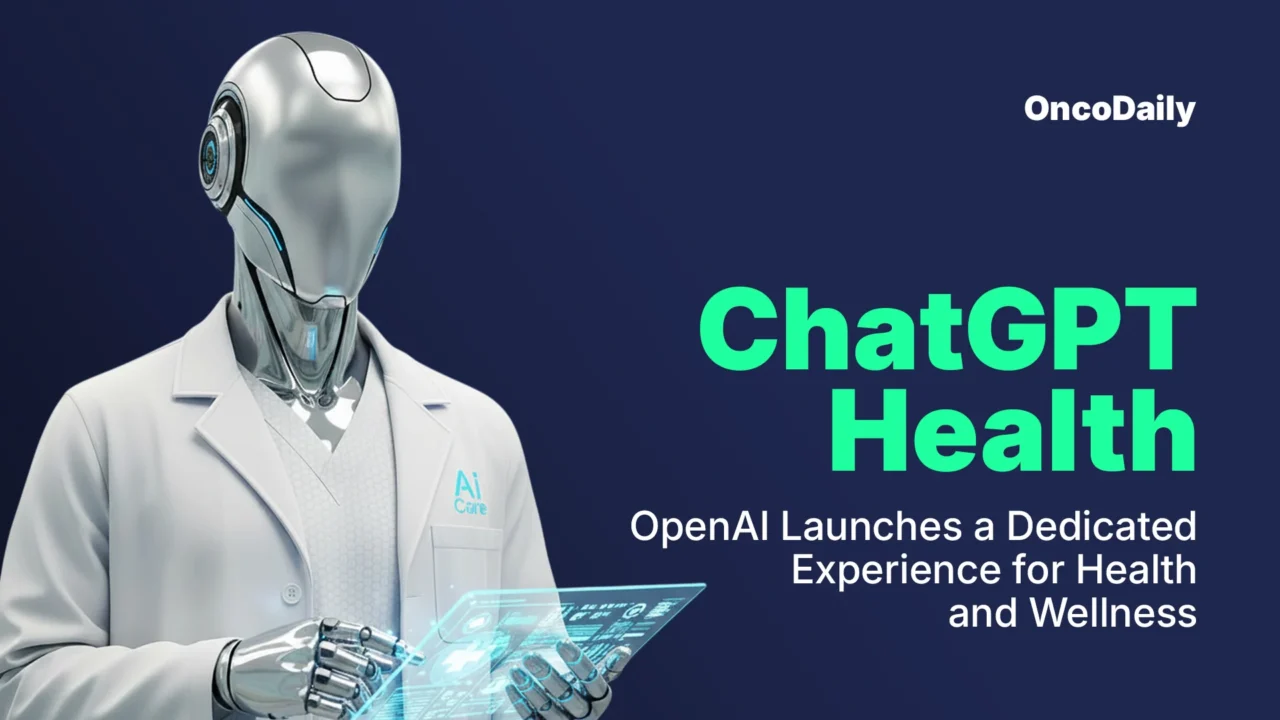
On January 7, 2026, OpenAI announced ChatGPT Health, a dedicated experience within ChatGPT designed to support health and wellness conversations. The company presents the feature as a way to help users feel more informed and prepared when navigating everyday health questions, while emphasizing that it is intended to support not replace clinical care.
OpenAI’s launch reflects how frequently people already use conversational AI for health-related topics. The company reports that more than 230 million people globally ask health and wellness questions on ChatGPT each week, a level of demand it says warrants a purpose-built health space with additional protections for sensitive information.
What ChatGPT Health Is
ChatGPT Health is described as a separate space inside ChatGPT where users can ask health and wellness questions and optionally connect personal health information to provide additional context. OpenAI states that Health is not intended to provide diagnosis or treatment; instead, it is designed to help users understand information, recognize patterns over time, and prepare for conversations with healthcare professionals.
This “separate space” concept is central to the product’s positioning. OpenAI explains that Health conversations, connected apps, and uploaded files are stored separately from a user’s other chats, with Health-specific memory intended to remain contained within the Health environment.
Key Capabilities and Connected Data
A distinguishing feature of ChatGPT Health is the option to connect health-related sources so responses can be grounded in the user’s own context. OpenAI indicates that this can support activities such as interpreting recent test results, preparing for medical appointments, and understanding lifestyle patterns derived from wellness tracking.
At launch, OpenAI highlights connections with wellness apps such as Apple Health, MyFitnessPal, and Function, among others. The company also notes that users can upload files and bring in records or summaries to inform the conversation within Health.
Medical Records Integration and Third-Party Partnerships
OpenAI states that medical record connectivity is enabled through a partnership with b.well for access to U.S. healthcare provider data. The company notes that medical record integrations are U.S.-only at launch, and OpenAI’s Help Center further notes that the optional Medical Records feature requires users to be over 18.
OpenAI also indicates that connecting Apple Health requires iOS and that Health is supported on web and iOS, with Android planned for later availability.
Privacy and Security Positioning
OpenAI frames privacy and security as foundational to the Health experience. In its product announcement and documentation, the company states that Health chats, files, and memories are not used to train its foundation models.
OpenAI also describes “layered protections” designed specifically for sensitive health information, including additional isolation for Health conversations. External reporting has noted that, as with other consumer technology products, Health remains subject to valid legal requests and does not operate as a clinical system under healthcare-specific regulations.

Clinical Input and Evaluation
OpenAI states that ChatGPT Health was developed in close collaboration with physicians, reporting involvement from more than 260 physicians across 60 countries. The company says this work informed both how the system answers and how it prioritizes safety, clarity, and appropriate guidance to seek clinician input when needed.
Availability and Rollout
Access to ChatGPT Health is being introduced through a staged rollout. OpenAI says it is starting with a limited group of early users, with access managed through a waitlist. At launch, OpenAI indicates that users outside the European Economic Area, Switzerland, and the United Kingdom are eligible, and that availability will expand over time.
Relevance for Oncology-Focused Audiences
For oncology patients and caregivers, health information is often complex and distributed across multiple sources, including lab reports, visit summaries, imaging narratives, medication instructions, and symptom logs. A tool aimed at consolidating and explaining information in accessible language may be attractive for preparation and comprehension particularly when it encourages structured questions for clinical visits rather than substituting for medical decision-making. OpenAI repeatedly emphasizes that ChatGPT Health is designed to support care, not replace clinicians, which is especially relevant in high-stakes specialties such as oncology.
Written by Nare Hovhannisyan, MD