





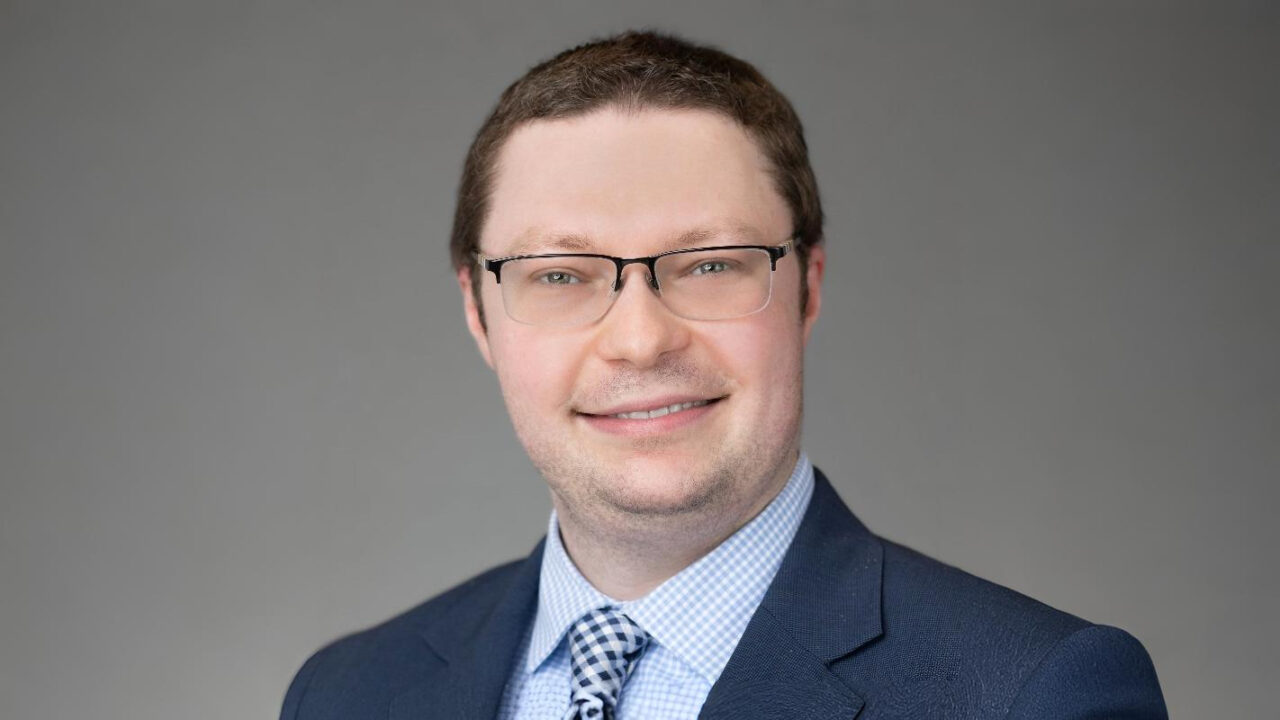
Yan Leyfman, Medical Oncologist, Co-Founder and Executive Director of MedNews Week, shared a post on LinkedIn:
“Can local immune modulation rescue encapsulated cell therapies?
A new study in Science Translational Medicine explores whether targeting innate immunity can improve outcomes for immunoisolated β-cell transplants in primates.
Strategy:
Alginate spheres co-encapsulating β cells + slow-release crystals of a CSF1R inhibitor (GW2580) to blunt the foreign body response (FBR).
Key findings:
– In immunocompetent diabetic mice:
- Human stem cell–derived β cells maintained glycemic control for 1 year.
– In nonhuman primates (NHPs):
- Allogeneic β cells remained viable and glucose-responsive at 1 month.
- No systemic immunosuppression required.
But…
- Xenogeneic human β cells failed in NHPs.
- Marked adaptive immune activation (↑ CD4+ T cells, CD19+ B cells, APC programs, MHC-II expression).
- Upregulation of chemokines CCL17, CCL22, CXCL13.
Interpretation:
Localized CSF1R inhibition appears sufficient to control innate-driven fibrosis and rejection in allogeneic settings, but xenogeneic sources in higher-order species trigger robust adaptive immunity that overwhelms this strategy.
Takeaway:
Innate immune targeting may unlock encapsulated allogeneic cell therapies-yet xenotransplantation likely requires additional adaptive immune modulation.”
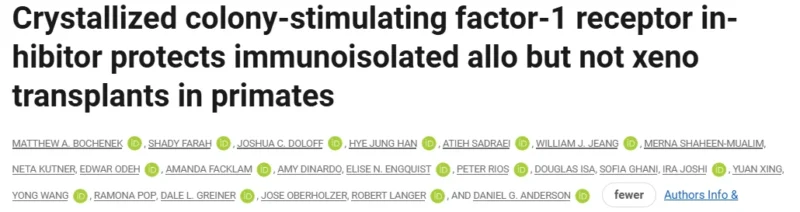
Title: Crystallized colony-stimulating factor-1 receptor inhibitor protects immunoisolated allo but not xeno transplants in primates
Authors: Matthew A. Bochenek, Shady Farah, Joshua C. Doloff, Hye Jung Han, Atieh Sadraei, William J. Jeang, Merna Shaheen-Mualim, Neta Kutner, Edwar Odeh, Amanda Facklam, Amy DiNardo, Elise N. Engquist, Peter Rios, Douglas Isa, Sofia Ghani, Ira Joshi, Yuan Xing, Yong Wang, Ramona Pop, Dale L. Greiner, Jose Oberholzer, Robert Langer, Daniel G. Anderson
Read The Full Article
Other articles featuring Yan Leyfman on OncoDaily.