





The Lancet Group shared a post on LinkedIn:
From page to policy impact: the Lancet Series on ultra-processed foods and human health
” ‘Being well-aware of the role of The Lancet in global health and its agenda-setting power-to elevate something we know is important, a Lancet Series was a crucial step.’
Dr Phil Baker is co-lead author of a Lancet Series on ultra-processed foods and human health. On a virtual call about the Series’ impact, he rattles off a list of policy moves following publication last November. In Spain, the Ministry of Consumer Affairs announced it will remove ultra-processed foods (UPFs) from the menus offered to children in hospitals. In San Francisco, the City Attorney cited the Series in relation to a lawsuit against some of the largest UPFs manufacturers. Citing the Series, the French National Assembly proposed new labelling legislation to identify ultra-processed foods.
‘And this is just within a few months’, Dr Baker enthuses.
The Series comes at a time of newfound scrutiny for ‘Big Food’, the sustainability of food systems, and more broadly, the commercial determinants of health. Synthesising the best available evidence, the Series’ key finding can be summarised in one damning line: the rise in ultra-processed foods poses a major public health threat.
Across three papers, the Series assesses the scientific, policy, and political dimensions of UPFs. Forty-three authors contributed.
‘You’re trying to build a team that is globally representative and has gender parity, or at least close to it’, Baker says of the collaboration. He continues: ‘You want to bring that diversity of perspective in. A huge value of The Lancetis that it’s a platform for interdisciplinarity.’
Peer and editorial review provide an essential, additional input of expert, external perspectives. Together, they lend clarity, situate new work in the context of the totality of evidence, and prevent over-interpretation.
As Sabine Kleinert, Deputy Editor of The Lancet and handling editor on the Series, explains: ‘UPFs is a topic rife with debate. Even the term ‘ultra-processed foods’ is debated. Because of that, we [editors and reviewers] challenged the authors to more readily engage with scientific debate in the area and acknowledge uncertainty. Authors sometimes feel this admission weakens their arguments, but it’s vital to bring people along and support understanding. It strengthens credibility.’
While academic social media is replete with memes about ‘Reviewer Two’, a famed harsh critic, Baker offers his own perspective: ‘You come to realise that, when you get roasted by the reviewers and editors, they’re doing it with good intent, and they have the best interests of the output in mind. I think that’s a big mindset shift researchers need to take-not to see editorial and peer reviews like an attack.’
‘When you get roasted by the reviewers and editors, they’re doing it with good intent […] I think that’s a big mindset shift researchers need to take-not to see editorial and peer reviews like an attack, but as an opportunity to reflect and hone your arguments…’
The work is ‘absolutely not done’ at the acceptance stage, Baker stresses. ‘This is where The Lancet also excels-with the quality of its Communications team in disseminating the Series-to get it in front of journalists, crafting the key messages, the press release, the social media, the infographic… That was what made the Series impactful. So, yeah, get ready for hard work oncea Series is accepted.’ Within two weeks, the Series had amassed over 1,500 international media articles and hundreds of thousands of social media hits.
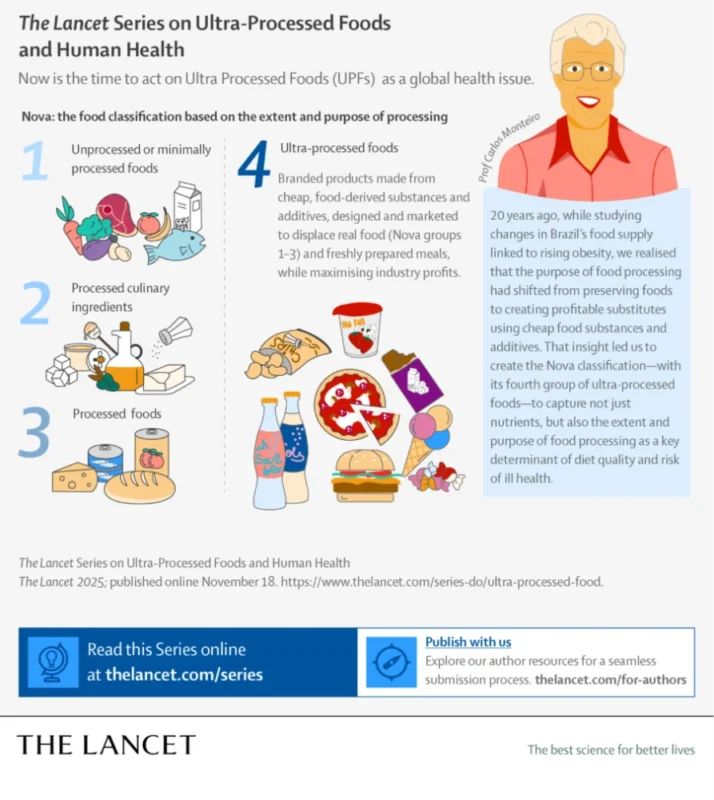
Is there any other advice for prospective Series authors? ‘Be very clear about why you are doing this’, Baker suggests. ‘For us, the evidence was in, and we wanted to elevate it to the world’s attention. The Lancetis absolutely a voice of authority.’ He also cautions against insularity by limiting collaboration to the research world only.
Soon after publication, the authors held a meeting with one main agenda point: What comes next? ‘There’s a big problem with doing a Lancet Series’, says Baker. ‘It generates more questions. But it’s a very good problem to have, creating these remarkable new lines of investigation-new, unanswered questions and innovations that we’re now looking into.’
Read the Lancet Series on ultra-processed foods and human health in full.
Learn more about publishing with The Lancet Group.”
Other articles about The Lancet on OncoDaily.