





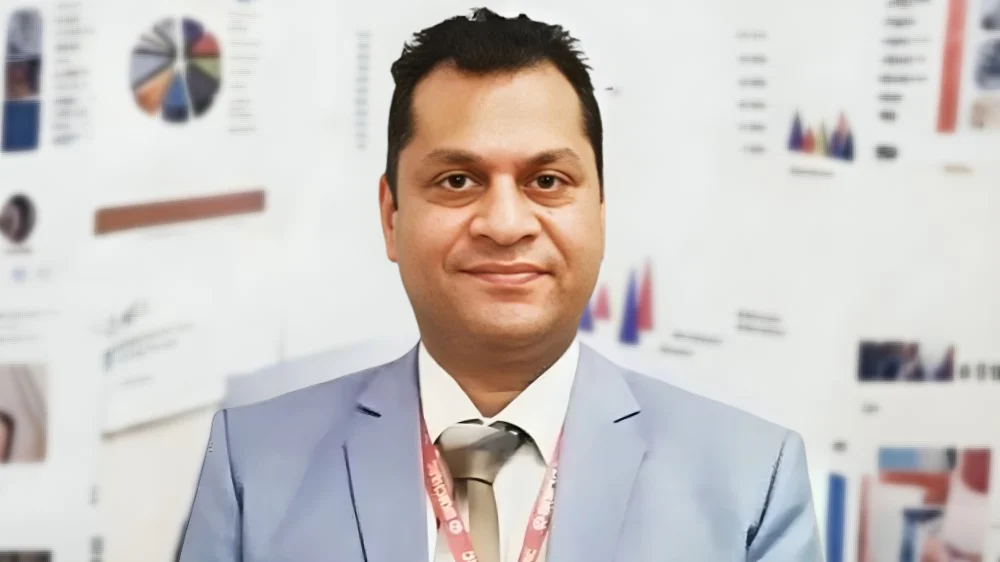
Syed Ali Shazif Baqar, Consultant Clinical Haematologist and Bone Marrow Transplant Physician at Pakistan Kidney and Liver Institute and Research Center, shared reflections on the psychosocial barriers preventing timely treatment of curable hematological diseases in Pakistan, highlighting challenges across healthcare systems, families, and society:
“Why Curable Diseases Remain Untreated: Psychosocial Barriers to Bone Marrow Transplant in Pakistan
I have been working as a bone marrow transplant consultant at PKLI and RC Lahore, which is one of the largest transplant centres in the world, largely known for solid organ transplantation. During my one year, I have made some startling observations pertaining to the psychosocial behaviour of our patients, their attendants, and the healthcare providers, both within and outside my institute.
As we know that we are a low- to middle-income country, and it is a well-established fact that our financial status shapes our psychology. In this article, we will largely focus on chronic haematological conditions, mainly beta thalassemia major, requiring bone marrow transplant, which is currently the only curative option available in Pakistan.
I will divide the psychological patterns of management of these children into three groups: psychology of healthcare providers, psychology of families, and psychology of society, for the purpose of understanding. Although it is very complex, as it is affected by each other and many other factors, these can broadly be categorised in this way.
1. Psychology of the healthcare providers
The doctors and the healthcare system do not support immediate referral for transplant and keep treating patients until they become incurable due to complications related to the disease and its poor management.
We have well-established thalassemia centres throughout the country which provide irregular blood transfusions and irregular chelation therapy, due to unavailability of resources or lack of knowledge about standard management.
Healthcare providers for these conditions may not be aware that the disease is curable, or that transplant centres are present in larger cities. They may also be unaware of how to contact or refer patients to these centres.
The management at our tertiary care transplant centres does not focus sufficiently on research or collaboration with other centres to address and remove the factors that lead to delays in bone marrow transplant.
2. Psychology of the families
There is a lack of education about the disease, its standard treatment, and its cure through bone marrow transplant.
Families become stuck in a loop where their children get temporary relief through irregular transfusions whenever they become severely anaemic. This continues for several years until the transfusions become too frequent or complications become so severe that temporary relief is no longer possible.
At this stage, they look for the curative option of bone marrow transplant, which is often not feasible anymore.
There are myths about bone marrow transplant in these families. It becomes difficult for them to come out of their comfort zone and consider transplant when the child is still in a relatively healthy state.
3. Psychology of the society
The overall approach of society is that we do not think scientifically. Although we are more empathetic towards these patients than many other nations of the world, and we donate generously, these donations are mainly on spiritual rather than scientific grounds. As a result, they often go to thalassemia centres which are not largely run in a scientific way and do not meet international standards.
We tend to blame frequently, but often for the sake of blame rather than in a constructive manner.
The purpose of presenting these observations is to highlight these important factors leading to poor management, and increased morbidity and mortality of these manageable and curable haematological conditions.”
Other articles featuring Syed Ali Shazif Baqar.