





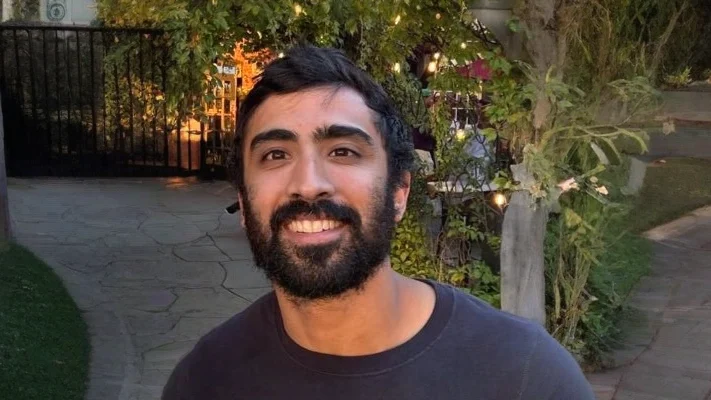
Surya Nagaraja, Postdoctoral Researcher at Harvard University, shared a post on X:
“Excited to share my postdoc work with Jason Buenrostro, now out in Nature!
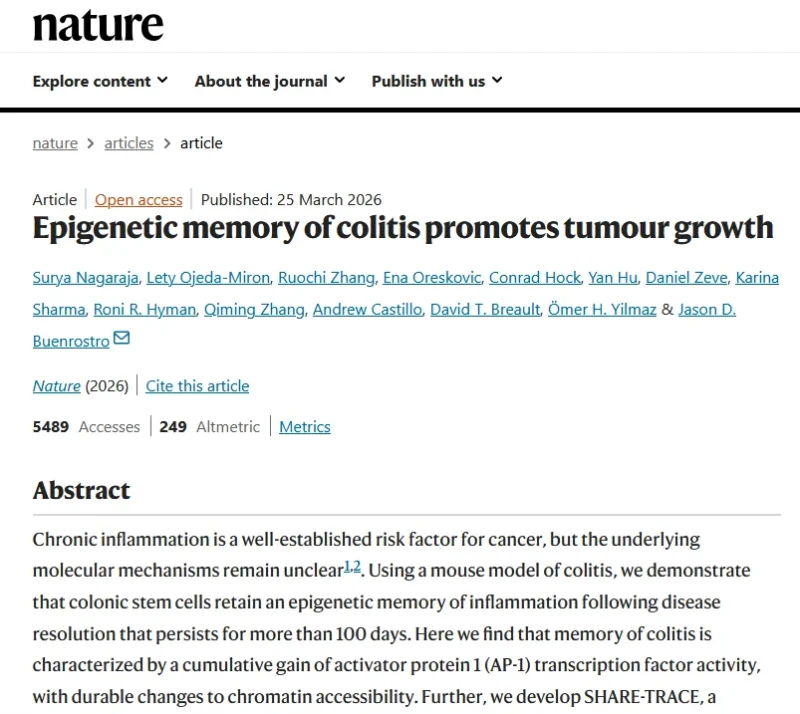
“Epigenetic memory of colitis promotes tumour growth”
We wanted to understand how transient inflammation can create a long-lived increase in cancer risk, even after full recovery.
Many cancer risk factors are episodic (inflammation, infection, diet, etc), yet risk can persist.
Mutations don’t fully explain this.
Instead, we hypothesized that prior exposure induces a stable epigenetic state in stem cells that alters future tumorigenesis (2/n)
We modeled this using chronic DSS colitis and examined acute and chronic injury, as well as following recovery from colitis.
By 21 days post-DSS:
- body weight restored
- crypt architecture normal
- immune infiltration resolved
– tissue appears fully recovered (3/n)
We found ~97% of gene expression changes during colitis injury returned to baseline following recovery from colitis. This told us there wasn’t meaningful transcriptional memory in our model. However, this wasn’t the case in the chromatin (4/n)
Using SHARE-seq (joint RNA + ATAC in single cells), we find stem cells in mice recovered from colitis are epigenomically distinct from controls. This told us memory is encoded in chromatin accessibility. (5/n)
The strongest signal was in a progressive gain in AP-1 motif accessibility. This accumulates throughout injury, with strongest signal after inflammation resolves.
Critically, this memory is durable through proliferation (>100 days post-DSS) and without elevated Fos protein. (6/n)
Is this memory intrinsic to stem cells?
Organoids derived from colitis tissue demonstrate a hyperproliferative/regenerative phenotype. This told us memory is encoded within stem cells, not dependent on niche. (7/n)
We took this one step further – is memory clonal? Passed from a mother cell to a daughter cell?
To answer this, we developed SHARE-TRACE, allowing for simultaneous measurement of:
- clonal lineage history
- gene expression
- chromatin accessibility
All in a single cell. (8/n)
We then developed a novel computational framework to evaluate whether motif accessibility for a given TF was clonally inherited.
This revealed that for certain TF motif families, cells within a clone looked significantly more like one another than chance (including AP-1). (9/n)
Hence, some forms of epigenetic memory could be propagated clonally and create hetergeneous stem cell lineages.
Interestingly, we found some of this could be explained by changes in DNA methylation. But not all. So, we took a deeper dive into mechanisms of AP-1 memory. (10/n)
We asked how this general TF family (AP-1) was able to create a specific memory in our system. Using the seq2PRINT method developed by our lab, we found composite binding motifs between AP-1 and FOX factors. (11/n)
This suggested cooperativity between the AP-1 and FOX families.
Using a novel footprinting-based in vitro binding assay, we showed FOX factors stabilize AP-1 on DNA. This suggested a mechanisms for maintaining AP-1 memory at specific sites (12/n)
Finally, we went back to cancer.
After APC loss, mice that had recovered from cancer had larger tumors. This was true even at the earliest stages of tumorigenesis when lesions were microscopic.
This told us – memory increases initial tumor outgrowth (13/n)
We found tumors in colitis recovered mice had higher expression of regenerative AP-1 associated genes. Consistently, inhibition of AP-1 blocked tumor growth specifically in colitis-recovered mice.
This told us epigenetic memory is functionally required for the phenotype (14/19)
Altogether, this created a model where inflammation:
- creates epigenetic memory
- which is clonally propagated, even when the inflammation subsides and tissue looks normal to the eye
- and once an oncogenic mutation occurs…
- memory enhances tumor growth (15/18)
This work creates a new framework for thinking about how environmental exposures and experiences shape the health of our tissues over a lifetime. We’ve built concepts and tools to now expand into studying long-term effects of diet, metabolism and more. (16/18)
These persistent epigenetic alterations also create the potential for developing new diagnostic tools. Can we measure “memory” in patient populations and quantify cancer risk before a tumor forms? (17/18)
Finally, I’d like to thank our collaborators in the Omer Yilmaz and Breault labs. As well as team PROSPECT, a Cancer Grand Challenges partnership between Cancer Research UK, National Cancer Institute, the Bowelbabe Fund for Cancer Research UK, and the French National Cancer Institute! (18/18)
Title: Epigenetic memory of colitis promotes tumour growth
Authores: Surya Nagaraja, Lety Ojeda-Miron, Ruochi Zhang, Ena Oreskovic, Conrad Hock, Yan Hu, Daniel Zeve, Karina Sharma, Roni R. Hyman, Qiming Zhang, Andrew Castillo, David T. Breault, Ömer H. Yilmaz and Jason D. Buenrostro.
Other articles on OncoDaily.