






Salvatore IacHino, Hematology Resident/Fellow of Hematology and Steam Cell Transplantation Unit at Università Campus Bio-Medico di Roma, shared a post on LinkedIn:
“Towards a ՛chemo-free՛ future in Acute Lymphoblastic Leukemia
The recent Post-ASH 2026 meeting in Turin highlighted significant advances in the treatment of Acute Lymphoblastic Leukemia (ALL). We are moving beyond the era of intensive chemotherapy toward a paradigm defined by precision medicine and immunotherapy, tailored to the molecular characteristics of the disease.
Here are four key developments that emerged:
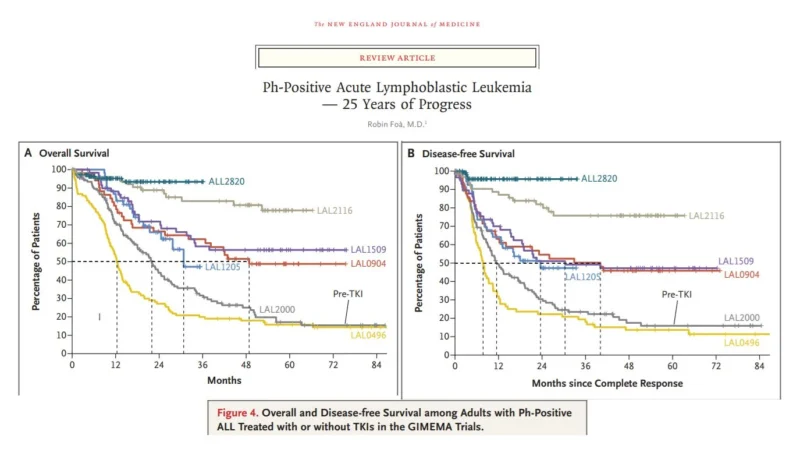
1. Ph+ ALL: The GIMEMA ALL2820 Revolution
Data presented by Chiaretti et al. may redefine the standard of care for Philadelphia-positive (Ph+) adult patients.
- Trial Design: Head-to-head comparison of Ponatinib + Steroids + Blinatumomab versus Imatinib + standard chemotherapy.
- Results: 42-month overall survival (OS) reached 94% in the chemo-free arm versus 77% in the chemotherapy arm.
- Implications: A chemo-free, targeted-immunotherapy approach achieves deeper MRD responses and fewer relapses. These results suggest it could become the new standard of care for adult Ph+ ALL.
2.Ph– ALL: Early Integration of Immunotherapy
For Philadelphia-negative patients, combinations of Inotuzumab (InO) and Blinatumomab are changing outcomes, particularly in older adults (A041703 Study):
- Efficacy: 1-year event-free survival (EFS) of 75% and a 97% complete remission (CR) rate by the end of Course II.
- GRAALL-2024/B Update: Blinatumomab consolidation improves outcomes across high-risk subgroups (age, WBC, Ph-like). Notably, bridging to allo-HSCT may not provide additional benefit in patients achieving undetectable MRD after Blinatumomab.
3.CAR-T and Transplant: A Delicate Balance
CAR-T therapy is increasingly considered for first-line consolidation but the role of allogeneic transplant remains under discussion:
- Real-world data (Logan A. et al.) suggests that allo-HSCT, either before or after CAR-T, may improve the durability of relapse-free survival.
- OS data remain immature. Decisions regarding transplant should remain individualized, weighing relapse risk, patient fitness, and potential post-CAR-T complications.
4. ASH 2026 Guidelines for AYA
- Asparaginase Management: Empirical dose capping and reductions are now considered reasonable strategies to mitigate toxicity without compromising efficacy.
- De-escalation: Routine allo-HSCT as consolidation is no longer recommended; adding Rituximab or Blinatumomab to standard protocols is preferred.
Conclusions
Future challenges include:
- Economic sustainability and global access,
- Harmonization of MRD assessment (NGS/ddPCR),
- Identifying the optimal treatment sequence based on individual patient characteristics,
- Monitoring of AEs such as VOD.
The goal is clear: offer the most effective care while minimizing toxicity.”
Other articles featuring Salvatore Iachino on OncoDaily.