 Calculators
 OncoCalendar





Richard Simcock, Chief Medical Officer at Macmillan Cancer Support, shared a post on LinkedIn:
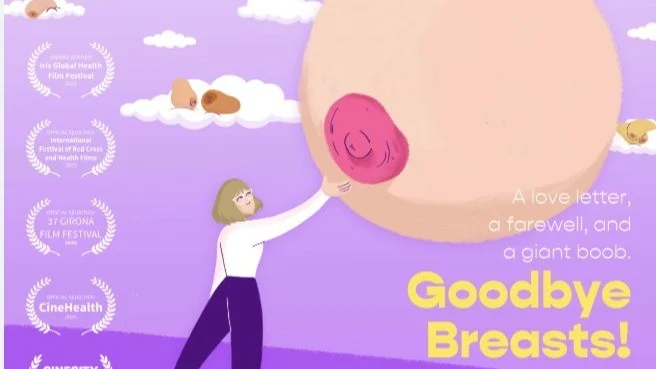
“On Tuesday this week I will be hosting a Q&A at the Dukes Komedia Brighton after the showing of Joanna Callaghan‘s film ‘Goodbye Breasts’.
How can the visual arts help us understand the experience of cancer better?
Art and Cancer – what can we learn?
This week I will be hosting a Q&A following a screening of Professor Joanna Callaghan‘s film ‘Goodbye Breasts’. It’s a documentarian’s approach to understand and share their story of mastectomy, a story which has already generated a giant inflatable breast and a dance routine. Biography, fact and possibly some catharsis.
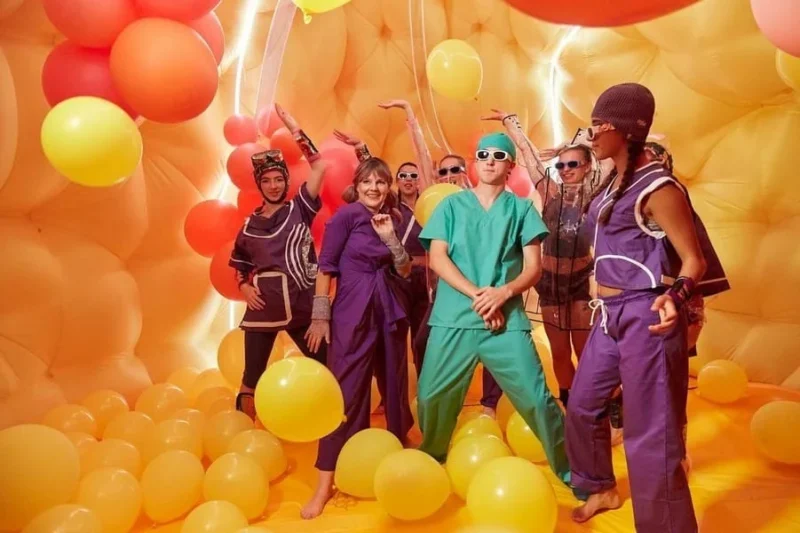
Inside the inflatable breast – from ‘Goodbye Breasts’
Can art help us make sense of cancer? Not in scientific terms, but in all of its’ complex, emotional and human impacts?
Over my working life as an oncologist I have seen truly exponential changes in our understanding of the mechanisms of cancer. I’m fond of a 2022 quote from Larry Norton that ’90 per cent of what we know about cancer was published in the last 5 years’. Genomics, proteomics, metabolomics and drug discovery make our knowledge deeper and wider, and necessarily inform new therapies. Clinical aspects of my practice are fundamentally different now to 20 years ago, and yet the humanistic perspective seems to be a constant. Whatever the context I still see that a cancer diagnosis provokes anxiety and fear.
At Macmillan, we know that cancer raises an enormous number of questions for people affected, it is why our information teams and helpline deal with requests ranging from help with toxicity of treatment, to workers’ rights or talking to children. Because thoughts of cancer will usually always entail some thoughts of the prospect of death it will also force us to consider our lives and its’ meaning. A necessary reflection on the human condition. Existential enquiry; ‘why me’ and ‘what’s next’ are questions that have occupied philosophers for centuries and don’t come with easy answers and it’s here that art may help people make sense of the world.
There are currently two works at the London based Tate galleries which consider aspects of cancer. At Tate Britain a video installation by artist P.Staff reflects on the toxicities of chemotherapy in a work itself based on a memoir (Catherine Lord’s ‘The Summer of Her Baldness’). Meanwhile down the river, and in sight of Macmillan offices, Tracey Emin’s large exhibition is entitled ‘A Second Life’ to mark the restart that life-altering surgery for bladder cancer has given her. Emin has always been prepared to show her private pain and this exhibition is no different, with selfies of her with her stomas shown alongside former works.
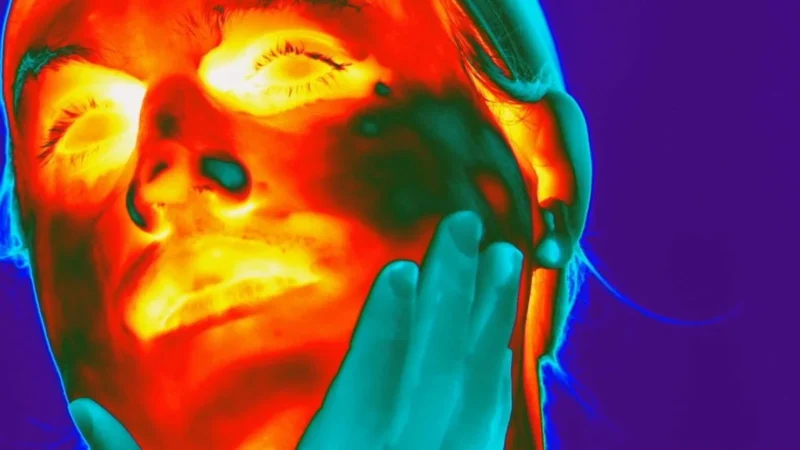
Still from ‘Weedkiller’ by P.Staff – currently at Tate Britain
Breast surgery is arguably the earliest ever documented treatment for cancer; the Edwin Smith Papyrus, now housed in New York and dates to around 1600BC. Translated it describes the treatment of a ‘bulging tumour of the breast with a firestick’. Fast forward more than three thousand years to Thomas Eakins oil painting of ‘The Agnew Clinic’ which depicts a surgical lecture given during a mastectomy. Dozens of male medical students watch intently. My eyes are drawn to the surgical assistant who has the job of restraining the hands of the only partly- anaesthetised patient. The only other woman in the picture, a nurse, half turns away.
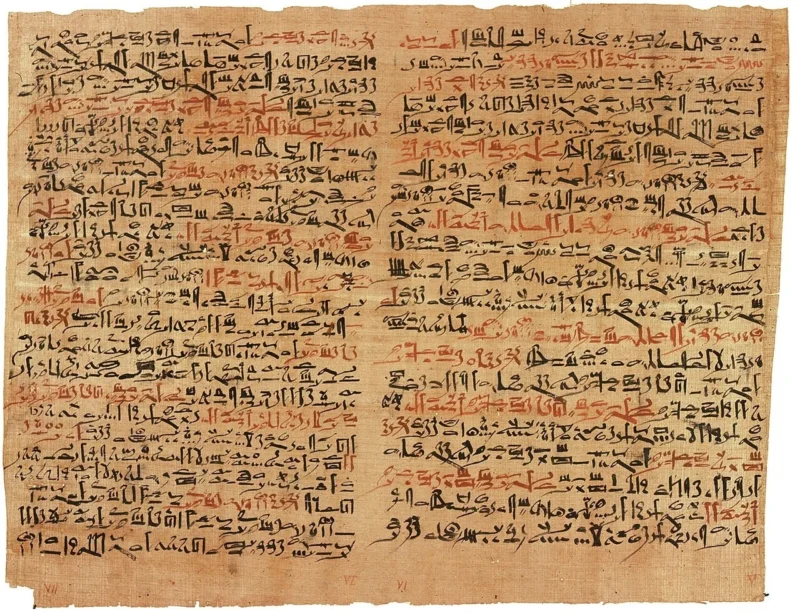
The Edwin Smith Papyrus
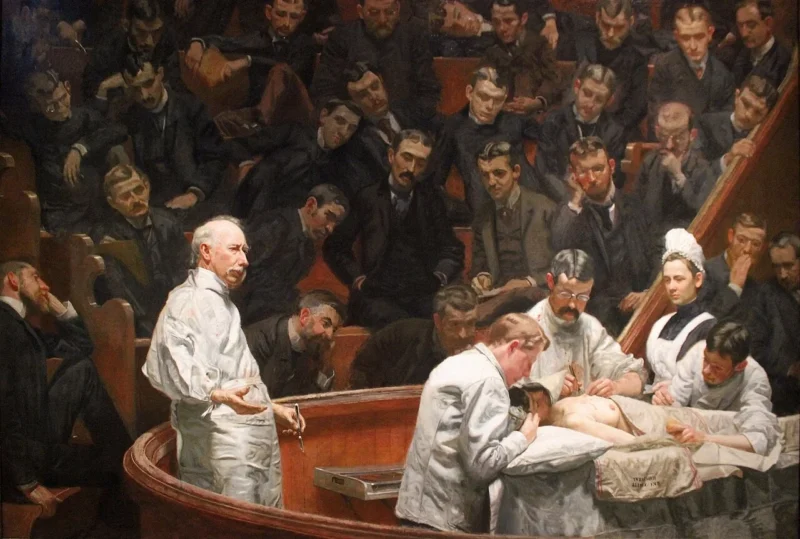
The Agnew Clinic by Thomas Eakins (1889)
Writers have told stories of mastectomy either as biography or a fiction. Audre Lorde and Catherine Guthrie write powerfully of their own experience of medical misogyny and ingrained attitudes towards breast reconstruction. Kimiko Tobimatsu tells their story as a graphic novel. In Solzhenitsyn’s 1966 semi-autobiographical work ‘Cancer Ward’ a woman shares both her sadness and also her breasts, with a fellow cancer patient on the eve of her mastectomy. The brutal phrasing encompasses how a body part can be seen as disposable in the face of cancer; ‘Today it was a marvel, tomorrow it would be in the trash bin’.
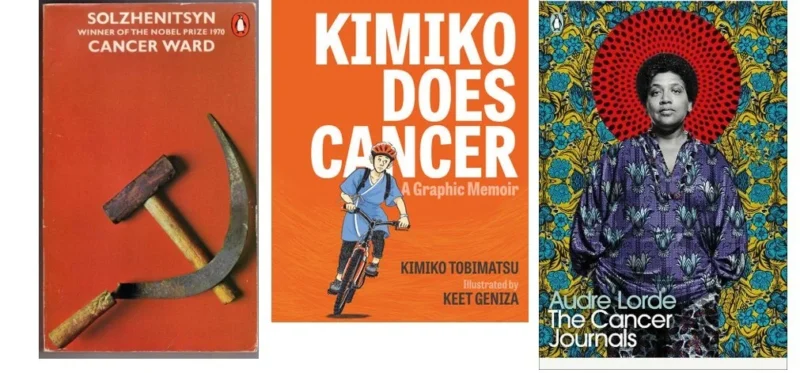
Biography and fiction in cancer
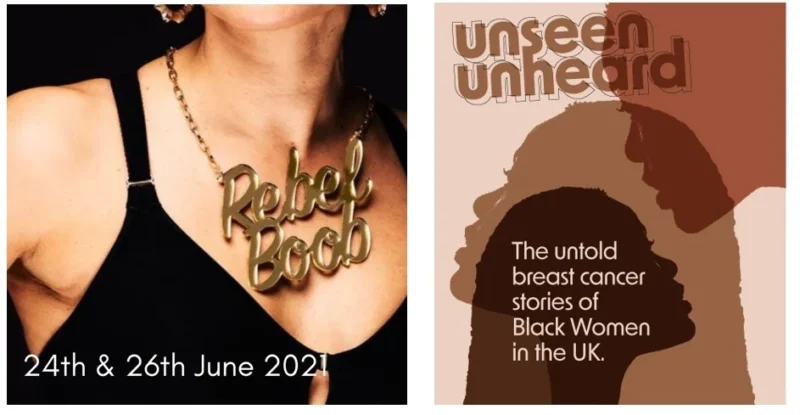
In 2020 I was invited to see the play ‘Rebel Boob’ which explored multiple themes from people affected by breast cancer voiced by actors and shared with prose, dance and testimony. The play ‘Unseen Unheard’ built on that theme in 2023 with a play that related experiences of black women with breast cancer in the UK.
Film allows more space to explore themes at greater length. ‘Forever a Woman’ (sometimes alternatively titled ‘The Eternal Breasts’) is a 1955 Japanese film which explores a woman’s loss of her breasts due to cancer. That process forces her to reflect on her desires and her husband’s infidelities, and the mastectomy starts an awakening in her which provokes her to become a poet. In this artistic observation of cancer the cancer provoked more art.
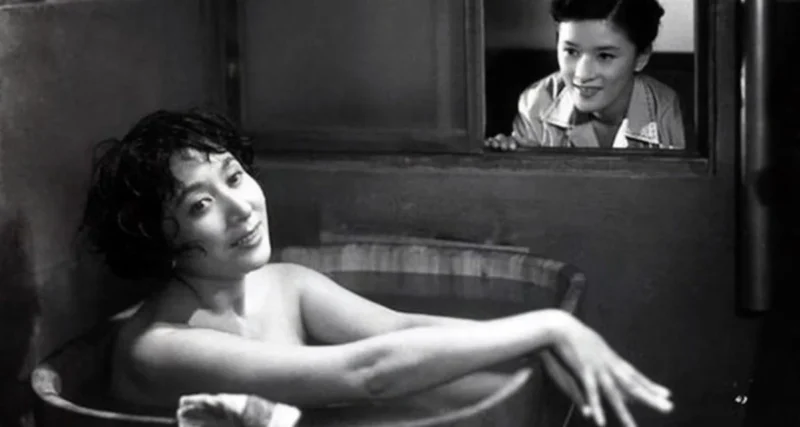
From ‘The Eternal Breasts’ 1955
I have seen the power of cancer stories. At Macmillan we are grateful to people with lived experience of cancer who share their stories for us in front of different audiences. Removed from the pressures of clinical work I have seen healthcare professionals who listen to people with cancer all the time really stop and hear them fully, when they are given the space to offer a truly personal view.
Joanna Callaghan is a Professor of Film making at the University of Sussex so it seems understandable that they would reach for film to reflect their own lived experience. It is an experience which to some extent has been informed by the scientific understandings that have changed medical management, as she was found to have a PALB2 mutation, a newer discovery than BRCA 1 and 2. I’m looking forward to seeing the film for the first time and I expect to learn something from lived experience that my medical expertise will never give me. I will be hosting a Q&A with Professor Callaghan afterwards.
Other colleagues and experts will also be hosting Q&A as the film tours the UK through the month.
- April 15th East Finchley with Katrina Jacobs-Sarig
- April 21st Norwich with Simon Pain
- April 22nd Cambridge with Marc Tischkowitz
- April 28th York with Matt Harper-Hardcastle
- May 3rd Nottingham
- May 5th Oxford with Toral Gathani
- MAy 6th Brixton
- May 7th Bath with Mark Beresford“
Other articles featuring Richard Simcock on OncoDaily.