Rafael Sirera, Professor of Cell Biology at the University Politècnica de Valènca, shared a post on X:
“The other day we discussed driver and passenger mutations.
Today, it is time to take one step further-because not all drivers are equal. Some do more than initiate cancer. Some become indispensable.
This is the basis of oncogenic addiction.
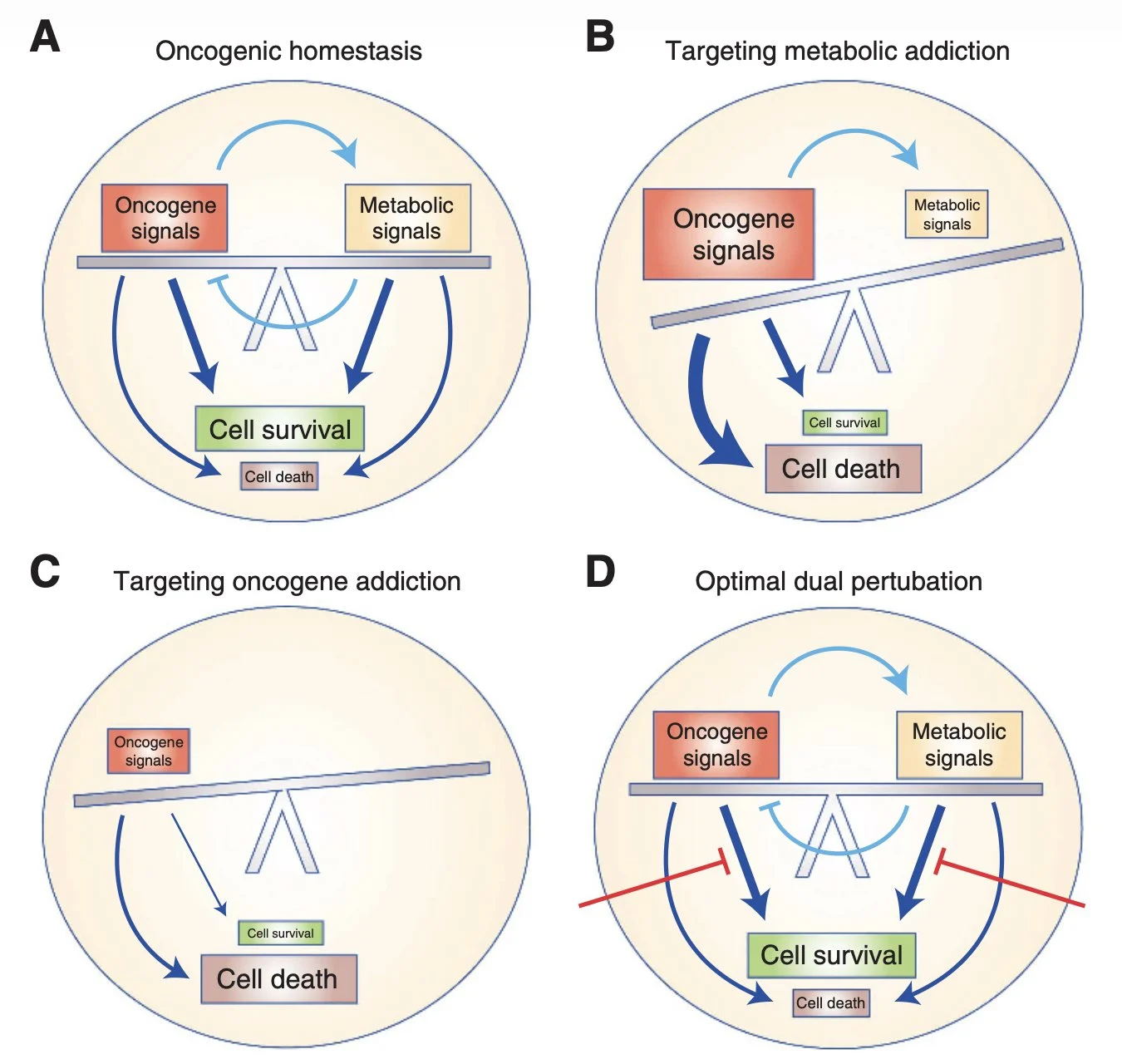
At first glance, a tumour appears genetically complex. Multiple mutations, redundant pathways, extensive heterogeneity. One might expect that such a system would be robust, difficult to disrupt. And yet, paradoxically, many cancers become highly dependent on a single dominant oncogenic signal.
They are, quite literally, addicted.
This concept emerged from observations that inhibiting one specific oncogene could trigger a disproportionate effect-cell cycle arrest, apoptosis, or even tumour regression-despite the presence of numerous other mutations. Classic examples include activating alterations in BCR–ABL in chronic myeloid leukaemia, EGFR in certain lung cancers, or BRAF in melanoma.
What is often overlooked is why this dependency emerges.
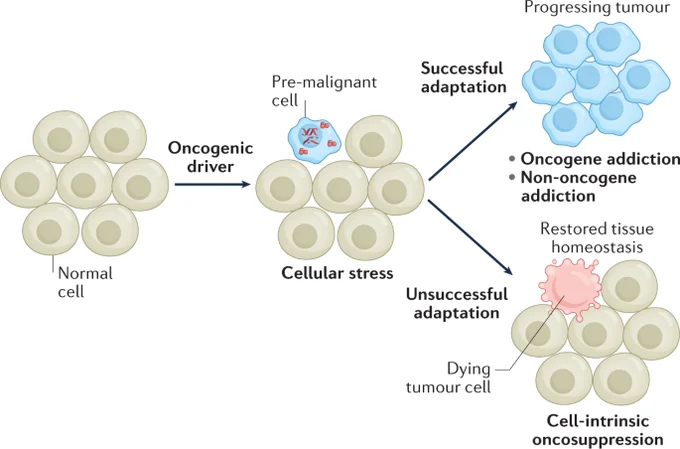
Oncogenic signalling rewires the cell at multiple levels. It is not just about proliferation. Chronic activation of a pathway imposes transcriptional, metabolic, and proteostatic constraints. The cell adapts to this altered state, losing flexibility. Alternative pathways are downregulated, feedback loops are reshaped, and survival becomes contingent on the continuous activity of that oncogene.
In other words, the cancer cell trades redundancy for efficiency-and becomes vulnerable.
Interestingly, this addiction is not merely a property of the initiating event. It is reinforced over time. As the tumour evolves, additional mutations may accumulate, but many of them are tolerated only within the context of the dominant oncogenic programme. Remove that central node, and the system collapses.
This explains a central paradox in oncology: genetic complexity does not always translate into functional independence.
Clinically, oncogenic addiction is the rationale behind targeted therapies.
Inhibitors directed against specific oncogenic drivers can produce dramatic responses, precisely because they exploit this acquired dependency. However, this state is rarely permanent. Tumours adapt, secondary mutations emerge, bypass pathways are activated, and resistance develops.
At its core, oncogenic addiction reflects an evolutionary compromise. By committing to a single dominant signal, the tumour gains growth advantage-but at the cost of fragility.
And that fragility is where therapy finds its opportunity.”
Other articles on OncoDaily.