NEJM Group shared a post on LinkedIn:
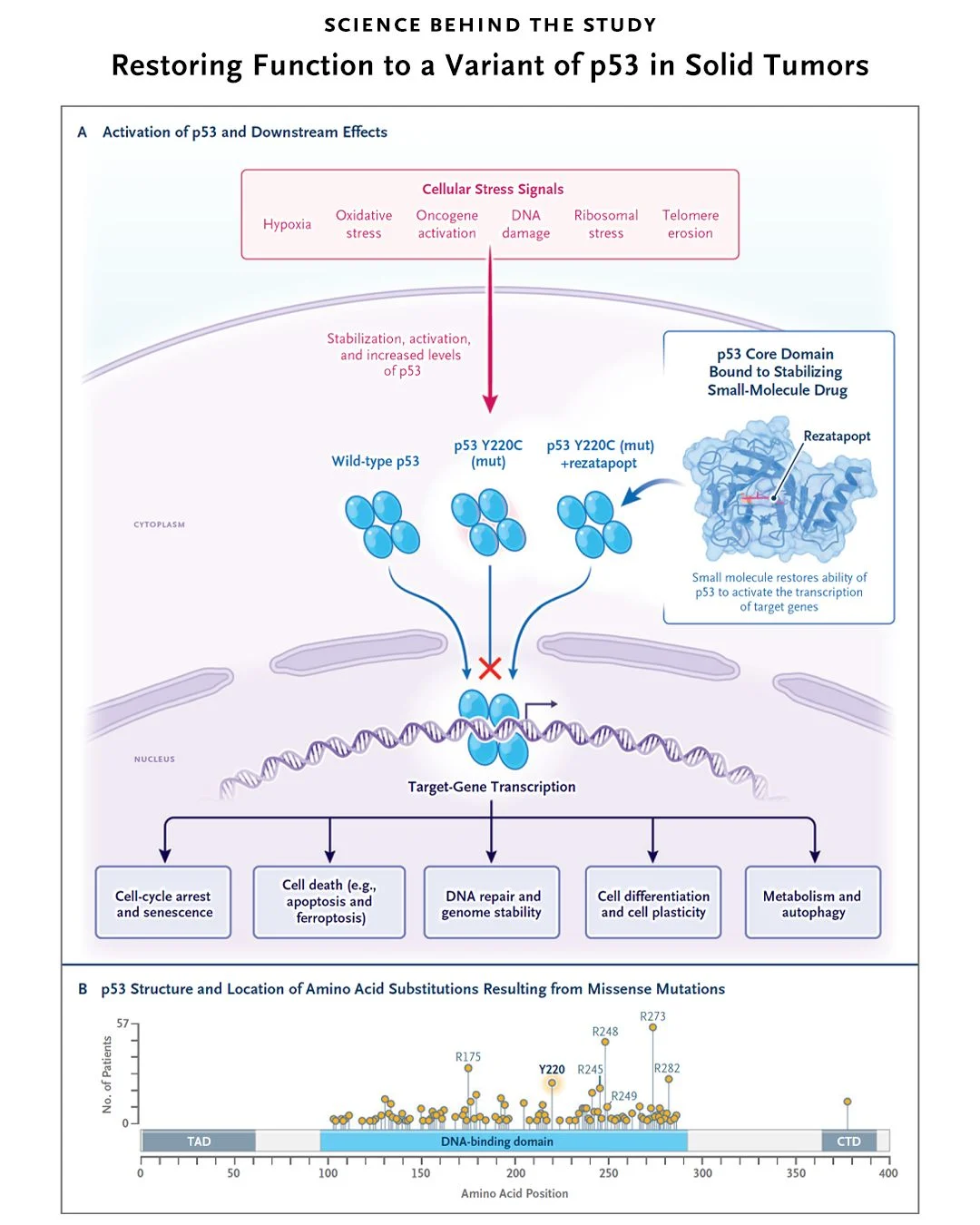
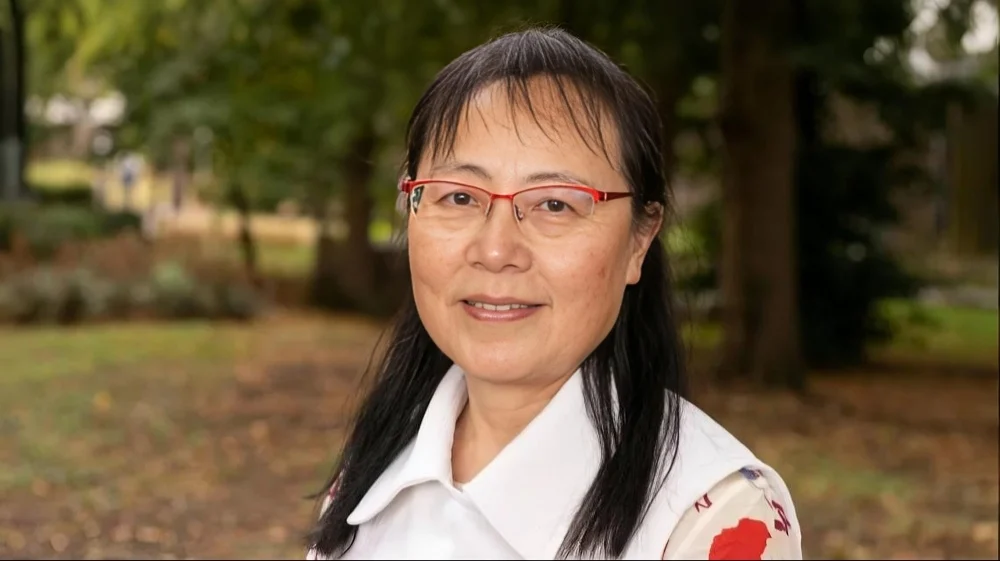
“Xin Lu, describes the scientific foundations of a study of rezatapopt, which targets a variant form of p53, to treat patients with solid tumors.
In 1979, Lloyd Old’s group at Memorial Sloan Kettering identified a tumor-specific antibody recognizing a tumor antigen of 53 kDa and duly dubbed it p53. In the same year, two other groups independently reported the identification of a 53 or 54 kDa host protein as the binding partner of the large T antigen oncoprotein in cells transformed by the oncovirus SV40.
Physicians now know that the p53 tumor antigen and the host protein that binds the large T antigen of SV40 virus are one and the same. Over the following decade, the precise role of p53 in tumorigenesis remained ambiguous, but in 1989, Bert Vogelstein’s group at Johns Hopkins University discovered that TP53 (which encodes p53) is often mutated in human cancers.
Persons born with a mutated TP53 allele have Li–Fraumeni syndrome, and cancer develops at a young age; early-onset tumors also develop in p53-knockout mice. These findings established the tumor-suppressive function of p53 in cancer, and research over subsequent decades established TP53 as the most commonly mutated gene in human cancers.
In NEJM, Dumbrava et al. report the results of a phase 1 trial of rezatapopt, a reactivator of the p53 protein, in patients with solid tumors harboring a specific TP53 mutation. They observed an overall response of 20% among participants whose tumors were measured at the start of the trial, which represents a proof of concept for tumor-suppressor reactivation.
Learn more about the science behind the study in the editorial ‘Restoring Function to a Variant of p53 in Solid Tumors’ by Xin Lu from Ludwig Cancer Research.”
Title: Restoring Function to a Variant of p53 in Solid Tumors
Author: Xin Lu
Read the Full Article.
Further reading at NEJM.org.
Title: Phase 1 Study of Rezatapopt, a p53 Reactivator, in TP53 Y220C–Mutated Tumors
Authors: Ecaterina Dumbrava, Geoffrey Shapiro, Aparna Parikh, Melissa Johnson, Anthony Tolcher, John Thompson, Anthony El-Khoueiry, Andrae Vandross, Shivaani Kummar, Dale Shepard, Kim LeDuke, Lisa Sheehan, Leila Alland, Arshad Haque, Deepika Jalota, Marc Fellous, Alison Schram
Read the Full Article.
Other articles about p53 on OncoDaily.