





Michael Mehanni, Assistant Lecturer of Clinical oncology at Kasr AlAiny School of Medicine, Cairo University, Oncology Specialist at As-Salam International Hospital, Clinical Oncology Specialist at Air Force Specialized Hospital, shared a post on LinkedIn:
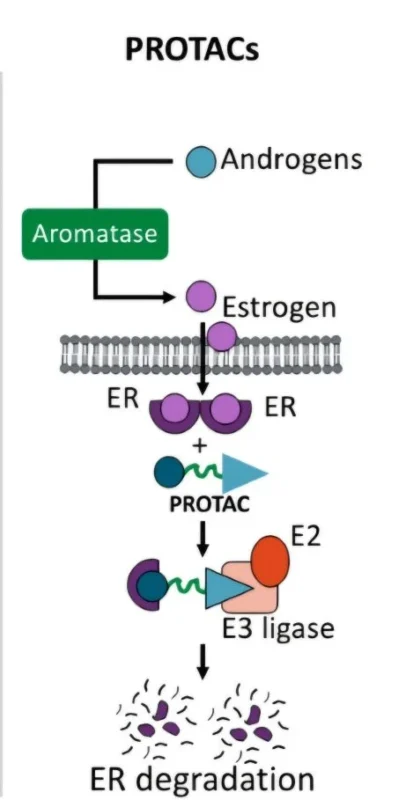
“PROTACs (Proteolysis Targeting Chimeras) are a new class of drugs designed to degrade disease-causing proteins rather than just blocking them. Unlike traditional inhibitors that must occupy a protein’s active site (occupancy-driven), PROTACs act as ‘molecular matchmakers’ that tag specific proteins for destruction by the cell’s own waste disposal system.
How PROTACs Work?
- A PROTAC is a ‘bifunctional’ molecule with three parts:
- Target Ligand: Binds to the specific protein you want to eliminate.
- E3 Ligase Ligand: Binds to a cellular enzyme called an E3 ubiquitin ligase.
- Linker: A chemical chain that connects these two heads.
When a PROTAC enters a cell, it brings the target protein and the E3 ligase together to form a ternary complex. The ligase then ‘tags’ the target protein with ubiquitin, a signal that tells the cell’s proteasome (the ‘cellular shredder’) to break it down. After the protein is destroyed, the PROTAC is released to repeat the cycle with a new target, making it highly efficient.”
Other articles featuring Michael Mehanni on OncoDaily.