






Mary Bussell, CEO at TriMar Strategies, shared a post on LinkedIn:
“Beyond lungs: expanding clinical and economic value of lung cancer screening
A compelling study published in JAMA Network Open on 31 March 2026 highlights an overlooked benefit of lung cancer screening. While radiologists primarily search for early signs of lung malignancy, LDCT scans can reveal significant incidental findings. Data from the National Lung Screening Trial involving >26K participants show that participants with incidental findings were nearly 2x as likely to be diagnosed with another cancer within the following year – particularly urinary system and hematological cancers.
These findings have a greater significance when viewed against the global burden of tobacco use. Tobacco use remains the leading cause of cancer worldwide, responsible for ~15% of all new cancer cases and ~25% (1 in 4) of all cancer deaths. In 2022 alone, tobacco smoking caused >2.7 million new cancer cases and >1.8 million deaths, with lung cancer accounting for roughly half of this burden. Tobacco use is responsible for ~80% of all lung cancer cases globally, underscoring why populations eligible for lung cancer screening are at elevated risk for multiple malignancies.
As countries expand national lung cancer screening programs, with recent national launches in Australia and Germany and pilot programs in countries such as Portugal, the evidence strengthens the argument for viewing screening not merely as a health intervention but as a strategic economic investment.
Next week TriMar Strategies is proud to be hosting a closed-door meeting on the margins of the Spring Meetings of the World Bank Group and the International Monetary Fund (WBG Meetings IMF Meetings) where we will explore this very issue: how early detection of lung cancer can contribute to economic resilience.
The economic consequences are substantial. Investment in early detection and more effective care pathways can improve outcomes while enabling individuals to return to meaningful and economically productive lives, strengthening the long-term economic contribution of affected populations. This is not a question of more spending, but of how effectively current spending is structured and deployed – preventing the entrenchment of inefficiencies within health systems and safeguarding human capital, while reducing the burden of advanced disease and supporting healthier aging populations.
Lung cancer screening was designed to save lives by detecting disease earlier. This study suggests that it may deliver even greater returns. By acting on findings beyond the lungs we can enhance both population health and economic stability – an imperative that sits at the heart of the intersection of health policy, fiscal policy, investment strategy and global health.”
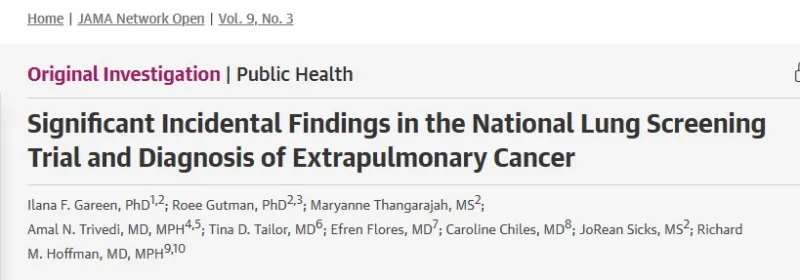
Title: Significant Incidental Findings in the National Lung Screening Trial and Diagnosis of Extrapulmonary Cancer
Authors: Ilana F. Gareen, Roee Gutman, Maryanne Thangarajah, Amal N. Trivedi, Tina D. Tailor, Efren Flores, Caroline Chiles, JoRean Sicks, Richard M. Hoffman
Read the Full Article.
Other articles about lung cancer on OncoDaily.