Laurence Buisseret, Director of the Medical Oncology Department at Institut Jules Bordet, shared a post on LinkedIn:
“Breast Cancer at ASCO26: a year of optimization rather than disruption.
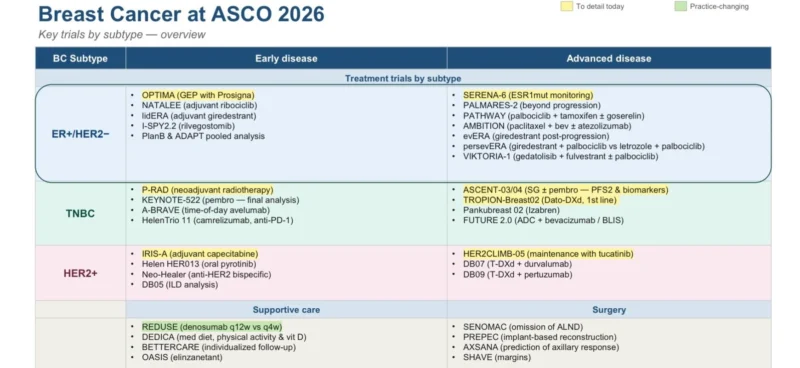
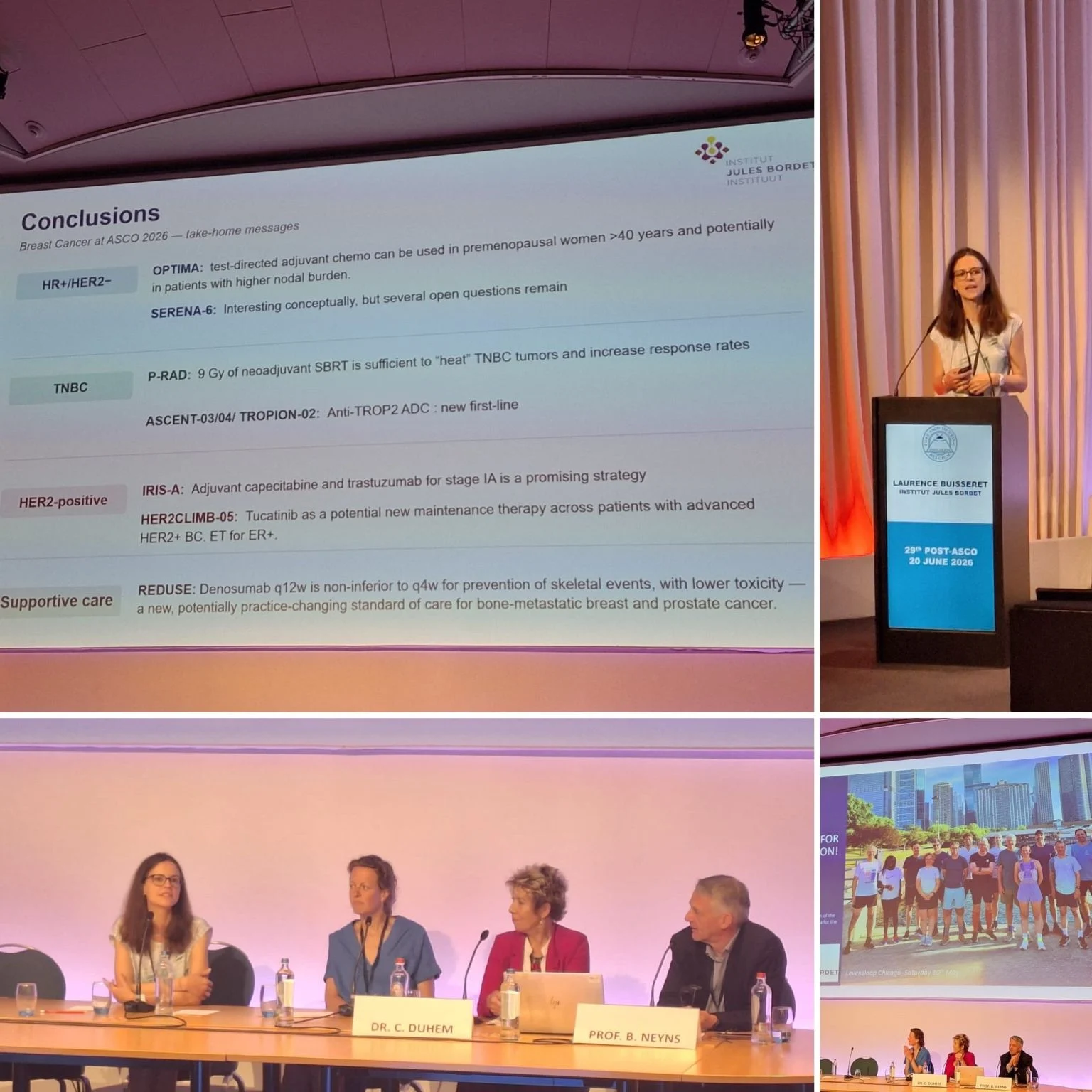
At the 29th edition of the post-ASCO meeting for Belgium and Luxembourg, a selection of breast cancer studies were presented and discussed highlighting a common theme: the data were less about practice-changing primary results from pivotal trials and more about refining patient management through biomarkers, treatment sequencing, new strategies, toxicity reduction, supportive care, and a better understanding of the long-term treatment trajectory.
- ER+/HER2− disease: OPTIMA provided further support for genomic-guided treatment decisions in early disease, while SERENA-6 explored ctDNA-guided intervention to treat patients at molecular progression in the metastatic setting.
- TNBC: TROP2-directed ADCs continue to move earlier in the treatment pathway, with supportive data from PFS2 analyses.
However, PFS2 remains a debated endpoint with limited validation as a surrogate for OS, highlighting the need for more sequencing trials such as SONIA.
Innovative approaches such as P-RAD also suggest that short-course neoadjuvant radiotherapy may help ‘heat’ tumors and enhance immune response to systemic therapy. - HER2+ disease: IRIS-A highlighted opportunities for treatment de-escalation in selected patients with early-stage disease, while HER2CLIMB demonstrated the benefit of triple HER2 blockade as maintenance therapy in the metastatic setting and reinforced the role of endocrine therapy in patients with ER-positive disease.
- Supportive care: REDUSE may be one of the most immediately practice-relevant studies, showing that denosumab every 12 weeks is non-inferior to every 4 weeks for preventing skeletal-related events, with less toxicity and treatment burden.
Overall, ASCO 2026 reminded us that progress is not only about new drugs, but also about optimizing treatment selection, sequencing, and supportive care to improve outcomes and quality of life for our patients.”